






The views expressed here are solely those of the author and do not necessarily represent the views of FreightWaves or its affiliates.
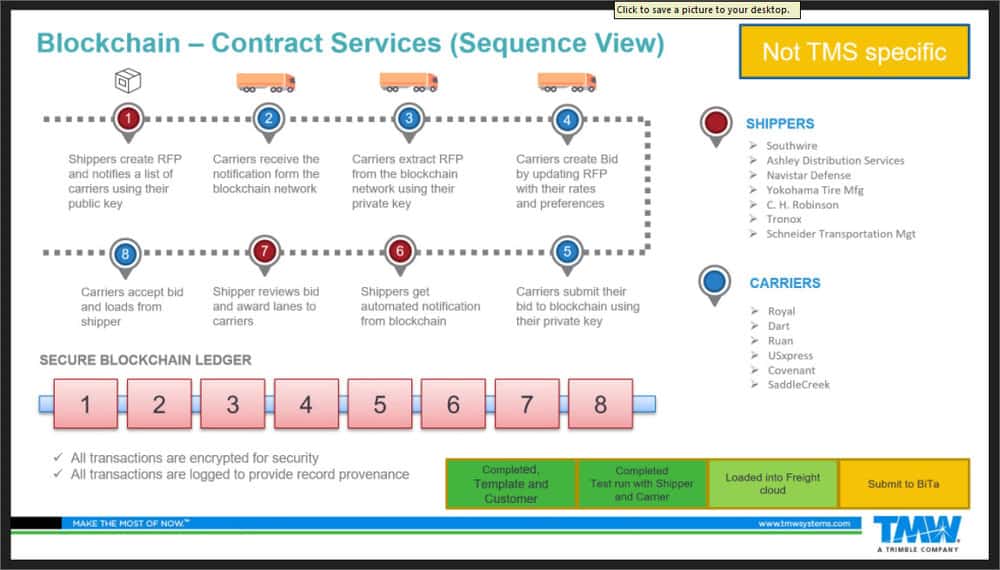
Much of the discourse and sentiment surrounding the application of blockchain, and other distributed ledger technologies, in enterprise supply chains has taken a decidedly pessimistic turn.
This is evident on Meetup.com where blockchain and cryptocurrency meetups that used to be very active have become decidedly and remarkably less so. According to a press release issued by Gartner Inc. on October 8, 2019, blockchain technologies that are most mature have slipped into the trough of disillusionment, while less mature blockchain technologies are approaching the peak of inflated expectations.
So it was with a bit of nervousness that The New York Supply Chain Meetup organized its first meetup of 2020 on Thursday, January 23, #TNYSCM18 – Blockchains in Supply Chain. We wanted to hear directly from people building away from the hype, the crowds and the noise.
The view from IBM and Maersk
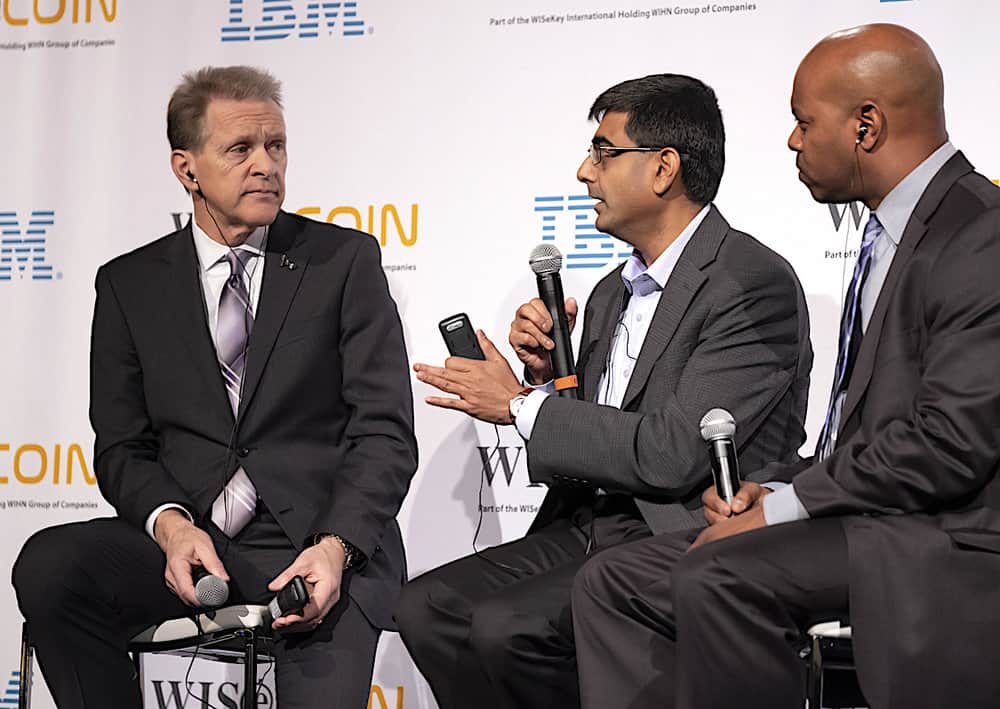
First, we heard from Nigel Gopie, Head of Marketing for IBM Blockchain, and Zach Tomlinson, Head of Marketing for TradeLens. They were interviewed by Rachel Premack, Senior Transportation Reporter at Business Insider.
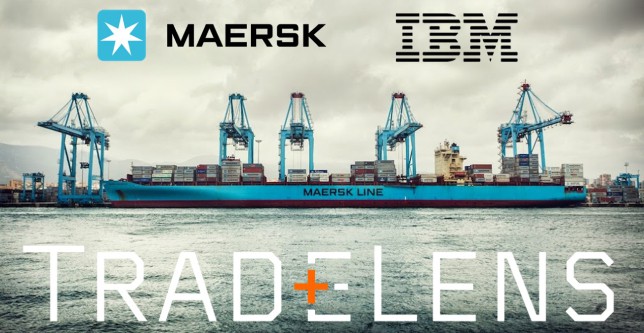
(Photo credit: TradeLens)
My take from the hour-plus conversation among them is that, while there are still issues that need to be ironed out, the enterprises with the most entrenched supply chain management problems remain committed to the application of blockchains in supply chain, where it makes sense to do so. One of the issues that is slowing progress is that blockchains really only make sense if applied within a supply chain network, preferably across an industry.
That is raising questions about governance that businesses did not have to contend with in the past. It is also raising questions about the nature of competition in a scenario where the greatest value is obtained from businesses that collaborate as part of an industry consortium.
The view from early-stage startup land
Second, we heard from four startup showcase speakers:
- Pratik Soni, CEO – OmniChain
- Simon Ručigaj, Public Relations and Technology Transformation Officer – CargoX
- Mary Kopczynski, CEO & Founder – RegAlytics
- Mykaila Dudley, Business Development Manager – ripe.io
Each of them described enterprise deployments in progress. It should not be surprising all of them appear to be growing customer adoption by using a land-and-expand approach. That is, first enterprises test the products and services on a relatively small scale, and growth occurs as customers gain comfort and confidence, and start to understand how the product can enhance the customer’s business operations, as a result start using the product or service more broadly within the company.
“How do you make money?” quickly became a refrain during the meetup.
The responses to that question varied to cover almost every customary and established software pricing model one would expect. The bottom line is that, when it comes to blockchain applications for enterprise supply chains, there’s still some experimentation going on to determine what pricing models work best. Nevertheless, the urgency with which the audience asked each speaker that question makes it clear to me that the conversation around blockchains in supply chain is moving beyond the novelty of the technology, and starting to focus more on the creation of value for customers and the extraction of value for startups themselves.
In that vein, Connecting-Food is a startup based in Paris that audits and tracks food chains in real-time. After speaking on the phone with Samantha Gadenne, International Business Developer for Connecting-Food in early December, I emailed her to ask what is causing Connecting-Food’s growth in customer adoption. She said, “One of the reasons we have been able to scale is because we provide a one-stop-shop that helps food brands and retailers address both their internal traceability challenges and their external customer transparency issues, instead of having to find multiple solution providers.”
My opinion about the state of affairs in blockchain + supply chain
According to Avivah Litan, a vice president of research at Gartner, “Blockchain technologies have not yet lived up to the hype and most enterprise blockchain projects are stuck in experimentation mode. Blockchain is not yet enabling a digital business revolution across business ecosystems and may not until at least 2028, when Gartner expects blockchain to become fully scalable technically and operationally.” I agree with that assessment.
We know that every new technology must encounter and conquer technological, sociological, psychological and economic barriers before it can succeed. It is only after it has gained a firm foothold among innovators and early adopters that a new technology starts to gain traction with the wider population of potential users or customers. Innovators and early adopters show what is possible with a new technology by creating innovations based on the new technology’s specific and unique characteristics when the rest of the world is still skeptical, pessimistic or downright cynical.
This process takes time. Nearly 30 years elapsed between the first time two computers at MIT’s Lincoln Lab communicated with one another, to the creation of web browsers. We all know what has happened since 1994.
It is likely something similar will happen with blockchains in enterprise supply chains.
In my February 18, 2018 blog post, #ChainReaction: Notes on Centralized, Decentralized and Distributed Systems, I delineated when centralized systems are preferable over decentralized systems. Based on that work, I understand that the technology questions that must be solved before successfully deploying blockchains in enterprise supply chains are much more tractable than the culture questions that must be tackled for that to happen.
What is the culture question? It is the question of how companies in the shipping industry do business with one another, for example. It is about how companies in the food and agriculture sector engage collaboratively with one another, as another example. You get the point; It is the people question that was alluded to during the discussion with IBM and Maersk.
How do people and companies that have traditionally not needed to cooperate significantly with one another learn to do so in that way that is necessary to unlock the full value of blockchains, and other distributed ledger technology? It takes time.
Something took me completely by surprise at the event. There is nothing outwardly fancy about our meetups. We are just a bunch of people who are obsessively enthusiastic about supply chains, innovation and technology. I assumed we’d have a low turnout. When I took a count of people at about 6:30 p.m., we had more than 60 at the event. Many more arrived between 6:30 and 7:00 p.m. Many had to stand.
I assumed most people would leave early. I was wrong. By my estimate 80% or more of the people who came stayed. We were supposed to end at 8:00 p.m., or 8:15 at the latest. We started promptly on time. The last group of people who were talking to one another left at about 9:30 p.m. I did not get home till after 11:00…
Based on the enthusiasm at #TNYSCM18, I would say that rumors about the death of blockchains in supply chain have been wildly exaggerated.
If you are a team working on a blockchain innovation for enterprise supply chains that is gaining adoption, we’d love to tell your story in FreightWaves. I am easy to reach on LinkedIn and Twitter. Alternatively, you can reach out to any member of the editorial team at FreightWaves at [email protected].
The reference archive – dig deeper into this topic with FreightWaves: