






Compliance is not strategic. Following regulations is, of course, necessary. But it does not put bread on the table.
I’m currently completing a study of the global trade compliance (GTC) solution market. Economic nationalism has brought about growing complexity surrounding trade. Trade laws are changing on an ongoing basis. Further, there is a shortening amount of time for companies to become compliant to these new regulations. All these things are good for the GTC market; All are bad for companies with global supply chains. These developments make a GTC solution increasingly useful. But it does not make these solutions strategic.
But sourcing is strategic. The one thing that elevates a GTC product to strategic necessity – at least for companies with global supply chains – are modules that help these companies optimize their sourcing. Several GTC suppliers have told me their products – or trade content – provide critical input for analyzing component sourcing based on country of origin issues. But things are changing so fast that global companies need more than this. They need a sourcing tool that helps them quickly analyze how changing duties impact the total landed costs of a product.
As Linda McKee, the Director of Solution Management, Global Trade Services at SAP, points out, analysis of “the impacts of future tariffs against forecasts provides clarity around those potential impacts to the bottom line. Such basic visibility helps companies to prepare for tariff increases and understand the financial impacts. More sophisticated capabilities provide visibility to potential options, such as where there are other (component) sources with lower tariff rates, allows decision-makers to better manage amidst the turmoil.” Companies cannot be expected to keep up with change by manually taking data from different sources and doing an analysis on a spreadsheet. Manual solutions are not fast or reliable enough.
ERP solutions have a bill of materials. The bill of materials (BOMs) shows the components and how those components are assembled to make a final product. But to run sourcing scenarios that understand the landed costs of a product, that is not enough. A BOM needs to be augmented with other critical information.
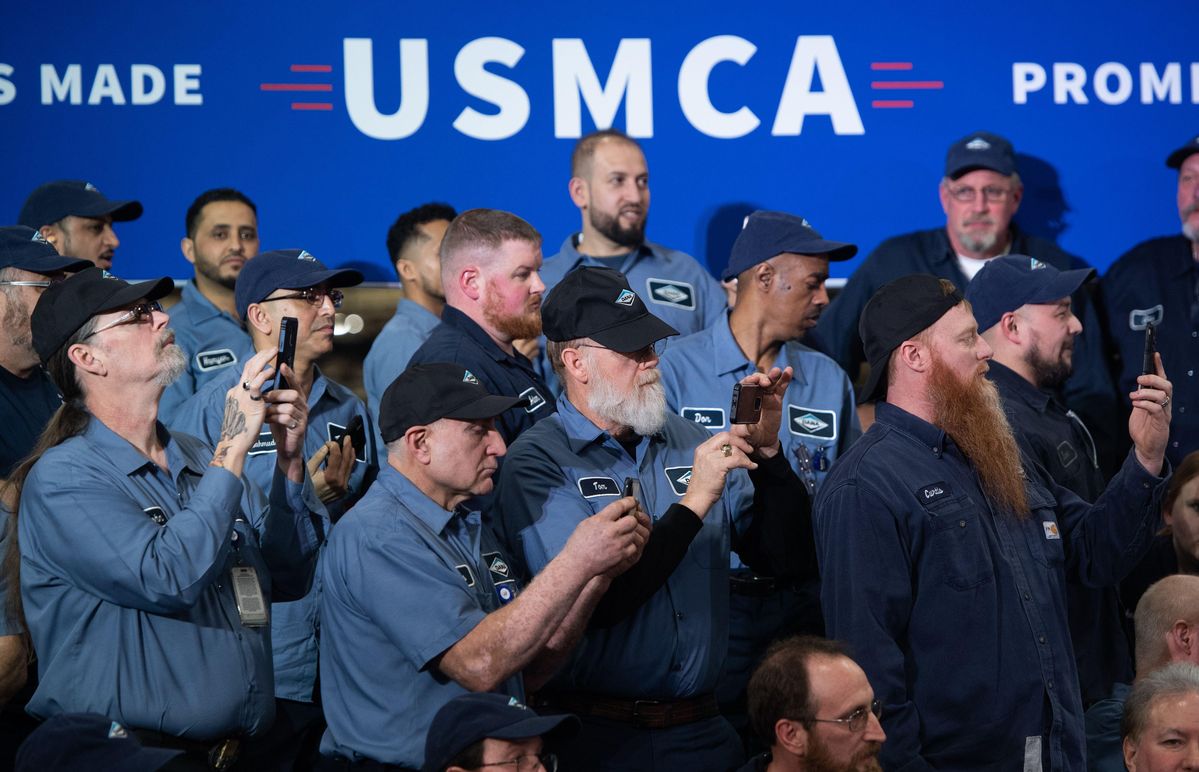
Some of the automotive provisions in the new United States-Mexico-Canada Agreement (USMCA) can help make this easier to understand. In order not to be subject to costly tariffs that make the vehicles too pricey, there are several requirements. These include increasing the North American content from 60%-62.5% to 75%. These requirements stipulate that 40%-45% of North American auto content be made by workers earning at least $16 per hour.
So, to do a tariff analysis on a vehicle, the BOM needs to be heavily augmented. It needs country of origin data, whether the factory the component is produced at pays more or less than $16 per hour, a way of calculating whether enough North American steel and aluminum was used in the finished vehicle, and a way to add up the costs of all the components to insure that at least 70% of the cost of the final product comes from North American parts.
And there needs to be automation. If a vehicle’s North American content is at 68%, 2% below the threshold, the scenario engine should point out the component or components that is causing the costs to come in too high. Then the solution needs to be capable of quickly running scenarios that swap out components from foreign suppliers and replace them with North American suppliers and getting a quick answer on whether the threshold requirement has been met.
So, what would a tariff sourcing analyzer need to do? If a non-domestic supplier is being considered for a component in a product, the process starts by requesting a supplier declaration and bringing that into the GTC solution. Arne Mielken, the Global Trade Management Director at E2open, talked to me about how important it was that this data be accurate. This requires “a robust validation process.”
Next, the solution needs to be able to turn complex trade language into machine readable data. This is accomplished by collecting new attributes (like country of origin) and associating these attributes with different supplier’s components. This information would need to be collected and stored in a way that this information could be easily pulled into the analyzer to run new scenarios.
I asked Ms. McKee from SAP whether their engine was customized, whether a different engine had to be developed for every preferential treaty. “No, it does not require different coding, we don’t do different coding agreement by agreement. There is a rules framework within the determination engine. The rules are based on each agreement, with most agreements leveraging common types of rules.” SAP works with content providers who codify the rules associated with each free trade agreement, allowing the engine to determine whether a product through its bill of material qualifies or not. SAP works with several content providers around the world. For example, in North America Descartes is a leading content partner.
Of the GTC suppliers I talked to few mentioned having these kinds of engines. Bamboo Rose has a solution designed for retailers that design and source apparel from foreign suppliers. E2open, formerly Amber Road, has also provided this kind of solution to one of the largest apparel companies in the world. But they say they can do this for complex bills of material like those that exist in the automotive industry.
The sourcing/tariff analysis does not provide a total solution. Landed cost calculations also need to consider logistics costs. A company might also want to consider soft costs, like cost of quality issues. Cost of quality reflects the idea that purchasing supplies from a provider with lower quality can result in higher costs to assemble and maintain a product. E2open points out that their supply chain collaboration network can provide the logistics cost and transit time data for their customers. SAP points to their HANA analytics environment, which is ideal for doing analysis around more difficult things to analyze like the cost of quality.
In summary, in the current trade environment, tariff engineering of products is strategic for companies with global supply chains.










