






The UK Ministry of Defence has shown a chronic lack of decision discipline, sometimes undermining its role in joint European projects.
Following Boris Johnson’s victory in the December 2019 UK general election, Downing Street lost no time in briefing that the first Whitehall target of its reforming zeal would be the Ministry of Defence (MoD). Specifically, the focus will be on the MoD’s long tradition of procurement disasters – runaway budgets and massive delays on equipment programmes – with the Royal Navy’s new aircraft carriers as exhibit A.
A while back, I had a ringside seat in the MoD from which to observe some of these mistakes – the consequences of which are only now becoming fully apparent (such is the timescale of these projects). My conclusion is that, among many other contributory factors, one major cause of the MoD’s dismal procurement record has been a chronic lack of decision discipline – an inability to resist the temptation to make radical changes to each new equipment programme almost as soon as it is launched. Ministers and top brass seldom stay in their posts for more than two or three years; and each successive generation feels free to reverse or amend their predecessors’ plans, often on a whim or by stealth. Such chopping and changing plays straight into the hands of contractors who are only too happy to seize the chance to take longer and charge more.
Let’s start with the carriers. These vulnerable white elephants, originally scheduled for 2012, are still not fully operational. They have cost over £6 billion – exceeding the amount budgeted for in 2007 by more than 50 percent – and further eye-watering bills are in prospect to equip, protect, and staff them. Their only strategic purpose appears to be to sail through the South China Sea and annoy the Chinese – just when Brexited Britain will be anxious to boost bilateral trade.
Much of the cost overrun has been put down to farcical reversals over whether to incorporate Top Gun-style catapults into the vessels to launch aircraft (they will not have them, to the Navy’s chagrin). But the big mistakes were made long before 2007. The new ships were first announced in the 1998 Strategic Defence Review: “we plan to replace our three small carriers with two larger carriers from around 2012. Work will now begin to refine our requirement but present thinking suggests that these might be of the order of 30,000-40,000 tonnes and capable of deploying up to 50 aircraft, including helicopters.” The first cost estimate was £2 billion for the pair.
The Royal Navy suffers from a deep institutional longing to be taken seriously by the US Navy.
The key question arising here is: how on earth did ships conceived as being in the 30,000-40,000 tonne class come to have a displacement of, as the two monsters now do, nearly 70,000 tonnes apiece? The answer is simple – the Royal Navy wanted them to be as big as possible. That service suffers from a deep institutional longing to be taken seriously by the US Navy – and, while 70,000 tonnes still falls short of the gold standard set by US nuclear-powered behemoths, it at least dwarfs the French Charles de Gaulle (whose displacement is less than 40,000 tonnes). So, as the MoD set about “refining its requirement”, the Navy urged that it was only prudent to err on the side of larger vessels, since “steel is cheap and air is free”. This is how the carriers earned the nickname in the MoD’s corridors of “Topsy”, after the little girl (regrettably, in Uncle Tom’s Cabin) who “just grow’d”. The ministry came to the somewhat awkward realisation that no UK shipyard was big enough to build a carrier of this size, but it circumvented the difficulty (though not, of course, the cost hike) by constructing a brand new facility at Rosyth – which just so happened to be in the political backyard of Gordon Brown, then chancellor of the exchequer and soon to be prime minister.
Exhibit B is the Boxer armoured personnel carrier (APC). By the end of the last century, the workhorse battlefield APC was forty years old, and in dire need of replacement. A contract was signed for a joint project with the Germans and Dutch in 1999; each country was to take an initial 200 of the heavily armoured vehicles. At this point, a new generation of British Army top brass fell in love with the US concept of “network-centric warfare”: superior information technology would enable fully informed and highly mobile forces to outmanoeuvre the enemy so comprehensively that physical protection of vehicles would become less important. Boring old armoured vehicles were reconceived as the “Future Rapid Effects System”, which – again following the latest US doctrine – must be rapidly deployable to distant trouble spots. As it was too heavy for Hercules transport planes, the Boxer must, therefore, be binned. The MoD had to pay £40 million to buy out of the contract.
The sequel, of course, was a hard lesson in Iraq and Afghanistan on the vulnerability of all but the most heavily armoured vehicles. The Future Rapid Effects System is no more; and the UK has worked its way back to where it was 20 years ago, ordering 500 Boxers in 2019 from its erstwhile partners. To salvage a degree of workshare from the £3 billion investment now required, the UK armoured vehicle industry has been reduced to being a junior partner in a joint venture with German manufacturers. The derailment of the original Boxer procurement has thus been an industrial and financial debacle – and has delayed the provision of proper protection to British soldiers by more than a decade.
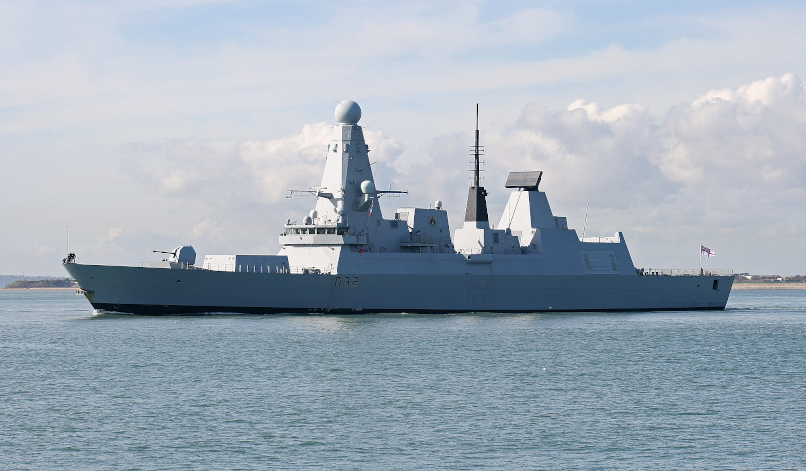
One could go on. The Type 45 destroyer was meant to have a very basic hull (a “barge”, as the commendably cost-conscious first sea lord of the day liked to call it) carrying a proven, highly effective missile system to provide air defence to the fleet. But someone thought it would be fun to equip the barge with a never-before-attempted integrated electric propulsion system – resulting in a cost that has rocketed to £1 billion a unit, a production run halved from the intended class of twelve to six, and a requirement for extensive open-heart surgery on all six vessels to fix their power-loss problems.
It is not just defence ministries, still less just the UK MoD, that preside over procurement catastrophes. Developing and fielding complex systems is a challenging business – just ask Boeing, whose successful Dreamliner entered service three years late (even before the latest 737 Max disaster). And defence industries can usually be found aiding and abetting that fatal over-reach by the new top brass, who decide their predecessors’ plans were insufficiently ambitious. But until decision discipline is restored – until the government of the day learns to tell the military of the day “that’s what was ordered, that’s what you’re getting, live with it or do without” – do not expect the MoD’s procurement record to improve.
The European Council on Foreign Relations does not take collective positions. This commentary, like all publications of the European Council on Foreign Relations, represents only the views of its authors.
Read more on: European Power, New European Security Initiative, International Justice










