



• Latest
  • Trending
  • All
Coronavirus: Implications for supply chains and the people who power them | Supply Chain Blog

Coronavirus: Implications for supply chains and the people who power them | Supply Chain Blog

February 4, 2020
Last Mile Delivery Market Worth Observing Growth | UPS, FedEx, SF Express

Last Mile Delivery Market Worth Observing Growth | UPS, FedEx, SF Express

April 23, 2024
Top 5 Spend Analysis Software ranked in 2024

Top 5 Spend Analysis Software ranked in 2024

March 1, 2024
How Tesla And BMW Are Leading A Supply Chain Renaissance With Blockchain

How Tesla And BMW Are Leading A Supply Chain Renaissance With Blockchain

January 19, 2024
LATAM Cargo strengthens European cargo links

LATAM Cargo strengthens European cargo links

April 14, 2020
Ford making reusable hospital gowns from airbag materials as efforts against coronavirus expand

Ford making reusable hospital gowns from airbag materials as efforts against coronavirus expand

April 14, 2020
Don’t Sweat NBC’s Decision to Cut Back on Television Ad Inventory

Don’t Sweat NBC’s Decision to Cut Back on Television Ad Inventory

April 14, 2020
Software firms sharpen focus on AI, big data as IT spending drops

Software firms sharpen focus on AI, big data as IT spending drops

April 14, 2020
Navigating turbulent times in your supply chain (TL:DR version)

Navigating turbulent times in your supply chain (TL:DR version)

April 14, 2020
Last Mile Delivery by Drones Market is Booming Worldwide

Last Mile Delivery by Drones Market is Booming Worldwide

April 14, 2020
AIR CARGO MARKET SIZE, SHARE, DEMAND, TREND, LATEST INNOVATIONS & APPLICATION ANALYSIS AND INDUSTRY GROWTH FORECAST 2027 – Science In Me

AIR CARGO MARKET SIZE, SHARE, DEMAND, TREND, LATEST INNOVATIONS & APPLICATION ANALYSIS AND INDUSTRY GROWTH FORECAST 2027 – Science In Me

April 14, 2020
Wheat procurement in Patiala: 6,500 coupons issued to farmers – cities

Wheat procurement in Patiala: 6,500 coupons issued to farmers – cities

April 14, 2020
Pandemic, Plastics And The Continuing Quest For Sustainability

Pandemic, Plastics And The Continuing Quest For Sustainability

April 14, 2020
  • Supply Chain
  • Logistics
  • Warehousing
  • Procurement
  • Shipping
  • More
    • Strategic Sourcing
    • Spend Analysis
    • Inventory
    • Contact Us
No Result
View All Result
United States International Supply Chain Commission
Home Supply Chain

Coronavirus: Implications for supply chains and the people who power them | Supply Chain Blog

by usiscc
February 4, 2020
in Supply Chain
0
Coronavirus: Implications for supply chains and the people who power them | Supply Chain Blog
492
SHARES
1.4k
VIEWS
Share on FacebookShare on Twitter

Today’s global supply chain leaders know to expect the unexpected. They prepare for natural disasters, sudden regulatory changes, social and economic shifts, and even cyber attacks. But some events are more disruptive than others. The recent outbreak of coronavirus has shaken communities and put companies that rely on manufacturing from facilities in Wuhan, China at risk.

Global companies are considering alternative suppliers as facilities in the region face potential production delays. The number of coronavirus cases continues to rise, and the region has implemented a quarantine, limiting transportation and the flow of goods. The impact isn’t completely clear nor is the timeline, making planning even more difficult.

The interference in the lives and health of so many people has magnified companies’ desire to act quickly to control its impacts. That, combined with the continuing unpredictability of the outbreak, has added new urgency to the need to know sooner and act faster.

A bad prognosis for sequential planning

In the best case scenario, your planners would have had three weeks – from the identification of the coronavirus until the day of the Wuhan lockdown – to execute a supply chain contingency plan or find alternatives.

That’s not enough time for the slow, sequential planning processes that many organizations use today. These processes were designed for an era in which teams worked in silos, data gathering happened in disconnected spreadsheets, and manufacturing happened in the same city – not in another hemisphere.

Sequential planning may take days or even weeks just to determine the financial impact of a lockdown, not to mention possible manufacturing alternatives. In a fast-paced emergency situation, that delay isn’t acceptable. In instances like Wuhan’s coronavirus lockdown, dependable supply chain planning processes are especially important because the very planners devising alternatives for a facility are often those directly affected by the crisis.

In contrast, modern planning processes are prepared for today’s global, always-on marketplace and constant change. Planners need to get an understanding of the alternatives and impacts in minutes, not weeks.  They can handle everyday challenges, like managing faraway contract manufacturers, and once-in-a-decade disruptions, like natural disasters and viral outbreaks.

A cure for inefficient planning

Instead of imagining what your planners would be able to accomplish with an outdated planning process, imagine this: your company is notified of a lockdown in Wuhan. As soon as the factory closes, your entire global network knows about its effects the same day. Everyone can see its impact at a corporate, business and individual level.
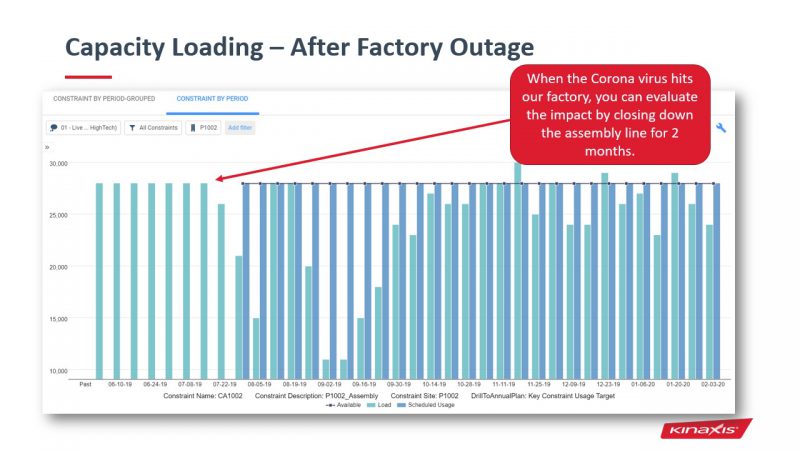
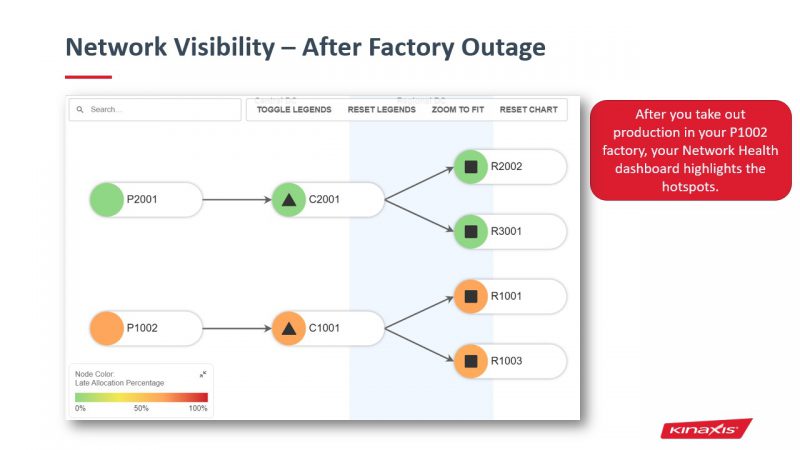
They can also see the closure’s impacts on the rest of the network. Processes in your planning software instantly alert planners to parts of the supply chain that will receive late shipments and what percentage of those shipments will be delayed. Planners don’t discover this information after hours or days of hands-on analysis. They see it within seconds, in an intuitive, graphical interface populated by algorithms embedded in your planning software.
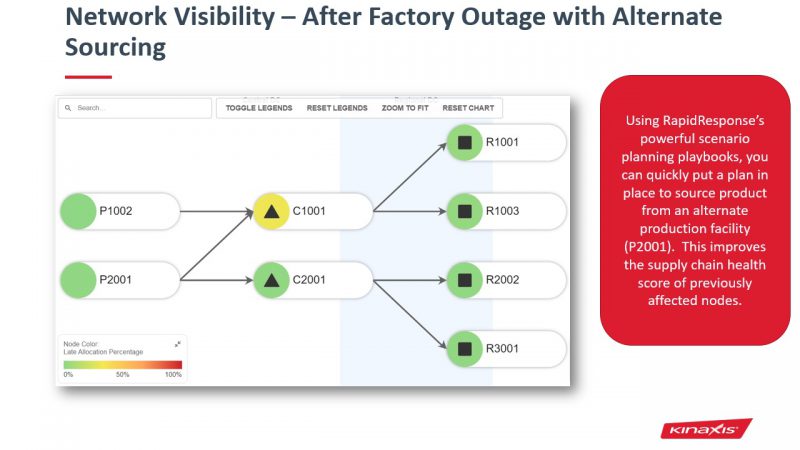
As soon as they have this information, these planners investigate alternative sourcing using scenario planning playbooks. They find a facility that can fulfill orders and restore health to the entire supply chain.
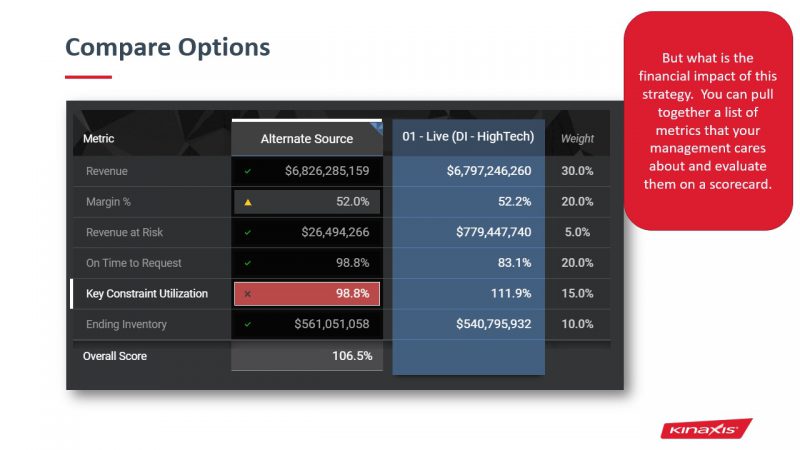
Planners even use key business metrics to evaluate the financial impacts of changing production facilities. Before the end of the day, planners have created a contingency plan that will fulfill orders on time and within budget.
You’re not imagining some far-off future. This process is already in practice at leading companies around the world. It’s called concurrent planning, and it has become essential to many operations because it is fast, connected and reliable. It’s helped Procter & Gamble supply families with much-needed goods in the aftermath of Hurricane Irma. It saved Lippert Components millions in the face of unexpected tariffs. And, it kept Keysight Technologies’ from canceling customer orders, even after a wildfire destroyed its headquarters.

Concurrent planning is the process of developing and managing synchronized plans across the entire supply chain. Each node in your supply chain is connected to the next, and each team shares data with the others. If someone makes a change at one end of the system, it’s instantly reflected up and down the rest of the network. Everyone stays strategically aligned, informed, and confident, knowing that their decisions will lead to success.

We’d like to believe the benefits of concurrency go beyond supply chain planning. These processes bring clarity to complexity, unite communities – even when they’re miles apart – and connect everyone to a shared mission. In the face of challenges like the coronavirus outbreak, these capabilities help people resurrect their power, optimism and stability.


Share197Tweet123
usiscc

usiscc

  • Trending
  • Comments
  • Latest
Escape From Tarkov – How to Rotate Items

Escape From Tarkov – How to Rotate Items

February 5, 2020
Supply chain examination: Planning for vulnerabilities you can’t control

Supply chain examination: Planning for vulnerabilities you can’t control

December 7, 2019
Procurement Project Manager job with Camden London Borough Council

Procurement Project Manager job with Camden London Borough Council

February 17, 2020
Art Battle Wichita Falls III at The Warehouse, 1401 Lamar.

Art Battle Wichita Falls III at The Warehouse, 1401 Lamar.

0
Global Industry Analysis, Size, Share, Growth, Trends, and Forecasts 2016–2024 – ZMR News Reports

Global Industry Analysis, Size, Share, Growth, Trends, and Forecasts 2016–2024 – ZMR News Reports

0
PHOTOS: Ottawa firefighters respond to warehouse fire

PHOTOS: Ottawa firefighters respond to warehouse fire

0
Last Mile Delivery Market Worth Observing Growth | UPS, FedEx, SF Express

Last Mile Delivery Market Worth Observing Growth | UPS, FedEx, SF Express

April 23, 2024
Top 5 Spend Analysis Software ranked in 2024

Top 5 Spend Analysis Software ranked in 2024

March 1, 2024
How Tesla And BMW Are Leading A Supply Chain Renaissance With Blockchain

How Tesla And BMW Are Leading A Supply Chain Renaissance With Blockchain

January 19, 2024
  • Privacy Policy
  • Terms of Use
  • Disclaimer
  • DMCA
  • Contact Us

Copyright © 2024 United States International Supply Chain Commission (usiscc.org)

This website uses cookies to improve your experience. We'll assume you're ok with this, but you can opt-out if you wish. Cookie settingsACCEPT
Privacy & Cookies Policy

Privacy Overview

This website uses cookies to improve your experience while you navigate through the website. Out of these cookies, the cookies that are categorized as necessary are stored on your browser as they are essential for the working of basic functionalities of the website. We also use third-party cookies that help us analyze and understand how you use this website. These cookies will be stored in your browser only with your consent. You also have the option to opt-out of these cookies. But opting out of some of these cookies may have an effect on your browsing experience.
Necessary
Always Enabled

Necessary cookies are absolutely essential for the website to function properly. This category only includes cookies that ensures basic functionalities and security features of the website. These cookies do not store any personal information.

Non-necessary

Any cookies that may not be particularly necessary for the website to function and is used specifically to collect user personal data via analytics, ads, other embedded contents are termed as non-necessary cookies. It is mandatory to procure user consent prior to running these cookies on your website.

SAVE & ACCEPT
No Result
View All Result
  • Supply Chain
  • Logistics
  • Warehousing
  • Procurement
  • Shipping
  • More
    • Strategic Sourcing
    • Spend Analysis
    • Inventory
    • Contact Us

Copyright © 2024 United States International Supply Chain Commission (usiscc.org)






