







To anyone who doubts that the United States is entrenched in the global interdependence of trade, it is with great regret and apprehension that I introduce you to the coronavirus.
The human cost, to date, of COVID-19 has been sizable. In my opinion, that should be the primary concern. As much as we may all hope that, as some have suggested, the virus’ impact might quickly dissipate, the reality is that it will very likely accelerate, bringing more deaths. Had there been the same level of prompt response as we saw to the Ebola outbreak, here in the United States and globally, the pending domestic outbreak may have been averted. But it is already too late to prevent.
The human impact acknowledged, let’s look at the immediate, intermediate, and long-term effects on supply chain management (SCM). As I have often pointed out in my writings, the quote of a 19th-century Bohemian poet is truer than ever: “Nothing is as it was and nothing will be as it is again.”
Safety First
So it is with the outbreak’s immediate impact on the supply chain. But of greater importance will be the dramatic adjustments required of businesses during the recovery period. Some of those I address here, but even more, less-than-subtle changes will be necessary after the recovery. Those adjustments among companies should include consideration for the potential of similar outbreaks, potential geopolitical intervention, and the inevitability of continued climate influences, including disruption of shipping lanes and port access.
The most immediate supply chain considerations in North America relate to safety stock. The retail trade, which functions to retain the lowest possible inventory outside of the actual brick-and-mortar outlet, is beginning to experience stock-outs. The occasional empty shelf is becoming more prevalent. With port activity in major supplier locations having had severely limited activity, now even online retailers, which tend to retain more expansive inventory, are experiencing difficulty maintaining supply.
Manufacturers, who depend on the global supply of parts and raw materials, generally retain some more reasonable level of safety stock inventory. Those inventories are starting to show strain, with many manufacturers facing the probable need to shut-down production lines. That has already begun in the auto industry.
The immediate economic impact is pretty evident to nearly everyone, as evidenced by the reaction in the global stock markets. It is hoped that health officials and governments will contain the outbreak in a shorter timeframe than is feared. Whenever that containment occurs, the recovery period will expose imbalances, with related costs increasing, at least temporarily, far beyond what they were before the outbreak.
Across the Waters
One of the first considerations must be ocean transportation. There is a severe imbalance of shipping containers due to domestic production halts in primary supply points. Right now, that imbalance exists primarily in the Pacific Rim; however, considering the delayed yet rapid advances of the virus in Europe and South America, it can be reasonably predicted that it will become a more dominant issue. That could limit export opportunities and increase shipping charges.
The steamship industry has been under extreme economic pressure for several years, with consolidations a primary means of survival. The need to cancel many sailings has resulted in those firms now being in even more critical condition. Once sailings are resumed, the bidding on limited container space will prove outrageous — contracted rates be damned. Then the issue of container imbalance will, over a few months, become precisely the opposite of what it is now: port congestion and domestic transportation costs will spike.
Domestic rail capacity has not expanded significantly in the past decade. And the-over-the-road trucking industry has witnessed a severe decline in rates, with many carriers shuttering their doors just in the first two months of 2020. Supply and demand imbalances will cause distribution costs to rise substantially.
Commodity Costs
The unavailability of raw materials and parts is already causing a rise in commodity prices. The basic tenants of supply-and-demand would be expected over time to return pricing to some reasonable balance. But this time it is going to be different. Even a short-term elimination of revenue can injure even the largest and most financially stable organizations. Many smaller entities, even those in the billion-dollar range, will not be capable of weathering what looks to be an extended reduction in revenue.
Fewer suppliers and high demand translate into higher prices. Fewer carriers and higher demand translate into higher rates. Depending on how long and how severe the coronavirus outbreak is, the intermediate recovery could extend well into the middle of this decade. During that period, businesses will need to dramatically adjust both their mix of suppliers and their commitment to inventory investment.
Despite the assertions of many executives that SCM is significant to their firms’ business strategies, executive managements have primarily viewed SCM as an area devoted to cost containment. In the wake of the coronavirus, CFOs may begin o consider inventory more like a capital investment than an operating cost. Over the past several decades, CFOs have thought of stocks as “stuff” that diverted capital from plant and equipment, training, marketing, and staffing. Now, at least temporarily, organizations will begin to perceive inventory as a vital piece of infrastructure.
Chuck Franzetta is CEO of Franzetta & Associates. Since 1981 he has provided SCM consultation, marketing assistance, training, and SCM talent recruitment in diverse industries. He is also chair of the editorial board of TheProfitChain.com.
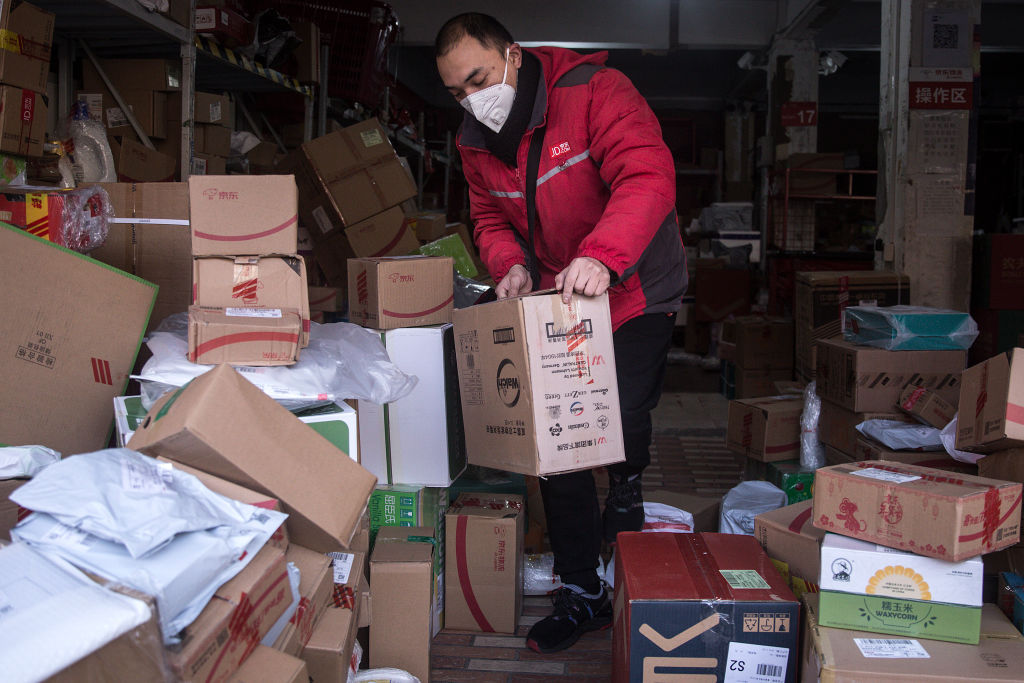
(Photo by Stringer/Getty Images)










