

• Latest
  • Trending
  • All
COVID-19 And Truck Driver Shortage May Threaten Food Supply Chain

COVID-19 And Truck Driver Shortage May Threaten Food Supply Chain

March 18, 2020
Last Mile Delivery Market Worth Observing Growth | UPS, FedEx, SF Express

Last Mile Delivery Market Worth Observing Growth | UPS, FedEx, SF Express

April 23, 2024
Top 5 Spend Analysis Software ranked in 2024

Top 5 Spend Analysis Software ranked in 2024

March 1, 2024
How Tesla And BMW Are Leading A Supply Chain Renaissance With Blockchain

How Tesla And BMW Are Leading A Supply Chain Renaissance With Blockchain

January 19, 2024
LATAM Cargo strengthens European cargo links

LATAM Cargo strengthens European cargo links

April 14, 2020
Ford making reusable hospital gowns from airbag materials as efforts against coronavirus expand

Ford making reusable hospital gowns from airbag materials as efforts against coronavirus expand

April 14, 2020
Don’t Sweat NBC’s Decision to Cut Back on Television Ad Inventory

Don’t Sweat NBC’s Decision to Cut Back on Television Ad Inventory

April 14, 2020
Software firms sharpen focus on AI, big data as IT spending drops

Software firms sharpen focus on AI, big data as IT spending drops

April 14, 2020
Navigating turbulent times in your supply chain (TL:DR version)

Navigating turbulent times in your supply chain (TL:DR version)

April 14, 2020
Last Mile Delivery by Drones Market is Booming Worldwide

Last Mile Delivery by Drones Market is Booming Worldwide

April 14, 2020
AIR CARGO MARKET SIZE, SHARE, DEMAND, TREND, LATEST INNOVATIONS & APPLICATION ANALYSIS AND INDUSTRY GROWTH FORECAST 2027 – Science In Me

AIR CARGO MARKET SIZE, SHARE, DEMAND, TREND, LATEST INNOVATIONS & APPLICATION ANALYSIS AND INDUSTRY GROWTH FORECAST 2027 – Science In Me

April 14, 2020
Wheat procurement in Patiala: 6,500 coupons issued to farmers – cities

Wheat procurement in Patiala: 6,500 coupons issued to farmers – cities

April 14, 2020
Pandemic, Plastics And The Continuing Quest For Sustainability

Pandemic, Plastics And The Continuing Quest For Sustainability

April 14, 2020
  • Supply Chain
  • Logistics
  • Warehousing
  • Procurement
  • Shipping
  • More
    • Strategic Sourcing
    • Spend Analysis
    • Inventory
    • Contact Us
No Result
View All Result
United States International Supply Chain Commission
Home Supply Chain

COVID-19 And Truck Driver Shortage May Threaten Food Supply Chain

by usiscc
March 18, 2020
in Supply Chain
0
COVID-19 And Truck Driver Shortage May Threaten Food Supply Chain
495
SHARES
1.4k
VIEWS
Share on FacebookShare on Twitter

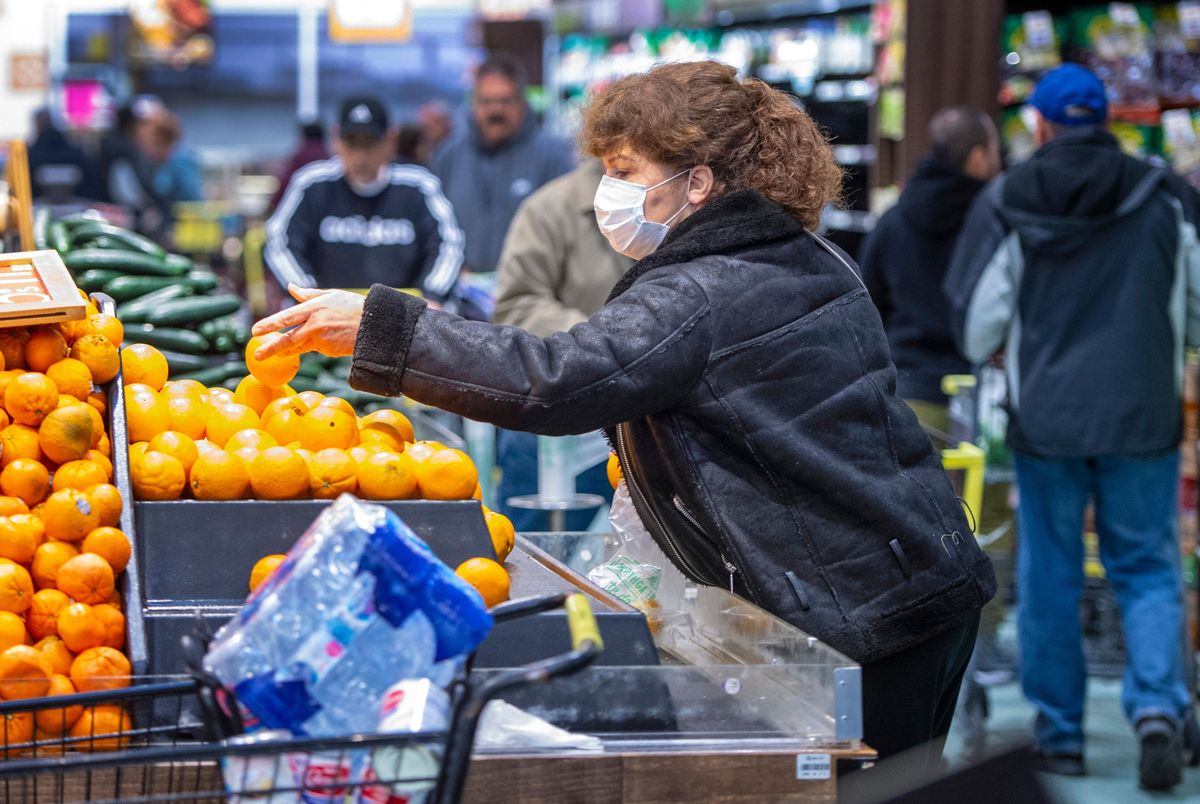
Transportation labor shortages may impact food deliver amidst coronavirus panic

LA HABRA, CA – MARCH 17: A woman wears a mask as she shops for oranges at the Northgate Market in La … [+] Habra early on Tuesday morning, March 17, 2020, after the store opened at 7 a.m. for seniors over 65 before letting the rest of the public in to shop amid coronavirus buying. (Photo by Mark Rightmire/MediaNews Group/Orange County Register via Getty Images)


MediaNews Group via Getty Images

Grocery store shoppers continue to pack their carts in response to the coronavirus pandemic, forcing chains like Harris Teeter and Walmart to set earlier closing times to restock their shelves. Food industry executives assure the public there is no food shortage, but that doesn’t mean the coronavirus poses no threat to the food system. As the pandemic persists, labor shortages in transportation and other areas of the food industry could soon prove to be a problem.

First, the good news. Andrew Novakovic, agricultural economist at Cornell University, agrees with the many food industry experts and government officials who say there is plenty of food. “This isn’t a supply chain disruption,” Novakovic says of the current pandemic. Though the U.S. food system is frequently criticized for being too big and too monolithic, its size and expediency, including crop surpluses, mean the U.S. has plenty of food available for the long haul.

At the same time, Novakovic points to a number of weak spots in the food transportation system that could be aggravated by the increased demand for food. Transportation is the one thing that connects all stages of the the supply chain, he says, from farm to food processing to warehouse to grocery store. That’s why any labor shortage in the food system, but especially a shortage of truck drivers, could pose a serious threat to the food supply chain if the high demand for groceries continues unabated. 

The rapid global spread of COVID-19 means few answers and lots of uncertainty across all industries, unfortunately, and that includes food production. While many are hoping the spread of the virus will slow by the end of the summer, it’s impossible to know for sure. “What kind of shape we’re going to be in the fall remains to be seen,” Novakovic cautions.

The exact nature of the labor shortage in the trucking industry is also tricky to assess. There isn’t widespread agreement about whether there even is a truck driver shortage, for example. When the shortage was first widely reported in 2018, some experts, including officials at the Department of Labor, suggested that there wasn’t actually a truck driver shortage, and that the claims were an industry push to remove regulations related to driver safety and long haul trucking, like mandated breaks during driving assignments. 
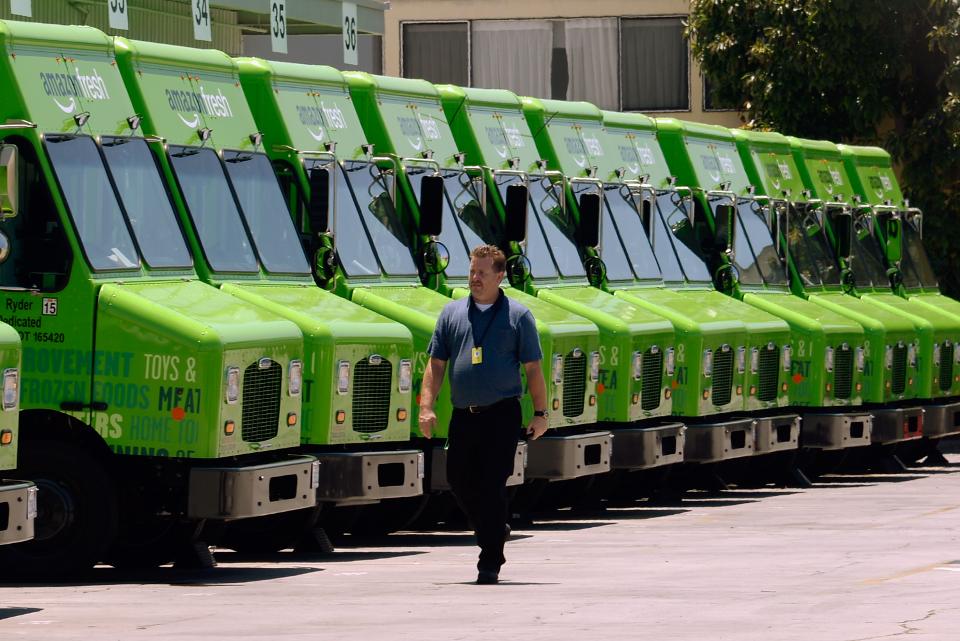
Increased grocery deliveries will require sufficient truck delivery driver staffing

INGLEWOOD, CA – JUNE 27: A man walk past an Amazon Fresh trucks parked at a warehouse on June 27, … [+] 2013 in Inglewood, California. Amazon began groceries and fresh produce delivery on a trial basis to select Los Angeles neighberhoods free of charge for Amazon Prime members. AmazonFresh lets you order groceries and have them delivered on the same day. (Photo by Kevork Djansezian/Getty Images)


2013 Getty Images

American Trucking Association spokesman Sean McNally says that he’s not heard anything about the COVID-19 crisis exacerbating a truck driving shortage. “Trucks are still moving and delivering to grocery stores,” he says. 

Novakovic is aware of the debate about whether there truly is a truck driver shortage, but he cautions that the key is to distinguish between long-haul and short-haul truck drivers. While many companies have no trouble hiring truck drivers for shorter distance gigs at a few hours at a time, employers have long been struggling to find drivers who can be away for days or even weeks. “Trucking companies are finding it much harder to recruit [those] long haul drivers,” he explains.

“Somebody who wants to manage concerns is going to say, hey, don’t worry about it. We’ve got it under control. I get that,” says Novakovic, but there are also plenty of indicators that there is a real shortage, he insists. Novakovic points to the high wages offered to entice long haul drivers as well as the increased push for technologies as evidence of the labor shortage, a shortage that could intensify if increased demand for groceries continue.

Plus.ai, a California-based company, has developed a self-driving system for trucks that it recently tested with a butter delivery from California to Quakertown, Pennsylvania. Meanwhile, the U.S. Transportation Department’s Federal Motor Carrier Safety Administration announced a nationwide exemption to rules limiting daily driving hours for truck drivers delivering emergency supplies, hand sanitizer and food. 

Food delivery labor shortages could threaten food supply during coronavirus

A food delivery man crosses the street in Times Square in Manhattan on March 17, 2020 in New York … [+] City. – Food delivery workers have become essential in New York after the city closed restaurants and bars to the public on March 16th, 2020. The coronavirus outbreak has transformed the US virtually overnight from a place of boundless consumerism to one suddenly constrained by nesting and social distancing. (Photo by Johannes EISELE / AFP) (Photo by JOHANNES EISELE/AFP via Getty Images)


AFP via Getty Images

COVID-19’s impact to other laborers in the food system remains far less clear. Most farms are located in sparsely populated rural areas, so experts hope the virus has a low chance of spreading to the majority of agricultural operations. “Farming is like social distancing for a lifetime,” explains Novakovic, but he also cautions that the number of workers varies greatly depending on the time of the year. “We’re now in the beginning of planting season,” he explains, which means many farms have employees working around the clock.

Dairy, pork, beef and chicken producers typically have far more employees than most crop operations, and these workers often handle food in relatively close quarters. “In some operations, particularly animal operations, you’ve got daily activities…where you have workers in pretty close proximity, two or three times a day.” These working conditions would certainly be strained if significant numbers of the workforce became infected.

Should the coronavirus threaten dairy farms and other livestock operations, health precautions will need to be taken very seriously, says Novakovic. Luckily, he says, these food producers are already subject to a high number of food safety regulations, so new requirements shouldn’t pose too steep a learning curve.

Food processing facilities can also require significant numbers of employees, though much depends on the food being processed, says Novakovic. Cheese processing operations, for example, can sometimes run with practically no human intervention at all while the cheese is culturing, for example, whereas chicken processing plants are constantly packed with people.

The employees of these plants may be young and asymptomatic but if they become infected, they can still pass on the virus to the elderly and immunocompromised, so these types of facilities will need to be especially careful.

The novel coronavirus pandemic has had a significant impact on grocery shopping, but it’s also turned conventional wisdom about grocery shopping on its head. ‘Eat more fresh fruits and vegetables’ is suddenly not very practical, and a number of experts are urging people to stockpile canned foods and starchy foods like potatoes, foods that last longer in storage.

These foods may not be the most healthful but they do last. And with longer-lasting food in their pantries, shoppers may finally ease up on those grocery shopping binges, a shift that would at least help alleviate the current extra pressure on the food supply chain, no matter what the status of the truck driver shortage.


 

Share198Tweet124
usiscc

usiscc

  • Trending
  • Comments
  • Latest
Escape From Tarkov – How to Rotate Items

Escape From Tarkov – How to Rotate Items

February 5, 2020
Supply chain examination: Planning for vulnerabilities you can’t control

Supply chain examination: Planning for vulnerabilities you can’t control

December 7, 2019
Procurement Project Manager job with Camden London Borough Council

Procurement Project Manager job with Camden London Borough Council

February 17, 2020
Art Battle Wichita Falls III at The Warehouse, 1401 Lamar.

Art Battle Wichita Falls III at The Warehouse, 1401 Lamar.

0
Global Industry Analysis, Size, Share, Growth, Trends, and Forecasts 2016–2024 – ZMR News Reports

Global Industry Analysis, Size, Share, Growth, Trends, and Forecasts 2016–2024 – ZMR News Reports

0
PHOTOS: Ottawa firefighters respond to warehouse fire

PHOTOS: Ottawa firefighters respond to warehouse fire

0
Last Mile Delivery Market Worth Observing Growth | UPS, FedEx, SF Express

Last Mile Delivery Market Worth Observing Growth | UPS, FedEx, SF Express

April 23, 2024
Top 5 Spend Analysis Software ranked in 2024

Top 5 Spend Analysis Software ranked in 2024

March 1, 2024
How Tesla And BMW Are Leading A Supply Chain Renaissance With Blockchain

How Tesla And BMW Are Leading A Supply Chain Renaissance With Blockchain

January 19, 2024
  • Privacy Policy
  • Terms of Use
  • Disclaimer
  • DMCA
  • Contact Us

Copyright © 2024 United States International Supply Chain Commission (usiscc.org)

This website uses cookies to improve your experience. We'll assume you're ok with this, but you can opt-out if you wish. Cookie settingsACCEPT
Privacy & Cookies Policy

Privacy Overview

This website uses cookies to improve your experience while you navigate through the website. Out of these cookies, the cookies that are categorized as necessary are stored on your browser as they are essential for the working of basic functionalities of the website. We also use third-party cookies that help us analyze and understand how you use this website. These cookies will be stored in your browser only with your consent. You also have the option to opt-out of these cookies. But opting out of some of these cookies may have an effect on your browsing experience.
Necessary
Always Enabled

Necessary cookies are absolutely essential for the website to function properly. This category only includes cookies that ensures basic functionalities and security features of the website. These cookies do not store any personal information.

Non-necessary

Any cookies that may not be particularly necessary for the website to function and is used specifically to collect user personal data via analytics, ads, other embedded contents are termed as non-necessary cookies. It is mandatory to procure user consent prior to running these cookies on your website.

SAVE & ACCEPT
No Result
View All Result
  • Supply Chain
  • Logistics
  • Warehousing
  • Procurement
  • Shipping
  • More
    • Strategic Sourcing
    • Spend Analysis
    • Inventory
    • Contact Us

Copyright © 2024 United States International Supply Chain Commission (usiscc.org)






