


• Latest
  • Trending
  • All
Covid 19 coronavirus: The Warehouse, liquor stores to close during lockdown

Covid 19 coronavirus: The Warehouse, liquor stores to close during lockdown

March 25, 2020
Last Mile Delivery Market Worth Observing Growth | UPS, FedEx, SF Express

Last Mile Delivery Market Worth Observing Growth | UPS, FedEx, SF Express

April 23, 2024
Top 5 Spend Analysis Software ranked in 2024

Top 5 Spend Analysis Software ranked in 2024

March 1, 2024
How Tesla And BMW Are Leading A Supply Chain Renaissance With Blockchain

How Tesla And BMW Are Leading A Supply Chain Renaissance With Blockchain

January 19, 2024
LATAM Cargo strengthens European cargo links

LATAM Cargo strengthens European cargo links

April 14, 2020
Ford making reusable hospital gowns from airbag materials as efforts against coronavirus expand

Ford making reusable hospital gowns from airbag materials as efforts against coronavirus expand

April 14, 2020
Don’t Sweat NBC’s Decision to Cut Back on Television Ad Inventory

Don’t Sweat NBC’s Decision to Cut Back on Television Ad Inventory

April 14, 2020
Software firms sharpen focus on AI, big data as IT spending drops

Software firms sharpen focus on AI, big data as IT spending drops

April 14, 2020
Navigating turbulent times in your supply chain (TL:DR version)

Navigating turbulent times in your supply chain (TL:DR version)

April 14, 2020
Last Mile Delivery by Drones Market is Booming Worldwide

Last Mile Delivery by Drones Market is Booming Worldwide

April 14, 2020
AIR CARGO MARKET SIZE, SHARE, DEMAND, TREND, LATEST INNOVATIONS & APPLICATION ANALYSIS AND INDUSTRY GROWTH FORECAST 2027 – Science In Me

AIR CARGO MARKET SIZE, SHARE, DEMAND, TREND, LATEST INNOVATIONS & APPLICATION ANALYSIS AND INDUSTRY GROWTH FORECAST 2027 – Science In Me

April 14, 2020
Wheat procurement in Patiala: 6,500 coupons issued to farmers – cities

Wheat procurement in Patiala: 6,500 coupons issued to farmers – cities

April 14, 2020
Pandemic, Plastics And The Continuing Quest For Sustainability

Pandemic, Plastics And The Continuing Quest For Sustainability

April 14, 2020
  • Supply Chain
  • Logistics
  • Warehousing
  • Procurement
  • Shipping
  • More
    • Strategic Sourcing
    • Spend Analysis
    • Inventory
    • Contact Us
No Result
View All Result
United States International Supply Chain Commission
Home Warehousing

Covid 19 coronavirus: The Warehouse, liquor stores to close during lockdown

by usiscc
March 25, 2020
in Warehousing
0
Covid 19 coronavirus: The Warehouse, liquor stores to close during lockdown
497
SHARES
1.4k
VIEWS
Share on FacebookShare on Twitter

KEY POINTS
• All non-essential businesses or services – bars, cafes, gyms, cinemas – should already be closed
• The Warehouse will close, as will liquor stores unless within a Licensing Trust Area
• Bunnings, Mitre 10 and Placemakers open for essential building and construction, but not general public
• Dairies can stay open but with strict “one in, one out” policy
• Meals on Wheels and delivery of non-pre-cooked food allowed. No food delivery such as Uber Eats
• Self-service laundry to stay open, with strict physical distancing
• Contact should be limited to a small “bubble”, and bubbles shouldn’t overlap
• Domestic flights, trains and Cook Strait services can be used until midnight Friday to get home

The Warehouse and most liquor stores will close when Covid-19 alert level 4 begins late Wednesday evening, Government ministers have confirmed.

MBIE Deputy Chief Executive Paul Stocks said ministers met on Tuesday night to clarify what essential services will remain open during the nationwide lockdown.

New Zealand will enter alert level 4 at 11.59pm tonight in an effort to “stop the virus in its tracks,” he said.

“That’s why we need as many businesses as possible to close their premises now if our one shot at beating the virus is to be successful.

“Only the businesses absolutely essential to ensure the necessities of life, like supermarkets and pharmacies, can stay open. If in doubt, the business premises should be closed.”

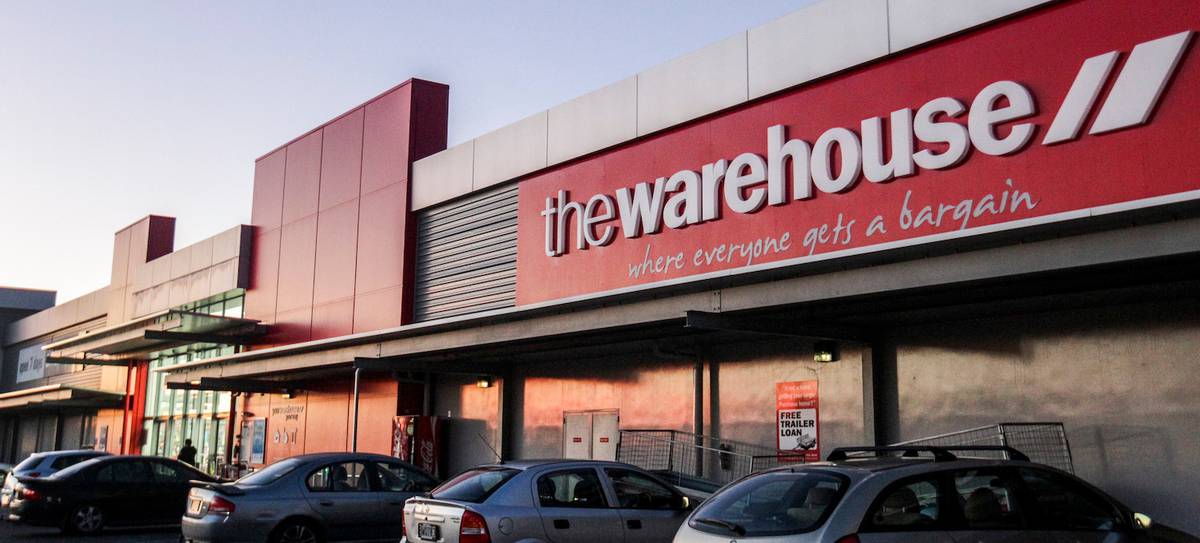
That means all Warehouse stores need to shut up shop for the next four weeks at least.

All Warehouse stores needs to shut up shop for the next four weeks at least. Photo / Paul Taylor

“Leaving them open to the general public creates too high a risk of further spreading the virus,” Stocks said.

Dairies can remain open, as they sell basic food items like milk and bread to those who live nearby, especially for the elderly who may struggle to get to a supermarket, he said.

“However, they will need to operate a strict ‘one-in one-out’ policy and they won’t be allowed to sell food prepared on the premises.

“If any dairy breaks the rules, we will shut it down. If there is evidence of systemic abuse, we will remove them from the essential services list.”

Liquor stores must close, unless they are within a Licensing Trust Area, such as in West Auckland and Invercargill.

These must operate with “one-in one-out” rule.

“Most people are able to purchase alcohol at supermarkets. On that basis liquor stores are being treated as other non-essential retail outlets and must close.”

Food delivery services such as Uber Eats and Delivery Easy are a no-go, as they “pose a risk to human health”. Only meals on wheels is exempt from this.

“We cannot guarantee every kitchen operates strict food preparation controls or that everyone who works in a kitchen is well,” Stocks said.

“Evidence overseas suggests the virus has been spread via poor food hygiene practices, so it’s a real risk we have to eliminate.

Schools and non-essential services across New Zealand will be closed for the next four weeks after the Government put the country in lockdown to try to stop the spread of coronavirus.

“For clarity, every restaurant, café and bar must close all aspects of their operation, including delivery.”

Delivery of food that is not pre-cooked will be allowed, but only under strict health conditions.

“Many New Zealanders now receive their food via a delivery company and are in effect no different to a supermarket delivery option.”

“We are doing further work on online ordering of non-food products for home delivery to see if this type of retail can be conducted safely. We will update advice on this once further decisions are made.”

Bunnings, Placemakers and Mitre 10 can stay open to trade customers for essential purposes only – that means helping out in the construction supply chain, not for the general public.

Businesses that are a critical part of the supply chain for essential services are also able to continue operating, but must do so in a way that is safe.

“For example, if you make chemicals that are needed for our wastewater plants, then we need you to keep operating at the minimum level required.”

Stocks reiterated that Covid-19 alert level 4 is not business as usual and will involve “significant restrictions on what New Zealanders are able to purchase”.

“However, these changes are essential to stop the spread of the virus. We are ready to change the list if necessary. If we discover there are essential services that have not been made available we will react to that as we go.”

More information:

• Dairies to stay open, with “one-in one-out” rule

• Food delivery prohibited, except meals on wheels and delivery of food not pre-cooked

• Liquor stores closed, unless within a Licensing Trust Area and with “one-in one-out” rule

• Self-service laundries can stay open, two-metre physical distancing to be enforced

• Retirement villages included as an essential service

• The Warehouse to close stores to the public

• Bunnings, Placemakers, Mitre 10 and other retailers essential to the supply chain for building and construction can stay open to trade customers for essential purposes only

• The Tiwai Pt smelter exempt from closure

• NZ Steel shut down in a way that allows for production to recommence easily

• Pulp and paper plants to shut down non-essential elements in a way that allows for production to recommence easily while maintaining essential production

• Methanex to remain in production, but at a scale consistent with stability of gas supply.

Focus: Shoppers protect themselves with masks and gloves at Pakn’Save Paraparaumu. Video / Mark Mitchell

• Covid19.govt.nz: The Government’s official Covid-19 advisory website

MORE TO COME.

Share199Tweet124
usiscc

usiscc

  • Trending
  • Comments
  • Latest
Escape From Tarkov – How to Rotate Items

Escape From Tarkov – How to Rotate Items

February 5, 2020
Supply chain examination: Planning for vulnerabilities you can’t control

Supply chain examination: Planning for vulnerabilities you can’t control

December 7, 2019
Procurement Project Manager job with Camden London Borough Council

Procurement Project Manager job with Camden London Borough Council

February 17, 2020
Art Battle Wichita Falls III at The Warehouse, 1401 Lamar.

Art Battle Wichita Falls III at The Warehouse, 1401 Lamar.

0
Global Industry Analysis, Size, Share, Growth, Trends, and Forecasts 2016–2024 – ZMR News Reports

Global Industry Analysis, Size, Share, Growth, Trends, and Forecasts 2016–2024 – ZMR News Reports

0
PHOTOS: Ottawa firefighters respond to warehouse fire

PHOTOS: Ottawa firefighters respond to warehouse fire

0
Last Mile Delivery Market Worth Observing Growth | UPS, FedEx, SF Express

Last Mile Delivery Market Worth Observing Growth | UPS, FedEx, SF Express

April 23, 2024
Top 5 Spend Analysis Software ranked in 2024

Top 5 Spend Analysis Software ranked in 2024

March 1, 2024
How Tesla And BMW Are Leading A Supply Chain Renaissance With Blockchain

How Tesla And BMW Are Leading A Supply Chain Renaissance With Blockchain

January 19, 2024
  • Privacy Policy
  • Terms of Use
  • Disclaimer
  • DMCA
  • Contact Us

Copyright © 2024 United States International Supply Chain Commission (usiscc.org)

This website uses cookies to improve your experience. We'll assume you're ok with this, but you can opt-out if you wish. Cookie settingsACCEPT
Privacy & Cookies Policy

Privacy Overview

This website uses cookies to improve your experience while you navigate through the website. Out of these cookies, the cookies that are categorized as necessary are stored on your browser as they are essential for the working of basic functionalities of the website. We also use third-party cookies that help us analyze and understand how you use this website. These cookies will be stored in your browser only with your consent. You also have the option to opt-out of these cookies. But opting out of some of these cookies may have an effect on your browsing experience.
Necessary
Always Enabled

Necessary cookies are absolutely essential for the website to function properly. This category only includes cookies that ensures basic functionalities and security features of the website. These cookies do not store any personal information.

Non-necessary

Any cookies that may not be particularly necessary for the website to function and is used specifically to collect user personal data via analytics, ads, other embedded contents are termed as non-necessary cookies. It is mandatory to procure user consent prior to running these cookies on your website.

SAVE & ACCEPT
No Result
View All Result
  • Supply Chain
  • Logistics
  • Warehousing
  • Procurement
  • Shipping
  • More
    • Strategic Sourcing
    • Spend Analysis
    • Inventory
    • Contact Us

Copyright © 2024 United States International Supply Chain Commission (usiscc.org)







