

• Latest
  • Trending
  • All
COVID-19 Threatens Food Supply Chain As Farms Worry About Workers Falling Ill : NPR

COVID-19 Threatens Food Supply Chain As Farms Worry About Workers Falling Ill : NPR

March 18, 2020
Last Mile Delivery Market Worth Observing Growth | UPS, FedEx, SF Express

Last Mile Delivery Market Worth Observing Growth | UPS, FedEx, SF Express

April 23, 2024
Top 5 Spend Analysis Software ranked in 2024

Top 5 Spend Analysis Software ranked in 2024

March 1, 2024
How Tesla And BMW Are Leading A Supply Chain Renaissance With Blockchain

How Tesla And BMW Are Leading A Supply Chain Renaissance With Blockchain

January 19, 2024
LATAM Cargo strengthens European cargo links

LATAM Cargo strengthens European cargo links

April 14, 2020
Ford making reusable hospital gowns from airbag materials as efforts against coronavirus expand

Ford making reusable hospital gowns from airbag materials as efforts against coronavirus expand

April 14, 2020
Don’t Sweat NBC’s Decision to Cut Back on Television Ad Inventory

Don’t Sweat NBC’s Decision to Cut Back on Television Ad Inventory

April 14, 2020
Software firms sharpen focus on AI, big data as IT spending drops

Software firms sharpen focus on AI, big data as IT spending drops

April 14, 2020
Navigating turbulent times in your supply chain (TL:DR version)

Navigating turbulent times in your supply chain (TL:DR version)

April 14, 2020
Last Mile Delivery by Drones Market is Booming Worldwide

Last Mile Delivery by Drones Market is Booming Worldwide

April 14, 2020
AIR CARGO MARKET SIZE, SHARE, DEMAND, TREND, LATEST INNOVATIONS & APPLICATION ANALYSIS AND INDUSTRY GROWTH FORECAST 2027 – Science In Me

AIR CARGO MARKET SIZE, SHARE, DEMAND, TREND, LATEST INNOVATIONS & APPLICATION ANALYSIS AND INDUSTRY GROWTH FORECAST 2027 – Science In Me

April 14, 2020
Wheat procurement in Patiala: 6,500 coupons issued to farmers – cities

Wheat procurement in Patiala: 6,500 coupons issued to farmers – cities

April 14, 2020
Pandemic, Plastics And The Continuing Quest For Sustainability

Pandemic, Plastics And The Continuing Quest For Sustainability

April 14, 2020
  • Supply Chain
  • Logistics
  • Warehousing
  • Procurement
  • Shipping
  • More
    • Strategic Sourcing
    • Spend Analysis
    • Inventory
    • Contact Us
No Result
View All Result
United States International Supply Chain Commission
Home Supply Chain

COVID-19 Threatens Food Supply Chain As Farms Worry About Workers Falling Ill : NPR

by usiscc
March 18, 2020
in Supply Chain
0
COVID-19 Threatens Food Supply Chain As Farms Worry About Workers Falling Ill : NPR
492
SHARES
1.4k
VIEWS
Share on FacebookShare on Twitter

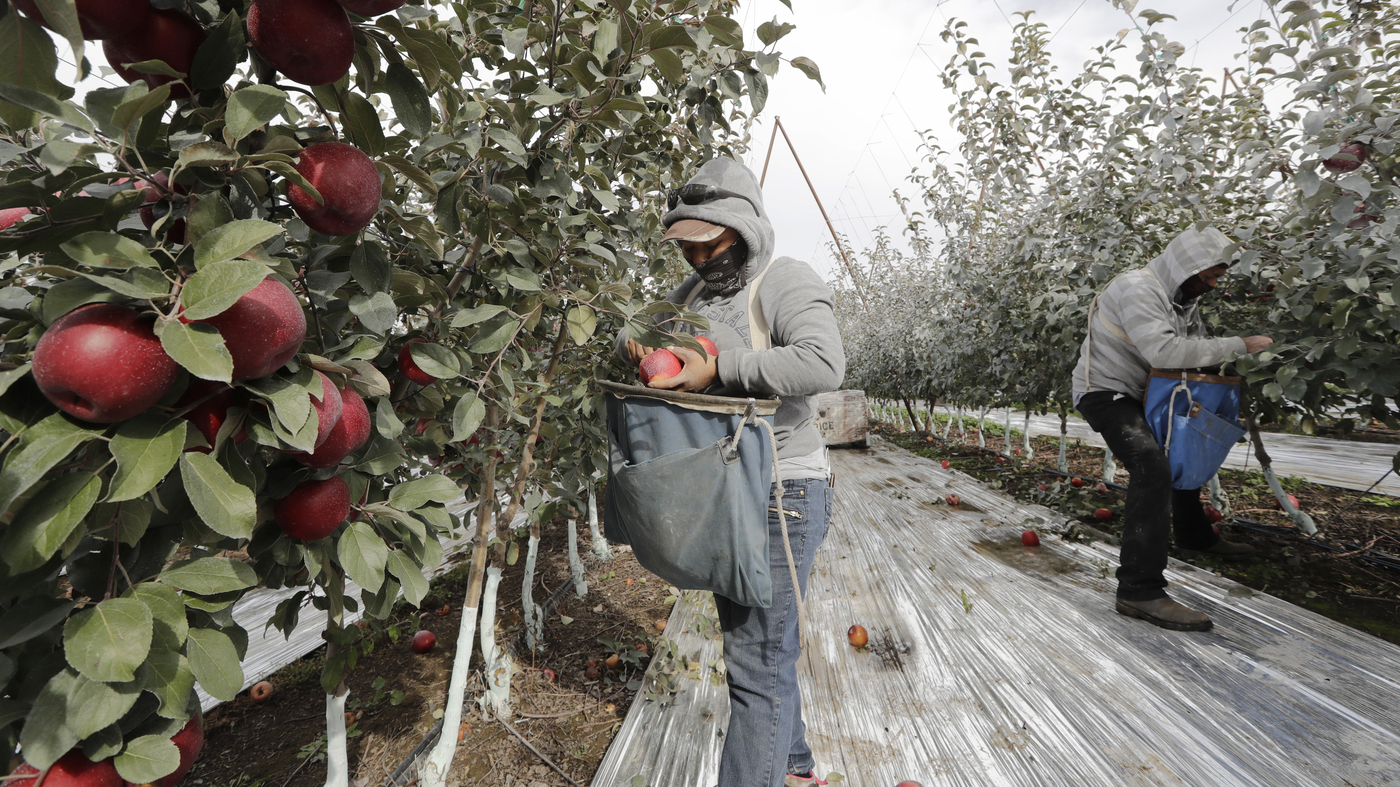
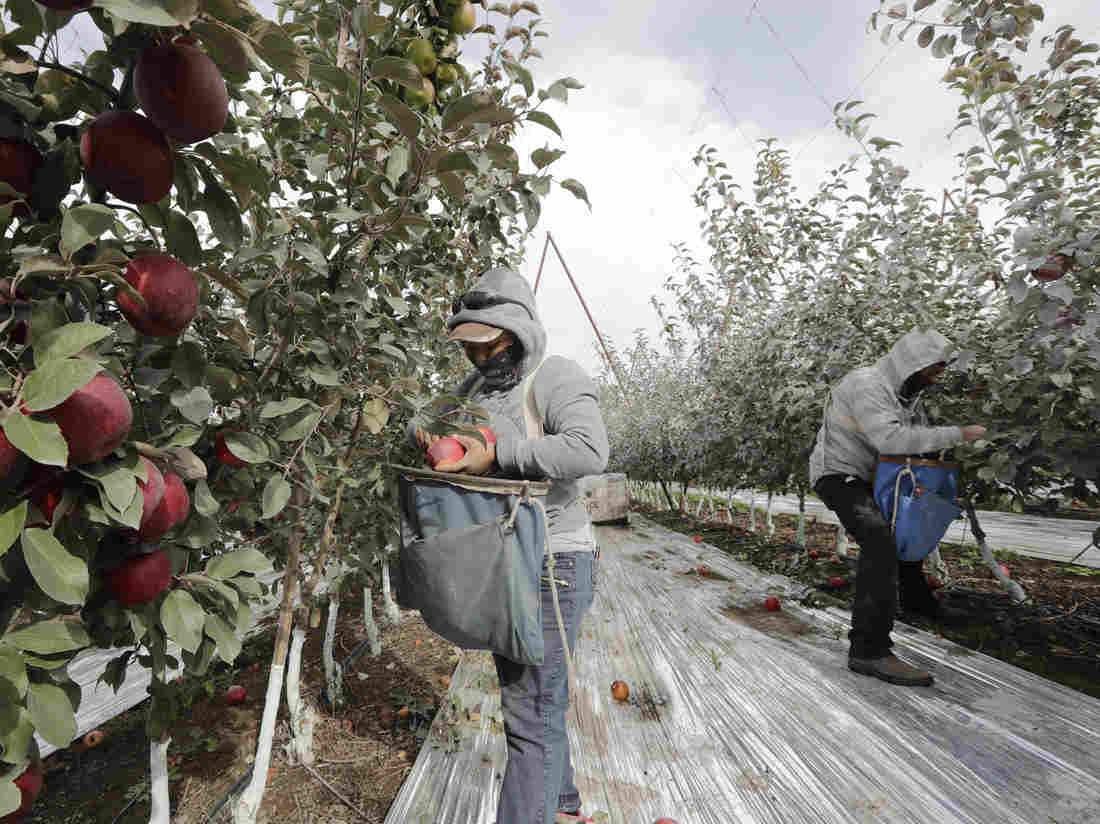
Workers pick apples in a Wapato, Wash., orchard last October. U.S. farms employ hundreds of thousands of seasonal workers, mostly from Mexico, who enter the country on H-2A visas. The potential impact of the coronavirus on seasonal workers has the food industry on edge.

Elaine Thompson/AP


hide caption

toggle caption

Elaine Thompson/AP
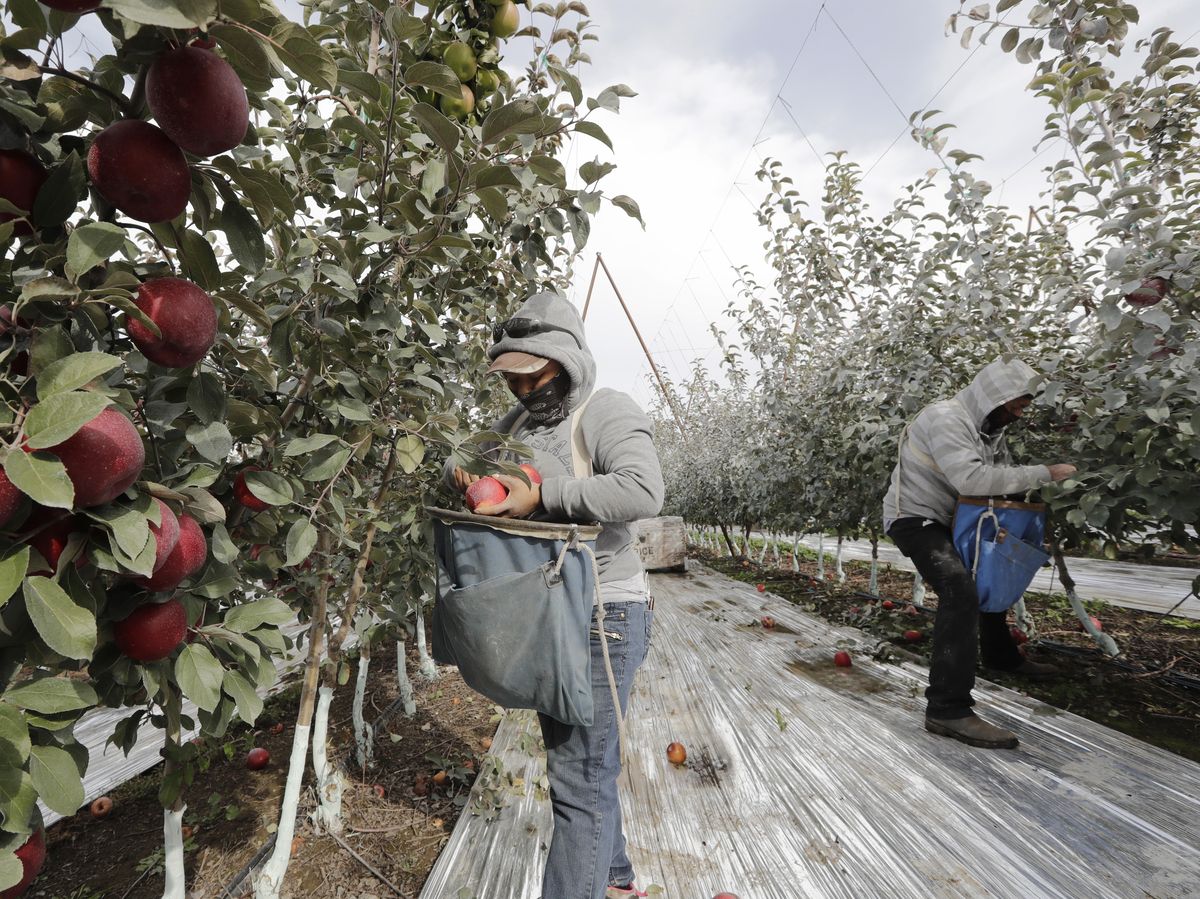
Workers pick apples in a Wapato, Wash., orchard last October. U.S. farms employ hundreds of thousands of seasonal workers, mostly from Mexico, who enter the country on H-2A visas. The potential impact of the coronavirus on seasonal workers has the food industry on edge.

Elaine Thompson/AP

As Americans scattered to the privacy of their homes this week to avoid spreading the coronavirus, the opposite scene was playing out in the Mexican city of Monterrey.

A thousand or more young men arrived in the city, as they do most weeks of the year, filling up the cheap hotels, standing in long lines at the U.S. Consulate to pick up special H-2A visas for temporary agricultural workers, then gathering in a big park to board buses bound for farms in the United States.

“I spoke with people going to North Carolina, Kentucky, Michigan, Mississippi,” says Justin Flores, vice president of the AFL-CIO’s Farm Labor Organizing Committee, who was in Monterrey for meetings. “[They were] headed to destinations all over the country to provide really important labor that supports the backbone of our economy, which is the agricultural industry.”

About 250,000 workers came to the U.S. on H-2A visas last year, the majority of them from Mexico. They’ve become an increasingly important piece of America’s food industry.

Late in the day on Monday, March 16, the U.S. Embassy in Mexico City announced that it is suspending non-emergency visa appointments due to concerns for the health of its employees and visitors.

At the same time, though, the embassy notified farm employers that many — perhaps most — of these farm workers still can get their visas, because they participated in the program last year and don’t require an in-person appointment at the consulate.

Ryan Ogburn, visa director at wafla, which helps farms manage the flow of H-2A workers in the Pacific Northwest, says that 85 to 90 percent of their workers will qualify for this exemption. Meanwhile, influential farm organizations in the U.S. are pushing the Trump administration to ease the entry of more guest workers.

The continuing availability of agricultural workers illustrates the paradox of America’s food supply in the age of COVID-19.

One end of the food supply chain has been completely upended as restaurants go dark and consumers prowl half-empty aisles of supermarkets. Food producers, though, are operating almost as normal — at least for now.

Slaughterhouses, dairies and vegetable producers say that they are open for business, ready to feed the nation. Howard Roth, president of the National Pork Producers Council, wrote in a statement that “telecommuting is not an option for us; we are reporting for work as always.”

Food distributors and wholesalers in the middle of that supply chain, meanwhile, are trying to perform logistical miracles, re-directing truckloads of food from shuttered businesses toward places where people now crave it — mainly grocery stores.

“There’s nothing ‘as usual’ anymore,” says Mark Levin, CEO of M. Levin and Co., a fruit and vegetable wholesaler in Philadelphia. Levin normally sells lots of bananas to schools and restaurants, and “unfortunately, all those people, last minute, say, ‘I’m sorry, I can’t use this fruit. You must take it back, or don’t deliver it.’ And that’s tough, because we’ve already got it in the system ripening and ready to sell,” Levin says.

Can he send those bananas instead to grocery stores that are out of stock? “Yes, but at a reduced price,” Levin says.

The problem, Levin says, is that different customers want slightly different things. Schools and other institutions buy boxes of loose “petite” bananas, with 150 bananas in a box. “Grocery stores don’t want those,” he says.

At least people are still eating. Drinking is a different story.

“We’re losing a lot of occasions, regular things like birthday parties or weddings, where people normally get together,” says Stephen Rannekleiv, who follows the beverage sector for RaboResearch Food & Agribusiness.

“For the beverage world, those are occasions for consumption. We’re losing some of those,” Rannekleiv says. He notes that in China, overall demand for alcoholic beverages has fallen by about 10% during the coronavirus crisis.

There’s an even bigger worry hanging over the food industry: The prospect of workers testing positive for COVID-19.

When it happens, the response likely will go beyond sending that individual home — although that alone can be catastrophic to field workers who are paid, in part, based on their production. This week, the United Farm Workers union called on employers to expand paid sick leave for workers.

Vegetable growers are considering policies that would require quarantine for everyone who worked in close proximity to the infected person. That could easily include two dozen or more people. Workers on H-2A visas often live together, sharing kitchens and bedrooms and traveling together on buses. The virus could spread quickly, and measures to stop it will be extremely costly.

According to Steve Alameda, a vegetable grower in Yuma, Ariz., losing an entire 30-person work crew overnight will be extremely disruptive. Farm workers already are hard to find, and replacing so many people immediately could prove impossible.

“We’ve got enough disruption,” Alameda says. “We don’t need to disrupt our food supply, that would be really catastrophic.”


Share197Tweet123
usiscc

usiscc

  • Trending
  • Comments
  • Latest
Escape From Tarkov – How to Rotate Items

Escape From Tarkov – How to Rotate Items

February 5, 2020
Supply chain examination: Planning for vulnerabilities you can’t control

Supply chain examination: Planning for vulnerabilities you can’t control

December 7, 2019
Procurement Project Manager job with Camden London Borough Council

Procurement Project Manager job with Camden London Borough Council

February 17, 2020
Art Battle Wichita Falls III at The Warehouse, 1401 Lamar.

Art Battle Wichita Falls III at The Warehouse, 1401 Lamar.

0
Global Industry Analysis, Size, Share, Growth, Trends, and Forecasts 2016–2024 – ZMR News Reports

Global Industry Analysis, Size, Share, Growth, Trends, and Forecasts 2016–2024 – ZMR News Reports

0
PHOTOS: Ottawa firefighters respond to warehouse fire

PHOTOS: Ottawa firefighters respond to warehouse fire

0
Last Mile Delivery Market Worth Observing Growth | UPS, FedEx, SF Express

Last Mile Delivery Market Worth Observing Growth | UPS, FedEx, SF Express

April 23, 2024
Top 5 Spend Analysis Software ranked in 2024

Top 5 Spend Analysis Software ranked in 2024

March 1, 2024
How Tesla And BMW Are Leading A Supply Chain Renaissance With Blockchain

How Tesla And BMW Are Leading A Supply Chain Renaissance With Blockchain

January 19, 2024
  • Privacy Policy
  • Terms of Use
  • Disclaimer
  • DMCA
  • Contact Us

Copyright © 2024 United States International Supply Chain Commission (usiscc.org)

This website uses cookies to improve your experience. We'll assume you're ok with this, but you can opt-out if you wish. Cookie settingsACCEPT
Privacy & Cookies Policy

Privacy Overview

This website uses cookies to improve your experience while you navigate through the website. Out of these cookies, the cookies that are categorized as necessary are stored on your browser as they are essential for the working of basic functionalities of the website. We also use third-party cookies that help us analyze and understand how you use this website. These cookies will be stored in your browser only with your consent. You also have the option to opt-out of these cookies. But opting out of some of these cookies may have an effect on your browsing experience.
Necessary
Always Enabled

Necessary cookies are absolutely essential for the website to function properly. This category only includes cookies that ensures basic functionalities and security features of the website. These cookies do not store any personal information.

Non-necessary

Any cookies that may not be particularly necessary for the website to function and is used specifically to collect user personal data via analytics, ads, other embedded contents are termed as non-necessary cookies. It is mandatory to procure user consent prior to running these cookies on your website.

SAVE & ACCEPT
No Result
View All Result
  • Supply Chain
  • Logistics
  • Warehousing
  • Procurement
  • Shipping
  • More
    • Strategic Sourcing
    • Spend Analysis
    • Inventory
    • Contact Us

Copyright © 2024 United States International Supply Chain Commission (usiscc.org)