![DHL Reveals Top 10 Supply Chain Risks to Watch in 2020 [Report]](https://usiscc.org/wp-content/uploads/2020/03/1584608476_small-360x180.jpg)







![DHL Reveals Top 10 Supply Chain Risks to Watch in 2020 [Report]](https://usiscc.org/wp-content/uploads/2020/03/1584608476_small.jpg)
Welcome to Thomas Insights — every day, we publish the latest news and analysis to keep our readers up to date on what’s happening in industry. Sign up here to get the day’s top stories delivered straight to your inbox.
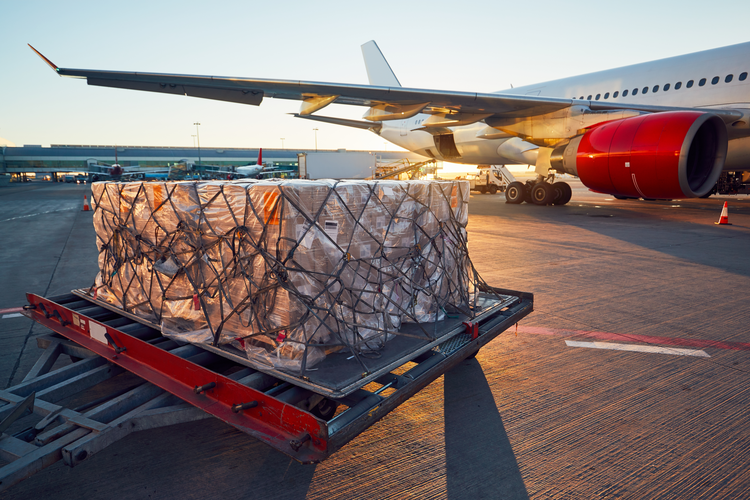
99% of surveyed organizations have experienced a supply chain disruption within the past five years. With the advent of coronavirus, the level of disruption may soon hit 100%.
Resilience360’s recently released 2020 Annual Risk Report analyzes the key challenges faced by global supply chains in the past year and examines the emerging risk trends. Based on these evaluations, the report highlights the top 10 supply chain risks to be aware of this year.
1. Threat of Cyber-attacks
It’s unsurprising that in our interconnected world, 68% of businesses believe their cybersecurity risks are increasing. In the first half of 2019, data breaches exposed 4.1 billion records and the damage caused by cybercrime is expected to reach $6 trillion per year by 2021. Historically, ransomware supply chain attacks have proved costly and time-consuming, impacting production in engineering firms and logistics companies.
In 2020, a key cyber-security concern is Advanced Persistent Threat (APT) groups, which are defined by Resilience360 as “highly sophisticated, long-lasting incursions into corporate IT systems.” Manufacturing industries are particularly at risk, with recent incidents affecting automakers and pharmaceutical companies. To address this threat, supply chain leaders must adopt a holistic approach to their supply chain’s cybersecurity.
2. Changes in Trade Policy
In 2020, the uncertainty surrounding several ongoing trade negotiations (and the additional tariffs they could bring) will continue to stall supply chain decision-making for many organizations.
- The U.S. and China are unlikely to finalize a trade deal until after the presidential election in November 2020.
- Following Brexit on January 31, the U.K. has until the end of the year to establish a new trade agreement with the E.U.
- Fifteen Asia-Pacific countries (including China and Japan) have endured six years of negotiations over The Regional Comprehensive Economic Partnership (RCEP), which they hope to finalize this year to lower tariffs and standardize customs rules.
- Due to concerns over home agricultural sectors, The E.U. has delayed an agreement it signed with MERCOSUR (South America’s trade bloc) in 2019 to reduce import tariffs.
3. Increased Economic Sanctions
Governments around the world took to flexing their political muscle in the form of harsher economic sanctions throughout 2019. In May, President Trump threatened Mexico with a 5% import tariff on all goods in a bid to tackle illegal immigration. While this particular threat was retracted, supply chains across several industries are reacting and adapting to ongoing disputes. Japan, for example, imposed new export controls on three chemical materials (hydrogen fluoride, photoresists, and fluorinated polyimide) that are essential to smartphone and semiconductor production in South Korea.
If the dispute continues, technology companies will be compelled to find alternate suppliers. Ongoing tensions between the U.S. and Iran are impacting energy and chemical supply chains around the globe.
In a bid to evade newly-imposed tariffs and import restrictions, several companies (most notably in China) have attempted to illegally ship products through third-party companies in order to hide their origin.
4. Protests and Strikes
Activists campaigning against economic and social injustice have taken to targeting supply chain infrastructure to maximize the impact of their protests, while unionized worker strikes have put supply chains under increased strain. In 2019, 50,000 General Motors (GM) workers walked out in what became the largest factory strike in the U.S. since 2007, costing GM over $1 billion. A Mexican teacher’s union demanding overdue salary payments set up a railroad blockade that lasted 31 days, halting 250 trains, 2.1 million tons of cargo and costing $736 million in economic losses.
Protests and strikes of this kind often spur subsequent protests in similar industries and even in neighboring countries, as was the case with anti-government protests in Columbia, Chile, and Bolivia, which impacted ocean and air freight, major roads, and borders.
5. Border Delays
Several nations are implementing stricter border control policies to address migration concerns, closing some crossings altogether and increasing checks at others. Last October, Nigeria closed all of its land borders in an effort to boost the local economy. This severely impacted trade routes via Nigeria impacting Cameroon, the Central African Republic (CAF), the Democratic Republic of the Congo (DRC), Uganda, and Kenya. Meanwhile, Central American migrant caravans caused up to 12-hour delays for trucks at the U.S.-Mexico border.
These circumstances delay the import of goods, which is particularly concerning for supply chains dealing with high value, time-sensitive or perishable shipments. Given rising political tensions and ongoing disputes, this problem is likely to continue throughout 2020, forcing organizations to relocate production or seek alternative transportation routes.
6. Climate Activism
2019 saw a dramatic increase in protests and activism relating to climate change with the largest climate strike in history on September 20, consisting of over 2,500 scheduled events in 163 countries. Some environmentalist groups made it their mission to target industries and transport hubs including Heathrow Airport in London and Houston Ship Channel in the U.S.
Resilience360’s report predicts that at-risk industries include heavy industry manufacturing sites, transport hubs, and crude oil shipping routes, with protests likely to increase during November’s UN Climate Summit.
7. New Environmental Regulations
The World Health Organization (WHO) estimates that 7 million people due to air pollution annually. As a result, global efforts to address and reduce air pollution are intensifying. This has particularly impacted the Asia-Pacific region where governments are attempting to limit industrial pollution without impacting economic growth.
In February, Thailand temporarily closed 600 factories and slowed down operations at 1500 factories in Bangkok to address the city’s smog. China issued a number of production curbs and production halts to control the emissions contributing to poor air quality. Traffic control measures have been implemented in China and India to reduce smog.
Meanwhile, the Netherlands plans to lower its maximum vehicle speed from 80mph to 62mph to reduce nitrogen pollution.
8. Territorial Disputes due to New Trade Routes
The use of the Northern Arctic route by vessels traveling between Asia and Europe grew by 60% in 2019. As the use of this route increases in 2020, so does the risk of territorial disputes and environmental degradations. Russia’s atomic energy agency (Rosatom) has been instructed to boost its position in the arctic and plans to expand its icebreaker fleet.
9. Narcotic Smuggling in Container Ships
Shipping companies have seen a dramatic increase in the smuggling of narcotics via container ships. In 2019 narcotics were seized in Germany, the U.K., the Netherlands, Spain, and Greece, with the largest ever seizure (20 tons of cocaine) carried out by the United States Customs and Border Protection agency on the container ship MSC Gayane.
With fines reaching up to $50 million in the U.S. for those who are caught smuggling illicit drugs, the issue is causing increasing concern for shipping companies. In addition to these penalties, increased port security is resulting in longer import delays.
10. Black Swan Events
Organizations can implement the most stringent risk mitigation strategies, but there will always be “black swan events” – seemingly impossible to predict and responsible for massive and long-lasting supply chain disruption.
The Coronavirus (COVID-19) is 2020’s ongoing black-swan crisis, which to date has infected over 100,00 people. The result of quarantines, city-wide lockdowns, and other major security measures stretching from Wuhan, China to Milan, Italy, has brutally impacted air, ocean, and ground transportation routes. Only time will tell the full extent of the viruses’ impact on global supply chains.
As Resilience360 points out, black swan events are the ultimate test of supply chain resilience and an organization’s ability to proactively respond to the unpredictable and push forward during and after a crisis.
Image Credit: Jaromir Chalabala / Shutterstock










