








Few logistics executives have as deep an understanding of North America’s transport modes as Jim Monkmeyer, CEO of managed transportation, Americas for DHL Supply Chain, the world’s largest logistics company. Monkmeyer manages shipping services for the unit’s North American clients and works with all modes to give businesses the best value for their budgets. North America generated $4.17 billion in gross revenue during 2018 and accounted for more than 12% of DHL Supply Chain’s worldwide gross revenue of $28.1 billion. (Gross revenue is defined as revenue that doesn’t take into account the costs of purchasing transportation services.)
Recently, Monkmeyer shared his views of geopolitical issues affecting global trade, his outlook for the four primary North American modes and what his unit’s customers want and need in a high-velocity environment.
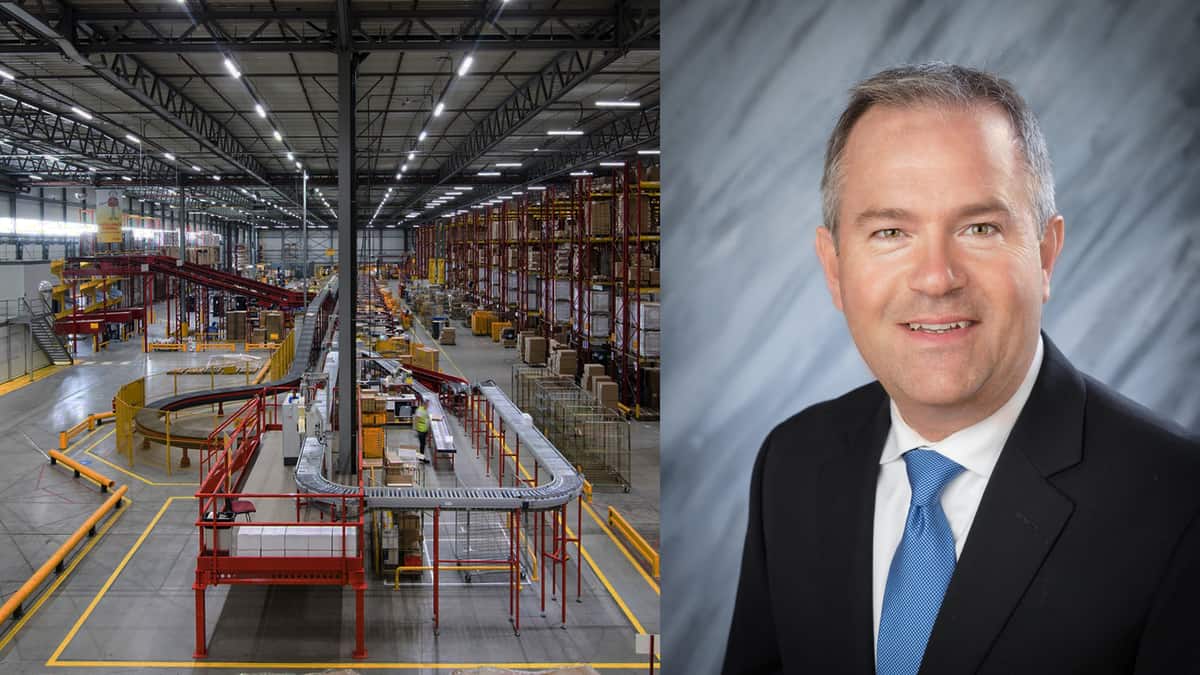
FreightWaves: World trade is moving away from multilateralism and toward bilateralism. Supply chains have been structured, and have flourished, during what has been a long cycle of multilateralism. You work for the world’s largest supply chain management company. What impact, if any, will this shift in trade regimes have on supply chains in general and on businesses like yours which have thrived under the existing order?
Monkmeyer: We encourage free and fair trade and the standardization and automation of processes to enable a streamlined supply chain. The current trend toward bilateral agreements does create some complexity in the short term. But I don’t think this trend will last, as it ultimately adds cost and friction to the trading process. It may be necessary, however, to bring certain trading partners to the point of respecting global norms and I think we can expect to see terms negotiated bilaterally used in other agreements over time.
FreightWaves: The U.S., Canada and Mexico are preparing to vote to ratify an updated version of the North American Free Trade Agreement. What are the key differences between the old and new NAFTAs and how will the new agreement affect supply chain flows between the three countries?
Monkmeyer: There are several key supply chain-related improvements in the USMCA agreement that replaces NAFTA. The new agreement provides for a more standardized and automated Customs process, eliminating the frustration of different requirements at different ports of entry and reducing delays. It also promotes coordination and cooperation on cybersecurity, allows third parties to have easier access to public data and to develop applications to facilitate trade and raises the minimum shipment values on which taxes and duties can be charged, which reduces trading costs for e-commerce shipping. In general, USMCA can be viewed as a needed modernization of NAFTA.
FreightWaves: What non-IT initiatives are highest on your customers’ 2020 demand lists? And what IT initiatives are on the realistic lock-and-load calendar in the year ahead?
Monkmeyer: Customers continue to press for higher service levels at a lower cost. Informed customers know that the market is soft from a rate perspective, but we need a balanced response if we want carriers to be there when times are tough. Customers expect consistency of information and transit times whether shipping a parcel around the world or a pallet across the state. They expect the same level of responsiveness 24 hours a day, 365 days a year, and they don’t just want to know that there is a problem, but also expect to know their options and associated costs and transits in near real time as well.
On the IT front, key focus areas in 2020 are on big-data analytics to evaluate not just our customers’ supply chains but our entire network of transport options and warehouses. We are focused on helping businesses maximize their supply chain value by increasing visibility and are expanding our freight marketplace capabilities to enable additional fixed price capacity in real time. We also have plans to grow our alternative fuel vehicle fleets.
FreightWaves: You interact with all modes of transportation. Can you summarize the key challenges faced by the four main modes in delivering for your customers?
Monkmeyer: In air, there has been a lower demand for heavyweight services this year and that has had an impact on service and cost. Providers have cut back on services to keep down costs, resulting in longer transit times for the shipper. With shippers pulling ahead inventory to avoid tariffs and a slowing of global trade in general, we continue to see a reduction in air freight moving into 2020.
In rail, we have lost market share to truck, primarily in the intermodal area as the truckload market softened in 2019. Intermodal rates were slow to react. Here as well we have seen service options reduced. Intermodal dray capacity in certain markets remains an issue, especially during peak periods. Consistent real-time tracking information needs improvement to compete with truck.
In trucking, we are seeing challenges with smaller carriers providing status update information as what is required by our large, very demanding shippers. Fleet management systems are generally required for today’s visibility requirements. Rates look as though they will remain depressed for at least the first six months of 2020 due to more capacity entering the market this year. Spot capacity is slowly tightening, however. We have seen some service degradation as carriers implement cost-reduction measures.
In maritime, global uncertainty in terms of tariffs and the overall economy is expected to result in further cost increases and market consolidation. The required reduction to less than 0.5% sulphur in fuel oil used to operate ships is expected to exacerbate the issue beginning Jan. 1.
FreightWaves: What segments of your verticals are holding up the best and which are struggling?
Monkmeyer: All of our industry sectors are performing well. We have seen some slight declines in international shipping volume in some manufacturing and industrial sectors, but domestic activity is strong across the board.
FreightWaves: Can you speak to, or better yet quantify, the amount of your customers’ 2020 budgets that are allocated to e-commerce?
Monkmeyer: In our non-retail business, e-commerce revenues are still in single digits. However, they are growing at a double-digit pace and they are straining traditional distribution networks. Customers are spending a disproportionate amount of their time trying to understand this new and rapidly evolving sales channel and its impact on their supply chains. It is a significant challenge and we don’t see that changing anytime soon.
FreightWaves: Your parent is the world’s largest provider of contract logistics services. What is your read on businesses’ warehousing and distribution needs? What are the thoughts behind their decision-making and their budgeting? And have you been affected by tightening logistics warehouse supply?
Monkmeyer: We continue to see growth in outsourcing and growth in customers expecting more integrated transportation, warehousing and distribution services from a single provider. The solutions we are delivering for customers today are larger and more complex than ever and carry with them more execution risk. On the flip side, bundling services allows customers — and providers — to get better visibility into supply chain performance on a real or near real-time basis, which provides them with the ability to anticipate and adapt to change and to do it efficiently.
FreightWaves: For years, there has been a disconnect between 3PLs’ perceptions of the value they provide and shippers’ expectations of what they want and are not getting. Does that gulf still exist and how does it get bridged?
Monkmeyer: I would agree there is still a gap. We conduct frequent surveys and meet with customers to discuss priorities and develop road maps. We have forums such as our Customer Club, where we solicit input on customer challenges and strategies while seeking input on research-and-development efforts at DHL. Finally, we monitor customer satisfaction and concerns on every account through a formalized customer experience management process. We strive to work in a transparent environment that builds trust and lets the customer lead the relationship.
Image by Bilal EL-Daou from Pixabay










