






New rules cracking down on pollution from dirty, cheap marine fuel kicked into gear this week, placing stricter requirements on cargo vessels and cruise ships that are plying northern waters thanks to climate change.
As of Jan. 1, Canada is enforcing a new UN-backed cap on the amount of sulphur allowed in heavy fuel oil (HFO) in the waters north of the 60th parallel, federal officials confirmed to National Observer on Thursday.
The cap comes as Transport Canada considers a proposal to ban all HFO for ships operating in the Arctic, to address the environmental risks of oil spills.
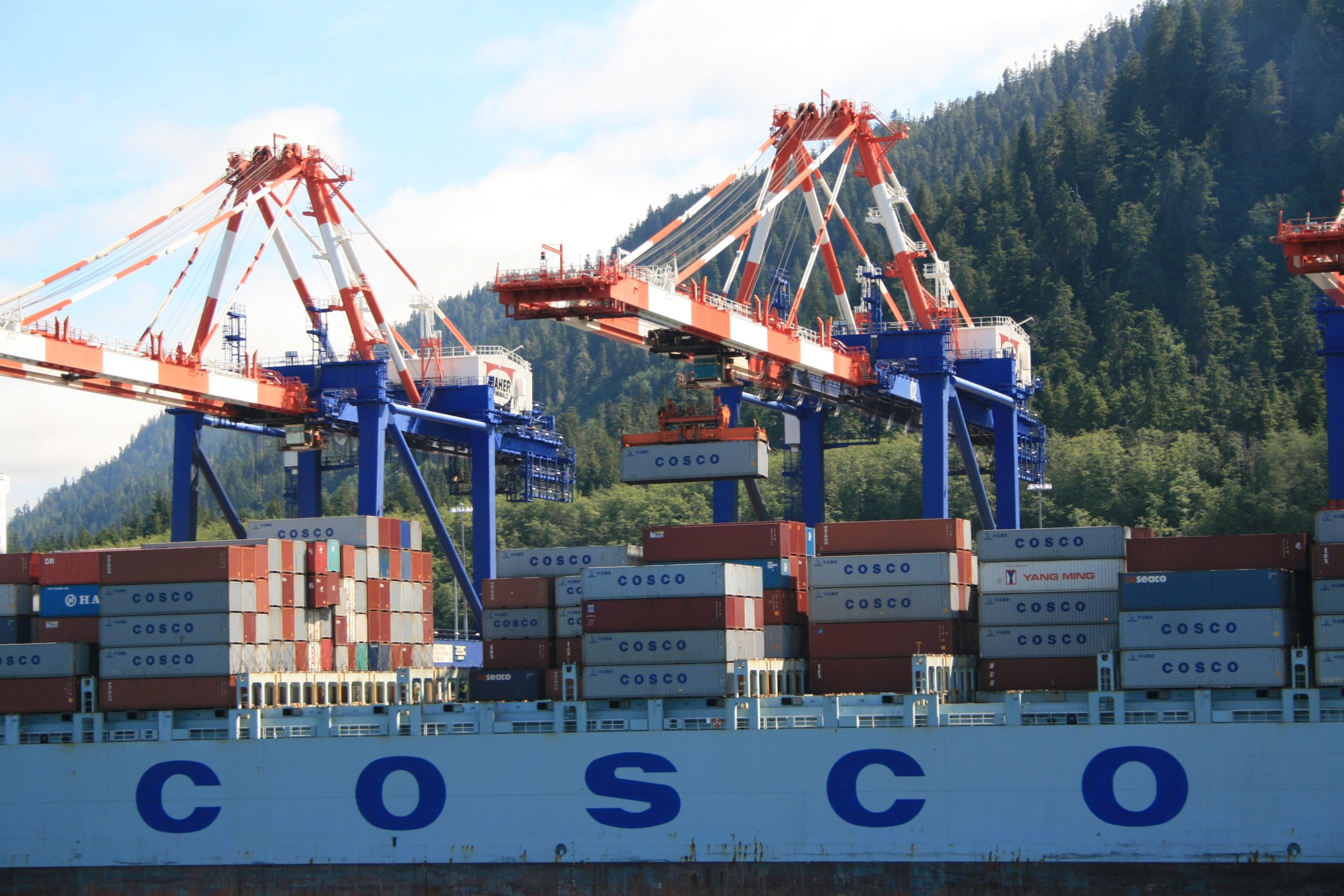
HFO, also known as bunker fuel, is a low-grade byproduct of crude oil that is widely used to power the cargo-shipping industry, as well as on cruise ships and other large vessels that guzzle hundreds of tonnes of fuel per day to move their enormous weight.
While inexpensive, burning sulphur-rich fuel such as HFO produces sulfur dioxide, which can damage eyes, lungs and the respiratory tract. When the gas combines with water, it also forms sulfuric acid, the main element in acid rain.
Sulphur pollution from ships has been associated with the deaths of 400,000 people each year from lung cancer and cardiovascular disease, and about 14 million childhood asthma cases, according to a study published in 2018 in the journal Nature Communications.
This dirty fuel has been capped at a low level for southern Canadian waters under what’s called an “emission control area.” Since 2013, ships along the B.C. and Atlantic coasts, the St. Lawrence and the Great Lakes, and extending 200 nautical miles out, cannot use fuel with more than 0.1 per cent sulphur.
But north of 60, this cap has defaulted to a higher level, 3.5 per cent. This week, a long-awaited rule change by the International Maritime Organization (IMO), a UN agency, lowered the global cap to 0.5 per cent.
Since the cap is global, it covers those areas that the emission control area doesn’t cover, including the North. (Although, at 0.5 per cent, the new cap is still less strict than Canada’s 0.1 per cent level in place for southern waters.)

Different rules for the Arctic
The reason Canada’s low-sulphur cap ends at the 60th parallel is due to the much lower volume of vessel traffic, said Simon Rivet, Transport Canada senior media relations adviser.
As of December, the Canadian Coast Guard said its traffic services centre in Iqaluit provided support for 191 vessels in the North over the season, including cargo ships, cruise ships, research vessels, fishing boats and others. That’s compared to over 3,100 vessels, for instance, at the Port of Vancouver each year.
Assessments by Environment and Climate Change Canada and Health Canada indicated the “greatest benefit” to banning the high-sulphur fuel would be for southern Canadian waters, said Rivet.
“Due to seasonal conditions and limited accessibility during much of the year, vessel traffic in the Arctic is limited with the largest volumes occurring between July and October,” he said.
The climate crisis, however, has led to northern Canada, already a fragile environmental area, warming at three times the global average rate, according to federal government scientists.
That is leading to “longer and more widespread sea ice-free conditions” in the Arctic Ocean and North Atlantic, they said. This, in turn, can attract thrifty shippers and cruise ships carrying thrill-seeking passengers, among others. From 2018 to 2019 there was an increase of 25 vessels tracked by the centre in Iqaluit.
Concerns over the use of HFO in the Arctic have persisted. In November, one industry group — the 30-member Association of Arctic Expedition Cruise Operators — announced it would ban heavy fuel oil entirely on members’ ships.
That self-imposed ban comes as the IMO, and Canada, consider banning HFO altogether in the Arctic, regardless of sulphur levels. Transport Canada held a public consultation on the matter in June 2019.
According to briefing notes to Transport Minister Marc Garneau obtained by National Observer, the department is still considering the ban, but points out the fuel is used by certain vessels that resupply Arctic communities and by others that serve mining projects and some fishing ships.
“A number of Canadian organizations (including some Indigenous communities) have voiced support for the ban,“ it said, but it will “result in socio-economic impacts on Arctic communities in Canada through higher shipping costs, as most depend vitally on marine shipping for community resupply.“
Michael Broad, president of the Shipping Federation of Canada, said shippers will spend $250 to $300 more per tonne on low-sulphur fuel than they would be spending on bunker fuel.
The amount that a large container ship spends every year on fuel varies widely, depending on factors like how many days it spends at sea, and how fast it goes.
Consultants Wood Mackenzie said in 2018 that global shipping fuel costs will likely rise by between US$24 billion and $60 billion by this year, as a result of the IMO sulphur rule, on top of an average yearly cost of $100 billion.
It’s common for large ships to burn more than a hundred tonnes of bunker fuel every day, moving at around 22 knots. At hundreds of dollars more per tonne, that’s an increase of millions of dollars per year, per ship.
‘Small steps are always good, and welcome’
In Canada, the new sulphur rule will be enforced by Transport Canada marine-safety inspectors, who will periodically inspect Canadian ships and foreign ships, Rivet said.
He said fines and jail time could be in store for those who don’t comply.
“Depending on the violation under the Vessel Pollution and Dangerous Chemicals Regulations, a number of enforcement measures may be taken in accordance to established enforcement procedures. A vessel operator may be fined up to $1 million or face a jail sentence up to 18 months, or both,” he wrote in an email.
Andrew Dumbrille, a senior specialist working on sustainable shipping for WWF-Canada, said the new rule change is a step in the right direction. But he said it should be followed by further moves toward low-carbon shipping.
“Small steps are always good, and welcome, and useful. Going down to a lower-sulphur fuel oil is positive,” Dumbrille said. “Transitioning away from carbon fossil fuels in the shipping industry is what’s ultimately needed… a lot more needs to be done to decarbonize the industry, and to start to use cleaner fuels.”
Dumbrille also raised concerns about “scrubbers,” a colloquial term for equipment that cleans up the sulphur from a ship’s exhaust before it’s released into the air. The IMO is allowing ships to install these devices to comply with the new rule, instead of switching to cleaner fuel.
“It turns an air-pollution problem into an ocean-pollution problem,” he argued. Particularly, if the device dumps the leftovers — called effluent — into the water, it could be polluting waterways with carcinogens and heavy metals.
Ultimately, what is needed, Dumbrille said, is for shipping operators to invest in renewable options like batteries, solar and wind, and other non-emitting technologies.
‘Our members, they want the policing’
But that’s not exactly simple to do for shipping companies that are already going to be paying millions of dollars more in fuel costs due to the sulphur rule change.
It’s not just the price itself that’s the problem — it’s finding new fuel suppliers, Broad said.
“It’s a little easier for ships that go back and forth from one port to another — let’s say from Europe to Halifax and back — because they can establish relationships with certain suppliers,” Broad said.
“But ships that travel all over the world, you have to make sure you get the right fuel. They have to have the right viscosity and a number of other criteria.”
The difference in cost will likely be passed through to the cargo owners, Broad said, via the freight rate shippers charge them.
But he said his members would be happy to be inspected by Transport Canada for using low-sulphur fuel, because everyone wants a level playing field in the business.
“Our members, they want the policing, because if they’re (paying more for) using the low-sulphur fuel, they don’t want some sort of rogue owner going out there using lower-cost fuel to get an unfair competitive advantage,” Broad said. “Our members want to make sure that everyone is compliant.”
And he said while there are a number of ships that have scrubbers installed, “I would say that is a very low number.”










