

• Latest
  • Trending
  • All
‘Distress Sale’: Delayed Procurement Forces Farmers to Sell Paddy at Lower Price

‘Distress Sale’: Delayed Procurement Forces Farmers to Sell Paddy at Lower Price

March 14, 2020
Last Mile Delivery Market Worth Observing Growth | UPS, FedEx, SF Express

Last Mile Delivery Market Worth Observing Growth | UPS, FedEx, SF Express

April 23, 2024
Top 5 Spend Analysis Software ranked in 2024

Top 5 Spend Analysis Software ranked in 2024

March 1, 2024
How Tesla And BMW Are Leading A Supply Chain Renaissance With Blockchain

How Tesla And BMW Are Leading A Supply Chain Renaissance With Blockchain

January 19, 2024
LATAM Cargo strengthens European cargo links

LATAM Cargo strengthens European cargo links

April 14, 2020
Ford making reusable hospital gowns from airbag materials as efforts against coronavirus expand

Ford making reusable hospital gowns from airbag materials as efforts against coronavirus expand

April 14, 2020
Don’t Sweat NBC’s Decision to Cut Back on Television Ad Inventory

Don’t Sweat NBC’s Decision to Cut Back on Television Ad Inventory

April 14, 2020
Software firms sharpen focus on AI, big data as IT spending drops

Software firms sharpen focus on AI, big data as IT spending drops

April 14, 2020
Navigating turbulent times in your supply chain (TL:DR version)

Navigating turbulent times in your supply chain (TL:DR version)

April 14, 2020
Last Mile Delivery by Drones Market is Booming Worldwide

Last Mile Delivery by Drones Market is Booming Worldwide

April 14, 2020
AIR CARGO MARKET SIZE, SHARE, DEMAND, TREND, LATEST INNOVATIONS & APPLICATION ANALYSIS AND INDUSTRY GROWTH FORECAST 2027 – Science In Me

AIR CARGO MARKET SIZE, SHARE, DEMAND, TREND, LATEST INNOVATIONS & APPLICATION ANALYSIS AND INDUSTRY GROWTH FORECAST 2027 – Science In Me

April 14, 2020
Wheat procurement in Patiala: 6,500 coupons issued to farmers – cities

Wheat procurement in Patiala: 6,500 coupons issued to farmers – cities

April 14, 2020
Pandemic, Plastics And The Continuing Quest For Sustainability

Pandemic, Plastics And The Continuing Quest For Sustainability

April 14, 2020
  • Supply Chain
  • Logistics
  • Warehousing
  • Procurement
  • Shipping
  • More
    • Strategic Sourcing
    • Spend Analysis
    • Inventory
    • Contact Us
No Result
View All Result
United States International Supply Chain Commission
Home Procurement

‘Distress Sale’: Delayed Procurement Forces Farmers to Sell Paddy at Lower Price

by usiscc
March 14, 2020
in Procurement
0
‘Distress Sale’: Delayed Procurement Forces Farmers to Sell Paddy at Lower Price
492
SHARES
1.4k
VIEWS
Share on FacebookShare on Twitter

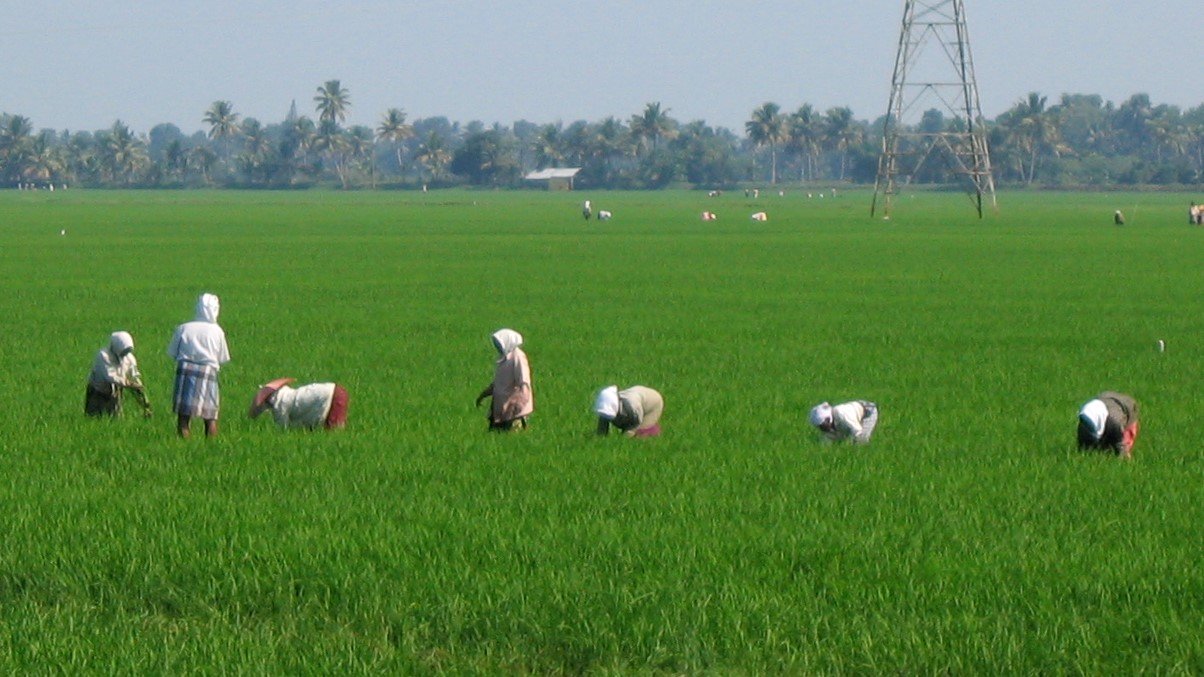
Representational image. | Image Courtesy: Wikimedia Commons

Patna: Ramanand Singh, a marginal farmer, sitting outside his brick-house under the cloudy sky of mid-March, feels cheated by the government’s much-hyped claim that farmers will benefit from paddy procurement. Harendar was forced to sell his paddy at throwaway prices to local traders last month.

Singh, resident of a village under Naubatpur block, about 25 km from Patna, expressed dismay over the government’s apathy in ensuring paddy procurement on time and blamed nexus of the government officials, middlemen and traders for slow procurement.

Singh told NewsClick that this is not the first time when the procurement has been delayed. “It has been going on for past five to six years; government agencies have failed to procure paddy from farmers including rich, marginal and small-scale. This forces them to sell paddy to traders at much lower rates.”

According to him, even though the state government had announced a rate of Rs 1,815 per quintal as the MSP for paddy this time, farmers have been forced to sell it at the cost of Rs 1350 to 1400 per quintal.
 

Shankar Yadav, resident of a village under Bihta block on the outskirts of Patna, echoes Singh’s sentiment. “The government has completely failed to procure paddy directly from the farmers. Paddy procurement is not only slow, it has led to a distress sale by farmers,” he said.

Yadav and Singh are just two of the thousands of farmers—including rich and poor—who have been affected by the poor paddy procurement by the government agencies. They are worried and unhappy. “Farmers have been treated like fools. Look how the government has forced us to go for distress sale of paddy, which we had produced after hard labour of months. Poor farmers cannot wait for months to sell paddy if the government agencies delay procurement. They have to earn money for their necessities,” said Chandra Dev Prasad, a small farmer from a village under Vikram block in Patna.

Yadav said that even as the farmers are forced to sell paddy for a lower price, the traders pay them immediately. “And unlike government agencies, they don’t require any paperwork.”

The ground reality is not in tandem with the state government’s claim—of helping farmers to increase their income—and the central government’s announcement of taking measures to double the farmers’ income by 2022.

So far [as of March 13], as per the official data, the government has procured 10.78 lakh metric tonnes of paddy, amounting to just about 33% of its target.

The paddy procurement process started in the state on November 15 and the government aimed at procuring 30 lakh metric tonnes of paddy by March 31. With hardly 16 days left, it is unlikely for the government to reach its target.
 

Sambhu Sen Kumar, nodal officer for paddy procurement in the state cooperative department, admitted that paddy procurement was slow in December and January. “But it gained speed later. We are still hopeful of achieving the fixed target,” he said.

However, even last year, the government agencies had procured 14.16 lakh metric tonnes of paddy from 2.10 lakh farmers against the target of 30 lakh metric tonnes during 2018-19.

Paddy procurement was 11.84 lakh metric tonnes during 2017-18 against the target of 30 lakh metric tonnes. It was 18.42 lakh metric tonnes during 2016-17,18.23 lakh metric tonnes during 2015-16 and 19.01 lakh metric tonnes during 2014-15.

In Bihar, Primary Agriculture Cooperative Societies (PACS) and Vyapar Mandals have been engaged in procuring paddy directly from the farmers in each panchayat across the state to ensure that farmers get fair and remunerative prices for their crops.

On the other hand, changing rainfall pattern has also affected farmers in the state. Farmers could not plant the kharif paddy on nearly 0.4 million hectares due to one of the worst rainfall deficits last year. Poor rainfall forced farmers to cultivate paddy in 2.8 million hectares, against the target of over 3.2 million hectares.


Share197Tweet123
usiscc

usiscc

  • Trending
  • Comments
  • Latest
Escape From Tarkov – How to Rotate Items

Escape From Tarkov – How to Rotate Items

February 5, 2020
Supply chain examination: Planning for vulnerabilities you can’t control

Supply chain examination: Planning for vulnerabilities you can’t control

December 7, 2019
Procurement Project Manager job with Camden London Borough Council

Procurement Project Manager job with Camden London Borough Council

February 17, 2020
Art Battle Wichita Falls III at The Warehouse, 1401 Lamar.

Art Battle Wichita Falls III at The Warehouse, 1401 Lamar.

0
Global Industry Analysis, Size, Share, Growth, Trends, and Forecasts 2016–2024 – ZMR News Reports

Global Industry Analysis, Size, Share, Growth, Trends, and Forecasts 2016–2024 – ZMR News Reports

0
PHOTOS: Ottawa firefighters respond to warehouse fire

PHOTOS: Ottawa firefighters respond to warehouse fire

0
Last Mile Delivery Market Worth Observing Growth | UPS, FedEx, SF Express

Last Mile Delivery Market Worth Observing Growth | UPS, FedEx, SF Express

April 23, 2024
Top 5 Spend Analysis Software ranked in 2024

Top 5 Spend Analysis Software ranked in 2024

March 1, 2024
How Tesla And BMW Are Leading A Supply Chain Renaissance With Blockchain

How Tesla And BMW Are Leading A Supply Chain Renaissance With Blockchain

January 19, 2024
  • Privacy Policy
  • Terms of Use
  • Disclaimer
  • DMCA
  • Contact Us

Copyright © 2024 United States International Supply Chain Commission (usiscc.org)

This website uses cookies to improve your experience. We'll assume you're ok with this, but you can opt-out if you wish. Cookie settingsACCEPT
Privacy & Cookies Policy

Privacy Overview

This website uses cookies to improve your experience while you navigate through the website. Out of these cookies, the cookies that are categorized as necessary are stored on your browser as they are essential for the working of basic functionalities of the website. We also use third-party cookies that help us analyze and understand how you use this website. These cookies will be stored in your browser only with your consent. You also have the option to opt-out of these cookies. But opting out of some of these cookies may have an effect on your browsing experience.
Necessary
Always Enabled

Necessary cookies are absolutely essential for the website to function properly. This category only includes cookies that ensures basic functionalities and security features of the website. These cookies do not store any personal information.

Non-necessary

Any cookies that may not be particularly necessary for the website to function and is used specifically to collect user personal data via analytics, ads, other embedded contents are termed as non-necessary cookies. It is mandatory to procure user consent prior to running these cookies on your website.

SAVE & ACCEPT
No Result
View All Result
  • Supply Chain
  • Logistics
  • Warehousing
  • Procurement
  • Shipping
  • More
    • Strategic Sourcing
    • Spend Analysis
    • Inventory
    • Contact Us

Copyright © 2024 United States International Supply Chain Commission (usiscc.org)