






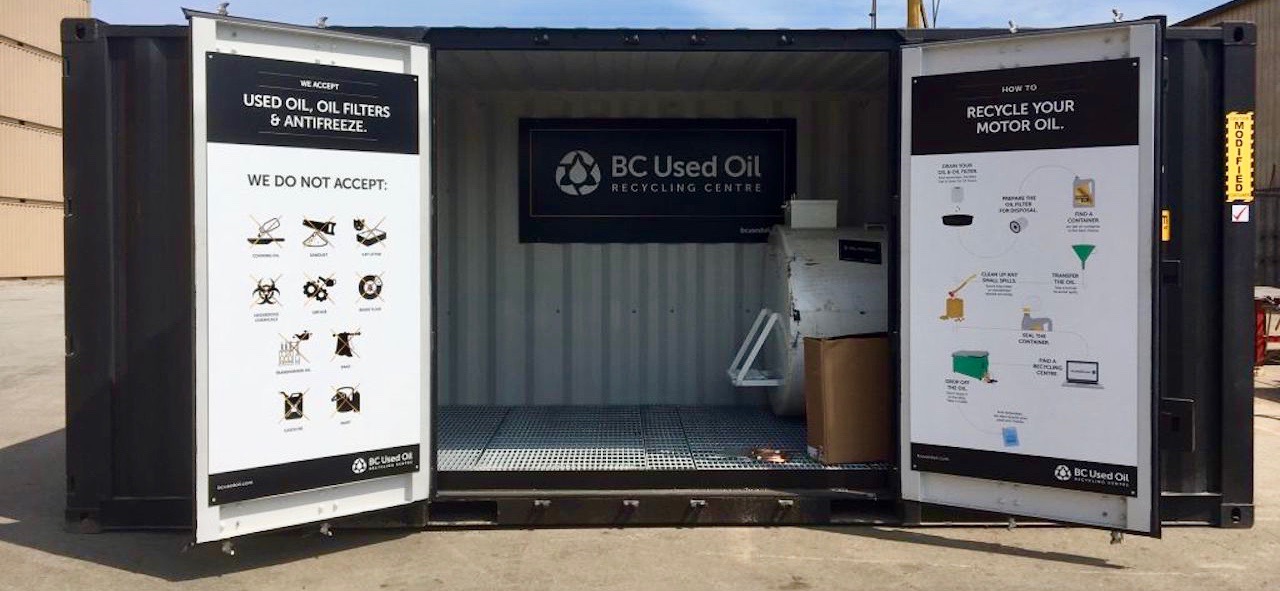
The BC Used Oil Management Association (BCUOMA) has started a “Top Collector Award” for registered Return Collection Facilities (RCFs). The top 30 RCFs in the province will be recognized, among them Lower Nicola Eco Depot, which came in at number 17.
David Lawes, Chief Executive Officer of the BC Used Oil Management Association spoke to the Herald about the recycling process, and the award.
“This is the first year we’ve launched this award and we’re really happy about it,” said Lawes. “We thought it was important to recognize the hard work done by the top collectors around BC, because it’s not easy business collecting oil and antifreeze. It’s always a bit messy taking it back from the public. There’s lots of work to do to help them when they get out of their vehicle, screen the material, make sure it gets into the right place. And so, we wanted to recognize the top 30 in BC, and one of them is the Lower Nicola Recycling Station.”
The criteria for Top Collector is based on the amount of oil and other recyclable fluids and filters that are processed at each facility.
“It’s all based on volume, so whoever’s taking the largest volume back is who we recognize, and there’s about 300 sites across BC, so we’ve taken the top 30 based on volume.”
Most of the collected material is processed in BC and turned back into a salable product.
“We’re fortunate in British Columbia that we have a re-refinery in North Vancouver, so three quarters of the oil that’s collected in BC goes back to re-refining into new lubricating oil. We call it a circular economy product. That means we can bring it back, clean it up and put it back out. It was sold as new lubricating oil, we can get it collected, cleaned and then sold again as a new lubricating oil. It’s really good for the environment, good for climate change, to put materials back into the original intended product,” Lawes explains.
Filters, antifreeze and other products are also eligible to be taken in at the Eco Depot and recycled.
“Most of the filters are metal, I think 99% of the filters collected are metal and that goes back into the steel recycling business. Plastic, almost all of it gets processed here in BC at a place down in Delta that is one of the best recyclers in the Pacific Northwest. Some of it is sent out of province to other plastic recyclers, but it gets collected, cleaned and processed into new plastic pellets, which is the base product of new plastic material, so it’s sold into the plastic market.”
Lawes also emphasizes public involvement, noting that it’s very important that people continue to use their local facilities to properly dispose of any used fluids so that they can be recycled and used again, and not contaminate soil or water or cause any harm to people or wildlife.
“Everybody should know it’s free to drop off your material at these facilities, and it’s easy to use, so please don’t let it sit around in your garage too long where it might get contaminated or other liquids get put into the oil or antifreeze. As soon as you can, take it down to one of our public collection sites.”










