







Key takeaways:
-
Washing and wearing synthetic clothing releases microplastic fibres that aren’t likely good for the environment.
-
Brands are investing in research to determine the supply chain sources of such microfibres so they can mitigate their release into the environment.
-
There are early efforts to create substitute fabrics that can either biodegrade or be recycled.
In February, a group of activists and researchers will set sail from the Galápagos Islands to Easter Island. The 2,000-mile trip is just one leg on a two-year journey to collect the first global data set of microfibre pollution.
Environmental scientists are finding microscopic plastics virtually everywhere they look — a consequence that the fashion industry bears significant responsibility for. Clothing made from synthetic materials — polyester, nylon and acrylic — sheds so-called microfibres, a type of microplastic contaminating waterways, and increasingly, the air. Plastic contaminants also enter the natural environment throughout the manufacturing process.
Synthetic clothing releases tiny plastic fibres when they’re washed and as they wear down over time. Microplastics are being found in the most remote corners of the planet, causing problems like fish mistaking them for food, but the full extent of the damage they may cause isn’t yet clear. Some scientists have said that this likely isn’t good for human health.
No one knows exactly how much microplastic pollution comes from fashion, but the $167 billion athleisure category and polyester-fuelled fast fashion are some key contributors.
Identifying the source of the problem
The move to increase data collection on microfibre pollution comes as public concern about microplastics heats up. For the first time, campaign group Fashion Revolution is including a question in its annual Transparency Index, which includes 200 of the biggest global fashion brands, about efforts to minimise the impacts of microfibres. The Microfibre Consortium, a UK-based industry collaborative, recently released what it calls the first standardised methodology for measuring microfibre losses. (The lack of a trusted methodology was the Sustainable Apparel Coalition’s stated reason for not including microplastics impacts in its Higg Materials Sustainability Index, a tool brands use to make more eco-friendly sourcing choices.)
Since microplastics come in various sizes from many sources and have no identifying properties, they’re hard to trace to their source. Filling those gaps is a crucial first step in the industry being able to reduce its role in the microplastics problem.
Carry Somers, the Fashion Revolution co-founder who is joining the sailing expedition, aims to use the data to help fashion enterprises identify ways to reduce their contribution to microfibre pollution. She will provide the data to H&M, which will partially fund her trip; Patagonia; and others that have expressed interest. The hope is that it will guide decisions like which regions or manufacturing processes to prioritise.
While manufacturers can currently take steps like installing wastewater treatment systems, there’s no way to know if such efforts are targeting the main sources or just stemming a leak when there’s a gush somewhere else. “If we can understand how much loss is coming from a variety of materials, we can tell companies so R&D can develop materials in a different way,” says Sophie Mather, the consortium’s managing director.
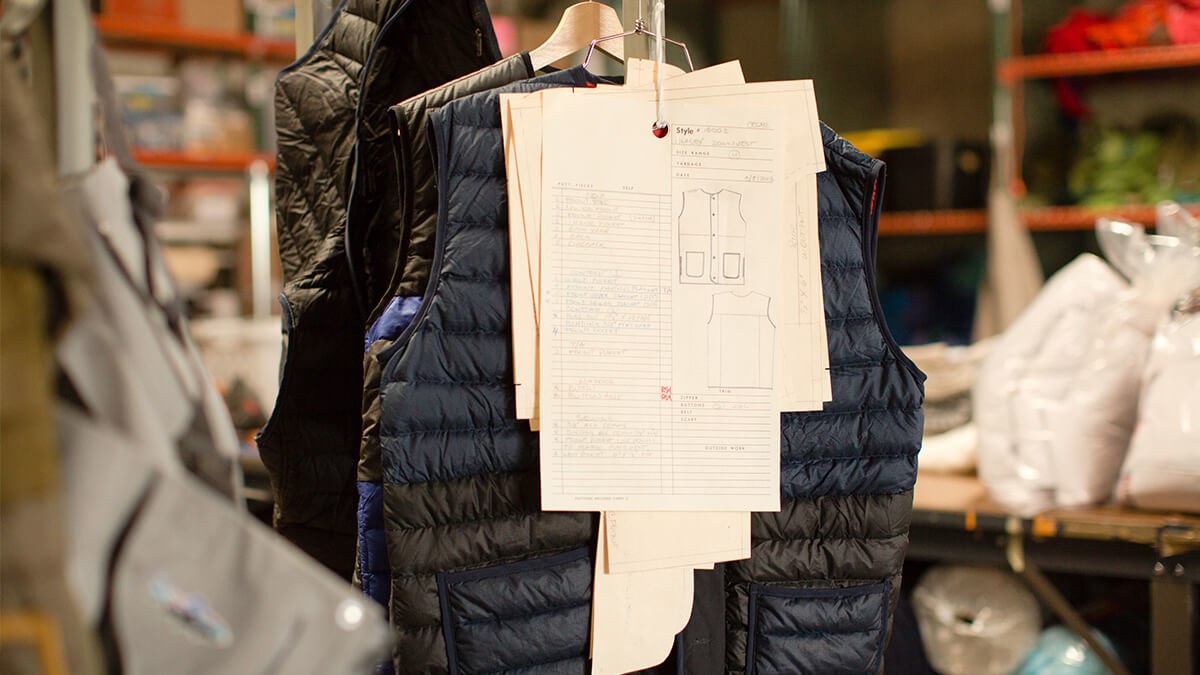
Patagonia has expressed interest in the first global data set of microfibre pollution, to better understand fashion’s contribution.
© Kern Ducotte / Patagonia

Research from the consortium and others has helped create several insights, including that certain ultra-soft fabrics are created through distressing the material to achieve that tactile quality, which in turn sheds fibres, she says. Research has also suggested that fabrics made with a tighter weave shed less than looser weaves, and longer fibres less than short fibres.
While the tool is still new, companies can still start pushing suppliers to take small steps like treating wastewater properly, says Mather. “If the question hasn’t come from a brand, it’s more difficult or challenging for a supplier to come on board.”
Creating non-polluting fabrics
Research, though, only goes so far. “We want to see more of the kind of radical solutions — new types of materials that don’t persist in the environment, that don’t need hazardous chemicals to be functional, and ideally come from natural materials,” says Martin Mulvihill, founding partner at Safer Made, a venture capital firm that focuses on eco-friendly technologies.
Stella McCartney may have made a breakthrough with a new denim produced with biodegradable elastane, which has been one of the hardest materials for apparel to make from recycled plastic. And California-based Mango Materials has developed a technology to turn polyhydroxyalkanoate, a naturally occurring compound, into a polyester replacement.
The company makes pellets for melt processors, which can transform them into fibre used for casual or sports apparel, shoes and other traditionally polyester-based products. Chief executive Molly Morse says the end product can be consumed by naturally occurring microorganisms, so even if microfibre sheds, it’s not polluting.
Natural Fiber Welding, based in Illinois, makes a plant-based leather substitute called Mirum that it says eliminates the need for polyurethane. “What gives Mirum a clear advantage over plastic incumbents is it will biodegrade and can be recycled. All the microfibres that it may shed are food for some plant system or organism,” claims director of business development Greg Stillman. Mirum was featured by designer Felder Felder in a concept dress at London Fashion Week last September.
Plastics persist
Many new fabrics marketed as eco-friendly, however, aren’t completely naturally biodegradable. Recycled nylon, for instance, is increasingly popular with the fashion industry, which could also start exploring bio-nylon as a commercial option; California biotech company Genomatica said on Wednesday that it had produced at scale a plant-based version of nylon. But both recycled and bio-nylon have the same chemical structure as conventional nylon, says Mulvihill, who has a PhD in Chemistry from the University of California, Berkeley. “It will persist in the environment in the same way.”
“Bio-nylon that isn’t recycled will not biodegrade on its own. Some things are meant to be durable, which is why, for those products, there should be strong recycling or reuse programmes,” a Genomatica spokesperson wrote by email. “For bio-nylon, we set out to create a product that had a lesser environmental impact from the beginning, with the same qualities and performance that we enjoy with conventional nylon.”
“Apparel’s push for recycled polyester is a good thing from a carbon perspective,” says Michael Sadowski, consultant for the World Resources Institute, who nonetheless thinks more effort should be applied to recycling textiles themselves, rather than turning plastic bottles into textiles. “How can you take a polyester shirt and turn it into a new polyester shirt? Ultimately, I think that’s where we need to go.”
The end product aside, plastic is used throughout manufacturing in ways that consumers will never see. Clothing manufacturers often use polyamide, a type of plastic that is the basis for nylon, to protect yarns and make them softer and more durable, says Greg Altman, CEO of Evolved By Nature, a green chemistry company. Petroleum-based chemicals that are building blocks of plastic are also used on natural fibres like cotton and wool. “Anytime you see the word ‘superwash’ on wool, that natural yarn is coated in liquid nylon.”
There is little or no research about if such materials release microplastic, but they are associated with other environmental impacts such as water contamination with toxic solvents and the release of volatile chemicals and acidic gases.
Evolved By Nature says it has been able to replace the toxic or petrol-based chemicals that give fabrics anti-wrinkle and moisture management properties, and softer textures, with activated silk. Altman describes this as a pure silk protein dissolved in water and processed into different configurations that give it the functions of the synthetic chemicals it’s replacing. The Massachusetts-based firm is working with apparel companies and has just invested in a large facility expansion that will enable it to process over 100 million yards of fabric annually.
The use of plastic is by no means limited to apparel and shows up in virtually every aspect of fashion. Mulvihill says all materials — in backpacks, purses and shoes, for example — that aren’t leather or woven likely include plastic. And even when the material is leather or woven, it’s often coated in chemicals such as polyurethane, which is plastic.
He sees promise in how companies like Evolved By Nature and Bolt Threads are developing technical applications with raw materials from nature. “I see this happening, and it’s exciting,” says Mulvihill. “The more as chemists we start thinking [of ways to use] these natural building blocks to provide functions, the better off we’ll be.”
To receive the Vogue Business Sustainability Edit, sign up here.
Comments, questions or feedback? Email us at [email protected].
More from this author:
How to mend sustainable fashion’s multi-billion dollar funding gap