

• Latest
  • Trending
  • All
FedEx Corporation (NYSE:FDX), United Parcel Service, Inc. (NYSE:UPS) – Commentary: Foreign Trade Zones Are Not “Free Trade Zones”

FedEx Corporation (NYSE:FDX), United Parcel Service, Inc. (NYSE:UPS) – Commentary: Foreign Trade Zones Are Not “Free Trade Zones”

December 18, 2019
Last Mile Delivery Market Worth Observing Growth | UPS, FedEx, SF Express

Last Mile Delivery Market Worth Observing Growth | UPS, FedEx, SF Express

April 23, 2024
Top 5 Spend Analysis Software ranked in 2024

Top 5 Spend Analysis Software ranked in 2024

March 1, 2024
How Tesla And BMW Are Leading A Supply Chain Renaissance With Blockchain

How Tesla And BMW Are Leading A Supply Chain Renaissance With Blockchain

January 19, 2024
LATAM Cargo strengthens European cargo links

LATAM Cargo strengthens European cargo links

April 14, 2020
Ford making reusable hospital gowns from airbag materials as efforts against coronavirus expand

Ford making reusable hospital gowns from airbag materials as efforts against coronavirus expand

April 14, 2020
Don’t Sweat NBC’s Decision to Cut Back on Television Ad Inventory

Don’t Sweat NBC’s Decision to Cut Back on Television Ad Inventory

April 14, 2020
Software firms sharpen focus on AI, big data as IT spending drops

Software firms sharpen focus on AI, big data as IT spending drops

April 14, 2020
Navigating turbulent times in your supply chain (TL:DR version)

Navigating turbulent times in your supply chain (TL:DR version)

April 14, 2020
Last Mile Delivery by Drones Market is Booming Worldwide

Last Mile Delivery by Drones Market is Booming Worldwide

April 14, 2020
AIR CARGO MARKET SIZE, SHARE, DEMAND, TREND, LATEST INNOVATIONS & APPLICATION ANALYSIS AND INDUSTRY GROWTH FORECAST 2027 – Science In Me

AIR CARGO MARKET SIZE, SHARE, DEMAND, TREND, LATEST INNOVATIONS & APPLICATION ANALYSIS AND INDUSTRY GROWTH FORECAST 2027 – Science In Me

April 14, 2020
Wheat procurement in Patiala: 6,500 coupons issued to farmers – cities

Wheat procurement in Patiala: 6,500 coupons issued to farmers – cities

April 14, 2020
Pandemic, Plastics And The Continuing Quest For Sustainability

Pandemic, Plastics And The Continuing Quest For Sustainability

April 14, 2020
  • Supply Chain
  • Logistics
  • Warehousing
  • Procurement
  • Shipping
  • More
    • Strategic Sourcing
    • Spend Analysis
    • Inventory
    • Contact Us
No Result
View All Result
United States International Supply Chain Commission
Home Logistics

FedEx Corporation (NYSE:FDX), United Parcel Service, Inc. (NYSE:UPS) – Commentary: Foreign Trade Zones Are Not “Free Trade Zones”

by usiscc
December 18, 2019
in Logistics
0
FedEx Corporation (NYSE:FDX), United Parcel Service, Inc. (NYSE:UPS) – Commentary: Foreign Trade Zones Are Not “Free Trade Zones”
492
SHARES
1.4k
VIEWS
Share on FacebookShare on Twitter

DHL was founded in the United States in 1969. Founders Dalsey, Hillblom and Lynn lent their initials to the company name. Germany’s Deutsche Post began acquiring stock in DHL in 1998 and by 2003 absorbed it into its global organization. Today, Deutsche Post DHL Group is a global air cargo integrator sharing the stage with FedEx Corporation (NYSE: FDX) and UPS Inc (NYSE: UPS). Each works to “integrate” door-to-door pickup and delivery services either in-house or in partnership with other companies.

Unlike FedEx and UPS, DHL is no longer a U.S. company. This means it cannot pick-up letters/packages at U.S. airports and fly them to other U.S. airports because that would be a cabotage violation. The European Union (EU)-United States Bilateral Air Agreement (2007) also prohibits EU-based airlines from flying from one U.S. airport to a second or more just to drop-off letters/packages imported in or pick-up those to be exported out. Technically, this means that the airplanes cannot co-terminalize. This prohibition is something that U.S.-based airlines are not burdened with when they operate in the EU.

Why? The EU-U.S. Bilateral Air Agreement considers the U.S. a single sovereign territory while the EU is made up of 28 sovereign territories. Under that interpretation it is not co-terminalization when flying from one European country to another despite them being part of a larger trade bloc. The agreement allows for “open skies” to the extent that an EU-based airline can fly into any U.S. airport that has a landing slot available. After that it must fly to a non-U.S. airport.

But what about DHL trucks and vans which are integral to its door-to-door U.S. activity? It is important to note that U.S. cabotage laws do not apply in the same way across all transport modes. As long as the trucks are licensed in the U.S. and driven by U.S. citizens then U.S. shipments can be picked up and dropped off within the U.S. – even if the truck fleet is owned by a foreign-based company like DHL.
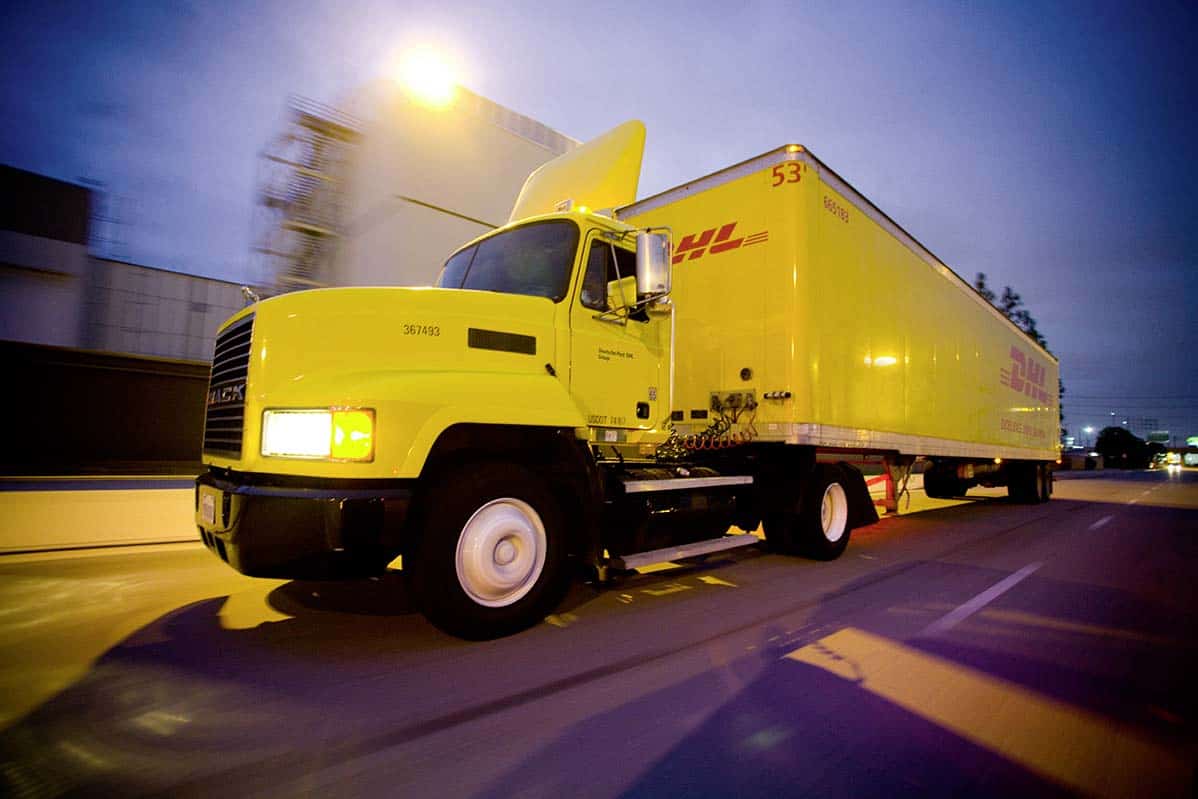
(Photo credit: DHL)

On Nov. 26, 2019, DHL opened its seventh location utilizing a U.S. Foreign Trade Zone (FTZ). This one is located at New York’s JFK Airport and operations will be handled by its freight forwarder subsidiary, DHL Global Forwarding. The other six FTZs are located at airports in: Atlanta, Chicago, Dallas-Fort Worth, Los Angeles, Miami and San Diego. These public spaces (typically, airports and ocean ports) are known as General Purpose Zones under the Foreign-Trade Zones Act (1934; 19 U.S.C. 81a-81u).

The purpose of FTZs is to promote U.S. exports whether they be facilitated by domestic or foreign companies. It makes sense, therefore, for DHL to provide its customers with the benefits that FTZs offer when they wish to export. Companies on private land can also apply to the U.S. Foreign-Trade Zones Board for status known as FTZ Subzones. Currently, DHL assists its customers who have subzones in Dallas and El Paso. 
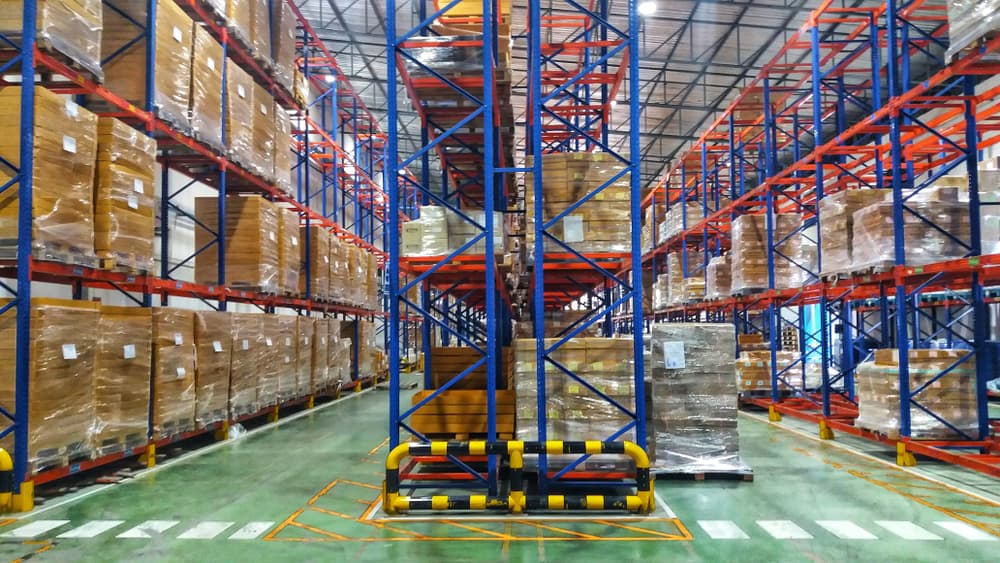
(Photo credit: Shutterstock)

While sometimes incorrectly referred to as “free trade zones,” FTZs are at best a managed form of free trade and with a special motive attached. The motive is that imports that would otherwise be subject to trade tariffs by U.S. Customs and Border Protection would be exempt if the item is either exported or, in very rare cases, is transformed into an item not subject to tariffs before it enters the U.S. economy. The point is that items within the FTZ and those moved from one FTZ to another are not considered a part of the U.S. economy until they leave these designated spaces and enter the U.S. economy as a true import. Under bilateral and multilateral free trade agreements, by contrast, tariffs are systematically eliminated and items would typically enter the U.S. economy duty-free.

FTZs may be useful even for U.S.-based importers who do not wish to ultimately export the item in its original form or as a transformed product. Tariffs deferred within FTZs have positive cash flow effects. Also, if the item is transformed within the FTZ and is subject to a lower tariff there is the added effect of lowering trade costs. By securing FTZ space for its customers, DHL alleviates them from having to negotiate lease space with airports. DHL’s aggregated import flows from a range of customers would likely better utilize scarce FTZ space for its intended purpose. Any of DHL’s customers that are involved in retail packaging, cross-docking (i.e., combining other products into sets), and value-added manufacturing (i.e., product transformation) would find FTZs advantageous.      

It is instructive that the word “reciprocity” is an old-fashioned form of the term “free trade.” But when it comes to FTZs and bilateral air agreements across countries, it is the lack of reciprocity that international shippers and carriers need to watch out for. This is why these arrangements are not indicators of free trade. Also, if a country offers FTZ benefits they need not match those found in a U.S. FTZ. Regulations can differ. There are over 100 bilateral air agreements between the U.S. and other countries which offer “open skies” and these, as well, need not involve the same range of options. Bilateral negotiations are not the same as multilateral ones. With this in mind international shippers and carriers may not have all the answers when they wish to expand into a different country but they can start by asking the right questions.

Image Sourced from Pixabay

Share197Tweet123
usiscc

usiscc

  • Trending
  • Comments
  • Latest
Escape From Tarkov – How to Rotate Items

Escape From Tarkov – How to Rotate Items

February 5, 2020
Supply chain examination: Planning for vulnerabilities you can’t control

Supply chain examination: Planning for vulnerabilities you can’t control

December 7, 2019
Procurement Project Manager job with Camden London Borough Council

Procurement Project Manager job with Camden London Borough Council

February 17, 2020
Art Battle Wichita Falls III at The Warehouse, 1401 Lamar.

Art Battle Wichita Falls III at The Warehouse, 1401 Lamar.

0
Global Industry Analysis, Size, Share, Growth, Trends, and Forecasts 2016–2024 – ZMR News Reports

Global Industry Analysis, Size, Share, Growth, Trends, and Forecasts 2016–2024 – ZMR News Reports

0
PHOTOS: Ottawa firefighters respond to warehouse fire

PHOTOS: Ottawa firefighters respond to warehouse fire

0
Last Mile Delivery Market Worth Observing Growth | UPS, FedEx, SF Express

Last Mile Delivery Market Worth Observing Growth | UPS, FedEx, SF Express

April 23, 2024
Top 5 Spend Analysis Software ranked in 2024

Top 5 Spend Analysis Software ranked in 2024

March 1, 2024
How Tesla And BMW Are Leading A Supply Chain Renaissance With Blockchain

How Tesla And BMW Are Leading A Supply Chain Renaissance With Blockchain

January 19, 2024
  • Privacy Policy
  • Terms of Use
  • Disclaimer
  • DMCA
  • Contact Us

Copyright © 2024 United States International Supply Chain Commission (usiscc.org)

This website uses cookies to improve your experience. We'll assume you're ok with this, but you can opt-out if you wish. Cookie settingsACCEPT
Privacy & Cookies Policy

Privacy Overview

This website uses cookies to improve your experience while you navigate through the website. Out of these cookies, the cookies that are categorized as necessary are stored on your browser as they are essential for the working of basic functionalities of the website. We also use third-party cookies that help us analyze and understand how you use this website. These cookies will be stored in your browser only with your consent. You also have the option to opt-out of these cookies. But opting out of some of these cookies may have an effect on your browsing experience.
Necessary
Always Enabled

Necessary cookies are absolutely essential for the website to function properly. This category only includes cookies that ensures basic functionalities and security features of the website. These cookies do not store any personal information.

Non-necessary

Any cookies that may not be particularly necessary for the website to function and is used specifically to collect user personal data via analytics, ads, other embedded contents are termed as non-necessary cookies. It is mandatory to procure user consent prior to running these cookies on your website.

SAVE & ACCEPT
No Result
View All Result
  • Supply Chain
  • Logistics
  • Warehousing
  • Procurement
  • Shipping
  • More
    • Strategic Sourcing
    • Spend Analysis
    • Inventory
    • Contact Us

Copyright © 2024 United States International Supply Chain Commission (usiscc.org)







