








Vast waves of fire have torn through Australia in recent months, leaving forests of skinned trees in their wake. The wildfires have been one of the most damaging in the country’s history – more than 11m hectares (27m acres) have burned, killing 33 people and decimating wildlife populations.
But they are just the latest in a succession of destructive blazes that have been flaring across the planet – even in the Arctic circle – in the past five years. The response from authorities, in Australia, the Americas and the Mediterranean often seems scrambled and ineffective.
So what is to be done? Fire experts point to a host of techniques that can help prevent fires before they have even started. These range from deliberate off-season blazes designed to manage the landscape to using grazing animals to reduce flammable material, as well as requiring people to remove trees and brush that are too close to homes.
Much of it draws on how our distant ancestors co-existed with forests and using agroforestry.
Good fires
The first thing to acknowledge is that firefighting doesn’t work and probably never will, says Guillermo Rein, professor of fire science at Imperial College London. He says pictures of air tankers are just “good PR” for politicians.
“We are almost fighting fires as we were 100 years ago except now we have bigger planes. All firefighters can do is protect the path of the fire and evacuate people. You have to wait for rain or wind to stop it.”
Rather than being a show of strength, firefighting should be seen as a last resort used only when preventive methods have failed, says Rein. Growing up in Spain, he was told that all fires were bad but after studying them he realised the importance of “good fires”.
“If we suppress all fires we are literally stopping life on Earth,” Rein says. “Wildfires were created by nature and they have well-recognised benefits – fire regulates the carbon cycle and has shaped all ecosystems known to man except Antarctica. The number one thing we can do to stop megafires is to create a natural fire regime.”
Counterintuitively, this involves burning more fires, using a technique called prescribed burns – intentional off-season fires that burn up leaves and old wood and create breaks in the forest. Indigenous people know this and have been regenerating forests using fire-stick farming for thousands of years, but much of that knowledge has been lost now.
Fires made out of season are often referred to as “cold fires”. They do not burn the canopy of trees, which means insects and other animals can take refuge without getting scorched. Many forests are reliant on fire to decompose dead wood and old leaves that otherwise lie on the forest floor. Some “phoenix plants” can only be regenerated by fire – sequoias, for instance, require fire to break open their cones so their seeds can spread.
Ever wondered why you feel so gloomy about the world – even at a time when humanity has never been this healthy and prosperous? Could it be because news is almost always grim, focusing on confrontation, disaster, antagonism and blame?
This series is an antidote, an attempt to show that there is plenty of hope, as our journalists scour the planet looking for pioneers, trailblazers, best practice, unsung heroes, ideas that work, ideas that might and innovations whose time might have come.
Readers can recommend other projects, people and progress that we should report on by contacting us at [email protected]
“Our fire management techniques in California are probably similar to those in Canada, Australia and the Mediterranean,” says Garrett Dickman, a biologist who has worked in forest management in Yosemite national park for 11 years. “It’s pretty simple in that you only have a handful of management tools – you’re either using fire, or you can use mechanical means. You can use livestock grazing too, which works pretty well in grass ecosystems.”
Fire management strategies vary in different countries – very generally, forests closer to the equator should have more wildfires and those farther away should have fewer. There are obvious exceptions such as the Amazon rainforest, which straddles the equator and should naturally have very few fires (tropical forests are normally too humid to sustain fires for long and their trees are not designed to withstand them).
Many US fire-suppression policies were created following devastating wildfires in the summer of 1910 (the “big blowup”) that ravaged large parts of Idaho, Montana and Washington. Forest rangers and ecologists understand the role of fires in shaping forests, but politicians have inherited this 100-year-old aversion to fire.
There are signs this is slowly starting to change.
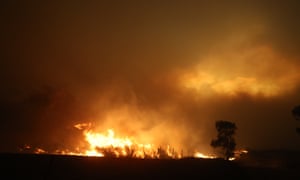
In California the amount of land allocated for prescribed burns has doubled between 2013 and 2018. About 19,000 hectares are burnt each year, but experts say that number needs to be far higher. Concerns about smoke pollution and the liability associated if something goes wrong discourage landowners from preemptive action.
Following a spate of fires in California between 2017 and 2019, there has been an effort to get rid of the barriers to prescribed burns, including removing liability for landowners and creating education programmes to help people understand their importance, though it is yet to be seen if these policies will be effective.
Agroforestry
Grazing animals help remove “fuel” from the forest floor and create natural breaks in woodland. Agroforestry systems – grazing animals and/or growing crops in forests – are part of cultural landscapes in Europe that are hundreds of years old. Having more people managing forests meant that small fires were less likely to get out of control. Because of lower population densities in North America and Australia, subsistence farming has had a less marked impact on forests.
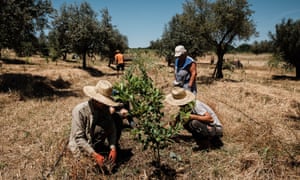
The slow decline of agroforestry was one of the factors that made the deadly 2017 wildfires in Portugal so destructive. Another issue is that ageing rural landowners – who often live next to forests – are not so active in clearing up brush from around their homes. The country also has large plantations of fast-growing (and flammable) eucalyptus trees grown to supply the country’s significant paper pulp industry, which may have exacerbated the problem.
However, small changes are starting to happen – authorities are seeking to reduce eucalyptus cultivation and plant more fire-resistant oak and chestnut trees. Rural properties are now required to clear undergrowth within 50 metres (164 feet) of houses.
A four-year study looking at land use in Cyprus, France, Greece, Italy, Portugal and Spain found that grazing animals were effective at reducing wildfires. “I get the impression that wildfires would still happen, but agroforestry is a way of minimising them,” says Dr Paul Burgess, a reader in crop ecology and management at the Cranfield Soil and Agrifood Institute, who helped write the study published in Agroforestry Systems.
But some are frustrated that these policies aren’t being created faster. Greece, whose islands and coasts have been hit by increasingly ferocious fires, faced tough criticism of its firefighting system after Mati, a resort town east of Athens, was consumed by an inferno that left 103 dead in 2018.
Following the tragedy, the European parliament called for tougher policies of prevention to be applied across the continent. “There were lessons to be drawn from Mati, but so far they have not been reflected in political action,” said Elias Tziritis, a forest fire specialist at WWF Greece. “There has to be a lot more emphasis on forest management and prevention of fires, a lot more focus on thinking ahead and not what should happen when a fire actually occurs.”
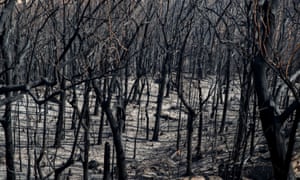
People involved in EU land use policy are starting to recognise the importance of farming and forestry: agroecology and agroforestry have been identified as key sustainable agricultural practices in the European Green Deal, which commits at least 40% of the common agricultural policy budget to climate action.
Burgess says: “In terms of agroforestry I think there’s an increasing appetite for integrated land management. In the context of Brexit there are more opportunities for it, too, which will also improve biodiversity, carbon storage, windbreaks and reduce soil erosion. It’s something the government is keen to look at, and I think we’re moving that way.”
Marc Castellnou, an incident commander in the Catalan fire service who is also a fire analyst at the University of Lleida, says wildfires are essentially a problem of land management and rural policies.
“We’re starting to realise that climate change isn’t just going to affect temperatures and sea levels – it’s also going to change landscapes on a global scale. The land as we have known it is not going to stay the same because the climate is changing. That is going to mean different policies when it comes to water and farming,” he said.
Indigenous people knew the art of forest management but much of that knowledge has been lost. Martin Kealy, a chartered fire consultant and managing director of MKA Fire, says: “It’s an art that would have been practised for thousands of years but when the Brits came and took over Australia, that knowledge was lost. The same happened in the US.
“These wildfires have been going on for hundreds if not thousands of years. It’s not something new and these fires will continue for hundreds or thousands of years – we just need to manage the land,” he said.
Additional reporting by Sam Jones in Madrid and Helena Smith in Athens
This article is part of a series on possible solutions to some of the world’s most stubborn problems. What else should we cover? Email us at [email protected]










