



• Latest
  • Trending
  • All
Financial Literacy To Supply Chain Digitization

Financial Literacy To Supply Chain Digitization

January 11, 2020
Last Mile Delivery Market Worth Observing Growth | UPS, FedEx, SF Express

Last Mile Delivery Market Worth Observing Growth | UPS, FedEx, SF Express

April 23, 2024
Top 5 Spend Analysis Software ranked in 2024

Top 5 Spend Analysis Software ranked in 2024

March 1, 2024
How Tesla And BMW Are Leading A Supply Chain Renaissance With Blockchain

How Tesla And BMW Are Leading A Supply Chain Renaissance With Blockchain

January 19, 2024
LATAM Cargo strengthens European cargo links

LATAM Cargo strengthens European cargo links

April 14, 2020
Ford making reusable hospital gowns from airbag materials as efforts against coronavirus expand

Ford making reusable hospital gowns from airbag materials as efforts against coronavirus expand

April 14, 2020
Don’t Sweat NBC’s Decision to Cut Back on Television Ad Inventory

Don’t Sweat NBC’s Decision to Cut Back on Television Ad Inventory

April 14, 2020
Software firms sharpen focus on AI, big data as IT spending drops

Software firms sharpen focus on AI, big data as IT spending drops

April 14, 2020
Navigating turbulent times in your supply chain (TL:DR version)

Navigating turbulent times in your supply chain (TL:DR version)

April 14, 2020
Last Mile Delivery by Drones Market is Booming Worldwide

Last Mile Delivery by Drones Market is Booming Worldwide

April 14, 2020
AIR CARGO MARKET SIZE, SHARE, DEMAND, TREND, LATEST INNOVATIONS & APPLICATION ANALYSIS AND INDUSTRY GROWTH FORECAST 2027 – Science In Me

AIR CARGO MARKET SIZE, SHARE, DEMAND, TREND, LATEST INNOVATIONS & APPLICATION ANALYSIS AND INDUSTRY GROWTH FORECAST 2027 – Science In Me

April 14, 2020
Wheat procurement in Patiala: 6,500 coupons issued to farmers – cities

Wheat procurement in Patiala: 6,500 coupons issued to farmers – cities

April 14, 2020
Pandemic, Plastics And The Continuing Quest For Sustainability

Pandemic, Plastics And The Continuing Quest For Sustainability

April 14, 2020
  • Supply Chain
  • Logistics
  • Warehousing
  • Procurement
  • Shipping
  • More
    • Strategic Sourcing
    • Spend Analysis
    • Inventory
    • Contact Us
No Result
View All Result
United States International Supply Chain Commission
Home Supply Chain

Financial Literacy To Supply Chain Digitization

by usiscc
January 11, 2020
in Supply Chain
0
Financial Literacy To Supply Chain Digitization
495
SHARES
1.4k
VIEWS
Share on FacebookShare on Twitter

Share

Tweet

Share

Share

Share

Print

Email

Supply chain management is increasingly more strategic than operational, enabling businesses around the world to improve their bottom lines while meeting the intensifying demands of end customers: quick and convenient ordering, faster and cheaper delivery, greater product choice and more.

In recent years, Industry 4.0 has opened up the opportunity for supply chains to not only digitize, but modernize. Internet of Things (IoT), robotics process automation (RPA) and autonomous vehicles are just some of the cutting-edge solutions offering positive disruption. According to research from JDA Software and KPMG, the C-Suite is eager to invest in these technologies to ramp up their supply chain management strategies.

Supply chain technology offers a level of automation, error mitigation and efficiencies that humans, in many cases, cannot provide. Indeed, supply chains are in the midst of a technological revolution, according to George W. Prest, CEO of logistics and supply chain association MHI.

Yet, while there are many areas of opportunity for digitization to help businesses meet the ever-increasing market demands, Prest told PYMNTS in a recent interview about the human capital challenge facing supply chains everywhere.

A Technology Combination

“Today’s supply chains do much more than just physically move materials and product from place to place,” Prest explained. “Customer service expectations are through the roof, and putting supply chains under more stress than ever before.”

Indeed, those demands for speed, efficiency, choice, affordability and beyond have introduced a high volume of friction and challenges for supply chain managers. Just a few of the tallest hurdles of a modern supply chain include enabling visibility and transparency as goods move from Point A to Point B, ensuring that those movements are accurately tracked and recorded, allowing digital communication between players throughout a supply chain and digitizing the flow of funds between businesses based on this information.

Yet, these challenges also present an opportunity for supply chain managers to wield a more strategic position within their enterprises, as technology arms these professionals with the capability to overcome these challenges.

There are many tools out there today vying for their chance to improve supply chain operations. Prest highlighted several, including blockchain, autonomous vehicles, cloud computing, IoT, predictive analytics and others — though not one single technology is going to emerge as a silver bullet to supply chain friction.

“These technologies work together to create next-generation supply chains that can meet new supply chain challenges,” he said.

Artificial Intelligence

One of the most heavily touted technologies in this arena is artificial intelligence (AI), which Prest pointed to as a key tool for positive change. Citing MHI’s own research, he said that while AI adoption in supply chains now stands at about 13 percent, it is expected to rise to 62 percent over the next five years.

However, perhaps the biggest role for AI, he added, is in data.

“AI will help firms make sense of the flood of digital information being generated by IoT and other technologies, to gain actionable insights about their operations,” Prest said, pointing to the “flexibility, reliability and speed” that AI can offer in its analytics capabilities.

Like any technology, AI will “not be the ‘be all, end all’” tool to elevate supply chains to the level necessary to meet today’s market demands, but the technology is particularly promising — considering its ability to ingest and make use of data in a way that humans alone cannot do.

The Human Capital Challenge

Technology is undoubtedly a necessity for today’s supply chains working to meet what Prest described as “the continued mindset of ‘faster-better-cheaper’” that the market requires. While there are several tools that can address an array of challenges, Prest emphasized that one of the largest points of friction in supply chains is of another nature.

“One of the main challenges facing our industry continues to be the shortage of skilled workers who can implement next-gen technologies, including managing and gaining insights from the onslaught of data coming from digital supply chains,” he said.

In other words, while technologies can generate, aggregate and analyze data for the purpose of faster, more efficient supply chains, there must be humans to make use of the insights that these technologies create.

Indeed, MHI’s 2019 Annual Industry Report found hiring qualified workers to be the biggest supply chain challenge for survey respondents, and Prest said he expects a similar outcome in the 2020 report. Talent will also be one of several key topics at MHI’s MODEX industry conference in Atlanta this coming March, the company said in a recent press release. It’s an important focus for an industry currently consumed with the demand to integrate cutting-edge technology, he noted.

“A critical component in the success of these digital supply chains is the ability to hire and retain the talent to run them,” he said. “One of the largest challenges — and opportunities — moving forward for supply chain advancement is to improve the digital literacy of the workforce.”
——————————–

Upcoming PYMNTS Virtual Event:

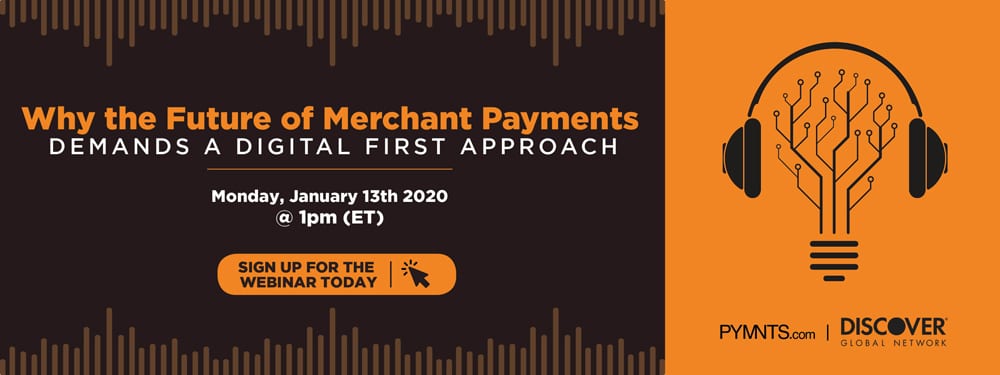
Join PYMNTS CEO, Karen Webster and Amy Parsons, SVP of Global Acceptance, Discover Financial Services on Monday, January 13, 2020 at 1:00 PM (ET) to learn the ways merchants can meet consumer expectations with payments technology available today — and how they can prepare for the future.

AI, Autonomous vehicles, B2B, B2B Payments, Consumer Demand, digital literacy, Digitization, Editors’ Picks, friction, Human Insight, Human Talent, IOT, MHI, News, supply chain management, technology adoption

Share198Tweet124
usiscc

usiscc

  • Trending
  • Comments
  • Latest
Escape From Tarkov – How to Rotate Items

Escape From Tarkov – How to Rotate Items

February 5, 2020
Supply chain examination: Planning for vulnerabilities you can’t control

Supply chain examination: Planning for vulnerabilities you can’t control

December 7, 2019
Procurement Project Manager job with Camden London Borough Council

Procurement Project Manager job with Camden London Borough Council

February 17, 2020
Art Battle Wichita Falls III at The Warehouse, 1401 Lamar.

Art Battle Wichita Falls III at The Warehouse, 1401 Lamar.

0
Global Industry Analysis, Size, Share, Growth, Trends, and Forecasts 2016–2024 – ZMR News Reports

Global Industry Analysis, Size, Share, Growth, Trends, and Forecasts 2016–2024 – ZMR News Reports

0
PHOTOS: Ottawa firefighters respond to warehouse fire

PHOTOS: Ottawa firefighters respond to warehouse fire

0
Last Mile Delivery Market Worth Observing Growth | UPS, FedEx, SF Express

Last Mile Delivery Market Worth Observing Growth | UPS, FedEx, SF Express

April 23, 2024
Top 5 Spend Analysis Software ranked in 2024

Top 5 Spend Analysis Software ranked in 2024

March 1, 2024
How Tesla And BMW Are Leading A Supply Chain Renaissance With Blockchain

How Tesla And BMW Are Leading A Supply Chain Renaissance With Blockchain

January 19, 2024
  • Privacy Policy
  • Terms of Use
  • Disclaimer
  • DMCA
  • Contact Us

Copyright © 2024 United States International Supply Chain Commission (usiscc.org)

This website uses cookies to improve your experience. We'll assume you're ok with this, but you can opt-out if you wish. Cookie settingsACCEPT
Privacy & Cookies Policy

Privacy Overview

This website uses cookies to improve your experience while you navigate through the website. Out of these cookies, the cookies that are categorized as necessary are stored on your browser as they are essential for the working of basic functionalities of the website. We also use third-party cookies that help us analyze and understand how you use this website. These cookies will be stored in your browser only with your consent. You also have the option to opt-out of these cookies. But opting out of some of these cookies may have an effect on your browsing experience.
Necessary
Always Enabled

Necessary cookies are absolutely essential for the website to function properly. This category only includes cookies that ensures basic functionalities and security features of the website. These cookies do not store any personal information.

Non-necessary

Any cookies that may not be particularly necessary for the website to function and is used specifically to collect user personal data via analytics, ads, other embedded contents are termed as non-necessary cookies. It is mandatory to procure user consent prior to running these cookies on your website.

SAVE & ACCEPT
No Result
View All Result
  • Supply Chain
  • Logistics
  • Warehousing
  • Procurement
  • Shipping
  • More
    • Strategic Sourcing
    • Spend Analysis
    • Inventory
    • Contact Us

Copyright © 2024 United States International Supply Chain Commission (usiscc.org)







