







➤ The COVID-19 outbreak has led to unprecedented consumer behavior, but goods shortages do not necessarily point to fundamental problems with the grocery supply chain.
➤ Americold Realty Trust does not anticipate significantly changing its business as a result of the pandemic.
|
|
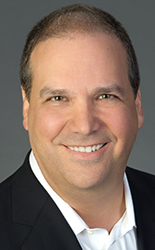 Americold Realty Trust President and CEO Fred Boehler
Cold storage has emerged recently as a favored niche of the darling industrial real estate segment, a major beneficiary of the growth of e-commerce. In the cold storage sphere, Americold Realty Trust is a dominant player and the only public real estate investment trust.
S&P Global Market Intelligence caught up with Fred Boehler, Americold’s president and CEO, to discuss the growth of the business and how the COVID-19 outbreak might have changed its trajectory. What follows is an edited transcript of that conversation.
S&P Global Market Intelligence: Some have said there is a significant undersupply of cold storage in key markets, and that the COVID-19 outbreak has made this problem more pronounced. Would you address the supply-demand picture today?
Fred Boehler: I would not say there is a dramatic undersupply in key markets. I would characterize supply and demand in this industry as being very, very tightly connected.
There are a couple of big misconceptions in [the] marketplace right now. First, that e-commerce — delivery of food directly to homes — is driving massive new demand for cold storage. But e-commerce is and will remain a small component of the grocery business, which is the backbone of ours. The vast majority of e-commerce is actually fulfilled from the local grocery store and will continue to be.
READ MORE: Sign up for our weekly coronavirus newsletter here, and read our latest coverage on the crisis here.
Moreover, the rise of e-commerce doesn’t translate to people eating more, or more food in the supply chain, per se. It’s just another distribution channel for the consumer.
The second misconception, which has grown around the COVID-19 outbreak, is that the lack of goods in grocery stores is a consequence of lack of capacity close to major markets. There is in fact about four months of food inventory, at any given time, in the supply chain. It’s just spread across multiple nodes, and this unprecedented event, and the mass hoarding that attended it, created gaps in the flow of goods. The goods were available. People just tugged on parts of the supply chain really fast and the supply chain had to react and push that inventory forward.
Do you expect any material change in how you do business as a result of the pandemic?
Not really. Infrastructure is critically important to get product from the point of manufacture to the consumer. That infrastructure is not going to change.
There have been reports about grocers reducing their inventory and moving toward a “just in time” model, but this is false. There is four months of inventory in the supply chain, and grocery stores, at their end of the business, have about 30 days’ inventory. That’s plenty for any event that occurs, and grocery stores can’t afford to increase it, given how thin margins are in the business.
Will speculative building ever be attractive in your business?
I often say “spec” is a four-letter word. We do what’s called market-driven builds, which one could describe as building on spec, but it’s with some market intelligence. Our customers tell us where the need is.
We have 2,600 customers, but 25 make up about 60% of our volume, and we work closely with them to understand growth trajectories. They describe their outlook for the next five years, and we validate that information based on historical data, and then we factor in data coming out of our sales force tool about all the demand we’ve had to turn away. We take all of that combined demand and determine the appropriate level of new capacity.
What then is the growth outlook for your company?
Food consumption typically grows with population growth. The majority of product going through our and our competitors’ warehouses comes from manufacturers, and manufacturers basically grow alongside gross domestic product. Demand could spike a little because of new demand from retail clients like grocery stores, which is the fastest-growing part of our business, but nothing crazy like the 5% or 10% growth some people think.
Because we’re so tightly connected on supply and demand, we expect capacity to grow at 1% to 2% year over year across the entire industry. And that’s about the amount of building that you see actually occurring out there.
Are you growing your portfolio primarily through development, acquisitions or M&A?
A little bit of each. We absolutely have to be developing some to be able to support our customers’ growth. We’ve been developing more since our IPO and have guided toward $75 million to $200 million of new starts every year. We’re on track to do that again this year, certainly.
On the M&A front, we’re opportunistic. There are a couple of big players in the industry like us and Lineage Logistics, and then it kind of drops off from there. It’s a very fragmented industry with lots of mom-and-pops. We are out there looking at the midsized and smaller companies, having those conversations. We’ve made six entity-level acquisitions since January 2019, and we’re talking to others.
Are you targeting any particular regions or states or cities in your deals?
Not necessarily. Our 160 sites in the U.S. have the country well covered. We did enter two new global markets recently. Our acquisition of Nova Cold Logistics facilitated our owned entry into Canada, and we’re obviously looking to expand there. We also entered into a joint venture in Brazil, through which we have the right to buy the whole thing out in 2023. There’s no urgency to do something near-term in Brazil. We’re dipping our toe in the water, and then we’ll determine what to do there later.
Most of the companies we’re talking to are within areas that we already operate in, with the exception of Europe. We’ll continue to have conversations there because Europe is a stable economy. We’re not talking to anybody in India or China because their supply chains aren’t mature enough yet.










