






U.S. Rep. Ed Case, D-Hawaii, has introduced three related bills in Congress to modify the Jones Act, saying that the law is “one of the key drivers of our astronomically high cost of living in Hawaii and other locations in our country that are not part of the continental U.S.”
The Jones Act is a cabotage law that requires ships moving cargo between two points in the U.S. be built in the U.S., be owned and crewed by U.S. citizens and be registered or “flagged” in the U.S.
The three bills introduced by Case are:
• H.R. 5500, or the Noncontiguous Shipping Competition Act, which would exempt additional noncontiguous trades within the U.S. from the Jones Act, including those between the “lower 48” and Hawaii, Alaska and Puerto Rico. With the change Chase is proposing, those three trades would be given an exemption to “coastwise” shipping laws and treated in a way that is more similar to the way shipping is regulated between the mainland U.S. and American Samoa, the Northern Mariana Islands and the Virgin Islands. However, the provision would not apply in cases in which there are at least three owners or operators and each has at least a 20% market share.
• H.R. 5499, or the Noncontiguous Shipping Reasonable Rate Act of 2019, which Case says would benchmark the definition of a reasonable rate that domestic shippers can charge as “no more than 10% above international shipping rates for comparable routes.” Case said while the Surface Transportation Board has the authority to adjudicate and set precedent on what a “reasonable rate” is for Jones Act shipping, “it has almost never been used and never to a clear conclusion on what is a reasonable rate. ” The bill would use as a benchmark an “international ocean rate index recognized by the Federal Maritime Commission,” which currently regulates foreign shipping.
• H.R. 5498, or the Noncontiguous Shipping Relief Act of 2019, which would allow transportation of merchandise in noncontiguous trade on foreign-flag vessels crewed by U.S. citizens. The bill also has provisions that would modify the personal injury provisions in the Jones Act by allowing employers to participate in “an authorized compensation plan under the Longshore and Harbor Workers’ Compensation Act” (LHWCA). The Department of Labor Office of Workers’ Compensation Programs notes that currently the LHWCA and Jones Act “are mutually exclusive regimes providing compensation for work-related injuries suffered by different categories of maritime employees.”
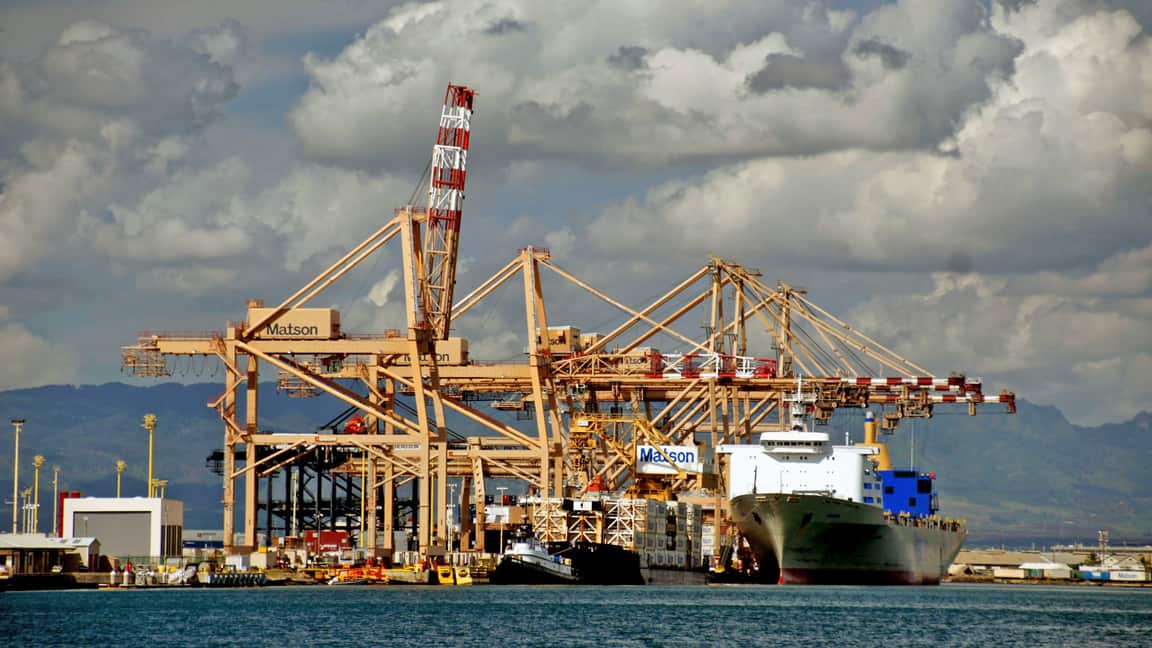
Case said the proposed law would rescind the Jones Act “wherever monopolies or duopolies in noncontiguous Jones Act shipping develop.” While there are smaller carriers serving the same markets, the major liner carriers to Hawaii are Matson and Pasha Hawaii; to Alaska, Matson and TOTE Maritime Alaska; and to Puerto Rico, Crowley Maritime and TOTE Maritime Puerto Rico.
All four of these companies — TOTE, Crowley, Matson and Pasha — have made massive investments in recent years building new ships for their Jones Act fleets.
TOTE and Crowley have each built two new container ships for their services between Jacksonville, Florida, and Puerto Rico. TOTE’s entered service in 2015 and 2016, and Crowley took delivery of two container/roll-on, roll-off ships (conros) in 2018.
Matson took delivery of two container ships in 2018 and 2019 that were built at Philly Shipyard in Philadelphia. On Dec. 26, Matson took delivery of its newest ship, the largest conro ever built in the the U.S., from the General Dynamics NASSCO shipyard in San Diego, where a sister ship is now under construction.
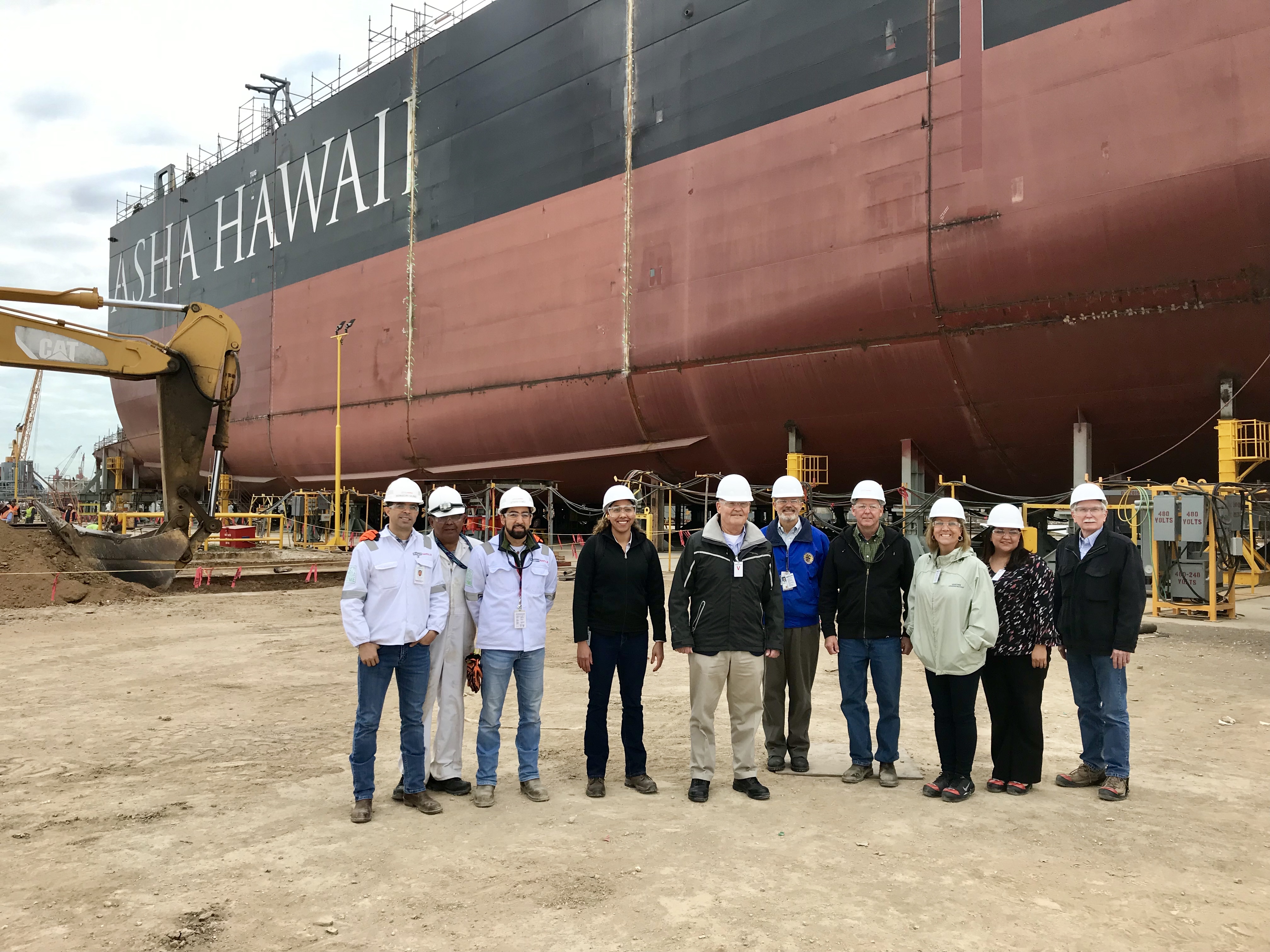
Pasha Hawaii has two conros under construction at the Keppel AmFELs shipyard in Brownsville, Texas. They are scheduled for delivery in 2020 and 2021.
In a Dec. 20 press release announcing the legislation, Case claimed the Jones Act “is widely credited with artificially inflating the cost of shipping goods to Hawaii.”
The Jones Act has been under attack for many years, recently by the Cato Institute, which has been sponsoring a “Project on Jones Act Reform.” Other critics of the law have included the Heritage Foundation, the Grassroot Institute of Hawaii and the late Sen. John McCain.
Case argues that “because Jones Act shipping has shrunken and international shipping has increased dramatically, especially in the last quarter century, the Jones Act results in a very few carriers serving all domestic shipping needs.”
While there is nothing in the Jones Act that prevents ships that are built, owned or registered in other countries or crewed by non-Americans from moving cargo in and out of Hawaii, Alaska and Puerto Rico from foreign countries, because so much cargo is shipped to and from the U.S. mainland, Case says the law “severely limits the supply of shipping to and from our communities. It has allowed a very few companies to control our very lifeline to the outside world and as a result command shipping rates way higher than the rest of the world.
“In the rest of our country, if shipping rates are too high, then there are transportation alternatives like trucking and rail that act as a market check on the shipping companies,” continued Case. “But that is not a choice in our noncontiguous jurisdictions, and if there are artificially limited numbers of shippers, then the price of virtually everything we need is jacked up.”
Case says Hawaii imports “well over 90% of its life necessities, including food and other consumer goods, construction and housing supplies and raw materials for Hawaii industries like agriculture, by ocean cargo only.”
“At a basic level, the everyday goods that we rely on in Hawaii cost much more than on the mainland. As just one example, yesterday there was a 30% difference in a gallon of milk at Safeway grocery stores in Honolulu and Long Beach, California,” he said. My constituents pay $6.39 for a gallon of whole milk, while those in Long Beach, one of the major ports where Hawaii’s goods come from, pay $4.49. That difference of fully 30% is only about shipping, way above world prices, and is unacceptable.
“There are plenty of international cargo lines who could and would compete for a share of that market. Yet in Hawaii’s case only two U.S-flag domestic cargo lines — Matson and Pasha— operate a virtual duopoly over our lifeline and they do not act as an effective market check on each other,” said Case.
John McCown, the former chief executive officer of the Jones Act carrier Trailer Bridge, has questioned the validity of Jones Act critiques put forth by the Cato Institute and others and was skeptical of Case’s milk analysis.
He noted that there are a number of reasons shipping costs are high to Hawaii that would remain whether it is served by Jones Act and U.S.-flag ships. He said those include Hawaii’s remote location, high stevedoring costs in both Hawaii and on the West Coast and its imbalanced trade.
“Hawaii has the highest milk prices in the country because it chooses to have virtually no milk cows,” he said. McCown went on to explain that he had looked at the ratio of cows to people in Hawaii and California and found that for each dairy cow in Hawaii there were 617.6 people, compared to just 22.6 people per cow in California. Instead, Hawaiian producers have chosen to raise beef cattle.
A 2012 story in American Shipper described how as recently as 1982 Hawaii was self-sufficient in milk, but that a 2010 report to the Hawaiian legislature said that “dairy operations on Oahu began to close in the 1970s as they came under land development pressure and were pushed out to marginal lands.”
In remarks when he introduced the bill, Case also said that the Jones Act “stifles meaningful competition” for farmers and ranchers who want to move their products to the U.S. mainland.
As an example, he said cattle must be shipped to Canada using foreign-flag ships or moved in “cow-tainers” from neighboring islands to Oahu, where they sit for days before being moved to the mainland.
“The result (besides associated higher costs) is in-harbor cattle waste disposal challenges, higher in-transit cattle mortality and lower-weight cattle delivery to market,” said Case.
In response to Case, Matson issued a statement that said, “Hanging Hawaii’s higher costs of living on shipping ignores what local economists and journalists have consistently found over the years, which is that shipping costs are just one of many cost factors that go into local pricing of consumer goods and represent a small fraction of price differences between Hawaii and the mainland.”
Case complained the Jones Act was enacted in a protectionist era under the guise of preserving a strong national merchant marine. “But today it is just an anachronism: Most of the world’s shipping is by way of an international merchant marine functioning in an open, competitive market. And those few U.S.-flag cargo lines that remain have maneuvered the Jones Act to develop virtual monopolies over domestic cargo shipping to and from our most isolated and exposed locales — our island and offshore states, territories and possessions.”
But Matson parried, saying, “The reason the Jones Act has had such strong bipartisan support in every Congress and administration in modern times is because it is important to homeland security and national defense, as well as the security of service to remote communities like Hawaii and Alaska, from an economic standpoint. The importance of being able to rely on critical supply line transportation is easy to take for granted but hard to overstate.”
Case said, “While they are nominally subject to federal regulation, the fact of the matter is that cargo prices have gone in only one direction — up, fast and accelerating — and it is indisputable that there is no downward market pressure which would otherwise result from meaningful competition.”
Michael N. Hansen, president of the Hawaii Shippers’ Council, said his organization welcomed Case’s bills, saying, “The Jones Act has made the domestic United States maritime industry the most expensive in the world and its burden falls most heavily on the noncontiguous jurisdictions.”
In addition to the restrictions placed on trade between the mainland and Hawaii, Puerto Rico and Alaska, Hansen noted the mainland-Guam trade is restricted to ships registered in the U.S., but that they do not have to be domestically built and owned.
Case’s bill seems targeted at the major container and roll-on, roll-off carriers that are common carriers to Hawaii, Alaska and Puerto Rico, but there are smaller carriers in these trades as well, many of them barge carriers. And it was unclear if the bill would have any impact on carriers moving bulk products.










