






The COVID-19 public health emergency has caused the product flow to be changed around the global and it caused the disruption of the supply chain network to a great extent. As world is the global village and interconnected with one another for different purposes. The most important manifestation of globalization is the Economic integration. The Coronavirus outbreak has caused the disruptions to every aspect of life but considerably to the Economy of every country and the global supply chains. The economy wheel is the fluctuation of the economy between periods of expansion (growth) and contraction (recession).
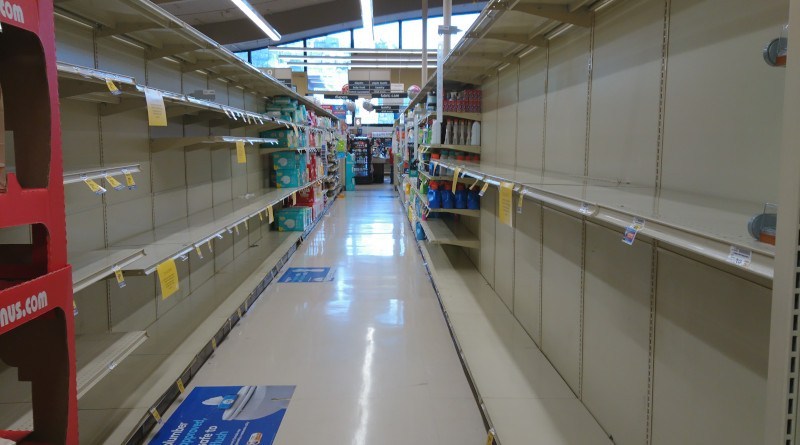
When we think about the disruption or disturbance of the supply chain network by COVID-19, it will be impacted in the four ways first of all “problem in Production of new products ” e.g. Demand for sanitizers and toilet papers has tremendously risen these days but racks are empty in the stores due to the production constraints. Due to this epidemic the whole supply chain network is disturbed because there is limited production in the organizations due to many reasons the foremost is the limited access to workforce or the employees due to quarantines as the virus is continuous to spread around the world so government advised to stay at home so it reduces the overall normal productions of the factories and the leaders also need to think about how they can protect the health of their employees and also help their workers who are ill.
Due to the pandemic most of the companies have started work from home but it is not that effective. there are different drawbacks related to that too.
The second one is the” cost of the products” due to this pandemic organizations have to bear the additional costs of shipping for the products to stay in the market as complete lockdown for the businesses is not easy and it will ultimately be horrifying for the economy as well.
Third is the ”products that have already being manufactured and present in the market and in these days people are stocking down (the essential items) but there is the limited supply at the backend due to factory lockdowns and this could lead to the loss of market shares for different companies as the customers are looking for the substitutes as well, due to the shortage of products in the market due to this pandemic outbreak.
Fourth is the ”customer satisfaction’’ in this period of higher uncertainty people are looking in order to fulfill their needs they are not considering their wants their first priority for this they are looking for the substitutes of the products no matter if they have a brand loyalty for certain brand or products. All this has changed due to the shortage of the products and rising uncertainty in the market.
The spread of COVID-19 has pushed the pause button on the world’s economy let’s talk about the world’s power economic houses. China has the world’s largest economy behind the US, one of the main reason of its rising economy is the massive network of different factories in China from T-shirts to mobile phones to all consumer goods for the consumers all over the World.
Today China makes up of 1/3 of world manufacturing and is the world’s largest exporter. As world is the global village and supply chain is interconnected so deeply across the world. So if the issues appear in China’s economy it can felt across the world. As the COVID-19 pandemic outbreak was first identified in Wuhan, China in December 2019, as of 28 March 2020 more than 650,000 cases of COVID-19 have been reported in over 190 countries resulting in approximately 30200 deaths. And due to the vigorous spread of virus globally it has impacted every country directly or indirectly.
In an effort to stop the spread of the virus the Wuhan China epicenter of the virus was completely sealed off and in China mandatory factories shutdown in most of its provinces in order to halt the spread of corona virus. All the businesses across the globe are badly affected by the COVID-19 outbreak e.g. The Hyundai Motors in South Korea had stopped their production in early February due to not getting its parts that they usually import from China. Chinese Car sales dropped drastically by 86% in last month and other companies like Tesla and Geely are start selling cars online as consumers stay away from showrooms.
On the other hand most of the components of iPhone are manufactured in china so it relies heavily on China for its production. China suggests Apple’s coronavirus problem may worsen in the future. As there is the steep decline in iPhone sales in February that is 61% and according to analyst it will be worse in the future.
As the corona virus impacted every business so the investors in US stock market suffers their worse week in February after the Global finance crises since 2008. Investors fear the spread of the virus will destroy the economic growth of countries. Central Banks in many countries including the United Kingdom has slashed the interest rates. Due to the coronavirus outbreak European automotive crises deepens, as plants have been closed temporary and demand likely to fall up to 20% this year.
The Travel Industry has been badly impacted by the outbreak of corona virus. In order to halt the further spread of this virus as airlines cutting down their flights and tourists cancelling business trips and holidays and the governments around the world have imposed the travel restrictions in order to stop the spread of virus as a controlling measure. In order to slow down the spread of virus as it is affecting the globe drastically the governments of almost every country has closed down the restaurants, bars, and social places.
The closure of restaurants is causing a knock-on effect on the related industries such as food production, dairy products, fish farming, food and beverages, wine and beer production. The issues are especially troublesome in industrialized where enormous extents of whole categories of food are normally imported typically by just-in-time logistics.
In addition to all this as the virus has spread globally the oil market is continue to suffer losses but the uncertainty is still there to answer the questions, how deep? and how long? Coronavirus impacts the oil market because of the travel restrictions imposed by the Government which limits the use of jet fuel and due to the slowdown of supply chain network, lockdowns, less mobility, shutting down of factories this has the very direct affect on the oil consumption.
In late January projections for oil consumption would decline by approximately by 600,0000 to 800,000 barrels per day (bpd) over Quarter 1 and by 200,000 (bpd) over the entire year eclipsed by International energy Agency’s (IEA).
Gold is traditionally considered as the safe haven for the investors throughout the world. When crises hits, investors often choose less risky Investments, but even the price of gold tumble briefly In March as investors were fearful about global recession. These are some high profile cases.
Now, there are certain suggestions for the businesses in order to cope with the prevailing uncertainty. There are certain lessons that the companies can learn from the current situation. There have to be some mitigation strategies as well. Companies can work more proactively and agile by good planning. They can overcome the risk by making improvements in the recognition of risk profiles.
By implementing the risk management strategies and many more. After the Covid-19 global emergency, we will see organizations can be categorized as one of two classifications. There will be those that don’t do anything, trusting such a disturbance won’t ever happen again. These organizations will be facing exceptionally hazardous challenges in future. Furthermore, there will be firms that notice the exercises of this emergency and make interests in mapping their supply chain network. The businesses should organize themselves so they don’t need to operate blind when the following emergency strikes again in future and they will be capable enough to rapidly make sense of arrangements. These organizations will be the victors in the long run.
*Zainab Arshad is a MS scholar “Business and Management” Comsats University, Lahore Campus Pakistan. Contact: [email protected]
Please Donate Today
Did you enjoy this article? Then please consider donating today to ensure that Eurasia Review can continue to be able to provide similar content.










