





If this year’s headlines are to be believed, hydrogen fuel cells are poised to become one of the defining renewable energy solutions of the future. Since January 2019, the technology has captured remarkable levels of interest from some of the world’s most important economies, energy leaders and corporations.
However, much of the conversation surrounding future applications for fuel cell technology tends to ignore the areas where it might make the greatest impact. As the CEO of a company that designs and manufactures hydrogen fuel cell systems, I’ve witnessed this firsthand. Most often, we often find ourselves distracted by the enduring allure (and endless theatrics) of the consumer automotive sector.
That’s unfortunate, because while fuel cells certainly have the potential to transform our global economy, it won’t be the rise of fuel cell electric vehicles (FCVs) that does it. It’s much more likely that fuel cell technology will change the world through its impact on the global supply chain, forever altering the flow of goods and resources around the planet and transforming the way we do business.
A Good Year For Fuel Cell Technology
This isn’t just some sanguine flight of fancy. Today’s rapidly maturing fuel cell technology is showing enormous promise — enough to drive significant investments from some of the world’s biggest economies.
In March, the Chinese government announced plans to promote the development and construction of fueling stations for hydrogen fuel cell cars. In June, the International Energy Association (IEA) released its monumental hydrogen report, which precipitated the signing of a joint statement of future cooperation on hydrogen and fuel cell technologies by national energy agencies from the U.S., E.U. and Japan. In November, the Fuel Cell and Hydrogen Energy Association issued its Road Map to a U.S. Hydrogen Economy, highlighting the critical importance of hydrogen in achieving a low-carbon energy mix.
The excitement surrounding hydrogen fuel cells shouldn’t come as a surprise. Fuel cells are a remarkably versatile technology with a wide array of applications, and they offer numerous practical advantages over other renewable energy solutions. Once the hydrogen and fuel cell technology ecosystem is fully mature, it could have the potential to transform each link in the global supply chain. Let’s take a look at a few examples:
Manufacturing And Distribution
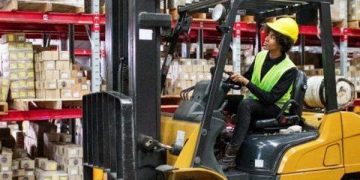
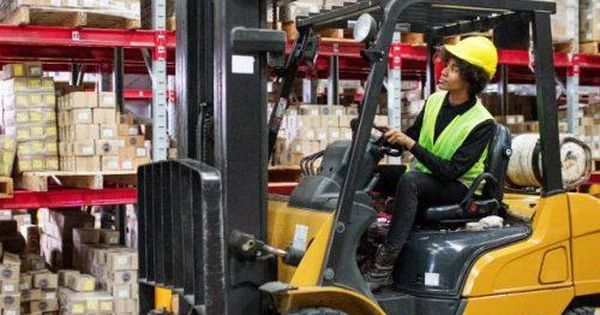
Hydrogen fuel cells aren’t just the technology of tomorrow; they’re also the technology of today. While we’re still very much in the early stages of seeing consumer FCVs take to the streets, fuel cells are making a real impact in nontraditional transportation applications like forklifts and other material handling equipment.
In fact, there are already over 25,000 hydrogen fuel cell forklifts and the number of hydrogen fueling stations deployed in warehouses, stores and manufacturing facilities across the globe continues to increase.
With fuel cell adoption growing in the manufacturing sector and FCV infrastructure continuing to scale, I think it won’t be long before hydrogen technologies take on a more prominent role in the distribution phase of the supply chain as well.
Fuel cell-powered freight trucks, ships and planes being used in the distribution process would eliminate another significant source of GHG emissions and once again lead to dramatically lower operating costs. Incorporate advances in autonomous vehicle technology, and it’s easy to envision a future in which fleets of autonomous, hydrogen-fueled freight trucks, ships and planes create a constant flow of consumer goods around the planet, rendering words like “exotic” all but obsolete.
Shipping And Freight Forwarding
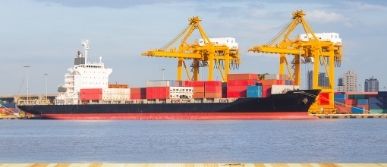
In 2018, the United States alone exported goods and services worth $2.5 trillion and imported $3.1 trillion, and much of that was transported between countries via ships. The use of traditional diesel-powered port equipment creates an environment for high GHG emissions. Hydrogen fuel cells can be used for the loading and unloading of ships. It’s no surprise that business leaders in the freight forwarding industry are already looking at hydrogen fuel cells as a solution for achieving carbon-free trucking over the long term.
Last-Mile Delivery
But perhaps the most exciting (and even perplexing) potential application of fuel cells in the supply chain is in the realm of last-mile delivery. Today, most of these deliveries are carried out via traditional diesel-powered trucks, which in many cases must travel miles between stops on ever-changing delivery routes. This makes last-mile delivery incredibly inefficient.
As a result, a company’s efforts to deliver products to the end user has become by far the costliest part of all supply chain shipping, so much so that last-mile delivery can easily account for over 50% of all supply chain shipping costs. Hydrogen fuel cells could change that forever.
Imagine a future in which solar-powered hydrogen fuel production enables a company like Amazon to create a fleet of airships that take up permanent residence in the skies above every major city. These airships could house thousands of fuel cell-powered drones capable of delivering packages to our doorsteps within minutes of receiving an order.
Such an innovation would make last-mile delivery significantly more efficient for consumers, who would receive shipments more quickly, and also for retailers, who would spend less money on fuel. More importantly, these innovations could greatly reduce the supply chain’s overall carbon footprint, forever eliminating one of the world’s biggest sources of carbon emissions.
The Supply Chain Of Tomorrow
As thoughtful consumers, we are encouraged to temper our consumption due, at least in part, to the threat of climate change. However, advances in fuel cell power and automation technologies could obviate those concerns altogether. How might such a shift affect our consumption patterns, our communities or our relationships with one another? It’s hard to say.
One thing is for certain, though: The fuel cell revolution is coming to the global supply chain, and these are exactly the questions we should be thinking about as we work to build the energy economy of the future.