

• Latest
  • Trending
  • All
‘In some states, disaster response forces are like a motley crew, need specialisation’

‘In some states, disaster response forces are like a motley crew, need specialisation’

April 4, 2020
Last Mile Delivery Market Worth Observing Growth | UPS, FedEx, SF Express

Last Mile Delivery Market Worth Observing Growth | UPS, FedEx, SF Express

April 23, 2024
Top 5 Spend Analysis Software ranked in 2024

Top 5 Spend Analysis Software ranked in 2024

March 1, 2024
How Tesla And BMW Are Leading A Supply Chain Renaissance With Blockchain

How Tesla And BMW Are Leading A Supply Chain Renaissance With Blockchain

January 19, 2024
LATAM Cargo strengthens European cargo links

LATAM Cargo strengthens European cargo links

April 14, 2020
Ford making reusable hospital gowns from airbag materials as efforts against coronavirus expand

Ford making reusable hospital gowns from airbag materials as efforts against coronavirus expand

April 14, 2020
Don’t Sweat NBC’s Decision to Cut Back on Television Ad Inventory

Don’t Sweat NBC’s Decision to Cut Back on Television Ad Inventory

April 14, 2020
Software firms sharpen focus on AI, big data as IT spending drops

Software firms sharpen focus on AI, big data as IT spending drops

April 14, 2020
Navigating turbulent times in your supply chain (TL:DR version)

Navigating turbulent times in your supply chain (TL:DR version)

April 14, 2020
Last Mile Delivery by Drones Market is Booming Worldwide

Last Mile Delivery by Drones Market is Booming Worldwide

April 14, 2020
AIR CARGO MARKET SIZE, SHARE, DEMAND, TREND, LATEST INNOVATIONS & APPLICATION ANALYSIS AND INDUSTRY GROWTH FORECAST 2027 – Science In Me

AIR CARGO MARKET SIZE, SHARE, DEMAND, TREND, LATEST INNOVATIONS & APPLICATION ANALYSIS AND INDUSTRY GROWTH FORECAST 2027 – Science In Me

April 14, 2020
Wheat procurement in Patiala: 6,500 coupons issued to farmers – cities

Wheat procurement in Patiala: 6,500 coupons issued to farmers – cities

April 14, 2020
Pandemic, Plastics And The Continuing Quest For Sustainability

Pandemic, Plastics And The Continuing Quest For Sustainability

April 14, 2020
  • Supply Chain
  • Logistics
  • Warehousing
  • Procurement
  • Shipping
  • More
    • Strategic Sourcing
    • Spend Analysis
    • Inventory
    • Contact Us
No Result
View All Result
United States International Supply Chain Commission
Home Procurement

‘In some states, disaster response forces are like a motley crew, need specialisation’

by usiscc
April 4, 2020
in Procurement
0
‘In some states, disaster response forces are like a motley crew, need specialisation’
493
SHARES
1.4k
VIEWS
Share on FacebookShare on Twitter

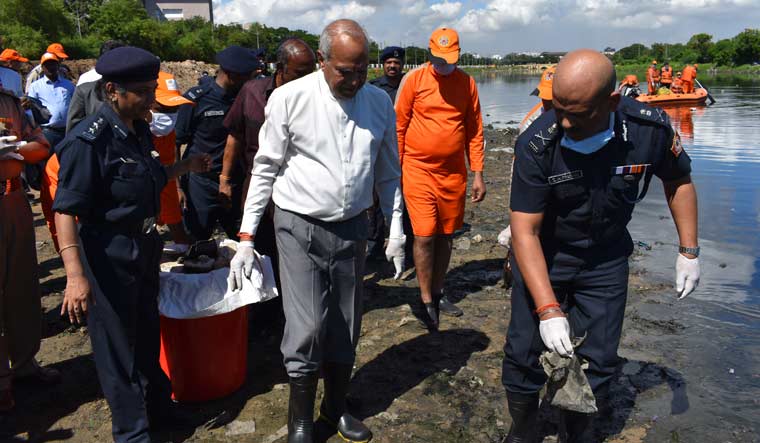
In 2011, India’s National Disaster Response Force helped recover dead bodies from the radioactive material released by the meltdown of three reactors at Fukushima Nuclear Power Plant in Japan resulting in emissions and explosions. The NDRF’s expertise in handling chemical, biological, nuclear and radiological disasters during the triple disaster in Japan (triggered by the earthquake in Tohoku that led to another devastating Tsunami followed by the meltdown) was globally recognised.

But nearly a decade later, India’s disaster ecosystem still shows gaps and deficiencies as it battles the biggest biological disaster, COVID-19.

Speaking to THE WEEK, S.N. Pradhan, Director General, National Disaster Response Force, said though the country has come a long way since 2005 when the National Disaster Management Act came into force, disaster preparedness across states continues to be plagued by lack of motivation, incentivisation, training and capacity building. Jharkhand and some northeastern states do not have State Disaster Response Forces (SDRFs) while others like Kerala have shared manpower. “In some states the SDRFs exist only on paper and in others they are operating on borrowed manpower from state armed forces, police and civil defence. It is like a motley crew,” he said.

Excerpts from an interview:

What is the role of NDRF in COVID-19 crisis?

NDRF was the first respondent when the first flight from Wuhan with coronavirus suspects landed in New Delhi. When the country was not aware of how to handle the COVID-19 patients, NDRF trained the first batch of immigration officials, CISF and subsequently central government and state government forces in handling those affected by the biological disaster. From basic training on how to wear the equipment (shoe covers, mask, gloves, head gears, top and bottoms) and discard it, and handling luggage to social distancing practices, the NDRF personnel provided training to central and state forces. Today, nearly 28,000 NDRF personnel are deployed at various airports, sea ports and landports. We have deployed our personnel in more than 20 state control rooms, helping them handle COVID-19 patients. We are already part of the home ministry’s control room. Being a specialised force, we are equipped to provide a specialised response to chemical, biological, nuclear and radiologicial disasters. NDRF is globally recognised as a unique force whose personnel are multi-skilled in handling all CBRN threats.

How do you see the country’s preparedness in dealing with biological disasters like COVID-19?

The scale of the present disaster is such that it has to be a collaborative effort even though disaster response is a state subject. In the COVID-19 crisis, the frontline of defence is the health and medical professionals who are dealing with infected cases directly. We are third in the response mechanism collaborating with central forces like coastguard, CISF and helping state governments.

What is the strength of the NDRF ?

The NDRF has 12 battalions (13,200 personnel) and 50 sub battalions which are divided into six teams. In the context of COVID-19, we have already prepared 84 teams and in each team there are 5-7 personnel with personal protective equipment and they are trained as paramedics. They have also undergone medical first responder training and pre-hospital training.

Have state governments sought the help of NDRF?

I have written to all chief ministers saying that the NDRF is in a state of preparedness. We have ensured all safety protocols and our commandants have been authorised to respond to the demands of the state governments. States like Bihar and Tamil Nadu have already roped in the NDRF services directly after cases came up in Munger in Bihar and concerns of infection among passengers at the railway station in Chennai.

Have all states created State Disaster Response Forces (SDRFs)?

There has been an inconsistent approach towards raising SDRFs. In spite of the government of India requesting state governments to create their own SDRFs and equip them with appropriate gear and provide training, very few states have followed it up. States like Rajasthan, Odisha, Madhya Pradesh, Tamil Nadu and Assam have created state disaster response forces. The Odisha and Rajasthan models are good and must be emulated by other states. However, many states have disaster response mechanisms only on paper. Jharkhand and some northeast states don’t have SDRFs while Kerala has SDRF manpower borrowed from its Fire Services department. So while some states have SDRFs on paper, others are still operating on borrowed manpower from state armed forces, police and civil defence. It is like a motley crew.

What is the way forward?

It is for the first time that the entire NDRF has been deployed for handling one single disaster. Normally, the NDRF goes into flood rescue, earthquake or cyclone disaster management which is limited to one or more states but does not involve the entire country. So, today the challenge is to be prepared not only to meet COVID-19 crisis but also to face any other kind of disaster when it comes. Some teams of the NDRF are permanently stationed in vulnerable locations for other disaster management challenges.

How is the NDRF ensuring its personnel are safe?

We are strictly following all safety protocols. Anyone who is on duty is being tested. The personnel are undergoing special cleaning and disinfectant exercises. We have also created barracks in the battalions to quarantine any personnel who are infected. 

Share197Tweet123
usiscc

usiscc

  • Trending
  • Comments
  • Latest
Escape From Tarkov – How to Rotate Items

Escape From Tarkov – How to Rotate Items

February 5, 2020
Supply chain examination: Planning for vulnerabilities you can’t control

Supply chain examination: Planning for vulnerabilities you can’t control

December 7, 2019
Procurement Project Manager job with Camden London Borough Council

Procurement Project Manager job with Camden London Borough Council

February 17, 2020
Art Battle Wichita Falls III at The Warehouse, 1401 Lamar.

Art Battle Wichita Falls III at The Warehouse, 1401 Lamar.

0
Global Industry Analysis, Size, Share, Growth, Trends, and Forecasts 2016–2024 – ZMR News Reports

Global Industry Analysis, Size, Share, Growth, Trends, and Forecasts 2016–2024 – ZMR News Reports

0
PHOTOS: Ottawa firefighters respond to warehouse fire

PHOTOS: Ottawa firefighters respond to warehouse fire

0
Last Mile Delivery Market Worth Observing Growth | UPS, FedEx, SF Express

Last Mile Delivery Market Worth Observing Growth | UPS, FedEx, SF Express

April 23, 2024
Top 5 Spend Analysis Software ranked in 2024

Top 5 Spend Analysis Software ranked in 2024

March 1, 2024
How Tesla And BMW Are Leading A Supply Chain Renaissance With Blockchain

How Tesla And BMW Are Leading A Supply Chain Renaissance With Blockchain

January 19, 2024
  • Privacy Policy
  • Terms of Use
  • Disclaimer
  • DMCA
  • Contact Us

Copyright © 2024 United States International Supply Chain Commission (usiscc.org)

This website uses cookies to improve your experience. We'll assume you're ok with this, but you can opt-out if you wish. Cookie settingsACCEPT
Privacy & Cookies Policy

Privacy Overview

This website uses cookies to improve your experience while you navigate through the website. Out of these cookies, the cookies that are categorized as necessary are stored on your browser as they are essential for the working of basic functionalities of the website. We also use third-party cookies that help us analyze and understand how you use this website. These cookies will be stored in your browser only with your consent. You also have the option to opt-out of these cookies. But opting out of some of these cookies may have an effect on your browsing experience.
Necessary
Always Enabled

Necessary cookies are absolutely essential for the website to function properly. This category only includes cookies that ensures basic functionalities and security features of the website. These cookies do not store any personal information.

Non-necessary

Any cookies that may not be particularly necessary for the website to function and is used specifically to collect user personal data via analytics, ads, other embedded contents are termed as non-necessary cookies. It is mandatory to procure user consent prior to running these cookies on your website.

SAVE & ACCEPT
No Result
View All Result
  • Supply Chain
  • Logistics
  • Warehousing
  • Procurement
  • Shipping
  • More
    • Strategic Sourcing
    • Spend Analysis
    • Inventory
    • Contact Us

Copyright © 2024 United States International Supply Chain Commission (usiscc.org)







