


• Latest
  • Trending
  • All
In the Green Transition, Transportation Is the Next Big Baddie

In the Green Transition, Transportation Is the Next Big Baddie

December 23, 2019
Last Mile Delivery Market Worth Observing Growth | UPS, FedEx, SF Express

Last Mile Delivery Market Worth Observing Growth | UPS, FedEx, SF Express

April 23, 2024
Top 5 Spend Analysis Software ranked in 2024

Top 5 Spend Analysis Software ranked in 2024

March 1, 2024
How Tesla And BMW Are Leading A Supply Chain Renaissance With Blockchain

How Tesla And BMW Are Leading A Supply Chain Renaissance With Blockchain

January 19, 2024
LATAM Cargo strengthens European cargo links

LATAM Cargo strengthens European cargo links

April 14, 2020
Ford making reusable hospital gowns from airbag materials as efforts against coronavirus expand

Ford making reusable hospital gowns from airbag materials as efforts against coronavirus expand

April 14, 2020
Don’t Sweat NBC’s Decision to Cut Back on Television Ad Inventory

Don’t Sweat NBC’s Decision to Cut Back on Television Ad Inventory

April 14, 2020
Software firms sharpen focus on AI, big data as IT spending drops

Software firms sharpen focus on AI, big data as IT spending drops

April 14, 2020
Navigating turbulent times in your supply chain (TL:DR version)

Navigating turbulent times in your supply chain (TL:DR version)

April 14, 2020
Last Mile Delivery by Drones Market is Booming Worldwide

Last Mile Delivery by Drones Market is Booming Worldwide

April 14, 2020
AIR CARGO MARKET SIZE, SHARE, DEMAND, TREND, LATEST INNOVATIONS & APPLICATION ANALYSIS AND INDUSTRY GROWTH FORECAST 2027 – Science In Me

AIR CARGO MARKET SIZE, SHARE, DEMAND, TREND, LATEST INNOVATIONS & APPLICATION ANALYSIS AND INDUSTRY GROWTH FORECAST 2027 – Science In Me

April 14, 2020
Wheat procurement in Patiala: 6,500 coupons issued to farmers – cities

Wheat procurement in Patiala: 6,500 coupons issued to farmers – cities

April 14, 2020
Pandemic, Plastics And The Continuing Quest For Sustainability

Pandemic, Plastics And The Continuing Quest For Sustainability

April 14, 2020
  • Supply Chain
  • Logistics
  • Warehousing
  • Procurement
  • Shipping
  • More
    • Strategic Sourcing
    • Spend Analysis
    • Inventory
    • Contact Us
No Result
View All Result
United States International Supply Chain Commission
Home Logistics

In the Green Transition, Transportation Is the Next Big Baddie

by usiscc
December 23, 2019
in Logistics
0
In the Green Transition, Transportation Is the Next Big Baddie
499
SHARES
1.4k
VIEWS
Share on FacebookShare on Twitter

Climate change crusaders are quick to lionize someone like

Tesla’s

Elon Musk

and to demonize Big Oil executives. The reality, though, is that even “green” transport risks becoming a villain.

Sustainability seems hardest for the firms that generate energy or extract the necessary commodities since moving away from oil and gas and into renewable sources requires turning their entire business models upside down. But the past five years suggest that businesses that move people and goods may actually have as difficult a road ahead.

This the first of a Heard on the Street series on transportation and the environment.

During this period it has been the only sector in which greenhouse-gas emissions have consistently risen both in the U.S. and in the European Union. By contrast, energy producers have finally started to get cleaner by switching from coal to gas and investing in renewable sources.

Road, aviation, waterborne and rail transportation put together now account for eight metric gigatons of carbon-dioxide equivalents, which is 24% of global greenhouse-gas emissions, according to the International Energy Agency. In the U.S. this figure rises to 34%.

United Nations climate talks in Madrid ended last Sunday without explicit pledges on key issues, but with an agreement to have carbon-cutting plans ready for next year’s conference. To be consistent with the existing Paris Agreement goals, transport emissions need to peak around 2020 and then fall around 70% relative to 2015 levels, estimates by the IEA show.

In theory, electric and plug-in hybrid vehicles chart a clear path to lower emissions. Even once the costs of making the batteries and generating the electricity that feeds them is taken into account, most estimates suggest that they emit roughly half as much greenhouse gases as a gasoline car.

But recent experience proves that consumer tastes can easily sabotage steps toward sustainability: In the U.S., rising demand for pickup trucks has offset any gain from electric vehicles. And faster economic development in emerging nations will inevitably mean higher emissions, even if each vehicle pollutes less.

In China and India, the number of motorized vehicles per person quintupled and tripled, respectively, between 2007 and 2017, according to U.S. Department of Energy data. Catching up with U.S. levels of motorization—which admittedly are very high—both countries would need two billion extra vehicles. Even if 100% of those were electric, they would add more emissions on their own than the total level allowed by the Paris goals.

Greenhouse gases coming from aviation also keep surging despite the fact that planes are becoming increasingly fuel efficient because air traffic growth has surged.

Furthermore, while environmental policies have tended to focus on passenger transport, this misses a big chunk of the picture, because almost half of transportation emissions now come from freight.
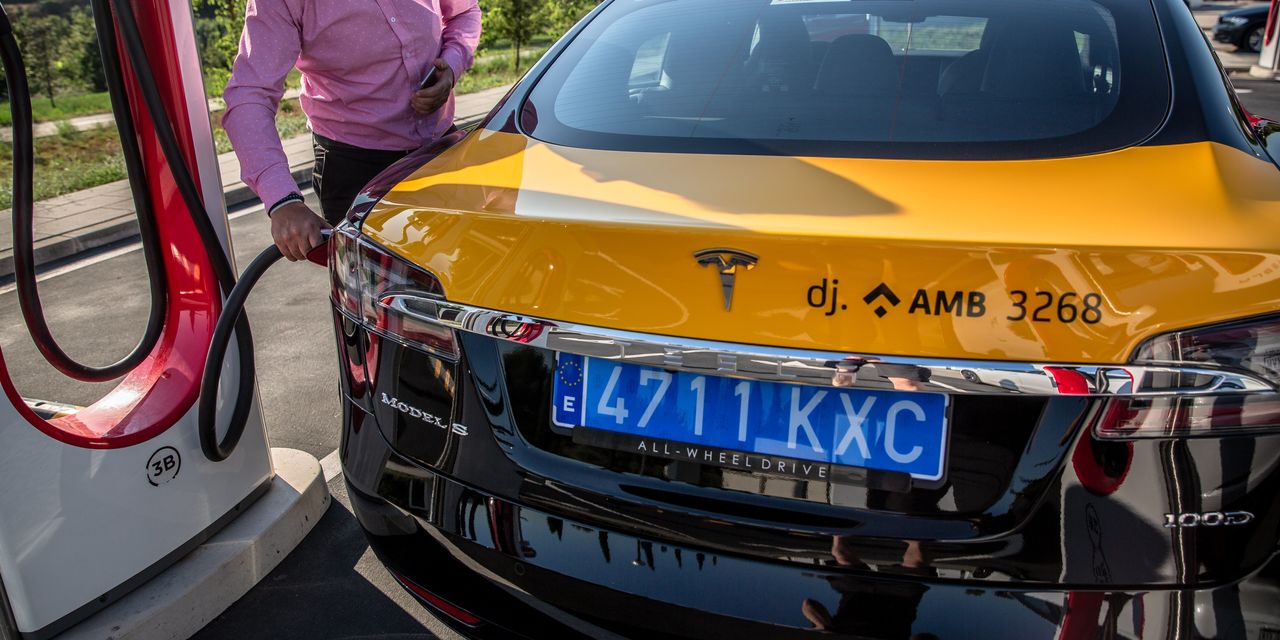
In theory, electric and plug-in hybrid vehicles chart a clear path to lower emissions.


Photo:

Angel Garcia/Bloomberg News

Trucks are harder to electrify, due to the extra weight and shorter range of batteries. Between 2005 and 2015, passenger transport energy intensity fell by 27%, compared with only 5% for freight, with road cargo vehicles showing no improvement at all. Adoption of rail, a cleaner alternative, isn’t picking up. Meanwhile ocean freight, which is by far the most efficient form of transport per ton mile, faces a reckoning from new rules that take effect in January because it relies on the dirtiest fuel to be so economical.

No technological solution on its own is likely to be enough to meet climate demands. Urban planning that emphasizes the use of trains, as well as allowing more employees to work from home, will play a big role, experts say. But higher taxes and hard limits on travel and freight might be the only solution.

As far as maligned industries go, transportation risks earning a permanent spot in the gallery of rogues.

Write to Jon Sindreu at [email protected]

Copyright ©2019 Dow Jones & Company, Inc. All Rights Reserved. 87990cbe856818d5eddac44c7b1cdeb8

Share200Tweet125
usiscc

usiscc

  • Trending
  • Comments
  • Latest
Escape From Tarkov – How to Rotate Items

Escape From Tarkov – How to Rotate Items

February 5, 2020
Supply chain examination: Planning for vulnerabilities you can’t control

Supply chain examination: Planning for vulnerabilities you can’t control

December 7, 2019
Procurement Project Manager job with Camden London Borough Council

Procurement Project Manager job with Camden London Borough Council

February 17, 2020
Art Battle Wichita Falls III at The Warehouse, 1401 Lamar.

Art Battle Wichita Falls III at The Warehouse, 1401 Lamar.

0
Global Industry Analysis, Size, Share, Growth, Trends, and Forecasts 2016–2024 – ZMR News Reports

Global Industry Analysis, Size, Share, Growth, Trends, and Forecasts 2016–2024 – ZMR News Reports

0
PHOTOS: Ottawa firefighters respond to warehouse fire

PHOTOS: Ottawa firefighters respond to warehouse fire

0
Last Mile Delivery Market Worth Observing Growth | UPS, FedEx, SF Express

Last Mile Delivery Market Worth Observing Growth | UPS, FedEx, SF Express

April 23, 2024
Top 5 Spend Analysis Software ranked in 2024

Top 5 Spend Analysis Software ranked in 2024

March 1, 2024
How Tesla And BMW Are Leading A Supply Chain Renaissance With Blockchain

How Tesla And BMW Are Leading A Supply Chain Renaissance With Blockchain

January 19, 2024
  • Privacy Policy
  • Terms of Use
  • Disclaimer
  • DMCA
  • Contact Us

Copyright © 2024 United States International Supply Chain Commission (usiscc.org)

This website uses cookies to improve your experience. We'll assume you're ok with this, but you can opt-out if you wish. Cookie settingsACCEPT
Privacy & Cookies Policy

Privacy Overview

This website uses cookies to improve your experience while you navigate through the website. Out of these cookies, the cookies that are categorized as necessary are stored on your browser as they are essential for the working of basic functionalities of the website. We also use third-party cookies that help us analyze and understand how you use this website. These cookies will be stored in your browser only with your consent. You also have the option to opt-out of these cookies. But opting out of some of these cookies may have an effect on your browsing experience.
Necessary
Always Enabled

Necessary cookies are absolutely essential for the website to function properly. This category only includes cookies that ensures basic functionalities and security features of the website. These cookies do not store any personal information.

Non-necessary

Any cookies that may not be particularly necessary for the website to function and is used specifically to collect user personal data via analytics, ads, other embedded contents are termed as non-necessary cookies. It is mandatory to procure user consent prior to running these cookies on your website.

SAVE & ACCEPT
No Result
View All Result
  • Supply Chain
  • Logistics
  • Warehousing
  • Procurement
  • Shipping
  • More
    • Strategic Sourcing
    • Spend Analysis
    • Inventory
    • Contact Us

Copyright © 2024 United States International Supply Chain Commission (usiscc.org)







