


• Latest
  • Trending
  • All
Indian defence procurement and the questionable value of staggered purchases

Indian defence procurement and the questionable value of staggered purchases

March 21, 2020
Last Mile Delivery Market Worth Observing Growth | UPS, FedEx, SF Express

Last Mile Delivery Market Worth Observing Growth | UPS, FedEx, SF Express

April 23, 2024
Top 5 Spend Analysis Software ranked in 2024

Top 5 Spend Analysis Software ranked in 2024

March 1, 2024
How Tesla And BMW Are Leading A Supply Chain Renaissance With Blockchain

How Tesla And BMW Are Leading A Supply Chain Renaissance With Blockchain

January 19, 2024
LATAM Cargo strengthens European cargo links

LATAM Cargo strengthens European cargo links

April 14, 2020
Ford making reusable hospital gowns from airbag materials as efforts against coronavirus expand

Ford making reusable hospital gowns from airbag materials as efforts against coronavirus expand

April 14, 2020
Don’t Sweat NBC’s Decision to Cut Back on Television Ad Inventory

Don’t Sweat NBC’s Decision to Cut Back on Television Ad Inventory

April 14, 2020
Software firms sharpen focus on AI, big data as IT spending drops

Software firms sharpen focus on AI, big data as IT spending drops

April 14, 2020
Navigating turbulent times in your supply chain (TL:DR version)

Navigating turbulent times in your supply chain (TL:DR version)

April 14, 2020
Last Mile Delivery by Drones Market is Booming Worldwide

Last Mile Delivery by Drones Market is Booming Worldwide

April 14, 2020
AIR CARGO MARKET SIZE, SHARE, DEMAND, TREND, LATEST INNOVATIONS & APPLICATION ANALYSIS AND INDUSTRY GROWTH FORECAST 2027 – Science In Me

AIR CARGO MARKET SIZE, SHARE, DEMAND, TREND, LATEST INNOVATIONS & APPLICATION ANALYSIS AND INDUSTRY GROWTH FORECAST 2027 – Science In Me

April 14, 2020
Wheat procurement in Patiala: 6,500 coupons issued to farmers – cities

Wheat procurement in Patiala: 6,500 coupons issued to farmers – cities

April 14, 2020
Pandemic, Plastics And The Continuing Quest For Sustainability

Pandemic, Plastics And The Continuing Quest For Sustainability

April 14, 2020
  • Supply Chain
  • Logistics
  • Warehousing
  • Procurement
  • Shipping
  • More
    • Strategic Sourcing
    • Spend Analysis
    • Inventory
    • Contact Us
No Result
View All Result
United States International Supply Chain Commission
Home Procurement

Indian defence procurement and the questionable value of staggered purchases

by usiscc
March 21, 2020
in Procurement
0
Indian defence procurement and the questionable value of staggered purchases
494
SHARES
1.4k
VIEWS
Share on FacebookShare on Twitter

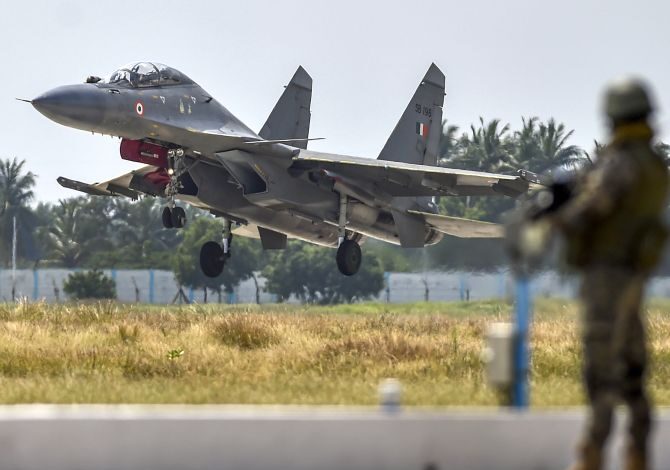
Thanjavur: Sukhoi-30MKI fighter aircraft squadron lands at the Thanjavur airbase during its induction ceremony into the Indian Air Force, Monday, Jan. 20, 2020. (PTI Photo/R Senthil Kumar)(PTI1_20_2020_000110B)

The author contextualises his view of continuing procurement through small orders on an ‘as-and-when’ basis in Gen Bipin Rawat’s recent announcement

The Chief of Defence Staff (CDS) Gen. Bipin Rawat has announced that India will employ a ‘staggered purchases’ approach to its defence procurement for the foreseeable future. Staggered purchasing is the procurement of small orders of defence equipment on an ‘as-and-when-required’ basis.

India has employed staggered purchases in the past. This experience shows that instead of being a solution, this method is emblematic of Indian defence procurement/production process’ larger systemic deficiencies. These deficiencies include a low operational account, large capital account deficit, inefficient domestic manufacturing, and diverse inventory of weapons and weapon-systems. Ultimately, India’s employment of staggered purchases is problematic as it is based on the prioritisation of affordability over value-for-money.

India’s T-90 Experience

Indian Defence Public Sector Units (DPSU) have wrangled with the issues of inefficient and expensive domestic manufacturing for decades. Take for example the Indian army’s purchase of its T-90 Main Battle Tank (MBT) fleet; the first deal for which was for 124 fully-built units and 186 local assembly kits in 2001. The second, in 2004, was for the licensed production of 1,000 units. In 2007, a further 347 had to be contracted directly from Russia. In 2019, licensed production for 464 additional tanks was negotiated at a cost of US$ 3.12 billion.

Even with relatively large orders, the Indian army has had to negotiate multiple contracts specifically due to the poor production standards in the Heavy Vehicles Factory (HVF) in Tamil Nadu. Weak indigenous production has resulted in additional costs; with barrels, targeting, and night-vision systems having to be replaced by foreign imports. In fact, even as of 2019, 45 per cent of the T-90 MBT (its transmission and engine) is still Russian-manufactured, necessitating units be shipped to Russia for major repairs. The dearth in domestic logistics and parts production have raised the actual cost of the T-90 MBT to three-times the purchase price. The staggered purchase of parts, kits, and whole platforms have also encouraged Russian vendors to gouge prices on each transaction.

The use of staggered purchases in the case of the T-90 MBT is reflective of the inefficiencies of India’s domestic manufacturing base. Its continued employment also denies any institutional attempt to improve Indian DPSUs, as staggered purchases preclude the economies of scale that make technology transfers and domestic production worthwhile.

Indian Air Force: MiGs and Spare Parts

A consequence of inefficient domestic production – as highlighted in the case of the T-90 – is the vulnerability of expensive spare parts and logistics. Another issue is the unreliable supply of these parts. Take the case of the Indian Air Force’s (IAF) fleet of Su-30MKIs. Russia’s erratic supply of parts causes delays in overhauls and maintenance as 49 per cent of a Su-30MKI consists of an imported kit (due to poor domestic production). The staggered purchasing of parts also burdens the operational budget as vendors are keen to push new parts, seeing as they cost about four times more than repairs. As such, the staggered purchases of parts, compared to placing a big-ticket order – where one can initiate domestic manufacturing and logistics – is not only detrimental to armed forces’ operational capabilities (due to increased downtime), but also to the already limited operational budget.

Another example of the myopic view of defence procurement is the IAF’s recent decision to buy 21 additional MiG-29s from Russia. Though the fighters do come cheap at US$ 39 million per fighter, it is only because they have been lying mothballed since the 1980s. Fielding these 40-year old fighters will require considerable improvements to the airframes and engines; an additional US$ 13 million upgrade to meet IAF specifications; and costly imported maintenance. While the cost of any other aircraft would have been ruinous to the IAF, it will still bear all of these expenses, only to decommission the MiG-29 squadron by 2032.

Interface and Interoperability Challenges

The final issue of staggering purchases of defence equipment – when coupled with an ageing and diverse inventory – is that it leads to problems in subsystem interfacing and platform interoperability. Weapon systems require extensive modifications to be compatible with other extant systems. Even then, platforms that do operate with subsystems that are different in terms of age and country of origin remain susceptible to operational failures. For example, in the 2019 Balakot strike, a French Mirage 2000 deployed by the IAF was unable to fire its Israeli Crystal Maze missile. Similarly, platforms from different countries, such as the Indian Navy’s Russian Kilo-class and French Scorpène-class submarines, have limited interoperability due to different communications systems, weapons, targeting equipment, etc.

Conclusion

Admittedly, the policy of staggered purchases results in marginal improvements in critical areas. However, its use in India – without an expansion of the defence budget’s capital and operational accounts, development of efficient indigenous manufacturing, and a compatible inventory – does nothing more than to preserve, and in some cases, aggravate the Indian armed forces’ systemic issues.


Siddharth Anil Nair

Research Intern with the South East Asia Research Programme (SEARP), IPCS.

Share198Tweet124
usiscc

usiscc

  • Trending
  • Comments
  • Latest
Escape From Tarkov – How to Rotate Items

Escape From Tarkov – How to Rotate Items

February 5, 2020
Supply chain examination: Planning for vulnerabilities you can’t control

Supply chain examination: Planning for vulnerabilities you can’t control

December 7, 2019
Procurement Project Manager job with Camden London Borough Council

Procurement Project Manager job with Camden London Borough Council

February 17, 2020
Art Battle Wichita Falls III at The Warehouse, 1401 Lamar.

Art Battle Wichita Falls III at The Warehouse, 1401 Lamar.

0
Global Industry Analysis, Size, Share, Growth, Trends, and Forecasts 2016–2024 – ZMR News Reports

Global Industry Analysis, Size, Share, Growth, Trends, and Forecasts 2016–2024 – ZMR News Reports

0
PHOTOS: Ottawa firefighters respond to warehouse fire

PHOTOS: Ottawa firefighters respond to warehouse fire

0
Last Mile Delivery Market Worth Observing Growth | UPS, FedEx, SF Express

Last Mile Delivery Market Worth Observing Growth | UPS, FedEx, SF Express

April 23, 2024
Top 5 Spend Analysis Software ranked in 2024

Top 5 Spend Analysis Software ranked in 2024

March 1, 2024
How Tesla And BMW Are Leading A Supply Chain Renaissance With Blockchain

How Tesla And BMW Are Leading A Supply Chain Renaissance With Blockchain

January 19, 2024
  • Privacy Policy
  • Terms of Use
  • Disclaimer
  • DMCA
  • Contact Us

Copyright © 2024 United States International Supply Chain Commission (usiscc.org)

This website uses cookies to improve your experience. We'll assume you're ok with this, but you can opt-out if you wish. Cookie settingsACCEPT
Privacy & Cookies Policy

Privacy Overview

This website uses cookies to improve your experience while you navigate through the website. Out of these cookies, the cookies that are categorized as necessary are stored on your browser as they are essential for the working of basic functionalities of the website. We also use third-party cookies that help us analyze and understand how you use this website. These cookies will be stored in your browser only with your consent. You also have the option to opt-out of these cookies. But opting out of some of these cookies may have an effect on your browsing experience.
Necessary
Always Enabled

Necessary cookies are absolutely essential for the website to function properly. This category only includes cookies that ensures basic functionalities and security features of the website. These cookies do not store any personal information.

Non-necessary

Any cookies that may not be particularly necessary for the website to function and is used specifically to collect user personal data via analytics, ads, other embedded contents are termed as non-necessary cookies. It is mandatory to procure user consent prior to running these cookies on your website.

SAVE & ACCEPT
No Result
View All Result
  • Supply Chain
  • Logistics
  • Warehousing
  • Procurement
  • Shipping
  • More
    • Strategic Sourcing
    • Spend Analysis
    • Inventory
    • Contact Us

Copyright © 2024 United States International Supply Chain Commission (usiscc.org)







