







 |
|
Ralph Lauren Corp is rolling out Digital Product Identities (IDs) for tens of millions of products |
Experts have told just-style of the urgent need for the clothing sector to embrace Industry 4.0 to boost productivity and harness creativity by providing a single, connected platform for all supply chain processes.
Industry 4.0 would help pull the apparel sector away from siloed product lifecycle management (PLM) solutions and isolated assessments of supply chain management, says Mark Burstein, president at NGC Software.
“This is where most of the fashion industry is today,” he explains, adding that Industry 4.0 can provide “a giant leap in productivity” by providing a single, connected platform for all supply chain processes.
Pete Santora, chief commercial officer at SoftWear Automation, which creates autonomous sewn goods production lines using robotic solutions, agrees, noting that Industry 4.0 is about “the interconnectivity of disparate islands of machines to form a chain of information and cooperation.”
He emphasises the importance of artificial intelligence solutions and the use of robotics, machine vision, machine learning, natural language processing and big data analysis “to become a more efficient and productive method of production.”
Industry 4.0 can provide a giant leap in productivity by providing a single, connected platform for all supply chain processes
Edward Hollyday, vice president of digital consultancy Black Swan Textiles, adds that because Industry 4.0 helps brands speed up the whole production process, they can deliver on-demand manufacturing.
“The single biggest impact this technology enables is the shift in business models from design/make/ship/sell, to design/sell/make/ship,” he explains.
But he stresses that this requires a fundamental change in approach to product planning. “For a brand, this means shifting from seasonal line planning to an open-to-buy model,” he says, adding this eliminates the risk of product and manufacturing capacity forecasting.
“Personalised clothing made only after the order provides the holy grail for both brand and customer,” Santora explains, adding that Industry 4.0 decreases the cost of localised manufacturing while increasing its quality, speed and capabilities, such as meeting orders for garments in three days or less.
IT strategist Craig Crawford adds that Industry 4.0 technology can also help brands get closer to the consumer by providing more information about each product.
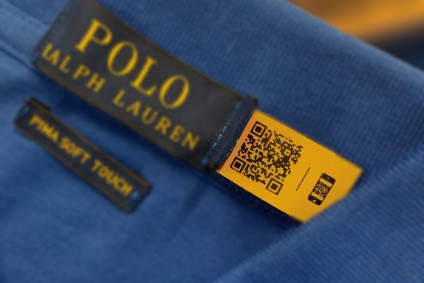
As an example, he points to a new initiative from Ralph Lauren, which has partnered with the real-time internet of things Software as a Service (SaaS) platform Evrythng and apparel label specialist Avery Dennison to install digital product IDs into product labels to help tackle counterfeiting of its brand.
Consumers can check if an item is authentic by scanning a product label with their smartphone, and then find out more about the product at the same time.
‘Intelligent’ clothing factories
A key issue for manufacturers is how to use Industry 4.0 technologies to transform an existing factory into an ‘intelligent’ factory.
Keith Fenner, managing director of Coats Digital, which provides software solutions to the clothing industry, says the first step in transforming an existing factory to an ‘intelligent’ factory is to standardise, digitise and centralise data collection.
“The second step is using this data to evolve and grow along with the changing needs of manufacturing by application of business process automation.” This could be more predictive and responsive approaches to operations and maintenance, incorporation of new processes or technologies, or near-real-time changes to production.
Rosemary Coates, executive director of the Reshoring Institute, a collaboration between the University of San Diego, California, and Blue Silk Consulting, which Coates founded, says a manufacturer should prioritise potential investments “starting with where the most labour can be extracted. Typically, this is the spot with the highest ROI [return on investment].”
She explains that a laser cutting table, for example, will significantly reduce the production time and ensure quality of the pattern cuts.
Sewing is another operation that can be transformed using Industry 4.0 technologies. For instance, software specialist PTC, together with Black Swan Textiles and Henderson Sewing Machine Co, have developed what they call a ‘connected sewing machine.’
Here, legacy sewing machines of all makes, models and stitch types are connected to PTC’s Intelligent Apparel Manufacturing (IAM), a new programme based around PTC’s FlexPLM and ThingWorx Internet of Things (IoT) solutions that can send materials and production data through to machinery, which can help guide (human) operators.
“The ability to provide two-way communication – regardless of machine manufacturer and stitch type – is a gateway to an intelligent process that automates the machine setup, operator instructions, and real-time data feedback” – as well as providing digital continuous improvement, Hollyday explains.
Santora adds that to create an effective intelligent factory: “Start with your people. People are the key to integrating technology into your ecosystem and guaranteeing success.”
The changing role of the creative designer
While much of the focus of Industry 4.0 is on production, the role of the creative designer is also constantly evolving thanks to new digital tech.
Softwear Automation’s Santora points to three particularly significant changes. Firstly, he says the design must be pulled from the consumer, “rather than just created in isolation and pushed down to them,” and digital technologies can help this.
Secondly he stresses that design will need to remain flexible all the way through manufacturing, to allow for consumer feedback. “Designs must allow for the customer to participate and adapt the designer’s work while still maintaining the vision. This creates a lot of stress on the manufacturing process, but offers a real opportunity for growth.”
Thirdly, designers need to design “with automation in mind,” taking account of the technology and factory making process rather than customer, material and company alone.
Karin Bursa, executive vice president at Logility, which provides supply chain management software to the clothing industry, adds the increased collaboration and visibility of information driven by Industry 4.0 can help inspire new designs and direct activity towards more profitable investments and the merchandise that will sell quickly.
Technology solutions allowing this to happen include Logility’s Inspiration Board, which brings together digital assets from across the supply chain combine “a designer’s inspirations such as fabrics, visuals and styles together with the intelligence of sourcing, compliance and manufacturing and the discipline of the financial planning process.”










