






Author: Micha’el Tanchum, AIES and Truman Institute
Iran’s integration into the China–Russia Eurasian architecture is as complicated as it is consequential for economic and security relations across Eurasia. As Beijing and Moscow seek to advance their respective strategic objectives while cooperating within the Shanghai Cooperation Organization framework, Iran’s integration carries the potential to shift the strategic balance between the two.
Iran is a liability for each Eurasian giant’s wider strategic agenda in the Middle East. With the security architecture of the Persian Gulf now in flux, Beijing and Moscow have a unique opportunity to reorient both Iran and its regional rivals towards the China–Russia Eurasian architecture.
Iran possesses the world’s second-largest natural gas reserves and the fourth-largest oil reserves. Unfettered Iranian hydrocarbon exports could reshape Eurasian geopolitics to China’s benefit and Russia’s detriment by jeopardising Russia’s pre-eminence among Eurasian energy suppliers.
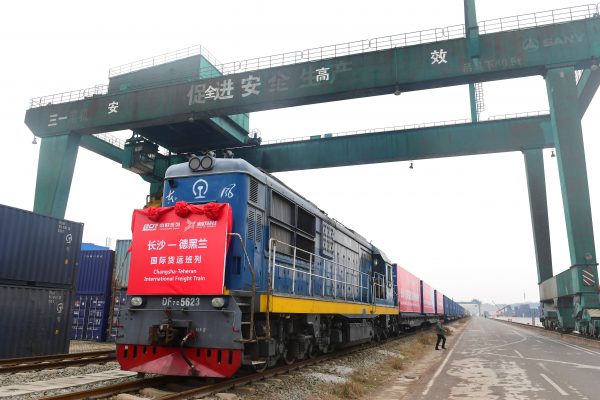
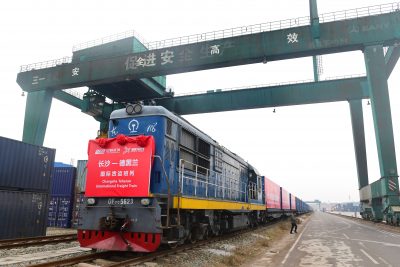
Iran’s strategic position at the heart of Eurasia’s southern rim also makes it the geographic pivot in China’s Belt and Road Initiative (BRI). Iran provides a crucial link for a contiguous China–Europe rail link that does not traverse Russian territory, in contrast to the current route based on the Trans-Caspian Corridor requiring transhipment across the Caspian Sea. In early 2016 the first China–Iran cargo train made its maiden journey from China’s Zhejiang province to Iran in just 14 days — beating by two-thirds the time taken on the maritime route. Unlike the troubled China–Pakistan Economic Corridor (CPEC), a China–Iran corridor would face fewer security and engineering challenges.
With Iran’s newly constructed deep-sea port at Chabahar and rail links extending into Central Asia, Iran is also poised to become the hub of the International North–South Transit Corridor (INSTC). The Indian Ocean-to-Europe commercial route would provide an alternative to Beijing’s BRI architecture. Russia and India have engaged Iran as partners in the project.
The INSTC contributes to Moscow’s strategic imperative to preserve its influence over the South Caucasus and Caspian Sea basin. Russian–Iranian cooperation is critical for blunting the eastward expansion of Turkish influence into the South Caucasus and Turkmenistan through Turkey’s energy and transportation partnerships with Azerbaijan. But the China-to-Europe commercial transit route via Iran must pass through Turkey, augmenting Ankara’s influence in the wider Caspian Sea basin region at Russia and Iran’s expense.
Beijing seeks to incorporate Iran’s commercial transit infrastructure into its BRI architecture. Iran’s disappointment with India’s adherence to US sanctions prompted Iran to suggest that Chabahar could be linked to CPEC’s Gwadar port. Robust China–Iran cooperation would secure China’s growing economic domination in Central Asia and further extend Chinese influence to the Caucasus and the Eastern Mediterranean.
Against this geopolitical backdrop, Chinese President Xi Jinping’s landmark visit to Tehran in January 2016 held out the possibility of reconfiguring strategic relations in Eurasia. Inking 17 agreements with Iran, China agreed to deepen its strategic relationship with the Islamic Republic over the course of 10 years by raising the level of China–Iran bilateral trade to US$600 billion.
But the geopolitical realities have turned out differently. The re-imposition of US sanctions on Iran after the United States’ withdrawal from the Joint Comprehensive Plan of Action put a chill on China–Iran commercial relations. Despite Iran’s geoeconomic significance for Eurasian commercial connectivity, China is hesitant to embrace Iran.
A full embrace of Iran would undermine Beijing’s carefully balanced strategic position in the Middle East that originally enabled it to make important inroads into Saudi Arabia, the United Arab Emirates and Egypt — Iran’s principal regional rivals. Saudi Arabia is China’s largest Middle Eastern trading partner and is second only to Russia as China’s largest oil supplier.
China’s relationship with Saudi Arabia has evolved from transactional cooperation to a ‘comprehensive strategic partnership’, aligning Saudi Arabia’s interests with China’s effort to create its self-declared 21st century Maritime Silk Road (MSR). The MSR is a maritime China-to-Europe transportation corridor consisting of a series of Chinese-built port installations extending westward across the Indian Ocean and via the Red Sea and Suez Canal to the now Chinese-owned Port of Piraeus in Greece — one of Europe’s major seaports and a hub for Chinese goods to enter European markets.
Saudi Arabia and the United Arab Emirates maintain a deep and active partnership with Egypt in protecting the Red Sea. China, also concerned about commercial transit through the Suez Canal, has invested billions of dollars in Egypt since Abdel Fatteh el-Sisi assumed Egypt’s presidency in 2014. This includes Beijing’s development of a port and industrial zone on Egypt’s Red Sea coast.
Russia arguably enjoys an even closer relationship with the Sisi government in signing a comprehensive strategic partnership treaty in 2018. Moscow is also engaged in a deep military partnership with Egypt in addition to significant economic investments. Moscow is also strengthening its economic ties with Riyadh and cultivating a strategic relationship with the United Arab Emirates.
The current crisis between Iran and its regional rivals has reached an inflection point after the September 2019 attack on Saudi Arabia’s Abqaiq oil processing plant. Iran has announced that it will be conducting naval exercises with China and Russia. Neither Beijing nor Moscow will sacrifice their relations with Saudi Arabia, the United Arab Emirates and Egypt. Instead, they will likely present their trilateral naval cooperation with Iran as part of a new security framework to protect maritime commerce.
Absent the United States — the principal Saudi and Emirati security provider — and Europe providing an alternative by establishing Persian Gulf maritime commerce protection, the Arab Gulf states and Egypt could turn more towards the Eurasian framework as they seek China and Russia’s auspices for brokering new security arrangements with Iran.
Anything short of a complete security arrangement for Saudi Arabia and the United Arab Emirates that is guaranteed by US military power will open the door for China and Russia to further reorient Iran and its Arab rivals towards the China–Russia Eurasian framework.
Micha’el Tanchum is a Senior Associate Fellow at the Austrian Institute for European and Security Studies (AIES) and a Fellow at the Truman Research Institute for the Advancement of Peace, the Hebrew University of Jerusalem. He is also a non-resident Fellow at the Centre for Strategic Studies at Başkent University, Ankara.
A longer version of this article appears in the most recent edition of East Asia Forum Quarterly, ‘Economics and Security’, Vol. 11 No. 4.










