






FAYETTEVILLE — A $200 million proposal “under consideration” aims to build on research initiatives at the University of Arkansas, Fayetteville, already bolstered by the Walton Family Charitable Support Foundation, as stated by UA’s top academic officer in job application materials submitted to a Florida university.
UA Provost Jim Coleman “co-led the development of a $200 million phase II proposal, that is now under consideration,” he stated in his curriculum vitae submitted to the University of Central Florida.
The “first phase was funded with a $23.7M gift from the Walton Family Charitable Support Foundation,” Coleman states in the document, referring to a November 2018 publicly announced Walton grant supporting faculty hiring in “signature” research areas and efforts to take concepts developed in research labs to the marketplace.
Mark Rushing, a UA spokesman, declined Friday to answer specific questions about funding efforts.
The university has previously announced a proposed Institute for Integrative and Innovative Research. Documents asking contractors to submit their qualifications for the project — referred to as I3R by UA Chancellor Joe Steinmetz — state that it would involve boosting laboratory capacity through a building or group of buildings at a “currently estimated” project cost of $80 million to $100 million.
“The campus is currently considering plans proposing many avenues to funding the development of this institute and the elements it would contain as we conceptualize how this institute would best support the university’s future growth and development opportunities for research and commercialization, part of our land-grant mission to serve the state,” Rushing said in a statement.
Rushing added that “we do not publicly discuss internal considerations related to potential proposals for private gifts.”
The Democrat-Gazette asked, under the state’s public disclosure law, for funding proposals to donors in support of the institute. UA stated that it did not identify any matching records.
Coleman, provost since 2017, wrote a cover letter dated March 1 seeking consideration for the Florida job. He was not among seven finalists for president announced Tuesday by the public university in Orlando, which released his application materials under the state’s public disclosure law.
Research projects at universities receive support from competitive grants provided by government agencies like the National Science Foundation. Industry also can provide financial support for research, while state government and university dollars also help pay for research expenditures.
Steinmetz, as part of his all-campus address in October, described a “pressing” need for new research space.
“Simply put, we’re out of it, and that fact is limiting our ability to recruit faculty, to secure external funding to conduct both pure and applied research, and move discovery to market when that is desired and appropriate,” Steinmetz said.
At that time, Steinmetz said a research building was projected to cost “somewhere in the neighborhood” of $75 million to $80 million.
Since then, the university has sought management services for “a planning, scope, and budget study” for the Institute for Integrative and Innovative Research.
Neither the scope of the project nor where it would be located have been decided yet, with other details also undetermined, according to the bid request.
“The building area may range from 75,000 to 100,000 square feet, and it may be arranged in a single building or a group of buildings from three to four stories high, depending on location. The project will give space for around 40 to 80 faculty researchers,” the bid request document states.
Interviews with firms shortlisted for the project are to begin this month, the document states.
The Walton Family Charitable Support Foundation, through a spokeswoman, also declined to comment about any specific proposal.
“The board is hopeful for the success of the 2018 grant and where it could lead, but as a matter of practice we don’t speculate on future funding,” said foundation spokeswoman Daphne Moore.
UA in January 2019 announced its three broad “signature” research areas, which relate to data science, community health and sustainability studies.
The 2018 Walton grant included $5 million to be offered to new faculty members to aid, for example, in startup lab operations and the hiring of junior researchers, said UA spokesman Andy Albertson. He said money from that portion of the grant has yet to be spent.
Other portions of the 2018 Walton gift directly support efforts to take ideas to the marketplace, also known as commercialization. For example, Albertson said UA has already awarded about $1.2 million to faculty members through its new Commercialization Fund. The money goes to applicants working on technologies with “strong commercial potential,” according to UA’s website.
UA officials and those behind the Walton-funded grant have described the research commercialization efforts as helping with the state’s economy.
“Universities are powerful engines in driving regional and national economies. These is even more potential for our universities to accelerate economic growth and development,” Jim Walton, son of Walmart founder Sam Walton, said in a statement released by UA with the November 2018 grant announcement.
A separate Walton foundation, the Walton Family Foundation, has funded a regional economic project known as the Economic Development: Generating Entrepreneurs program.
A report released in November through the program recommended two “priority areas for initial focus” to help with a regional entrepreneurship strategy: data science and “food + technology.” The report, which referred extensively to UA involvement, was put together by the IC2 Institute at the University of Texas at Austin.
The document seeking services for the proposed UA institute states that five “innovation clusters” have been identified “in conjunction with a study of the Northwest Arkansas region funded by the Walton Family Foundation.”
Data science, and food and technology are among the five clusters, according to the document, which also include: material science, bioscience and bioengineering research and education in metabolism, and integrative systems neuroscience.
Steinmetz, a behavioral neuroscientist and UA’s chancellor since 2016, in December wrote about the vision and purpose for the institute, describing it as a place for collaboration that would promote “integrative thinking and opportunities across campus to move in new directions of discovery previously unexplored or impossible to achieve.”
He also wrote: “Critical to the I3R would be the commercialization potential that goes hand-in-hand with the innovative and integrative research. Thus, a portion of the I3R Building and programming would be dedicated to this function.”
Lee Vinsel, a historian of technology and innovation, said it’s common for research universities to devote significant resources to research commercialization. But while there are examples of success, like Stanford and Silicon Valley, such university efforts rarely produce a windfall, Vinsel said.
“They’re often in the red or just barely produce profit,” said Vinsel, an assistant professor of science, technology and society at Virginia Tech University.
He also cited a 2009 study done by a University of Wisconsin-Milwaukee researcher, Marc V. Levine. The study of 55 U.S. metropolitan regions found “no meaningful correlations between any gauges of entrepreneurial university activity (research expenditures, patents, or licensing) and core measures of city and regional economic well-being.”
Others say research commercialization efforts by universities — including public land-grant universities like UA — can play a role in a region’s broader economy.
“The impact, in the long run, is going to depend in part on how aligned the university’s research portfolio is to the region itself,” said Sheila Martin, vice president for economic development and community engagement with the Association of Public and Land-grant Universities, adding that the research and education mission of universities are intertwined as students gain workforce skills from their research experiences.
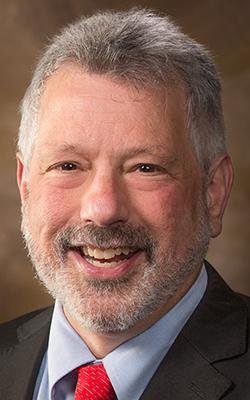
Jim Coleman (Special to the Arkansas Democrat-Gazette)
Metro on 03/07/2020










