


• Latest
  • Trending
  • All
Maine Potato Board announces worst Post-Harvest Test since 2012 — Aroostook — Bangor Daily News — BDN Maine

Maine Potato Board announces worst Post-Harvest Test since 2012 — Aroostook — Bangor Daily News — BDN Maine

February 15, 2020
Last Mile Delivery Market Worth Observing Growth | UPS, FedEx, SF Express

Last Mile Delivery Market Worth Observing Growth | UPS, FedEx, SF Express

April 23, 2024
Top 5 Spend Analysis Software ranked in 2024

Top 5 Spend Analysis Software ranked in 2024

March 1, 2024
How Tesla And BMW Are Leading A Supply Chain Renaissance With Blockchain

How Tesla And BMW Are Leading A Supply Chain Renaissance With Blockchain

January 19, 2024
LATAM Cargo strengthens European cargo links

LATAM Cargo strengthens European cargo links

April 14, 2020
Ford making reusable hospital gowns from airbag materials as efforts against coronavirus expand

Ford making reusable hospital gowns from airbag materials as efforts against coronavirus expand

April 14, 2020
Don’t Sweat NBC’s Decision to Cut Back on Television Ad Inventory

Don’t Sweat NBC’s Decision to Cut Back on Television Ad Inventory

April 14, 2020
Software firms sharpen focus on AI, big data as IT spending drops

Software firms sharpen focus on AI, big data as IT spending drops

April 14, 2020
Navigating turbulent times in your supply chain (TL:DR version)

Navigating turbulent times in your supply chain (TL:DR version)

April 14, 2020
Last Mile Delivery by Drones Market is Booming Worldwide

Last Mile Delivery by Drones Market is Booming Worldwide

April 14, 2020
AIR CARGO MARKET SIZE, SHARE, DEMAND, TREND, LATEST INNOVATIONS & APPLICATION ANALYSIS AND INDUSTRY GROWTH FORECAST 2027 – Science In Me

AIR CARGO MARKET SIZE, SHARE, DEMAND, TREND, LATEST INNOVATIONS & APPLICATION ANALYSIS AND INDUSTRY GROWTH FORECAST 2027 – Science In Me

April 14, 2020
Wheat procurement in Patiala: 6,500 coupons issued to farmers – cities

Wheat procurement in Patiala: 6,500 coupons issued to farmers – cities

April 14, 2020
Pandemic, Plastics And The Continuing Quest For Sustainability

Pandemic, Plastics And The Continuing Quest For Sustainability

April 14, 2020
  • Supply Chain
  • Logistics
  • Warehousing
  • Procurement
  • Shipping
  • More
    • Strategic Sourcing
    • Spend Analysis
    • Inventory
    • Contact Us
No Result
View All Result
United States International Supply Chain Commission
Home Procurement

Maine Potato Board announces worst Post-Harvest Test since 2012 — Aroostook — Bangor Daily News — BDN Maine

by usiscc
February 15, 2020
in Procurement
0
Maine Potato Board announces worst Post-Harvest Test since 2012 — Aroostook — Bangor Daily News — BDN Maine
492
SHARES
1.4k
VIEWS
Share on FacebookShare on Twitter

David Marino Jr. | BDN

David Marino Jr. | BDN

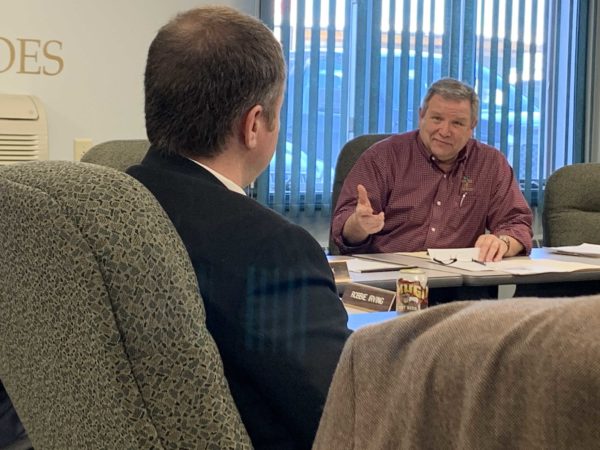
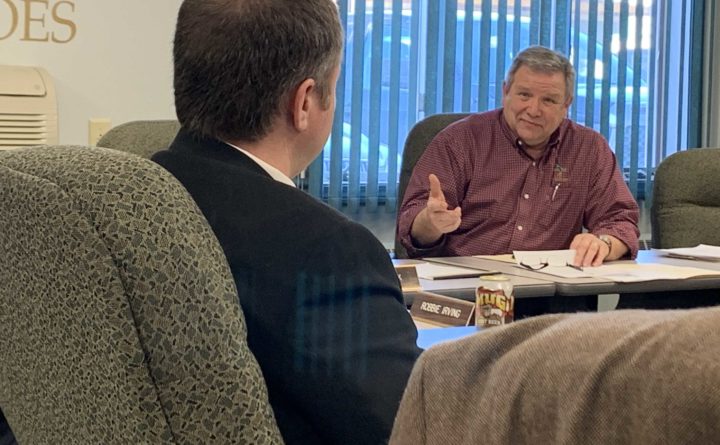
Don Flannery, right, speaks to a member of the Maine Potato Board in in a meeting Wednesday.

By David Marino Jr., The Star-Herald •
February 15, 2020 1:00 am


PRESQUE ISLE, Maine — Maine Potato Board plant pathologist/lab manager Andrew Plant said during a meeting Feb. 12 that the 2019-20 results of the Maine Department of Agriculture, Conservation and Forestry’s annual Post-Harvest Test was the worst since 2012-13.

Plant said that 7.3 percent of all seed potato lots were rejected because of the presence of pathogens within the crop, such as the bacteria Dickeya solani, which is known to cause potatoes to rot in storage, as well as potato virus Y, which can cause rot or affect sprouting.

It was nearly 70 percent higher than the 2018-19 season’s number of 4.4 percent, and the worst since 10.7 percent rejected in 2012-13.

Plant said that for a lot of seed potatoes to be rejected, more than 5 percent of the sample needs to test positive for pathogens. He said about 700 acres of seed potatoes met that threshold.

“Acre-wise, our rejections just about doubled since last year,” Plant said.

Plant said that the increase is part of a larger uptick in pathogens in potatoes since 2010. He said that prior to that year, it was fairly common for only 1 percent of potato lots to not pass inspection, but the recent harvest had shown much higher numbers of potatoes infected with pathogens.

Plant said that while the high rejection rates would prevent those crops from being used as originally intended — as seed potatoes — producers would likely sell them to potato processors to make potato chips and french fries.

Besides the Post-Harvest Test results announcement, Maine Potato Board President Don Flannery singled out two bills in the Maine State Legislature that he felt would hurt the potato industry, and he said he and the board’s lobbyist would actively fight against them.

LD 2083 would prohibit the use of all products containing neonicotinoids for landscape gardening by certified pesticide applicators, though it does give the Maine Board of Pesticide Control authority to allow the use of neonicotinoids it determines is necessary to “protect the State.” It would also require that same board to publish an annual report detailing the use of pesticides by commercial users, including the total quantity of pesticides used.

Flannery said that while the current wording of the bill does not affect the potato industry, he believes the prohibition on neonicotinoids could be expanded during the legislative process, affecting an insecticide extensively used within Maine’s potato businesses.

Flannery said that if potato farmers were prohibited from using neonicotinoids, they would simply use larger amounts of a less effective pest control mechanism, and that new EPA reviews concerning neonicotinoids made the regulations “unnecessary.”

“If we lose this tool in our IPM [integrated pest management] toolbox, the beetles and the bugs and everybody is still going to be there,” Flannery said.

Flannery said he was also actively opposing LD 2104, which would establish a number of programs and new regulations to encourage recycling, including a requirement that producers of packaging pay a fee based on the weight of packaging material they sell within Maine.

In turn, that fee will be used to reimburse municipalities for recycling and waste management costs.

Flannery said that potato processors such as Frito-Lay could choose to make up for increased production costs by “finding it” within a supply chain, i.e. reducing prices for producers.


 

…


Share197Tweet123
usiscc

usiscc

  • Trending
  • Comments
  • Latest
Escape From Tarkov – How to Rotate Items

Escape From Tarkov – How to Rotate Items

February 5, 2020
Supply chain examination: Planning for vulnerabilities you can’t control

Supply chain examination: Planning for vulnerabilities you can’t control

December 7, 2019
Procurement Project Manager job with Camden London Borough Council

Procurement Project Manager job with Camden London Borough Council

February 17, 2020
Art Battle Wichita Falls III at The Warehouse, 1401 Lamar.

Art Battle Wichita Falls III at The Warehouse, 1401 Lamar.

0
Global Industry Analysis, Size, Share, Growth, Trends, and Forecasts 2016–2024 – ZMR News Reports

Global Industry Analysis, Size, Share, Growth, Trends, and Forecasts 2016–2024 – ZMR News Reports

0
PHOTOS: Ottawa firefighters respond to warehouse fire

PHOTOS: Ottawa firefighters respond to warehouse fire

0
Last Mile Delivery Market Worth Observing Growth | UPS, FedEx, SF Express

Last Mile Delivery Market Worth Observing Growth | UPS, FedEx, SF Express

April 23, 2024
Top 5 Spend Analysis Software ranked in 2024

Top 5 Spend Analysis Software ranked in 2024

March 1, 2024
How Tesla And BMW Are Leading A Supply Chain Renaissance With Blockchain

How Tesla And BMW Are Leading A Supply Chain Renaissance With Blockchain

January 19, 2024
  • Privacy Policy
  • Terms of Use
  • Disclaimer
  • DMCA
  • Contact Us

Copyright © 2024 United States International Supply Chain Commission (usiscc.org)

This website uses cookies to improve your experience. We'll assume you're ok with this, but you can opt-out if you wish. Cookie settingsACCEPT
Privacy & Cookies Policy

Privacy Overview

This website uses cookies to improve your experience while you navigate through the website. Out of these cookies, the cookies that are categorized as necessary are stored on your browser as they are essential for the working of basic functionalities of the website. We also use third-party cookies that help us analyze and understand how you use this website. These cookies will be stored in your browser only with your consent. You also have the option to opt-out of these cookies. But opting out of some of these cookies may have an effect on your browsing experience.
Necessary
Always Enabled

Necessary cookies are absolutely essential for the website to function properly. This category only includes cookies that ensures basic functionalities and security features of the website. These cookies do not store any personal information.

Non-necessary

Any cookies that may not be particularly necessary for the website to function and is used specifically to collect user personal data via analytics, ads, other embedded contents are termed as non-necessary cookies. It is mandatory to procure user consent prior to running these cookies on your website.

SAVE & ACCEPT
No Result
View All Result
  • Supply Chain
  • Logistics
  • Warehousing
  • Procurement
  • Shipping
  • More
    • Strategic Sourcing
    • Spend Analysis
    • Inventory
    • Contact Us

Copyright © 2024 United States International Supply Chain Commission (usiscc.org)






