


• Latest
  • Trending
  • All
‘Modern-Day Slavery’: How Coronavirus Could Devastate Supply Chain Workers

‘Modern-Day Slavery’: How Coronavirus Could Devastate Supply Chain Workers

March 19, 2020
Last Mile Delivery Market Worth Observing Growth | UPS, FedEx, SF Express

Last Mile Delivery Market Worth Observing Growth | UPS, FedEx, SF Express

April 23, 2024
Top 5 Spend Analysis Software ranked in 2024

Top 5 Spend Analysis Software ranked in 2024

March 1, 2024
How Tesla And BMW Are Leading A Supply Chain Renaissance With Blockchain

How Tesla And BMW Are Leading A Supply Chain Renaissance With Blockchain

January 19, 2024
LATAM Cargo strengthens European cargo links

LATAM Cargo strengthens European cargo links

April 14, 2020
Ford making reusable hospital gowns from airbag materials as efforts against coronavirus expand

Ford making reusable hospital gowns from airbag materials as efforts against coronavirus expand

April 14, 2020
Don’t Sweat NBC’s Decision to Cut Back on Television Ad Inventory

Don’t Sweat NBC’s Decision to Cut Back on Television Ad Inventory

April 14, 2020
Software firms sharpen focus on AI, big data as IT spending drops

Software firms sharpen focus on AI, big data as IT spending drops

April 14, 2020
Navigating turbulent times in your supply chain (TL:DR version)

Navigating turbulent times in your supply chain (TL:DR version)

April 14, 2020
Last Mile Delivery by Drones Market is Booming Worldwide

Last Mile Delivery by Drones Market is Booming Worldwide

April 14, 2020
AIR CARGO MARKET SIZE, SHARE, DEMAND, TREND, LATEST INNOVATIONS & APPLICATION ANALYSIS AND INDUSTRY GROWTH FORECAST 2027 – Science In Me

AIR CARGO MARKET SIZE, SHARE, DEMAND, TREND, LATEST INNOVATIONS & APPLICATION ANALYSIS AND INDUSTRY GROWTH FORECAST 2027 – Science In Me

April 14, 2020
Wheat procurement in Patiala: 6,500 coupons issued to farmers – cities

Wheat procurement in Patiala: 6,500 coupons issued to farmers – cities

April 14, 2020
Pandemic, Plastics And The Continuing Quest For Sustainability

Pandemic, Plastics And The Continuing Quest For Sustainability

April 14, 2020
  • Supply Chain
  • Logistics
  • Warehousing
  • Procurement
  • Shipping
  • More
    • Strategic Sourcing
    • Spend Analysis
    • Inventory
    • Contact Us
No Result
View All Result
United States International Supply Chain Commission
Home Supply Chain

‘Modern-Day Slavery’: How Coronavirus Could Devastate Supply Chain Workers

by usiscc
March 19, 2020
in Supply Chain
0
‘Modern-Day Slavery’: How Coronavirus Could Devastate Supply Chain Workers
494
SHARES
1.4k
VIEWS
Share on FacebookShare on Twitter

The COVID-19 coronavirus is officially a pandemic, the US and Australian share markets have collapsed, both governments have unveiled stimulus packages, and Australia’s trade union movement is worried about the position of casuals.

But things are worse overseas, including for the workers who make products for Australians.

20,000 garment workers in Cambodia face job losses from factory closures because of shortages of raw materials from China and reduced orders from buyers in the virus-affected locations including the United States and Europe.

Thousands have already lost their jobs in Myanmar.

Garment workers in Sri Lanka and Bangladesh are uncertain of their futures.

COVID-19 is affecting supply chains and disrupting manufacturing around the world.

In February, Apple warned investors it would not meet its revenue forecasts due to impacts of the coronavirus on both iPhone manufacturing and its sales in China.

Many companies are prioritising safety in responding to the outbreak, including Amazon, which has urged its workforce to focus on “the safety of our teams”.

More indirect than direct employees

But what does it mean by its workforce, and how does it define its “teams”?

Amazon has 800,000 direct employees, but tens of thousands more in its supply chain.

Apple was estimated to have 139,000 employees in 2019, but as part of it supplier responsibility program in the same year it provided training to more than 3.6 million.

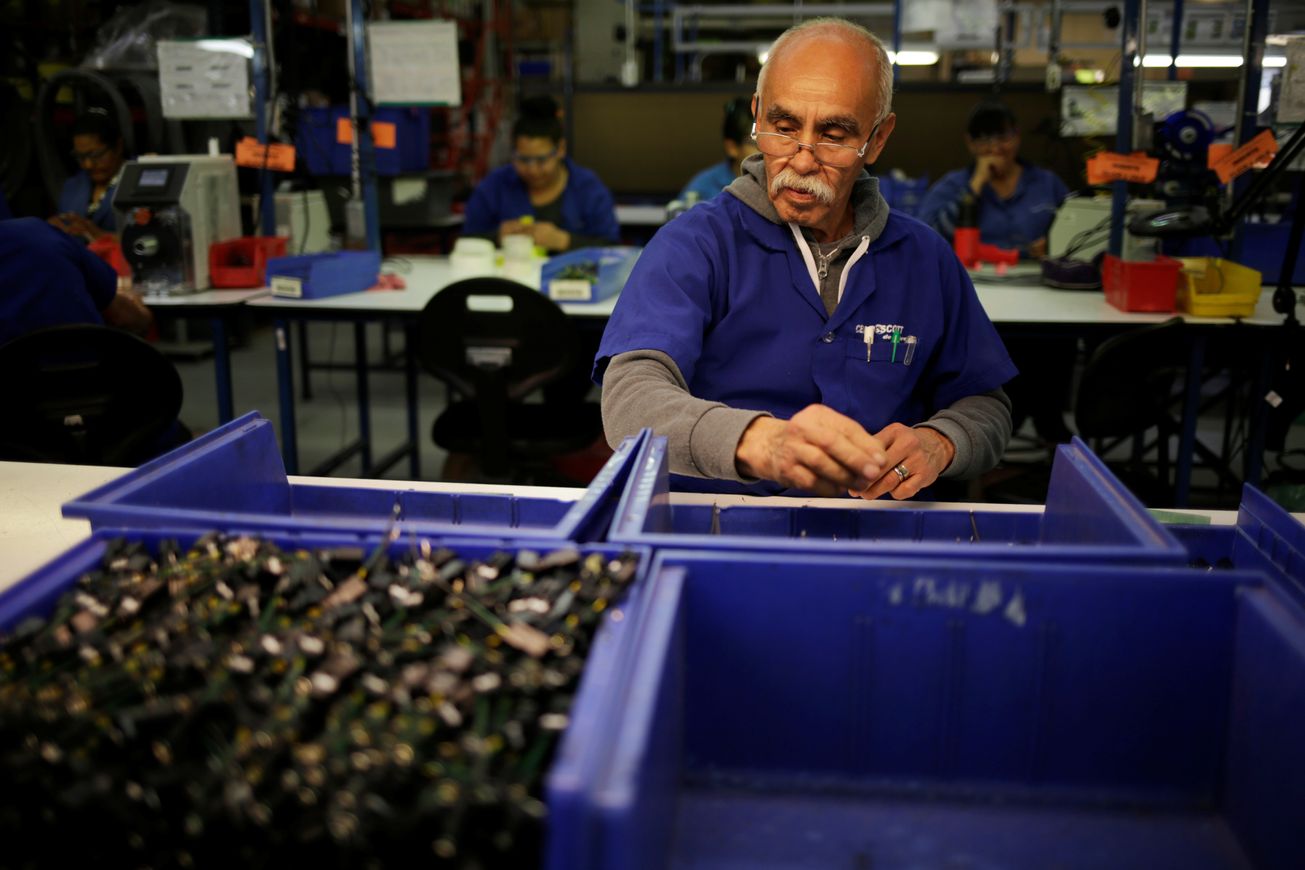
Supply chain workers are not directly employed by the brands for whom they produce goods, and can be left destitute when the work stops, needing to search for even more precarious work and exposing themselves to a greater risk of exploitation.

As work dries up, desperation among workers grows. In such circumstances working conditions can quickly deteriorate at the hands of unscrupulous employers. This can result in modern slavery, which includes forced labour and human trafficking.

Extreme examples, such as those experienced by Uyghurs’ working as forced labourers in Chinese supply chains or fisherman trapped on boats in the Pacific, might seem remote to us, but they are part of the delivery of goods most of us consume daily.

Two reports released this month make that clear.

A Walk Free Foundation report provided a comprehensive assessment of modern slavery in the Pacific including exploitation in labour mobility schemes and the commercial sexual exploitation of children.

And a report from the Australian Strategic Policy Institute provided grim details of the mass transfer of Uyghur and other ethnic minorities to factories across China to produce products for some of the world’s most profitable brands.

From this year, the more than 3,000 companies with turnovers in excess of A$100 million will have to publicly report on the modern slavery risks in their operations and supply chains and the action they have taken to tackle them as a requirement of Australia’s new Modern Slavery Act.

The Modern Slavery Act is a sliding door

Australia’s Modern Slavery Act, which comes into force later this year, offers Australian companies an opportunity to take a holistic approach to preventing and addressing risks in all parts of their operation, not only those involving people they directly employ.

But it isn’t certain that they all will.

After the introduction of Britain’s Modern Slavery Act in 2015 some companies chose to take a narrow approach to investigating and reporting on what went on their supply chains.

The first step for those companies that are serious is to understand what they can see and what they cannot.

Companies need to drill down beyond their direct suppliers. Some will be able to easily trace the origin of their raw materials, most will not.

The second step is to understand risk correctly.

It is important to consider not only risks to the business, but also the risks the business poses to others, including its indirect employees.

The persistence of modern slavery derives in part from purchasing practices that put extreme pressure on suppliers, such as extremely tight production windows, short-term contracts, last-minute or short-term orders and severe payment terms.

A global economic crisis might make them worse.

Finally, it is vital that companies engage and collaborate with others, including suppliers, workers and the public in order to understand how best to address these risks.

The next few months will provide vital clues as to whether Australian companies are really serious about addressing modern slavery, or whether they regard the Act as merely symbolic.

The increasingly-common mantra of aligning profit with purpose can’t only apply in the good times.

The Conversation

Martijn Boersma, Senior lecturer, University of Technology Sydney and Justine Nolan, Professor, UNSW Law, UNSW

This article is republished from The Conversation under a Creative Commons license. Read the original article.

Image: Reuters

Share198Tweet124
usiscc

usiscc

  • Trending
  • Comments
  • Latest
Escape From Tarkov – How to Rotate Items

Escape From Tarkov – How to Rotate Items

February 5, 2020
Supply chain examination: Planning for vulnerabilities you can’t control

Supply chain examination: Planning for vulnerabilities you can’t control

December 7, 2019
Procurement Project Manager job with Camden London Borough Council

Procurement Project Manager job with Camden London Borough Council

February 17, 2020
Art Battle Wichita Falls III at The Warehouse, 1401 Lamar.

Art Battle Wichita Falls III at The Warehouse, 1401 Lamar.

0
Global Industry Analysis, Size, Share, Growth, Trends, and Forecasts 2016–2024 – ZMR News Reports

Global Industry Analysis, Size, Share, Growth, Trends, and Forecasts 2016–2024 – ZMR News Reports

0
PHOTOS: Ottawa firefighters respond to warehouse fire

PHOTOS: Ottawa firefighters respond to warehouse fire

0
Last Mile Delivery Market Worth Observing Growth | UPS, FedEx, SF Express

Last Mile Delivery Market Worth Observing Growth | UPS, FedEx, SF Express

April 23, 2024
Top 5 Spend Analysis Software ranked in 2024

Top 5 Spend Analysis Software ranked in 2024

March 1, 2024
How Tesla And BMW Are Leading A Supply Chain Renaissance With Blockchain

How Tesla And BMW Are Leading A Supply Chain Renaissance With Blockchain

January 19, 2024
  • Privacy Policy
  • Terms of Use
  • Disclaimer
  • DMCA
  • Contact Us

Copyright © 2024 United States International Supply Chain Commission (usiscc.org)

This website uses cookies to improve your experience. We'll assume you're ok with this, but you can opt-out if you wish. Cookie settingsACCEPT
Privacy & Cookies Policy

Privacy Overview

This website uses cookies to improve your experience while you navigate through the website. Out of these cookies, the cookies that are categorized as necessary are stored on your browser as they are essential for the working of basic functionalities of the website. We also use third-party cookies that help us analyze and understand how you use this website. These cookies will be stored in your browser only with your consent. You also have the option to opt-out of these cookies. But opting out of some of these cookies may have an effect on your browsing experience.
Necessary
Always Enabled

Necessary cookies are absolutely essential for the website to function properly. This category only includes cookies that ensures basic functionalities and security features of the website. These cookies do not store any personal information.

Non-necessary

Any cookies that may not be particularly necessary for the website to function and is used specifically to collect user personal data via analytics, ads, other embedded contents are termed as non-necessary cookies. It is mandatory to procure user consent prior to running these cookies on your website.

SAVE & ACCEPT
No Result
View All Result
  • Supply Chain
  • Logistics
  • Warehousing
  • Procurement
  • Shipping
  • More
    • Strategic Sourcing
    • Spend Analysis
    • Inventory
    • Contact Us

Copyright © 2024 United States International Supply Chain Commission (usiscc.org)







