


• Latest
  • Trending
  • All
Navy turns to machine learning to help spot supply chain gaps

Navy turns to machine learning to help spot supply chain gaps

March 11, 2020
Last Mile Delivery Market Worth Observing Growth | UPS, FedEx, SF Express

Last Mile Delivery Market Worth Observing Growth | UPS, FedEx, SF Express

April 23, 2024
Top 5 Spend Analysis Software ranked in 2024

Top 5 Spend Analysis Software ranked in 2024

March 1, 2024
How Tesla And BMW Are Leading A Supply Chain Renaissance With Blockchain

How Tesla And BMW Are Leading A Supply Chain Renaissance With Blockchain

January 19, 2024
LATAM Cargo strengthens European cargo links

LATAM Cargo strengthens European cargo links

April 14, 2020
Ford making reusable hospital gowns from airbag materials as efforts against coronavirus expand

Ford making reusable hospital gowns from airbag materials as efforts against coronavirus expand

April 14, 2020
Don’t Sweat NBC’s Decision to Cut Back on Television Ad Inventory

Don’t Sweat NBC’s Decision to Cut Back on Television Ad Inventory

April 14, 2020
Software firms sharpen focus on AI, big data as IT spending drops

Software firms sharpen focus on AI, big data as IT spending drops

April 14, 2020
Navigating turbulent times in your supply chain (TL:DR version)

Navigating turbulent times in your supply chain (TL:DR version)

April 14, 2020
Last Mile Delivery by Drones Market is Booming Worldwide

Last Mile Delivery by Drones Market is Booming Worldwide

April 14, 2020
AIR CARGO MARKET SIZE, SHARE, DEMAND, TREND, LATEST INNOVATIONS & APPLICATION ANALYSIS AND INDUSTRY GROWTH FORECAST 2027 – Science In Me

AIR CARGO MARKET SIZE, SHARE, DEMAND, TREND, LATEST INNOVATIONS & APPLICATION ANALYSIS AND INDUSTRY GROWTH FORECAST 2027 – Science In Me

April 14, 2020
Wheat procurement in Patiala: 6,500 coupons issued to farmers – cities

Wheat procurement in Patiala: 6,500 coupons issued to farmers – cities

April 14, 2020
Pandemic, Plastics And The Continuing Quest For Sustainability

Pandemic, Plastics And The Continuing Quest For Sustainability

April 14, 2020
  • Supply Chain
  • Logistics
  • Warehousing
  • Procurement
  • Shipping
  • More
    • Strategic Sourcing
    • Spend Analysis
    • Inventory
    • Contact Us
No Result
View All Result
United States International Supply Chain Commission
Home Supply Chain

Navy turns to machine learning to help spot supply chain gaps

by usiscc
March 11, 2020
in Supply Chain
0
Navy turns to machine learning to help spot supply chain gaps
491
SHARES
1.4k
VIEWS
Share on FacebookShare on Twitter

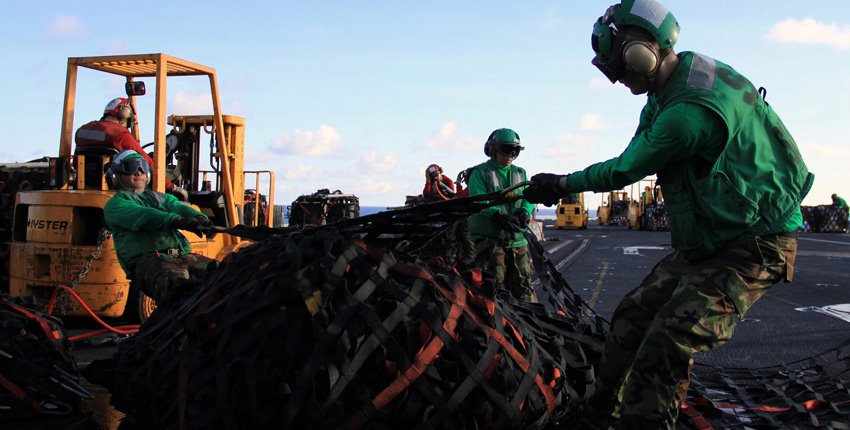
The Navy’s global supply chain for parts and other supplies is vastly complicated, and as things stands now, parts of the system have too much inventory, and others have too little.

To help solve the problem, Naval Supply Systems Command (NAVSUP) is turning to a concept that’s already taken hold in large commercial supply chains called an integrated supply chain control tower. In the Navy’s case, it means synthesizing vast amounts of data from government organizations and suppliers and applying machine learning algorithms to build better forecasts of what’s needed, where, and when.

As of now, NAVSUP’s control tower is still in a pilot phase. The command, working together with Naval Air Systems Command (NAVAIR), is using it to work toward a DoD mandate to get 80% of its F-18 fleet in mission-capable condition.

But Kurt Wendelken, NAVSUP’s vice commander, said the project has already found supply chain gaps that had gone unidentified until now.


“The idea of the control tower is that it enables the program manager to use the primary lever to that they have to ensure readiness, which is providing funding to the right level for each of the readiness generators – maintenance, repair, repairable parts, engineering, and brand new spare parts for the right level,” he said in an interview. “But it’s kind of unclear what the right level is – there’s a real integration effect that is needed. And there’s also a delay with these different kinds of inputs where they’re not always available as quickly as someone might need them. So the control tower addresses this problem.”

Wendelken said the Navy turned to the control tower idea after extensive consultations with industry, but the tool NAVSUP is using was developed specifically for the Navy’s needs. Those needs differ from commercial supply chains, not least because of the sheer number and variety of weapons platforms the command is charged with supporting.

Read more: Defense News

In the case of the F-18, it appears to be creating much more accurate forecasts of spare parts needs than were possible in the past largely because of the huge quantity of data it’s injesting from NAVAIR, weapons maintainers, original equipment manufacturers and NAVSUP itself.

“We’re integrating data from each of the different parts of the supply chain and putting those into a single simulation, instead of the individual simulations that we used to do,” Wendelken said. “Using the single simulation, we’re now able to give a target to each part of the sustainment supply chain, as opposed to each part of the supply chain guessing with separate forecasts. In addition, we’ve taken historical data forecasts to use machine learning in our forecast. And what the machine learning does is it uses algorithms to predict changes in weapon system usage that we may not have captured through historical demand.”

In the near-term, since NAVAIR has already proven to be adept at providing the sorts of data that work well in the control tower environment, the Navy wants to expand the concept to build additional control towers for other aviation platforms. The service will then extend it to other weapons systems, eventually build toward the point where program managers and other users can see high-fidelity forecasts of the Navy’s entire supply chain.

“At the end of all this, we want the fleet to have fewer back orders and we want them to perceive a smoother supply system that’s supporting them when they need things to to keep their weapon systems up,” Wendelken said. “In the future, we don’t want the fleet to even have to deal with the backorder in the first place. As this initiative develops, I think we’ll get much better at predicting when we are going to have a need and have that material available to meet the need.”

Copyright © 2020 Federal News Network. All rights reserved. This website is not intended for users located within the European Economic Area.


Share196Tweet123
usiscc

usiscc

  • Trending
  • Comments
  • Latest
Escape From Tarkov – How to Rotate Items

Escape From Tarkov – How to Rotate Items

February 5, 2020
Supply chain examination: Planning for vulnerabilities you can’t control

Supply chain examination: Planning for vulnerabilities you can’t control

December 7, 2019
Procurement Project Manager job with Camden London Borough Council

Procurement Project Manager job with Camden London Borough Council

February 17, 2020
Art Battle Wichita Falls III at The Warehouse, 1401 Lamar.

Art Battle Wichita Falls III at The Warehouse, 1401 Lamar.

0
Global Industry Analysis, Size, Share, Growth, Trends, and Forecasts 2016–2024 – ZMR News Reports

Global Industry Analysis, Size, Share, Growth, Trends, and Forecasts 2016–2024 – ZMR News Reports

0
PHOTOS: Ottawa firefighters respond to warehouse fire

PHOTOS: Ottawa firefighters respond to warehouse fire

0
Last Mile Delivery Market Worth Observing Growth | UPS, FedEx, SF Express

Last Mile Delivery Market Worth Observing Growth | UPS, FedEx, SF Express

April 23, 2024
Top 5 Spend Analysis Software ranked in 2024

Top 5 Spend Analysis Software ranked in 2024

March 1, 2024
How Tesla And BMW Are Leading A Supply Chain Renaissance With Blockchain

How Tesla And BMW Are Leading A Supply Chain Renaissance With Blockchain

January 19, 2024
  • Privacy Policy
  • Terms of Use
  • Disclaimer
  • DMCA
  • Contact Us

Copyright © 2024 United States International Supply Chain Commission (usiscc.org)

This website uses cookies to improve your experience. We'll assume you're ok with this, but you can opt-out if you wish. Cookie settingsACCEPT
Privacy & Cookies Policy

Privacy Overview

This website uses cookies to improve your experience while you navigate through the website. Out of these cookies, the cookies that are categorized as necessary are stored on your browser as they are essential for the working of basic functionalities of the website. We also use third-party cookies that help us analyze and understand how you use this website. These cookies will be stored in your browser only with your consent. You also have the option to opt-out of these cookies. But opting out of some of these cookies may have an effect on your browsing experience.
Necessary
Always Enabled

Necessary cookies are absolutely essential for the website to function properly. This category only includes cookies that ensures basic functionalities and security features of the website. These cookies do not store any personal information.

Non-necessary

Any cookies that may not be particularly necessary for the website to function and is used specifically to collect user personal data via analytics, ads, other embedded contents are termed as non-necessary cookies. It is mandatory to procure user consent prior to running these cookies on your website.

SAVE & ACCEPT
No Result
View All Result
  • Supply Chain
  • Logistics
  • Warehousing
  • Procurement
  • Shipping
  • More
    • Strategic Sourcing
    • Spend Analysis
    • Inventory
    • Contact Us

Copyright © 2024 United States International Supply Chain Commission (usiscc.org)






