


• Latest
  • Trending
  • All
New defence procurement policy gets mixed reaction from industry

New defence procurement policy gets mixed reaction from industry

April 5, 2020
Last Mile Delivery Market Worth Observing Growth | UPS, FedEx, SF Express

Last Mile Delivery Market Worth Observing Growth | UPS, FedEx, SF Express

April 23, 2024
Top 5 Spend Analysis Software ranked in 2024

Top 5 Spend Analysis Software ranked in 2024

March 1, 2024
How Tesla And BMW Are Leading A Supply Chain Renaissance With Blockchain

How Tesla And BMW Are Leading A Supply Chain Renaissance With Blockchain

January 19, 2024
LATAM Cargo strengthens European cargo links

LATAM Cargo strengthens European cargo links

April 14, 2020
Ford making reusable hospital gowns from airbag materials as efforts against coronavirus expand

Ford making reusable hospital gowns from airbag materials as efforts against coronavirus expand

April 14, 2020
Don’t Sweat NBC’s Decision to Cut Back on Television Ad Inventory

Don’t Sweat NBC’s Decision to Cut Back on Television Ad Inventory

April 14, 2020
Software firms sharpen focus on AI, big data as IT spending drops

Software firms sharpen focus on AI, big data as IT spending drops

April 14, 2020
Navigating turbulent times in your supply chain (TL:DR version)

Navigating turbulent times in your supply chain (TL:DR version)

April 14, 2020
Last Mile Delivery by Drones Market is Booming Worldwide

Last Mile Delivery by Drones Market is Booming Worldwide

April 14, 2020
AIR CARGO MARKET SIZE, SHARE, DEMAND, TREND, LATEST INNOVATIONS & APPLICATION ANALYSIS AND INDUSTRY GROWTH FORECAST 2027 – Science In Me

AIR CARGO MARKET SIZE, SHARE, DEMAND, TREND, LATEST INNOVATIONS & APPLICATION ANALYSIS AND INDUSTRY GROWTH FORECAST 2027 – Science In Me

April 14, 2020
Wheat procurement in Patiala: 6,500 coupons issued to farmers – cities

Wheat procurement in Patiala: 6,500 coupons issued to farmers – cities

April 14, 2020
Pandemic, Plastics And The Continuing Quest For Sustainability

Pandemic, Plastics And The Continuing Quest For Sustainability

April 14, 2020
  • Supply Chain
  • Logistics
  • Warehousing
  • Procurement
  • Shipping
  • More
    • Strategic Sourcing
    • Spend Analysis
    • Inventory
    • Contact Us
No Result
View All Result
United States International Supply Chain Commission
Home Procurement

New defence procurement policy gets mixed reaction from industry

by usiscc
April 5, 2020
in Procurement
0
New defence procurement policy gets mixed reaction from industry
492
SHARES
1.4k
VIEWS
Share on FacebookShare on Twitter


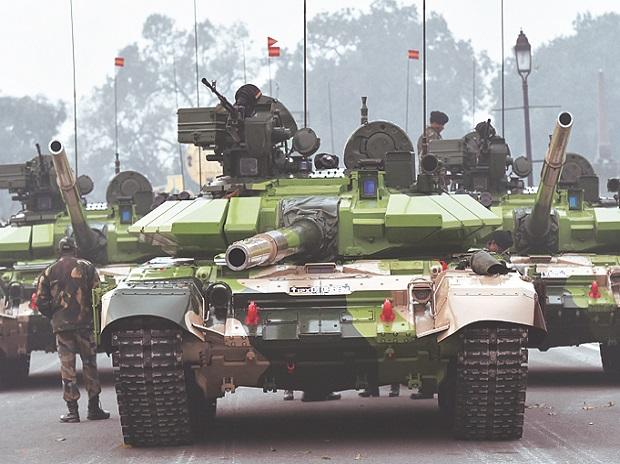
The defence industry has expressed mixed reactions to the proposed Defence Procurement Procedure of 2020 (DPP-2020), which the Ministry of Defence (MoD) released in draft form on February 20.


The MoD has invited suggestions and recommendations by April 17. After that, DPP-2020 will be promulgated and will govern all acquisitions initiated thereafter. It will supersede DPP-2016 as the MoD’s handbook for purchasing of weapons, warships and equipment from the defence capital budget.


A Business Standard survey of small, medium and large defence firms reveals broad agreement that DPP-2020 has been hurriedly finalised and uploaded. Important annexures and appendices have been left out and even page numbering has not been done.


Like successive DPPs since the first in 2002, the draft DPP-2020 is longer and more complex than any other that preceded it. This despite the MoD’s stated aim of simplifying acquisition procedures to speed up the military’s modernisation. A 719-page long, the draft DPP-2020 is far wordier than its predecessor — the 430-page DPP-2016, which has, over the past four years, been amended 47 times for business process reengineering.


This is so, even though the draft DPP-2020 excludes an entire chapter on the Strategic Partnership Model of procurement since no changes are being recommended to the version in DPP-2016.


Abhishek Jain of software firm Zeus Numerix sees a change of soul in DPP-2020. Unlike previous DPPs, which he says primarily laid out guidelines on procuring foreign equipment, this time around there is a full chapter on indigenous innovation, including how single vendor purchase is acceptable for an innovative product developed by an Indian company, which has 50 per cent indigenous content.


However, Rahul Chaudhry, former chief of Tata Power (Strategic Electronics Division), believes the 2020 draft scatters its focus on various government policies at the cost of practicality. DPP-2020 aims to implement Make in India, Start Up India and support to micro, small and medium enterprises. These policies should be left to other government agencies such as the Department of Industrial Policy and Promotion, Securities and Exchange Board of India, and the Technology Development Board. These agencies, with their specialised capabilities, must be allowed to implement these national policies without MoD interference. This will make the DPP simpler and implementable, says Chaudhry.


There is appreciation across the industry for DPP-2020’s proposed enhancement of indigenous content requirements in foreign procurements, most of which have been raised by 10 per cent. This increase will boost self-reliance, allow a greater role for the indigenous defence manufacturing ecosystem and reduce the life cycle cost of the foreign equipment we buy, said Jayant Patil, who oversees L&T’s defence vertical and heavy engineering division.


While there is appreciation for some of the proposed measures to expedite equipment procurement — such as simplifying the procedure for accord of necessity (AoN) for procurements — there is broad dismay that DPP-2020 does not reduce procurement time frames. The target for completing the acquisition of an equipment remains 70-126 weeks, in addition to the time required for the military to frame the requirement and obtain AoN from the MoD.


The current 92 week deadline for a Make-1 category prototype development contract is too high. If we cut procurement time the vendors would be able to reduce prices by 10-20 per cent, says Jain of Zeus.


Ashok Atluri of Zen Technologies believes procurement could be speeded up by building transparency into the process, through measures like publicly posting the movement of the procurement file. He suggests the laying down of stringent penalties for vendors who are found to have overstated indigenisation levels.


Atluri also points to positives in DPP-2020, such as a new clause that allows the MoD to fall back on the second-lowest cost vendor (L-2), if the lowest cost (L-1) vendor backs out during cost negotiations.


Rajesh Dhingra, who heads RNaval, applauds the newly introduced option to lease equipment, where purchase would be too expensive and cost-ineffective. Leasing will spare funds for capital acquisition. But DPP-2020 should identify the role of local industry in leasing cases, specifying responsibility for maintaining, operating and training, he said.


Others believe leasing should be approached with caution, being a potential debt trap. Increased liabilities from leasing, including embedded interest pay out, could cut the capital funds available for fresh contracts, says L&T’s Patil.


“Increased liabilities from leasing, including embedded interest pay out, could cut the capital funds available for fresh procurement contracts,” says L&T’s Patil.


The new offset rules remain an area of concern for industry, with DPP-2020 proposing to exempt government-to-government (G2G) purchases from offsets. “With the lion’s share of the capital budget going on G2G procurements, this will cut down offsets significantly,” said Dhingra.


There is also concern that the DPP-2020 reduces government funding for “Make-I” category procurements, in which indigenous firms develop complex platforms and systems, with financial support from the MoD. Till 2016, the government’s share of funding for “Make I” projects was 80 per cent and DPP-2016 increased that to 90 per cent. DPP-2020, however, proposes to slash government funding to just 70 per cent. “This would dissuade our defence industry from participating in large platform development programmes, where the prototype development cost exceeds a few hundred crore,” says Patil.


Share197Tweet123
usiscc

usiscc

  • Trending
  • Comments
  • Latest
Escape From Tarkov – How to Rotate Items

Escape From Tarkov – How to Rotate Items

February 5, 2020
Supply chain examination: Planning for vulnerabilities you can’t control

Supply chain examination: Planning for vulnerabilities you can’t control

December 7, 2019
Procurement Project Manager job with Camden London Borough Council

Procurement Project Manager job with Camden London Borough Council

February 17, 2020
Art Battle Wichita Falls III at The Warehouse, 1401 Lamar.

Art Battle Wichita Falls III at The Warehouse, 1401 Lamar.

0
Global Industry Analysis, Size, Share, Growth, Trends, and Forecasts 2016–2024 – ZMR News Reports

Global Industry Analysis, Size, Share, Growth, Trends, and Forecasts 2016–2024 – ZMR News Reports

0
PHOTOS: Ottawa firefighters respond to warehouse fire

PHOTOS: Ottawa firefighters respond to warehouse fire

0
Last Mile Delivery Market Worth Observing Growth | UPS, FedEx, SF Express

Last Mile Delivery Market Worth Observing Growth | UPS, FedEx, SF Express

April 23, 2024
Top 5 Spend Analysis Software ranked in 2024

Top 5 Spend Analysis Software ranked in 2024

March 1, 2024
How Tesla And BMW Are Leading A Supply Chain Renaissance With Blockchain

How Tesla And BMW Are Leading A Supply Chain Renaissance With Blockchain

January 19, 2024
  • Privacy Policy
  • Terms of Use
  • Disclaimer
  • DMCA
  • Contact Us

Copyright © 2024 United States International Supply Chain Commission (usiscc.org)

This website uses cookies to improve your experience. We'll assume you're ok with this, but you can opt-out if you wish. Cookie settingsACCEPT
Privacy & Cookies Policy

Privacy Overview

This website uses cookies to improve your experience while you navigate through the website. Out of these cookies, the cookies that are categorized as necessary are stored on your browser as they are essential for the working of basic functionalities of the website. We also use third-party cookies that help us analyze and understand how you use this website. These cookies will be stored in your browser only with your consent. You also have the option to opt-out of these cookies. But opting out of some of these cookies may have an effect on your browsing experience.
Necessary
Always Enabled

Necessary cookies are absolutely essential for the website to function properly. This category only includes cookies that ensures basic functionalities and security features of the website. These cookies do not store any personal information.

Non-necessary

Any cookies that may not be particularly necessary for the website to function and is used specifically to collect user personal data via analytics, ads, other embedded contents are termed as non-necessary cookies. It is mandatory to procure user consent prior to running these cookies on your website.

SAVE & ACCEPT
No Result
View All Result
  • Supply Chain
  • Logistics
  • Warehousing
  • Procurement
  • Shipping
  • More
    • Strategic Sourcing
    • Spend Analysis
    • Inventory
    • Contact Us

Copyright © 2024 United States International Supply Chain Commission (usiscc.org)






