

• Latest
  • Trending
  • All
Ohio State researchers work to solve global rubber shortage

Ohio State researchers work to solve global rubber shortage

January 30, 2020
Last Mile Delivery Market Worth Observing Growth | UPS, FedEx, SF Express

Last Mile Delivery Market Worth Observing Growth | UPS, FedEx, SF Express

April 23, 2024
Top 5 Spend Analysis Software ranked in 2024

Top 5 Spend Analysis Software ranked in 2024

March 1, 2024
How Tesla And BMW Are Leading A Supply Chain Renaissance With Blockchain

How Tesla And BMW Are Leading A Supply Chain Renaissance With Blockchain

January 19, 2024
LATAM Cargo strengthens European cargo links

LATAM Cargo strengthens European cargo links

April 14, 2020
Ford making reusable hospital gowns from airbag materials as efforts against coronavirus expand

Ford making reusable hospital gowns from airbag materials as efforts against coronavirus expand

April 14, 2020
Don’t Sweat NBC’s Decision to Cut Back on Television Ad Inventory

Don’t Sweat NBC’s Decision to Cut Back on Television Ad Inventory

April 14, 2020
Software firms sharpen focus on AI, big data as IT spending drops

Software firms sharpen focus on AI, big data as IT spending drops

April 14, 2020
Navigating turbulent times in your supply chain (TL:DR version)

Navigating turbulent times in your supply chain (TL:DR version)

April 14, 2020
Last Mile Delivery by Drones Market is Booming Worldwide

Last Mile Delivery by Drones Market is Booming Worldwide

April 14, 2020
AIR CARGO MARKET SIZE, SHARE, DEMAND, TREND, LATEST INNOVATIONS & APPLICATION ANALYSIS AND INDUSTRY GROWTH FORECAST 2027 – Science In Me

AIR CARGO MARKET SIZE, SHARE, DEMAND, TREND, LATEST INNOVATIONS & APPLICATION ANALYSIS AND INDUSTRY GROWTH FORECAST 2027 – Science In Me

April 14, 2020
Wheat procurement in Patiala: 6,500 coupons issued to farmers – cities

Wheat procurement in Patiala: 6,500 coupons issued to farmers – cities

April 14, 2020
Pandemic, Plastics And The Continuing Quest For Sustainability

Pandemic, Plastics And The Continuing Quest For Sustainability

April 14, 2020
  • Supply Chain
  • Logistics
  • Warehousing
  • Procurement
  • Shipping
  • More
    • Strategic Sourcing
    • Spend Analysis
    • Inventory
    • Contact Us
No Result
View All Result
United States International Supply Chain Commission
Home Procurement

Ohio State researchers work to solve global rubber shortage

by usiscc
January 30, 2020
in Procurement
0
Ohio State researchers work to solve global rubber shortage
494
SHARES
1.4k
VIEWS
Share on FacebookShare on Twitter

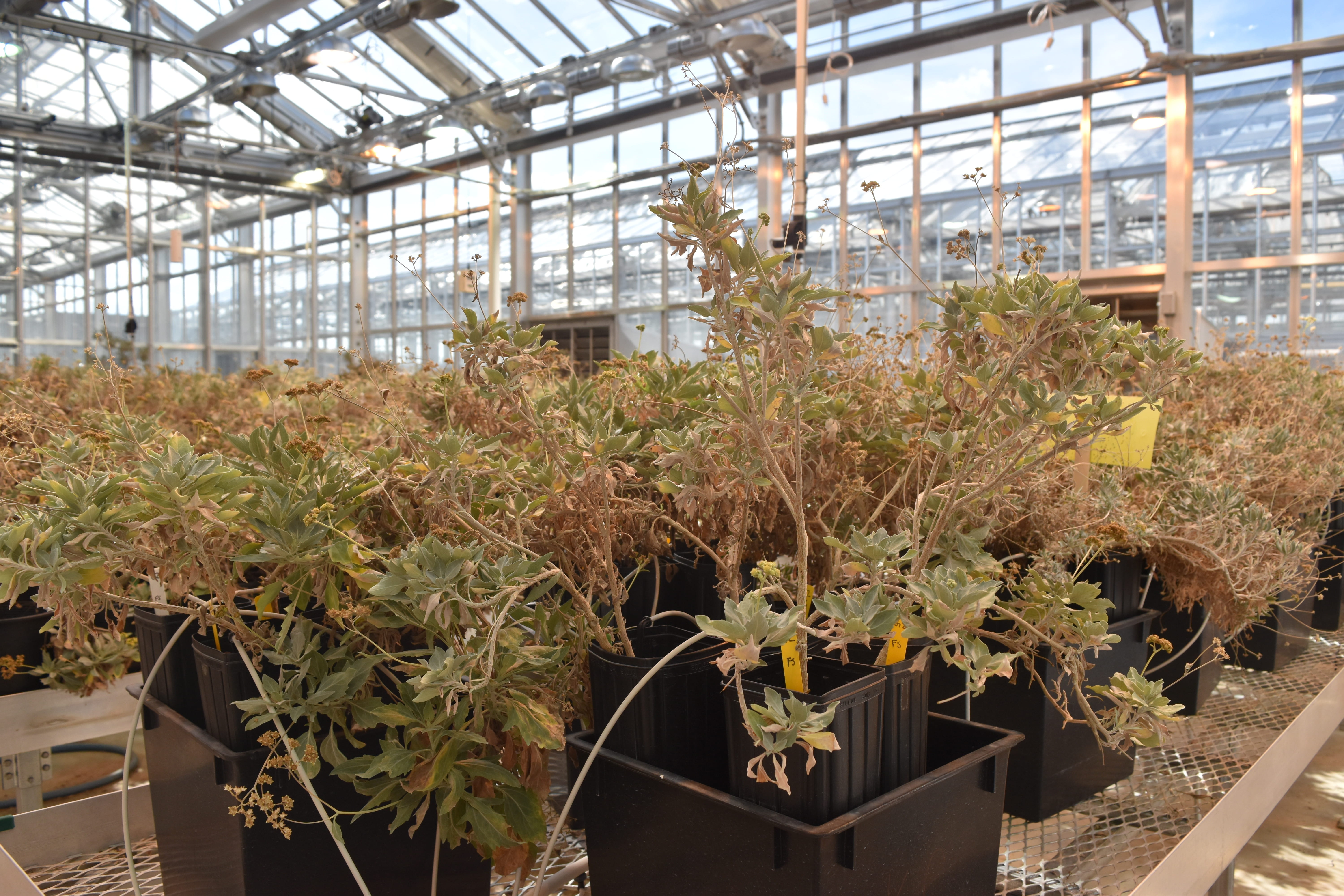
Guayule plants growing in a greenhouse at the Wooster campus of Ohio State. Courtesy of Roberta Franks

Catheters, medical and sporting gloves, tires, condoms and some 50,000 other products depend on the more than 15 million tons of natural rubber produced every year, a researcher at Ohio State studying natural rubber production, said.

But this year, there will be a 1 million-ton global shortage of natural rubber, according to the International Tripartite Rubber Council. Climate change and diseases, such as Pestalotiopsis leaf fall and South American Leaf Blight, are killing rubber trees in growing regions across the planet. However, Ohio State researchers said they are developing ways to commercially produce new sources of natural rubber.

Natural rubber can distribute heat better and is more tear resistant than synthetic rubbers, which are made from petroleum and natural gas, Katrina Cornish, a researcher studying alternative rubber and latex production, said.

“You wouldn’t be able to drive a car at the speeds we drive or the distances we drive,” Cornish said. “That’s completely dependent upon natural rubber.”

The United States imports about 1 million tons of raw natural rubber a year, and Cornish said it’s important to have alternative sources because any rubber shortage can stress American production.

John Cardina, a plant ecologist and professor of horticulture and crop science, said natural rubber is a “strategic raw material,” and without a reliable supply of natural rubber, military airplanes would not be able to fly. Airplane tires have to be made completely with natural rubber because synthetic rubber would crack and fail when the planes land, he said.

Cornish said about 20,000 species of plants and fungi make latex — the raw material used in rubber production — but only the para rubber tree can supply enough latex and be grown for commercial production.

Rubber trees need a tropical climate and about 50 inches of rain each year, so the range of where they can grow is limited. Cornish said about 89 percent of the world’s natural rubber supply comes from three countries: Thailand, Indonesia and Malaysia.

On rubber plantations, the trees are grown clonally, meaning each tree is genetically identical to one another, Cornish said. When one tree becomes infected with a disease, it spreads quickly because there is no genetic variation that could potentially be resistant to pathogens.

“It’s always seemed crazy to not have any sort of biodiversity in rubber production because it’s a critical raw material,” Cornish said. “Literally, we’re going back to the 1900s or the 1890s if we lose natural rubber.”

Cornish said she and other scientists at Ohio State are working with a flowering shrub called guayule and the rubber dandelion — two plants that grow in separate hemispheres — to produce alternative sources for natural rubber.

Guayule grows across the American Southwest and can be harvested year-round by cutting the top of the plants. To extract the latex, Cornish said researchers mash up the cuttings and blend them into a liquid to make a “guayule milkshake,” not unlike the process of separating cream from milk.

Native to Kazakhstan, the rubber dandelion looks like the common dandelion that grows in American backyards, but the Kazakh variety is genetically different and produces latex in its roots. Cardina said the dandelion is still a primitive crop, so he worked with Cornish’s lab to manipulate its seeds and domesticate the plant so it can be grown in rows like corn or soybeans.

“We’re trying to speed up the crop domestication process that took thousands of years for most of our crops,” Cardina said. “We think we can do it in 20 years.”

Jonathan Fresnedo Ramirez, an assistant professor in horticulture and crop science, said the rubber dandelion needs to be domesticated so it can endure the weather conditions in fields and agricultural management conditions.

“The other part is that you are able to produce these plants in a reliable way over time, in different spaces,” Fresnedo Ramirez said.

The rubber dandelion naturally produces genetic variation and isn’t able to self-fertilize so it will be more genetically resistant against pathogens and infections than the rubber trees. 

Cornish said researchers are working on a hydroponic solution for the dandelions so latex can be harvested more regularly. By growing the dandelions above a tank of nutrient-rich water, the roots spread down, allowing for a harvest every day without killing the plant.

Using guayule and rubber dandelions for rubber production isn’t new, according to a U.S. Department of Agriculture report from 1947. During World War II, the Soviet Union and the U.S. used dandelions and guayule as emergency sources of rubber after Japan cut off 90 percent of the world’s supply in Southeast Asia. 

However, the report states that both countries abandoned their rubber programs when the war ended because the para tree was more efficient in producing latex — and it still is.

Cornish said the efficiency of the para tree is why the rubber made from guayule and dandelion latex will be used in premium markets, including medicine, where products have small amounts of rubber and can be sold at a high price. 

Cornish said her lab produced a thinner guayule glove that exceeds FDA radiation standards and can be sold at a price more than 3,500 percent higher than its production costs.

Guayule rubber is commercially ready, but there haven’t been the production levels required to bring down the price of the raw material, Cornish said.

This year, Cornish and Cardina said guayule and the dandelion will be planted in production fields.

“If that works, we’re rapidly expanding from there,” Cornish said.

Share198Tweet124
usiscc

usiscc

  • Trending
  • Comments
  • Latest
Escape From Tarkov – How to Rotate Items

Escape From Tarkov – How to Rotate Items

February 5, 2020
Supply chain examination: Planning for vulnerabilities you can’t control

Supply chain examination: Planning for vulnerabilities you can’t control

December 7, 2019
Procurement Project Manager job with Camden London Borough Council

Procurement Project Manager job with Camden London Borough Council

February 17, 2020
Art Battle Wichita Falls III at The Warehouse, 1401 Lamar.

Art Battle Wichita Falls III at The Warehouse, 1401 Lamar.

0
Global Industry Analysis, Size, Share, Growth, Trends, and Forecasts 2016–2024 – ZMR News Reports

Global Industry Analysis, Size, Share, Growth, Trends, and Forecasts 2016–2024 – ZMR News Reports

0
PHOTOS: Ottawa firefighters respond to warehouse fire

PHOTOS: Ottawa firefighters respond to warehouse fire

0
Last Mile Delivery Market Worth Observing Growth | UPS, FedEx, SF Express

Last Mile Delivery Market Worth Observing Growth | UPS, FedEx, SF Express

April 23, 2024
Top 5 Spend Analysis Software ranked in 2024

Top 5 Spend Analysis Software ranked in 2024

March 1, 2024
How Tesla And BMW Are Leading A Supply Chain Renaissance With Blockchain

How Tesla And BMW Are Leading A Supply Chain Renaissance With Blockchain

January 19, 2024
  • Privacy Policy
  • Terms of Use
  • Disclaimer
  • DMCA
  • Contact Us

Copyright © 2024 United States International Supply Chain Commission (usiscc.org)

This website uses cookies to improve your experience. We'll assume you're ok with this, but you can opt-out if you wish. Cookie settingsACCEPT
Privacy & Cookies Policy

Privacy Overview

This website uses cookies to improve your experience while you navigate through the website. Out of these cookies, the cookies that are categorized as necessary are stored on your browser as they are essential for the working of basic functionalities of the website. We also use third-party cookies that help us analyze and understand how you use this website. These cookies will be stored in your browser only with your consent. You also have the option to opt-out of these cookies. But opting out of some of these cookies may have an effect on your browsing experience.
Necessary
Always Enabled

Necessary cookies are absolutely essential for the website to function properly. This category only includes cookies that ensures basic functionalities and security features of the website. These cookies do not store any personal information.

Non-necessary

Any cookies that may not be particularly necessary for the website to function and is used specifically to collect user personal data via analytics, ads, other embedded contents are termed as non-necessary cookies. It is mandatory to procure user consent prior to running these cookies on your website.

SAVE & ACCEPT
No Result
View All Result
  • Supply Chain
  • Logistics
  • Warehousing
  • Procurement
  • Shipping
  • More
    • Strategic Sourcing
    • Spend Analysis
    • Inventory
    • Contact Us

Copyright © 2024 United States International Supply Chain Commission (usiscc.org)