






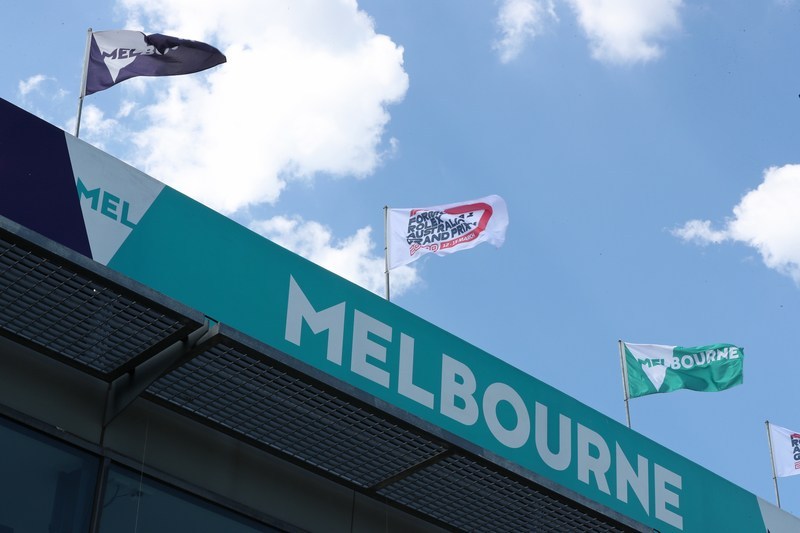
A week has passed since Formula 1 took the dramatic decision to delay the start of the 2020 season, and the sport has largely moved on from a Thursday night spent in confusion and disarray. The rampant advances of the coronavirus across the world, forcing tens of millions to isolate themselves at home, has understandably relegated this sporting calamity to a forgotten detail.
Within the F1 community, most of the backlash has been assuaged by three decisive, clear-headed decisions: the postponement/cancellation of all races until June, the change to the summer break and the deferral of the sea change 2021 regulations until 2022. Having attempted to ride out the storm in Melbourne, this was the week where F1 properly came to terms with the implications of COVID-19.
Not that the decision to go ahead with the race in the weeks prior to the Australian Grand Prix came under much criticism at the time. Two weeks ago southeastern Australia had just a handful of confirmed positive cases, and given the fact that the teams use sea freight to supply the fly-away races, there was little scope for flexibility as more localized cases were confirmed in the days prior to the race.
Too little, too late?
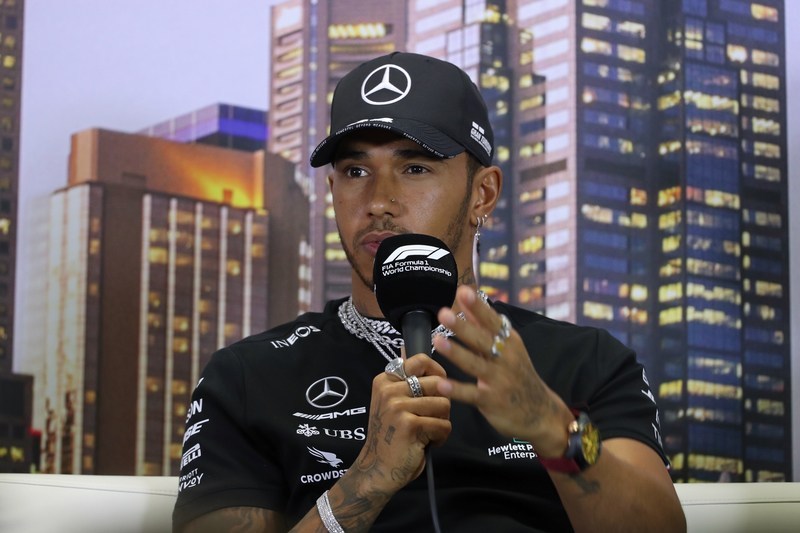
However, Thursday already felt like a mistake. Five F1 personnel – four from Haas and one from McLaren – were tested for coronavirus after showing fever-like symptoms. By this point, an outspoken reigning champion had already dropped the bombshell about what he described as the “shocking” decision to hold the race. McLaren’s decision to withdraw following the confirmed diagnosis ought to have been followed by the immediate unanimous cancellation of the race.
Instead, in a sport widely famed for political farce, McLaren’s withdrawal was the starting gun for one of the most humiliating episodes in F1 history. There was one chink of light from a night of otherwise reckless stupidity. The paddock’s journalists outdid themselves. Doubtlessly fueled by an ocean of coffee and no small amount of anger, these keyboard warriors fought to bring a jot of clarity to the matted web of self-interest. RACER magazine’s Chris Medland deserves a special mention, having somehow stayed up the entire night.
The night’s events have been well-documented by this point. In order to avoid any legal challenges by the promoter (the Australian Grand Prix Corporation) the FIA wanted to couch the cancellation in terms of the sporting regulations: i.e. a failure to provide a minimum of twelve cars. An initial vote among the teams returned an even split, with five teams in favour of practicing on Friday and five against. The practicalities and underlying fairness of running a race without all ten teams appears not to have featured prominently in the discussions.
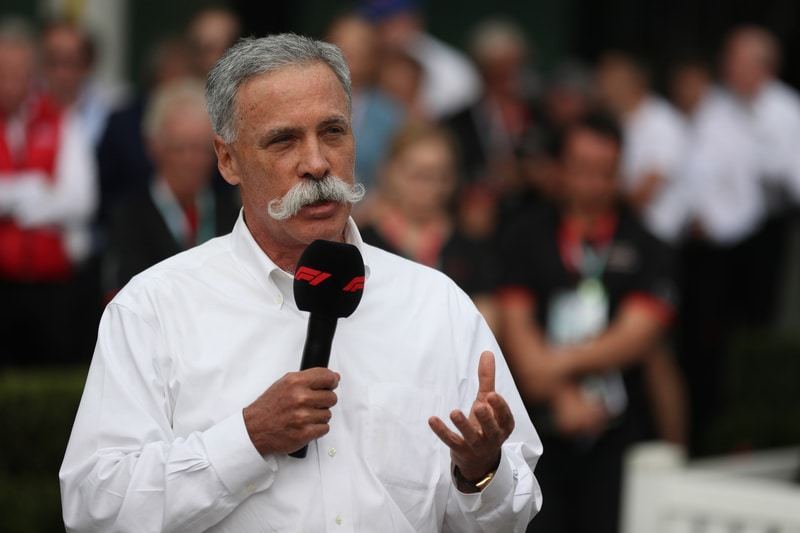
Throughout this process, three bodies; Formula One Management, the FIA and the AGPC; were jockeying for supremacy. To make matters worse, FOM CEO Chase Carey was on a flight from Vietnam whilst FIA president Jean Todt was obliviously enjoying the hospitality of a group of business leaders in Valenciennes. When Todt finally made himself available, he is reported to have decreed that the final decision must be made by the teams. To say that F1 was lacking in leadership during this saga would be something of an understatement.
Confusion reigns as fans left in the dark
As a direct consequence of this power vacuum, the AGPC released a statement in the hours before the gates opened on Friday stating that the event would proceed as scheduled and that marshals should take up their posts. The AGPC’s position is somewhat understandable. Having paid $55 million for the pleasure of hosting the race – much of it government money – it was certainly in the financial interests of both the AGPC and FOM that the race went ahead.
But the writing was very much on the wall by this point. McLaren had withdrawn and Ferrari, Renault and Alfa Romeo were adamantly opposed to racing. The prospect of a race held under lockdown without any spectators – an option favoured by Red Bull – would have fielded a maximum of twelve cars and been subject to universal ridicule and condemnation. That’s without mentioning recklessness of ordering F1 personnel to return to a paddock where a confirmed carrier of COVID-19 had been working just one day prior.
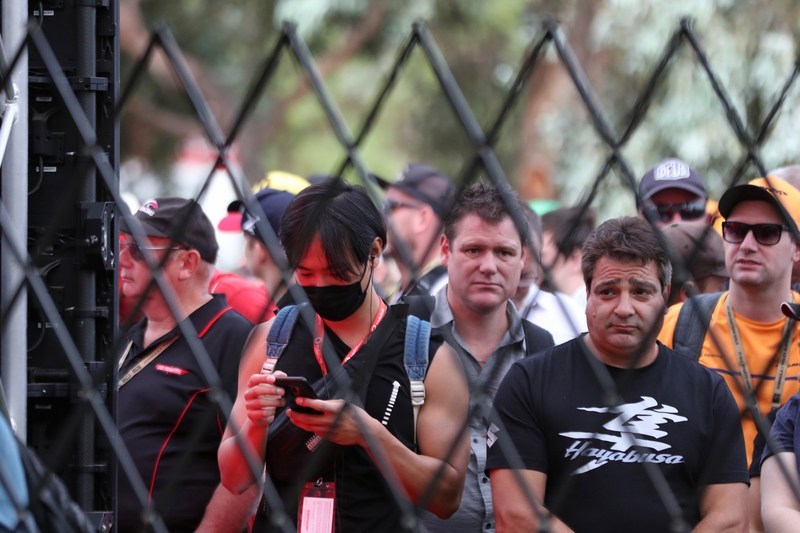
The fact that the race was a non-starter, that any notion of ploughing ahead was both negligent and idiotic ought to have been abundantly clear to both the AGPC and FOM. Instead F1 put public health on the backburner and allowed crowds of expectant fans to gather outside the circuit gates on Friday morning, further jeopardising their health. Of all the ineptitude and absurdity from F1’s aborted season opener, this was by far the gravest error.
Daimler AG CEO steps in
Ultimately the whole ugly saga was resolved by an innocuous phone call. Daimler CEO Ola Kallenius rang Toto Wolff, who had previously been in favour of practicing on Friday, to express his concerns about the race going ahead. Whilst it is believed that Kallenius left the final decision to Wolff, this light-handed corporate nudge was enough to flip the vote of the Mercedes team and break the deadlock in the vote. In turn this also brought the number of willing participants below the twelve-car watermark.
The final announcement came just two hours before the scheduled start of FP1 and almost twelve hours after McLaren’s bombshell withdrawal. That morning it was confirmed that both Sebastian Vettel and Kimi Raikkonen had flown home overnight, and that the belated advice of the Victorian government public health officials had ruled out the prospect of holding the event with spectators. By that point thousands of fans had amassed outside the circuit gates, in every bit as close proximity as they would have been in the grandstands.
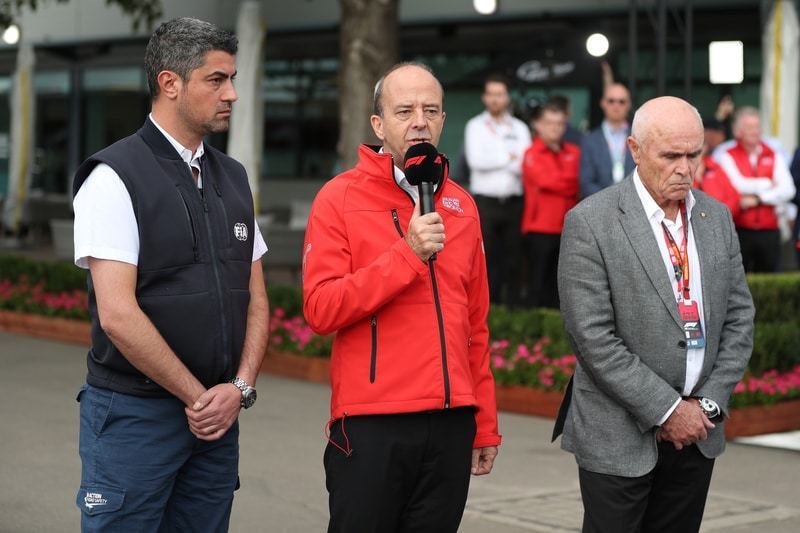
A rather awkward presser held by AGPC CEO Andrew Westacott, AGPC chair Paul Little, FOM CEO Chase Carey and an oddly silent Michael Masi struck a gratuitously defensive tone. The lack of a remotely compelling explanation as to why the cancellation couldn’t have been confirmed sooner was conspicuous. In the subsequent hours, any suggestion that the decision could have been expedited was roundly rebuffed, with Ross Brawn adding his perspective on the web of complexities that blocked a more timely announcement.
What transpired on Friday morning at Melbourne was unacceptable: throngs of fans gathered outside of an event ruled unsafe for spectators by government public health advisors. If F1 cannot coherently make a necessary decision to safeguard the safety of its fans that is either an indictment of the sport’s leaders or the contractual obligations that bound their hands. If it is the former, it verges on a resignation-worthy lapse in leadership. However, in either case, F1 needs to rethink its relationship with the promoters. In a year that will inevitably be dominated by coronavirus, F1 must do the following:
- Clarify a command and control structure within the race agreements, allowing for the unilateral cancellation of events under dynamic and fast-moving circumstances.
- Establish a procedure for last-minute cancellation, encompassing a rigorous communications strategy and a contingency for instructing fans.
- Give the FIA the power to cancel events, not merely on sporting grounds, but on safety and existential grounds.
Certainly, some fine decisions in the subsequent days have somewhat redeemed F1 from its weekend of indecision and ineptitude. It defended the interests of the smallest teams in deferring the introduction of the next-gen regulations, it gave clarity by calling off all races until June and it acted in common sense in moving the summer break forward. However, this cannot be allowed to excuse the sport’s farcical showing in Melbourne.
Whilst the likes of MotoGP and Formula E have acted quickly, imaginatively and proactively ever since the coronavirus established a foothold outside of China, F1 has been behind the curve, as painfully demonstrated down-under. Rapidly evolving circumstances, political unwieldiness and financial self-interest conspired to produce F1’s most shameful showing since the infamous 2005 US Grand Prix. F1 must shape up and act decisively if it has any designs on holding a championship in this dangerous new world.