

• Latest
  • Trending
  • All
Ossia On Powering Supply Chain IoT Digitization

Ossia On Powering Supply Chain IoT Digitization

January 11, 2020
Last Mile Delivery Market Worth Observing Growth | UPS, FedEx, SF Express

Last Mile Delivery Market Worth Observing Growth | UPS, FedEx, SF Express

April 23, 2024
Top 5 Spend Analysis Software ranked in 2024

Top 5 Spend Analysis Software ranked in 2024

March 1, 2024
How Tesla And BMW Are Leading A Supply Chain Renaissance With Blockchain

How Tesla And BMW Are Leading A Supply Chain Renaissance With Blockchain

January 19, 2024
LATAM Cargo strengthens European cargo links

LATAM Cargo strengthens European cargo links

April 14, 2020
Ford making reusable hospital gowns from airbag materials as efforts against coronavirus expand

Ford making reusable hospital gowns from airbag materials as efforts against coronavirus expand

April 14, 2020
Don’t Sweat NBC’s Decision to Cut Back on Television Ad Inventory

Don’t Sweat NBC’s Decision to Cut Back on Television Ad Inventory

April 14, 2020
Software firms sharpen focus on AI, big data as IT spending drops

Software firms sharpen focus on AI, big data as IT spending drops

April 14, 2020
Navigating turbulent times in your supply chain (TL:DR version)

Navigating turbulent times in your supply chain (TL:DR version)

April 14, 2020
Last Mile Delivery by Drones Market is Booming Worldwide

Last Mile Delivery by Drones Market is Booming Worldwide

April 14, 2020
AIR CARGO MARKET SIZE, SHARE, DEMAND, TREND, LATEST INNOVATIONS & APPLICATION ANALYSIS AND INDUSTRY GROWTH FORECAST 2027 – Science In Me

AIR CARGO MARKET SIZE, SHARE, DEMAND, TREND, LATEST INNOVATIONS & APPLICATION ANALYSIS AND INDUSTRY GROWTH FORECAST 2027 – Science In Me

April 14, 2020
Wheat procurement in Patiala: 6,500 coupons issued to farmers – cities

Wheat procurement in Patiala: 6,500 coupons issued to farmers – cities

April 14, 2020
Pandemic, Plastics And The Continuing Quest For Sustainability

Pandemic, Plastics And The Continuing Quest For Sustainability

April 14, 2020
  • Supply Chain
  • Logistics
  • Warehousing
  • Procurement
  • Shipping
  • More
    • Strategic Sourcing
    • Spend Analysis
    • Inventory
    • Contact Us
No Result
View All Result
United States International Supply Chain Commission
Home Supply Chain

Ossia On Powering Supply Chain IoT Digitization

by usiscc
January 11, 2020
in Supply Chain
0
Ossia On Powering Supply Chain IoT Digitization
500
SHARES
1.4k
VIEWS
Share on FacebookShare on Twitter

Share

Tweet

Share

Share

Share

Print

Email

At the onset of Industry 4.0, the drive toward supply chain digitization is fueling massive investments in Internet of Things (IoT), smart sensors and connected devices.

The technology is often considered a game-changer for supply chain management and logistics operations, able to both elevate the efficiency of operations while connecting corporates to real-time data for deep business intelligence and analytics.

There are, of course, drawbacks to this trend, as businesses with some of the most complex and widespread supply chains grapple with the costs of a technological overhaul, security concerns of connected devices, and more.

Preston Woo, chief strategy officer at wireless power company Ossia, recently told PYMNTS about one of the lesser-discussed, but not less prominent, challenges in the supply chain digitization journey: power. As more companies adopt IoT and sensory devices, powering these tools is becoming a greater challenge that can hold back the supply chain modernization that will be required to keep pace with rapidly changing market demands.

“The supply chain is evolving very dynamically because of eCommerce, same-day fulfillment and things like that,” he said in an interview. “Digitization is a big trend, and data is the new currency. Retailers and logistics companies, they need a lot more data, and they want it in real time.”

While that demand for real-time supply chain data is certainly among the largest drivers of IoT device adoption in this space, Woo explained that power issues can thwart modernization efforts.

IoT’s Power Problem

Traditionally, adoption of sensors, scanners and other internet-connected devices in warehouses, fulfillment centers and elsewhere along the supply chain relies on power from batteries or power cables.

However, according to Woo, this method of powering these devices is far from ideal.

Take, for instance, a storage facility within the food and beverage supply chain. The demand for sensors that monitor temperature, humidity and other environmental metrics is critical to maintaining quality and safety of fresh produce and other food products, but as Woo explained, batteries do not operate optimally in cold temperatures, while the number of power cables necessary to power every device can be overwhelming and expensive.

Other “power problems” relate to the manual labor and environmental repercussions of relying on batteries that must constantly be changed out and checked, while wires lack the customization necessary for many bespoke facilities.

“Right now, businesses need more sensors and devices to get data, digitize and optimize,” said Woo. “But one of the big problems they come up with is the inability to deploy more devices or sensors that are IoT-connected because of this power problem.”

The Chicken-and-Egg Conundrum

Ossia recently announced its participation in the Plug and Play Northwest Arkansas Supply Chain Program, in which the company will pilot its wireless power technology, Cota, with Walmart.

According to Woo, Walmart reflects the retail sector’s particularly large interest in supply chain modernization and push to participate in Industry 4.0.

Indeed, Walmart has made several high-profile investments in its supply chain in recent months, including an investment in India-based grocery supply chain management startup Ninjacart last month, the development of a blockchain-powered logistics and supply chain payments network in Canada, and a ramp-up of investment in its supply chain and logistics operations in China.

Collaborating directly with Walmart, as well as other service providers in the logistics and supply chain technology arena, will be key to solving what Woo termed a “chicken-and-egg” conundrum that emerges: a lack of powering technology for IoT-connected devices can hamper corporates’ adoption of those supply chain tools, but without adoption of these tools, demand for wireless power technology will lag.

“Walmart wants the full solution, they don’t want the piecemeal,” he said. “We have to work with all ecosystem players.”

That will be an important strategy moving forward as wireless power technology moves into additional use cases. For Walmart, the pilot will see the retail conglomerate deploying Cota for its asset tracking operations across large distribution centers, a process Woo explained traditionally requires manual, human intervention to track and manage inventory across thousands of trailers.

But there are other applications in supply chain management, ranging from wirelessly powering other kinds of asset tracking devices, handheld devices and scanners, sensors and more, from warehouses to distribution centers to fleet and shipping vehicles. Often times, the power of an employee’s handheld device won’t last through an entire shift, said Woo, leading to inefficiencies.

And in filling the power gap that can hold businesses back from migrating their supply chains into Industry 4.0, Ossia can also elevate corporates’ ability to access data from those powered devices, which Woo said will be essential to removing major barriers to adoption of these tools.

“If I walk into Macy’s, for example, the reason there are not all of the beacons and IoT sensors is not because those products don’t exist and aren’t good at digitizing data,” he said. “It’s because you have to run a wire through it, or put a battery in it, which run out. These technologies don’t get deployed because they don’t have a good power solution.”
——————————–

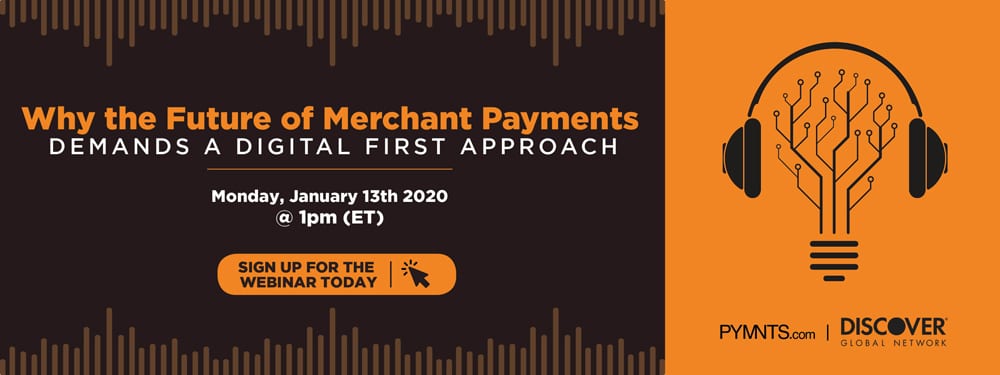
Upcoming PYMNTS Virtual Event:

Join PYMNTS CEO, Karen Webster and Amy Parsons, SVP of Global Acceptance, Discover Financial Services on Monday, January 13, 2020 at 1:00 PM (ET) to learn the ways merchants can meet consumer expectations with payments technology available today — and how they can prepare for the future.

B2B, B2B Payments, Cota, Editors’ Picks, Industry 4.0, Internet of Things, IOT, News, Ossia, real-time data, supply chain digitization, supply chain management, walmart, wireless power

Share200Tweet125
usiscc

usiscc

  • Trending
  • Comments
  • Latest
Escape From Tarkov – How to Rotate Items

Escape From Tarkov – How to Rotate Items

February 5, 2020
Supply chain examination: Planning for vulnerabilities you can’t control

Supply chain examination: Planning for vulnerabilities you can’t control

December 7, 2019
Procurement Project Manager job with Camden London Borough Council

Procurement Project Manager job with Camden London Borough Council

February 17, 2020
Art Battle Wichita Falls III at The Warehouse, 1401 Lamar.

Art Battle Wichita Falls III at The Warehouse, 1401 Lamar.

0
Global Industry Analysis, Size, Share, Growth, Trends, and Forecasts 2016–2024 – ZMR News Reports

Global Industry Analysis, Size, Share, Growth, Trends, and Forecasts 2016–2024 – ZMR News Reports

0
PHOTOS: Ottawa firefighters respond to warehouse fire

PHOTOS: Ottawa firefighters respond to warehouse fire

0
Last Mile Delivery Market Worth Observing Growth | UPS, FedEx, SF Express

Last Mile Delivery Market Worth Observing Growth | UPS, FedEx, SF Express

April 23, 2024
Top 5 Spend Analysis Software ranked in 2024

Top 5 Spend Analysis Software ranked in 2024

March 1, 2024
How Tesla And BMW Are Leading A Supply Chain Renaissance With Blockchain

How Tesla And BMW Are Leading A Supply Chain Renaissance With Blockchain

January 19, 2024
  • Privacy Policy
  • Terms of Use
  • Disclaimer
  • DMCA
  • Contact Us

Copyright © 2024 United States International Supply Chain Commission (usiscc.org)

This website uses cookies to improve your experience. We'll assume you're ok with this, but you can opt-out if you wish. Cookie settingsACCEPT
Privacy & Cookies Policy

Privacy Overview

This website uses cookies to improve your experience while you navigate through the website. Out of these cookies, the cookies that are categorized as necessary are stored on your browser as they are essential for the working of basic functionalities of the website. We also use third-party cookies that help us analyze and understand how you use this website. These cookies will be stored in your browser only with your consent. You also have the option to opt-out of these cookies. But opting out of some of these cookies may have an effect on your browsing experience.
Necessary
Always Enabled

Necessary cookies are absolutely essential for the website to function properly. This category only includes cookies that ensures basic functionalities and security features of the website. These cookies do not store any personal information.

Non-necessary

Any cookies that may not be particularly necessary for the website to function and is used specifically to collect user personal data via analytics, ads, other embedded contents are termed as non-necessary cookies. It is mandatory to procure user consent prior to running these cookies on your website.

SAVE & ACCEPT
No Result
View All Result
  • Supply Chain
  • Logistics
  • Warehousing
  • Procurement
  • Shipping
  • More
    • Strategic Sourcing
    • Spend Analysis
    • Inventory
    • Contact Us

Copyright © 2024 United States International Supply Chain Commission (usiscc.org)







