






Are you Team Trump – “prophets of doom” – or Team Thunberg – “world on fire” – when it comes to fate of the planet? Both grabbed headlines at the World Economic Forum in Davos this week with their latest public war of words. But whatever worldview you take, back on the ground – and in the water – plastic pollution continues to prove a huge challenge.
The disappearance of single-use bags was supposed to help, but has in reality led consumers to treat their reusable bags as throwaways – Greenpeace found that shoppers purchase an average of 54 per year. Recycling facilities are not advancing, so it’s still really difficult to dispose of plastic in an environmentally friendly way.
And back over at Davos, Coca-Cola, one of the biggest producers of plastic waste, announced it has no intention of ditching single-use plastic bottles because consumers apparently still want them.
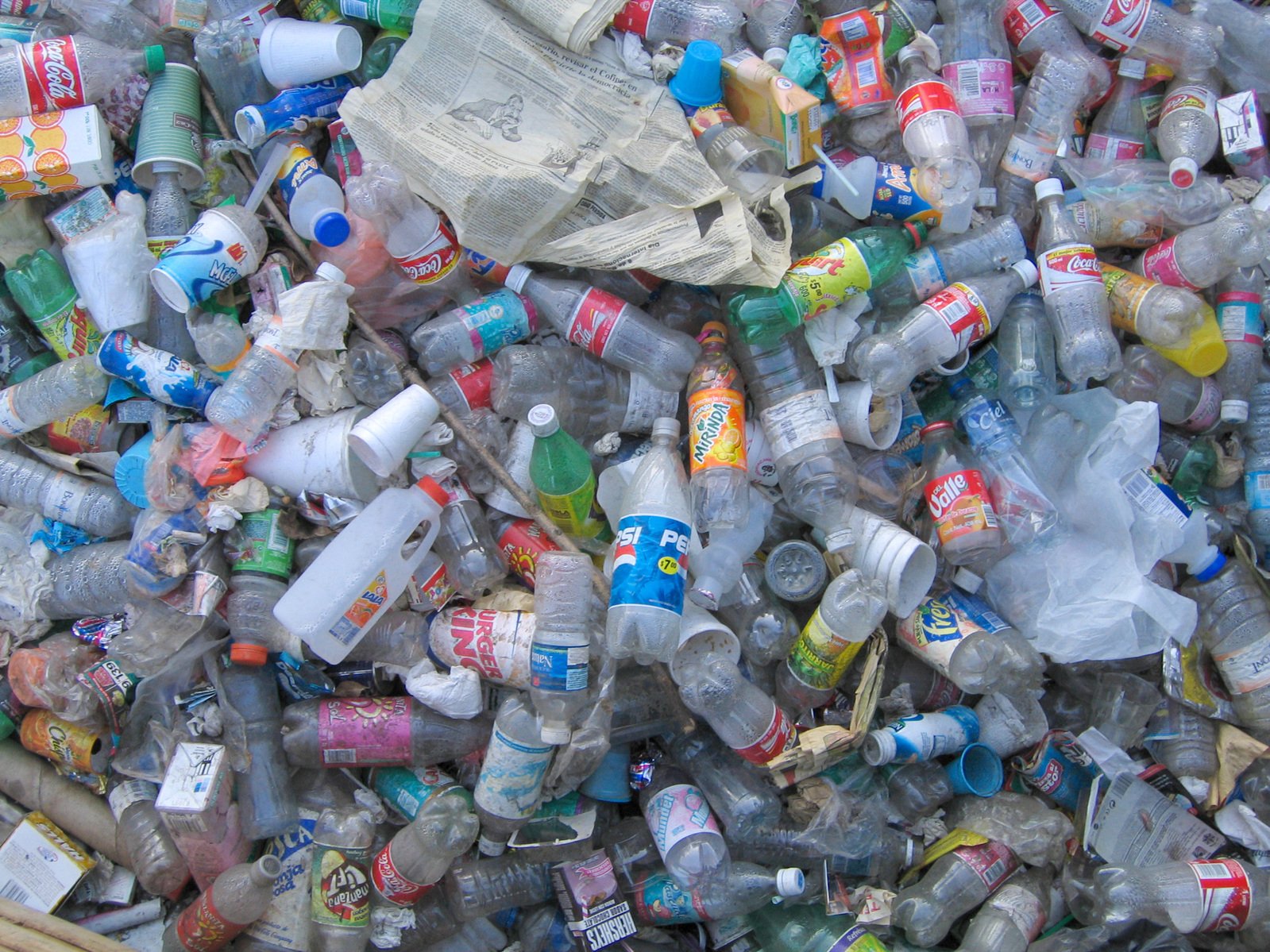
It seems unfair to pick on one company, but then again in 2019, Coca-Cola was found to be the planet’s most polluting brand by charity Break Free from Plastic; the drinks giant produces about three million tonnes of plastic packaging a year – equivalent to 200,000 bottles a minute. The firm’s pledge to use at least 50% recycled material in its packaging by 2030 seems rather ineffectual when you’re talking about an amount of plastic waste on that scale.
And then there’s the longevity of these plastic bottles, which literally hang around polluting the seas for decades. This was highlighted perfectly when a 47-year-old bottle of Fairy washing-up liquid washed up onto a UK beach, in pristine condition despite having weathered the seas for nearly 50 years.
Another major challenge in the battle against plastic pollution is the growing use of multi-layered packaging – the material that makes up our food packaging like crisp packets and chocolate bar wrappers, and often ends up littering our streets and clogging up our waterways. Global polyethylene terephthalate (PET) production is projected to grow from 42 million metric tons to 73 million metric tons from 2014 to 2020 to meet demand for this type of plastic. Worse still, this is all single-use plastic, which is collected alongside general waste.
This is a perfect example of a negative impact on the planet throughout the entire product lifecycle: fossil fuel sources are used to make it; it’s then discarded as waste; some of it escapes into the environment and pollutes the habitat of life forms; anything left is typically incinerated or buried in landfill; and so there’s no material to reuse.
Speaking at a plastic pollution event hosted by the British International Education Association last week, mechanical engineer Manu Mulakkal from Imperial College, London, told delegates that much more needs to be done to create plastics or packaging that can be more easily recycled, as well as increase demand for recycled materials. He explained:
We struggle to see any meaningful action addressing the main plastic pollutants such as food packaging. Our attempts to reduce and recycle plastics are not being effective. Global packaging is still projected to grow.
The new oil
Fortunately, there are some companies tackling this specific area. Recycling Technologies is working to transform the future of this ‘unrecyclable’ plastic by creating value from plastic waste. The company has engineered a modular and scalable machine – the RT7000 – to convert mixed plastic waste that currently ends up in landfill or incineration into a reusable product.
As Mulakkal noted, one of the biggest challenges with plastic waste is that so much of it, from pet food packets and shopping bags to crisp packets, cannot be recycled by conventional means. This is where the RT7000 comes in, which can turn these ‘soft’ plastics – anything that can be scrunched into a ball, to give a non-scientific description – into Plaxx oil, which is then reused in the manufacture of new plastic.
Recycling Technologies has partnered with grocery giant Tesco to trial recycling bins for soft plastics, and has teamed up with Total, Nestlé and Mars to target plastic packaging waste in France.
Plastics Cloud
SAP, which signed up to the World Economic Forum’s Global Plastic Action Partnership this week, is already making more targeted efforts to encourage more use of recycled materials. Last September, the firm launched a plastics marketplace based on SAP Ariba technology to expand the trade of recycled plastics and plastic alternatives.
Around $10 billon worth of packaging flows through Ariba Network every year. Plastics Cloud enabled by Ariba Network connects buyers with recycled and alternative plastics suppliers such as Bantam Materials UK and others certified by organizations such as OceanCycle, focused on creating traceability in plastic supply chains. The aim is to ensure as much of this cash as possible is spent on eco-friendly products.
SAP is now expanding Plastics Cloud to focus at an earlier stage in the process – the production of materials. The idea is to let companies develop products more responsibly by offering them global insights about what materials are used and their fates.
Minimising microbeads
For those of us wanting to steer clear of any hidden plastics in the products we buy, there’s CodeCheck. The mobile app scans the barcodes on food and cosmetic labels to show the hidden ingredients inside, letting shoppers understand the environmental and health impacts of hidden polymers in their choice of make-up and toiletries.
From sunscreen to nail polish and dry shampoo, we’re exposed to a multitude of different liquid polymers and microplastics during the course of our normal daily routine. From this, we ingest about 100 solid plastic particles a day, not including liquid polymers. Yum yum…
By scanning the barcode on the cosmetics, vitamins, food and cleaning products we choose, consumers can see if that product has any hazardous substances like microplastic particles – and make a more informed choice.
Drones and AI
One of the biggest problems with tackling plastic waste is effectively tracking and locating plastic in our waters. Properly quantifying the mass of disintegrating plastics in the ocean requires taking spatially distributed measurements of all sizes and classes of debris on a global scale, as well as the plastic beneath the surface. Professor René Garello, IEEE fellow and Professor at IMT Atlantique, notes this isn’t a problem that can be solved by any one single technology or nation. He explains:
Scientists must focus on the acquisition of data from multiple sources – such as satellite imaging mixed with global and local observations – to create models of surface current circulation and give indicators of the levels of plastic presence. To get meaningful output from such a diverse dataset, and to improve their decision-making ability, scientists must fully and thoroughly analyze the data with artificial intelligence (AI).
One example is drones being fitted with cameras and flown locally across coastal regions, while AI is being trained to recognise the difference between images of shells, jellyfish and plastic products snapped by the cameras. However, even with all these individual efforts, technology is still just a cog in the wheel to stem the tide of plastic pollution. Mulakkal said:
Technology solutions alone can’t solve pollution. We want manufacturers to move away from single-use plastics, and make sure their packaging designs are recycle-friendly and they can be widely recycled. We want policies to enforce manufacturers to follow such standards.
We also have to help consumers to dispose correctly and we need policies to develop a strong recycling industry, helping process the waste generated here. We have to dispel consumer misconceptions of recycling, and change the negative consumer perception of products that use recycled materials.
My take
The scope of the problem is huge. I’m actively trying to cut down the amount of plastic I use, but it feels like a losing battle every time I look in the fridge or on the supermarket shelves.
One area I’d love to see technology tackle next is refill facilities for staples like pasta, washing-up liquid and cereals. At present these are limited in location and product choice, and I wonder if technology could offer a way of making these more viable for retailers, perhaps with a mix of sensors and AI.
PS. I’m Team Thunberg all the way!










