








Apparel businesses don’t look too merry and bright this holiday season. So far this year, 11 of the 16 major retail bankruptcies were filed by companies that mostly sell apparel, footwear or accessories and the majority of those are dominated by private label products. Though poor inventory management alone is unlikely to drive a retailer to such dire straits, good inventory hygiene is gaining importance in the minds of analysts and investors.
Last week, Moody’s cut its fourth-quarter forecast for department stores, heavily reliant on apparel for years, predicting a 20% dip in operating income instead of the earlier prediction of 15%. “Inventory management is critical to success,” reads the note, adding most retailers have maxed out operational efficiency gains and winners have managed to better match inventories and consumer demand.
Moody’s also lowered its outlook for apparel brands in October from positive to stable. Analysts cited a stronger U.S. dollar, which increased cost of goods sold for apparel importers. Tariff pressure, as well, triggered inventory pull-forward before the expected Dec. 15 implementation of List 4B, though the round was canceled last week.
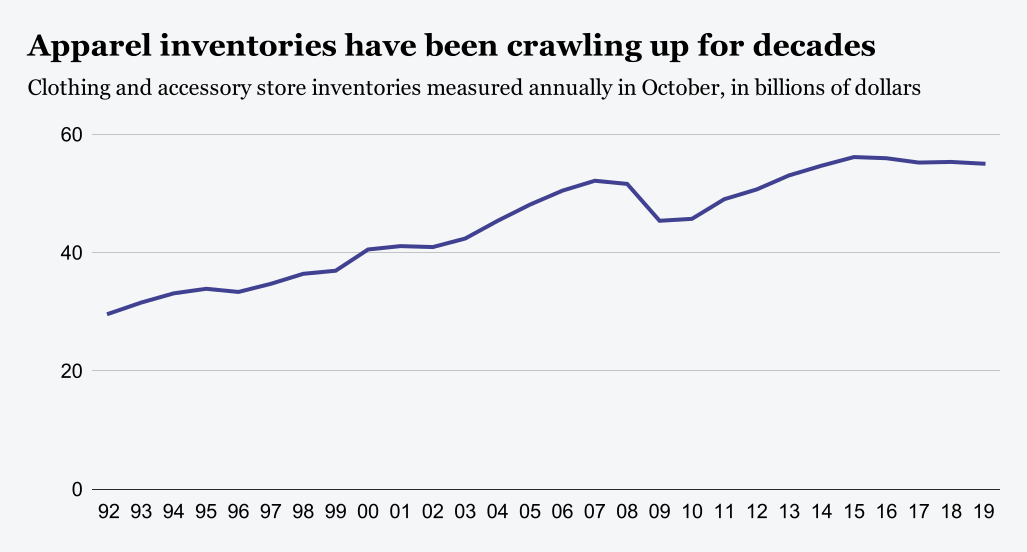
UBS named inventory growth as a top reason it is bearish on apparel, footwear and accessory sales for the 2019 holiday season. UBS noted in September that inventory growth for apparel, footwear and accessories has outpaced sales growth for four quarters running — predicting higher than normal promotions in Q4 and lower gross margins.
“I’m hearing so many companies that brought in inventory a lot sooner than expected, in order to get ahead of what was going to be some tariff increases,” Moody’s apparel and footwear analyst Mike Zuccaro told Supply Chain Dive.
But, tariffs, declining consumer spending on apparel and a cooling global economy may only be exacerbating a flaw lurking beneath the modern apparel industry for years.
How did we get here?
The problem is the way apparel is sourced and the priorities of operations teams dictating those purchases, which leads to overbuying, argued John Thorbeck, chairman of Chainge Capital, which specializes in lead-time optimization, at the Sourcing Journal Summit earlier this year. The result is markdowns.
Coresight Research put the value of retail markdowns at $300 billion in 2018 — representing 12% of non-grocery retail sales. Apparel retailers had a 60% full-price sell-through rate, which Coresight chalked up to poor inventory management.
“What other industry starts with a 65-70% initial margin and ends up at one or two? That’s the cost of uncertainty. How has this industry dealt with this for fifty years or longer? It’s finding what that cushion is in sourcing and cheaper and cheaper countries,” Thorbeck said.
Demand forecasting, from style to quantity, is growing in importance in modern apparel. Retailers like Kohl’s and brands like Nike tout their ability to decrease lead times leading to a more responsive supply chain and more relevant product. But most brands aren’t prioritizing short lead times over the king of KPIs: cost.
Most mass-market apparel supply chains were built to optimize cost of above all else, according to Thorbeck. These supply chains seem lower risk, since the cost of goods is so low, but they raise the cost of uncertainty since they tend to require larger orders and more lead time.
“What other industry starts with a 65-70% initial margin and ends up at one or two?”

John Thorbeck
Chairman, Chainge Capital
Change how new suppliers are chosen, said Thorbeck, and the inventory burden could lift, resulting in a perhaps more expensive, but certainly more resilient supply chains.
“When production location is considered part of a sourcing strategy, that’s a clear indicator that cost of goods sold is the ruling metric — and that’s how the industry ended up here,” said Thorbeck. “Speed and flexibility more than compensate for the cost of material and cost of location. I don’t see enough attention given to process innovation,” said Thorbeck.
The power to change
Though Thorbeck put the emphasis on lead times and sourcing, there’s not one link of the supply chain that is completely to blame for the problem of chronically-elevated inventory. Best practices in nearly every area can help, said Zuccaro.
True omnichannel operations, which are largely intended to meet the customers where they are and therefore garner the maximum sales, require advanced inventory management skills. In many cases when retailers up their fulfillment speed or omnichannel options, investment, either in technology or more inventory, follows. Even Amazon saw increased expense from staging inventory when it shifted Prime shipping speed from two days to one.
Design, lead times, order sizes, tariffs, omnichannel fulfillment, baseline inventory management … “There are a lot of different things that can go wrong,” said Zaccaro and each company is a little different. Many of these potential areas for error lead to stranded inventory and eventually markdowns. But managing them well can also optimize inventory in an era where most fail to do so — offering a competitive edge.
Zuccaro said many apparel sellers still need baseline operational investments to bring their supply chains into the omnichannel age and the ability to change, beyond self-awareness and will, stems from a firm’s financial health running much deeper than cost of goods sold. No new inventory management tech, no shift to a more expensive yet more flexible and responsive supplier is possible without funds available to invest in these areas. Subpar inventory management and wasteful buying doesn’t generally spell doom for an apparel dependent company on its own — but combine it with a sick balance sheet not strong enough to invest in best practices and even the best intentions won’t turn a business around.
Forever 21’s collapse didn’t come without the potent combination of high inventory and the financial burden of long-term leases, said Jefferies analyst Janine Stichter at the same summit.
This story was first published in our weekly newsletter, Supply Chain Dive: Operations. Sign up here.