

• Latest
  • Trending
  • All
Procurement AI Tackles ePayments Adoption

Procurement AI Tackles ePayments Adoption

January 10, 2020
Last Mile Delivery Market Worth Observing Growth | UPS, FedEx, SF Express

Last Mile Delivery Market Worth Observing Growth | UPS, FedEx, SF Express

April 23, 2024
Top 5 Spend Analysis Software ranked in 2024

Top 5 Spend Analysis Software ranked in 2024

March 1, 2024
How Tesla And BMW Are Leading A Supply Chain Renaissance With Blockchain

How Tesla And BMW Are Leading A Supply Chain Renaissance With Blockchain

January 19, 2024
LATAM Cargo strengthens European cargo links

LATAM Cargo strengthens European cargo links

April 14, 2020
Ford making reusable hospital gowns from airbag materials as efforts against coronavirus expand

Ford making reusable hospital gowns from airbag materials as efforts against coronavirus expand

April 14, 2020
Don’t Sweat NBC’s Decision to Cut Back on Television Ad Inventory

Don’t Sweat NBC’s Decision to Cut Back on Television Ad Inventory

April 14, 2020
Software firms sharpen focus on AI, big data as IT spending drops

Software firms sharpen focus on AI, big data as IT spending drops

April 14, 2020
Navigating turbulent times in your supply chain (TL:DR version)

Navigating turbulent times in your supply chain (TL:DR version)

April 14, 2020
Last Mile Delivery by Drones Market is Booming Worldwide

Last Mile Delivery by Drones Market is Booming Worldwide

April 14, 2020
AIR CARGO MARKET SIZE, SHARE, DEMAND, TREND, LATEST INNOVATIONS & APPLICATION ANALYSIS AND INDUSTRY GROWTH FORECAST 2027 – Science In Me

AIR CARGO MARKET SIZE, SHARE, DEMAND, TREND, LATEST INNOVATIONS & APPLICATION ANALYSIS AND INDUSTRY GROWTH FORECAST 2027 – Science In Me

April 14, 2020
Wheat procurement in Patiala: 6,500 coupons issued to farmers – cities

Wheat procurement in Patiala: 6,500 coupons issued to farmers – cities

April 14, 2020
Pandemic, Plastics And The Continuing Quest For Sustainability

Pandemic, Plastics And The Continuing Quest For Sustainability

April 14, 2020
  • Supply Chain
  • Logistics
  • Warehousing
  • Procurement
  • Shipping
  • More
    • Strategic Sourcing
    • Spend Analysis
    • Inventory
    • Contact Us
No Result
View All Result
United States International Supply Chain Commission
Home Procurement

Procurement AI Tackles ePayments Adoption

by usiscc
January 10, 2020
in Procurement
0
Procurement AI Tackles ePayments Adoption
492
SHARES
1.4k
VIEWS
Share on FacebookShare on Twitter

Share

Tweet

Share

Share

Share

Print

Email

Enterprise digitization continues to ramp up the availability of data, and open up new opportunities for in-depth analysis of that information. However, it’s no longer enough for solution providers to simply analyze corporate data. Businesses demand actionable insights, and analytics technology must be tailored to users in a way that can guide corporate strategy.

The procure-to-pay function is no exception, with businesses continuing to show demand for technologies that can analyze spend and purchasing behavior. According to Xeeva SVP of Business Development, Product and Growth Vikas Shah, this disruption is among the largest he’s seen in the industry as of late, he recently told PYMNTS.

“The market is moving [toward] prescriptive analytics,” he explained, adding that spend analytics technologies must be designed to address organizations’ unique and specific rules and requirements to promote compliance and growth. “The trend is shifting from just getting information about what’s happening in the company to giving specific direction [and] guidance on what you should be doing with that information.”

Collaboration Through Data

Data integrations with procurement and spend analytics technologies, like those offered by Xeeva, are finding empowerment through data integrations with a range of other back-office platforms in middle-market and large enterprises. The ability to take advantage of the electronic data generated by digital platforms, from accounting to inventory management, means a greater volume of quality information — from which analytics technologies like artificial intelligence (AI) and machine learning can develop those valuable insights.

This data integration trend is also driving another critical trend in procurement and spend analytics, according to Shah: enterprise-wide collaboration.

“We’re seeing the analytics space being disrupted dramatically by making sure there is a bridge between all business units within the function,” he said. “Traditionally, companies have not done a good job in making sure all business stakeholders within an organization have a consistent and streamlined view of their business spend.”

That means ensuring that procurement, finance, accounts payable (AP) and other departments are not only on the same page, but can interconnect their data with each other, as well as into a unified platform for the most holistic view of procurement and spend activity.

Sluggish ePayments Adoption

One of the greatest barriers to achieving data integration and producing actionable insights through analytics is a lack of quality information at the disposal of organizations and their service providers, said Shah. Despite the lofty promises and objectives of the spend analytics industry, technology is still limited in providing the kind of valuable insights that corporates demand when a high volume of line-level, granular information is missing — a problem that Shah said leads to spend leakage and a lack of visibility.

Exacerbating this challenge is the sluggish pace of electronic payments adoption, preventing systems from obtaining valuable, robust transaction data.

“We’re seeing slow progress right now. We continue to see the proliferation of paper checks. We’re seeing purchase card transactions, and a slight uptick in the use of virtual cards — but it’s only slight,” Shah said. “By and large, the pace of innovation and electronic payments adoption — at least in terms of the information management of that data around purchase orders and invoices — is not as rapid as we anticipated.”

AI Steps In

The lack of data integrity and availability, resulting in lackluster digital payments adoption, as well as an array of other factors, is not an easy challenge to address. Couple that with a lack of expertise within the enterprise on how to make use of the data that does exist, and the challenge seems insurmountable.

“There are two constraints in the industry today,” Shah said. “One is quality of data. It continues to be very poor, or imperfect. Another constraint is the lack of subject matter and domain expertise to make any of this data relevant for business action.”

However, he noted that AI — a technology traditionally viewed as a tool to support analytics of this information — can operate as a facilitator of filling in data gaps, so long as the technology is developed specifically for procurement and spend analytics applications. Xeeva’s strategic investments in AI are part of the company’s efforts to address issues like a lack of data, a lack of quality data and a lack of analytics expertise for its corporate customers.

As corporates advance toward real-time spend analytics (Shah said he has seen a rapid shift from the enterprise being satisfied with quarterly analytics only a few years ago to demanding monthly and weekly analytics today), the need to generate and maintain high-quality data will only grow. While AI can help to fill the gaps, Shah emphasized the role that pan-enterprise collaboration plays in not only supporting data integration, but in driving the generation of that data in the first place.

“Businesses are still struggling with a lot of fundamental challenges within finance, AP and procurement departments,” he said. “There’s a lack of collaboration that continues to persist between AP, finance and procurement. To dramatically move the needle in terms of electronic adoption, there has to be cross-functional stakeholder alignment within large organizations — and that’s really hard  to achieve.”
——————————–

Upcoming PYMNTS Virtual Event:

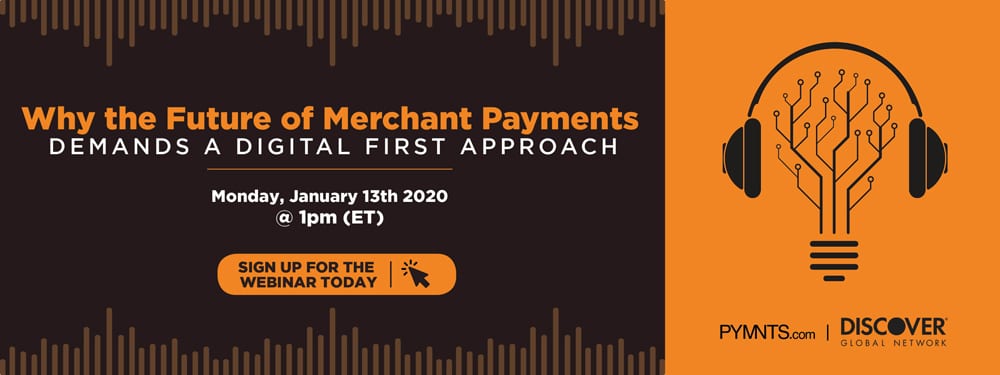
Join PYMNTS CEO, Karen Webster and Amy Parsons, SVP of Global Acceptance, Discover Financial Services on Monday, January 13, 2020 at 1:00 PM (ET) to learn the ways merchants can meet consumer expectations with payments technology available today — and how they can prepare for the future.

AI, B2B, B2B Payments, Collaboration, data analytics, data insights, data integration, ePayments, News, Payments Adoption, procurement, spend analytics, Xeeva

Share197Tweet123
usiscc

usiscc

  • Trending
  • Comments
  • Latest
Escape From Tarkov – How to Rotate Items

Escape From Tarkov – How to Rotate Items

February 5, 2020
Supply chain examination: Planning for vulnerabilities you can’t control

Supply chain examination: Planning for vulnerabilities you can’t control

December 7, 2019
Procurement Project Manager job with Camden London Borough Council

Procurement Project Manager job with Camden London Borough Council

February 17, 2020
Art Battle Wichita Falls III at The Warehouse, 1401 Lamar.

Art Battle Wichita Falls III at The Warehouse, 1401 Lamar.

0
Global Industry Analysis, Size, Share, Growth, Trends, and Forecasts 2016–2024 – ZMR News Reports

Global Industry Analysis, Size, Share, Growth, Trends, and Forecasts 2016–2024 – ZMR News Reports

0
PHOTOS: Ottawa firefighters respond to warehouse fire

PHOTOS: Ottawa firefighters respond to warehouse fire

0
Last Mile Delivery Market Worth Observing Growth | UPS, FedEx, SF Express

Last Mile Delivery Market Worth Observing Growth | UPS, FedEx, SF Express

April 23, 2024
Top 5 Spend Analysis Software ranked in 2024

Top 5 Spend Analysis Software ranked in 2024

March 1, 2024
How Tesla And BMW Are Leading A Supply Chain Renaissance With Blockchain

How Tesla And BMW Are Leading A Supply Chain Renaissance With Blockchain

January 19, 2024
  • Privacy Policy
  • Terms of Use
  • Disclaimer
  • DMCA
  • Contact Us

Copyright © 2024 United States International Supply Chain Commission (usiscc.org)

This website uses cookies to improve your experience. We'll assume you're ok with this, but you can opt-out if you wish. Cookie settingsACCEPT
Privacy & Cookies Policy

Privacy Overview

This website uses cookies to improve your experience while you navigate through the website. Out of these cookies, the cookies that are categorized as necessary are stored on your browser as they are essential for the working of basic functionalities of the website. We also use third-party cookies that help us analyze and understand how you use this website. These cookies will be stored in your browser only with your consent. You also have the option to opt-out of these cookies. But opting out of some of these cookies may have an effect on your browsing experience.
Necessary
Always Enabled

Necessary cookies are absolutely essential for the website to function properly. This category only includes cookies that ensures basic functionalities and security features of the website. These cookies do not store any personal information.

Non-necessary

Any cookies that may not be particularly necessary for the website to function and is used specifically to collect user personal data via analytics, ads, other embedded contents are termed as non-necessary cookies. It is mandatory to procure user consent prior to running these cookies on your website.

SAVE & ACCEPT
No Result
View All Result
  • Supply Chain
  • Logistics
  • Warehousing
  • Procurement
  • Shipping
  • More
    • Strategic Sourcing
    • Spend Analysis
    • Inventory
    • Contact Us

Copyright © 2024 United States International Supply Chain Commission (usiscc.org)