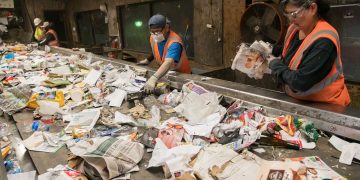







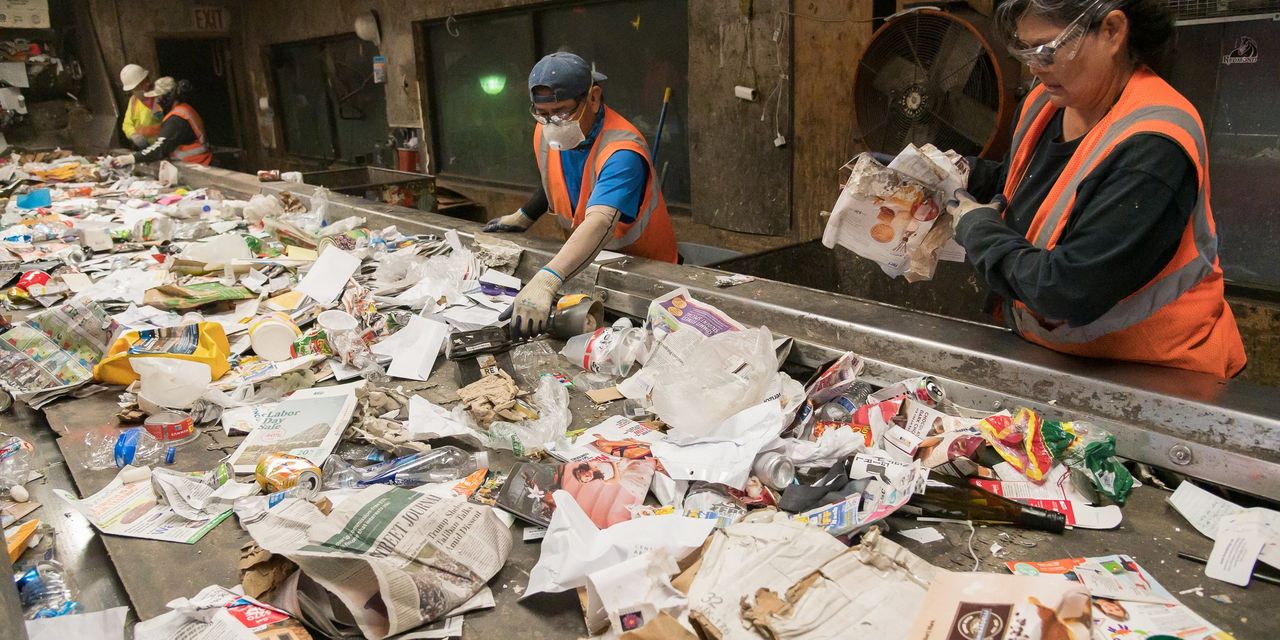
For decades, America and much of the developed world threw their used plastic bottles, soda cans and junk mail in one bin. The trash industry then shipped much of that thousands of miles to China, the world’s biggest consumer of scrap material, to be sorted and turned into new products.
That changed last year when China banned imports of mixed paper and plastic and heavily restricted other scrap. Beijing said it wants to stimulate domestic garbage collection and end the flow of foreign trash it sees as an environmental and health hazard. Since then, India, Malaysia, Vietnam, Thailand and Indonesia—other popular markets for the West’s trash—have implemented their own restrictions.
The moves have caused a seismic shift in how the world deals with its waste. Long used to shipping off trash to poorer countries to sort and process, nations are now faced with the question of what recycling is worth to them. They are undertaking new investments in domestic processing, ramping up alternative strategies such as incineration and rolling out education campaigns to teach homeowners to sort trash. Others are dropping programs altogether.
Recycling is “something that’s ingrained in you, and one day it suddenly all goes away,” said
Kyle O’Brien,
the town manager of Broadway, Va. The town had offered curbside recycling for two decades but canceled the service last year after Beijing started turning away the world’s recyclables. The company that processed the materials, van der Linde Recycling, closed its household waste processing facility, blaming the severe drop in prices.
Trash Trade
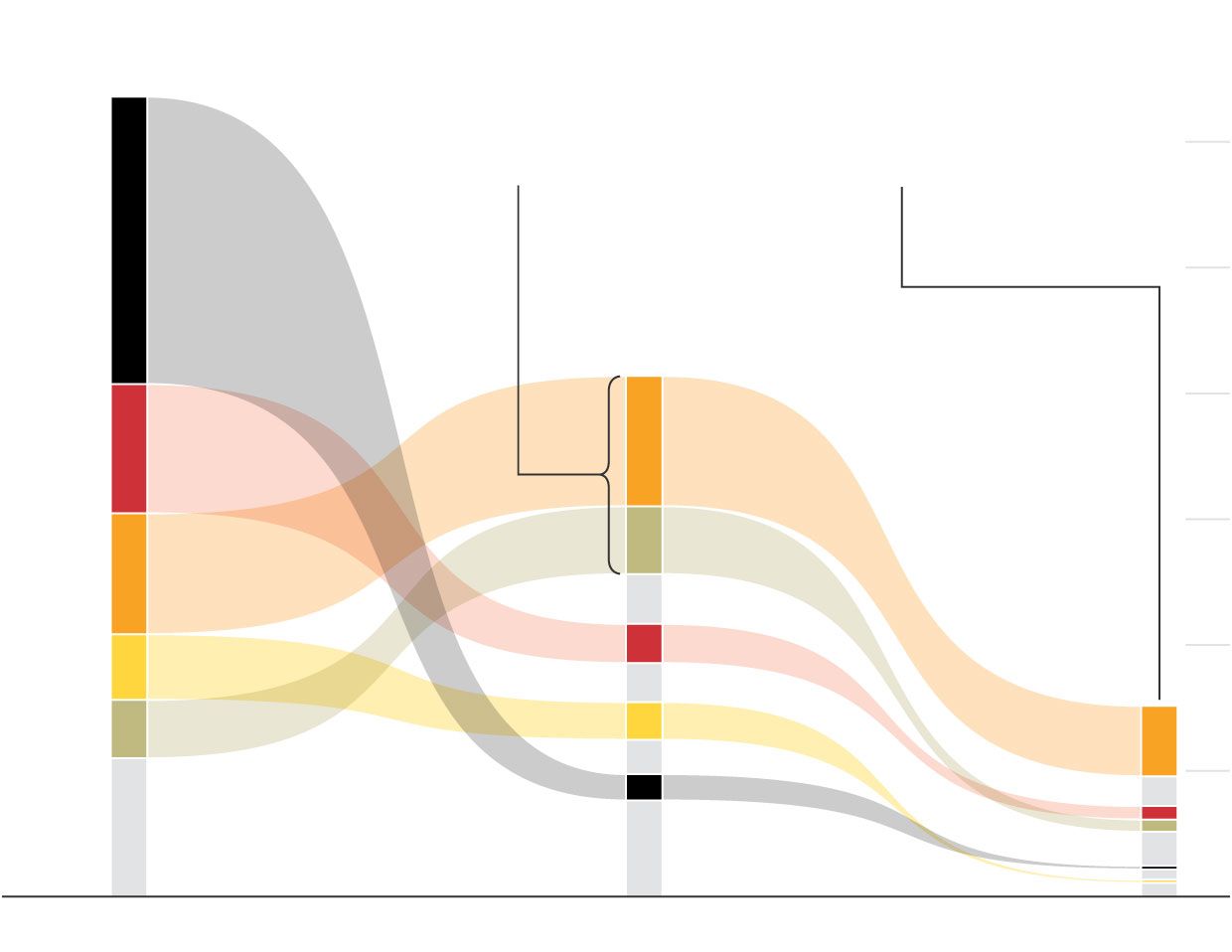
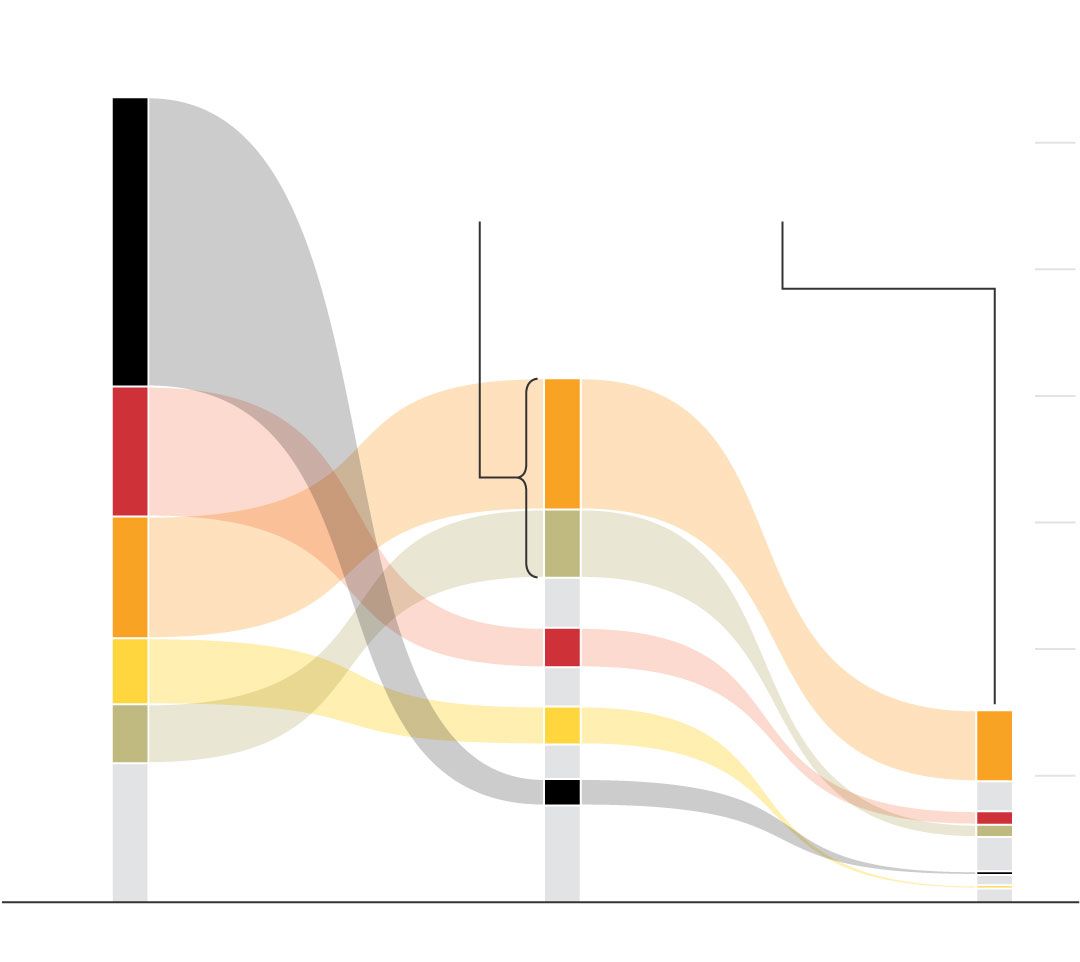
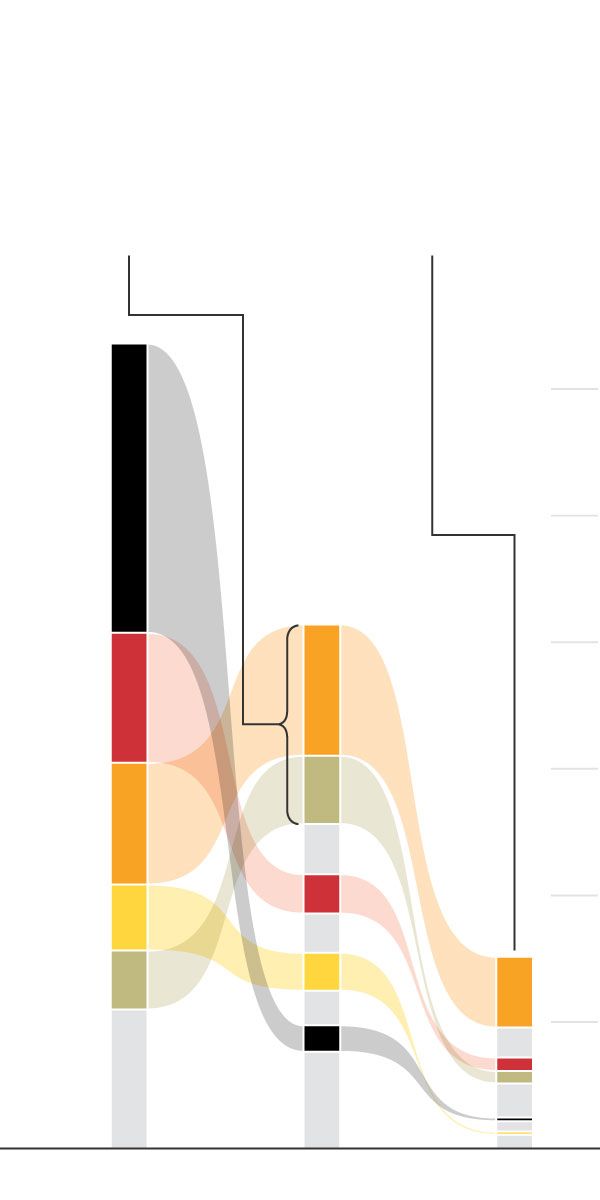
China’s 2018 restrictions on a variety of waste imports radically changed global flows of plastics, including polyethylene, a popular type used in shopping bags and shampoo bottles.
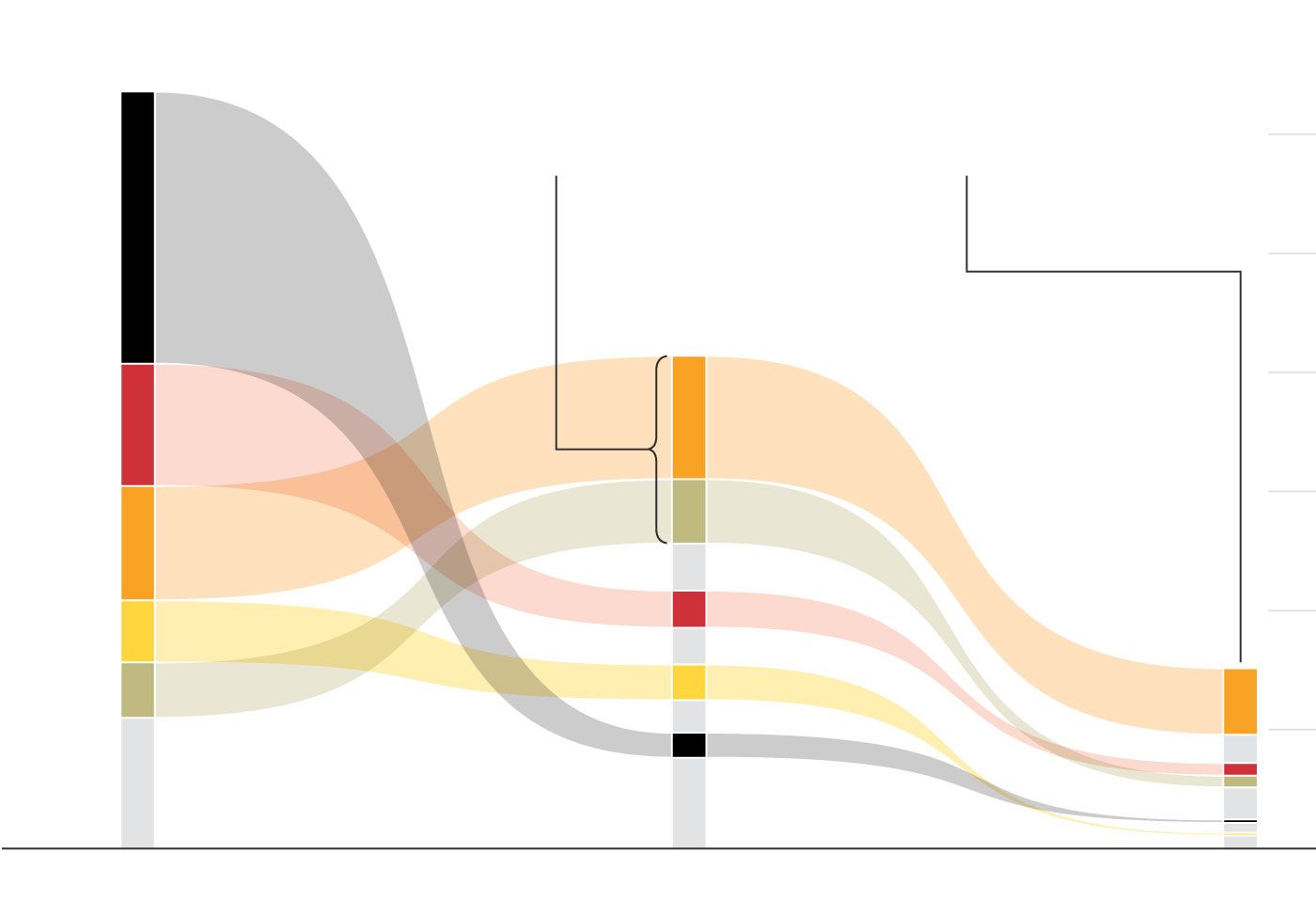
Top destinations for U.S. polyethylene scrap exports in 2017
Shut out of China, the U.S. sent more of its plastic waste to India and Malaysia last year.
However, stricter rules are further restricting plastic exports so far this year.
Top destinations for U.S. polyethylene scrap exports in 2017
Shut out of China, the U.S. sent more of its plastic waste to India and Malaysia last year.
However, stricter rules are further restricting plastic exports so far this year.
Top destinations for U.S. polyethylene scrap exports in 2017
Shut out of China, the U.S. sent more of its plastic waste to India and Malaysia last year.
However, stricter rules are further restricting plastic exports
so far this year.
Top destinations for U.S.
polyethylene scrap exports in 2017
However, stricter rules are further restricting plastic exports
so far this year.
Shut out of China, the U.S. sent more of its plastic waste to India and Malaysia last year.
For years, the world’s bottles and boxes made their way to China on ships that offered deep discounts to avoid returning empty after dropping off cargo in the U.S. and other countries. Since 1992, China has imported 45% of the world’s plastic waste, according to data published last year in the journal Science Advances.
“It was a great relationship, where we bought their goods and sent them back the empty boxes,” says
Brent Bell,
vice president of recycling for Houston-based
the largest waste management company in the U.S.
Last year, China instituted a ban on 24 categories of waste—including, for example, plastic clamshell containers, soda and shampoo bottles, and junk mail. It said foreign garbage was “provoking a public outcry.”
As of October, U.S. scrap exports of plastic to mainland China were down 89% since early 2017, when China began to make clear it would ban many categories, while mixed paper exports were down 96%, according to the Institute of Scrap Recycling Industries.
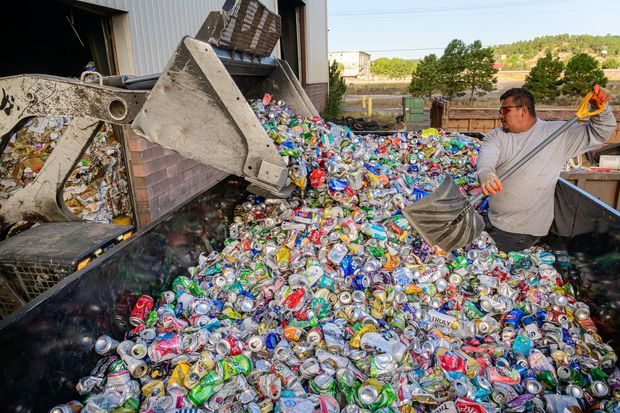
Photo:
DAWN KISH for The Wall Street Journal
Total U.S. plastic scrap exports to all countries were down 64% in that time period, while mixed paper exports were down 42% according to ISRI.
Cities and towns have been scrambling to find new buyers for their waste ever since. One big problem is that many locations outside cities such as New York are used to putting recycling in a single bin. Different materials must be painstakingly separated before they can be processed. Much paper is too damp and plastic too soiled with food or grease to be recycled at all.
China accepted dirty and mixed recyclables because it had low-wage workers to sort out unwanted material, often by hand. That gave American contractors little incentive to weed out food scraps, plastic bags and nonrecyclable junk stateside.
After China rejected imports, a flood of trash was rerouted to countries such as India, Indonesia and Malaysia. Many of those places now say they are overwhelmed and have imposed their own restrictions on paper or plastic imports. The countries also want to focus on developing their own waste collection industries.
Malaysia in May began sending back 60 containers of imported trash to the U.S. and other countries, complaining it had become a dumping ground for rich countries. The containers were meant to contain plastic scrap but were contaminated with other items such as cables and electronic waste. A government spokeswoman said more containers will be returned as Malaysia ramps up inspections.
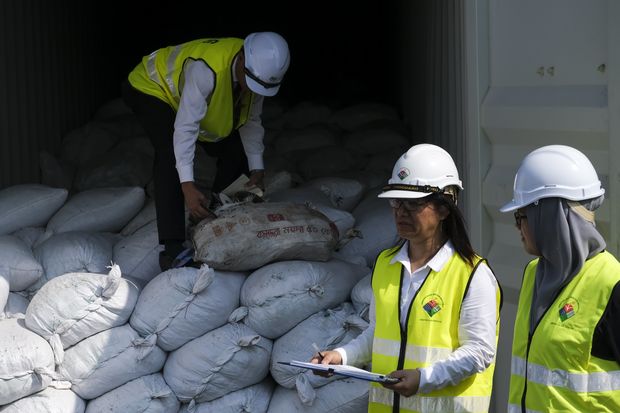
Photo:
Samsul Said/Bloomberg News
Japan, which historically sent most of its plastic exports to China, had been redirecting trash to Malaysia, Thailand and Vietnam after China’s ban. But when those countries began turning dirty recycling away, Japanese collectors started stockpiling, in hopes a new market would arise. Over the past year, Japan has amassed 500,000 tons of plastic waste, according to
Hiroaki Kaneko,
deputy director of recycling at the environment ministry.
Japan, the second-biggest exporter of plastic waste behind the U.S., is trying to stimulate domestic processing by earmarking billions of yen to subsidize plastic recycling machinery for private companies.
Daiei Kankyo Holdings, a recycling company based in Kobe, recently applied for the government subsidies, which are estimated to cover up to half the cost of recycling equipment for a new plant slated to open next year in Osaka. The opening of the plant, where plastic waste will be recycled into cases for transportation of food and other items, has been pushed forward by a couple of years due to China’s ban, said
Kunihiko Idei,
manager of the business strategy division of the company. The plant will double the company’s current capacity to around 30,000 tons a year.
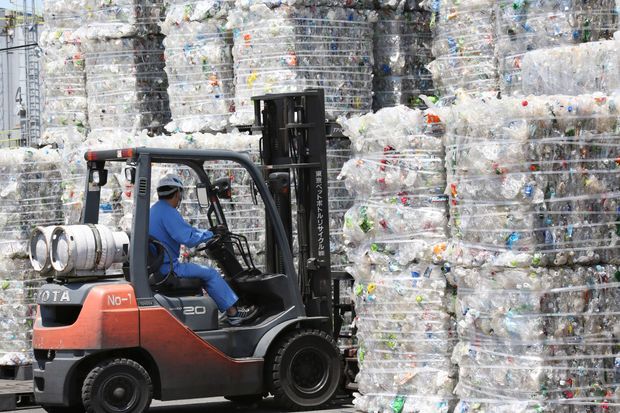
Photo:
Koji Sasahara/Associated Press
Asei Co., a Japanese plastic waste exporter, moved the production of plastic pellets, which are created during the recycling process and used to produce new products, home from its factory in Shanghai. It spent 500 million yen, or close to $5 million, on two new facilities northeast of Tokyo.
The U.K. is burning more of its trash, including dirty or low-value recycling. Attitudes toward incineration vary greatly by country. In the U.S., where space is plentiful, it has long been cheaper to send materials to landfills, and incineration has remained unpopular. Across much of Europe, by contrast, trash burned for energy has been popular for years.
Paper Trail
For decades, much of America’s recycling has ended up on the other side of the world.
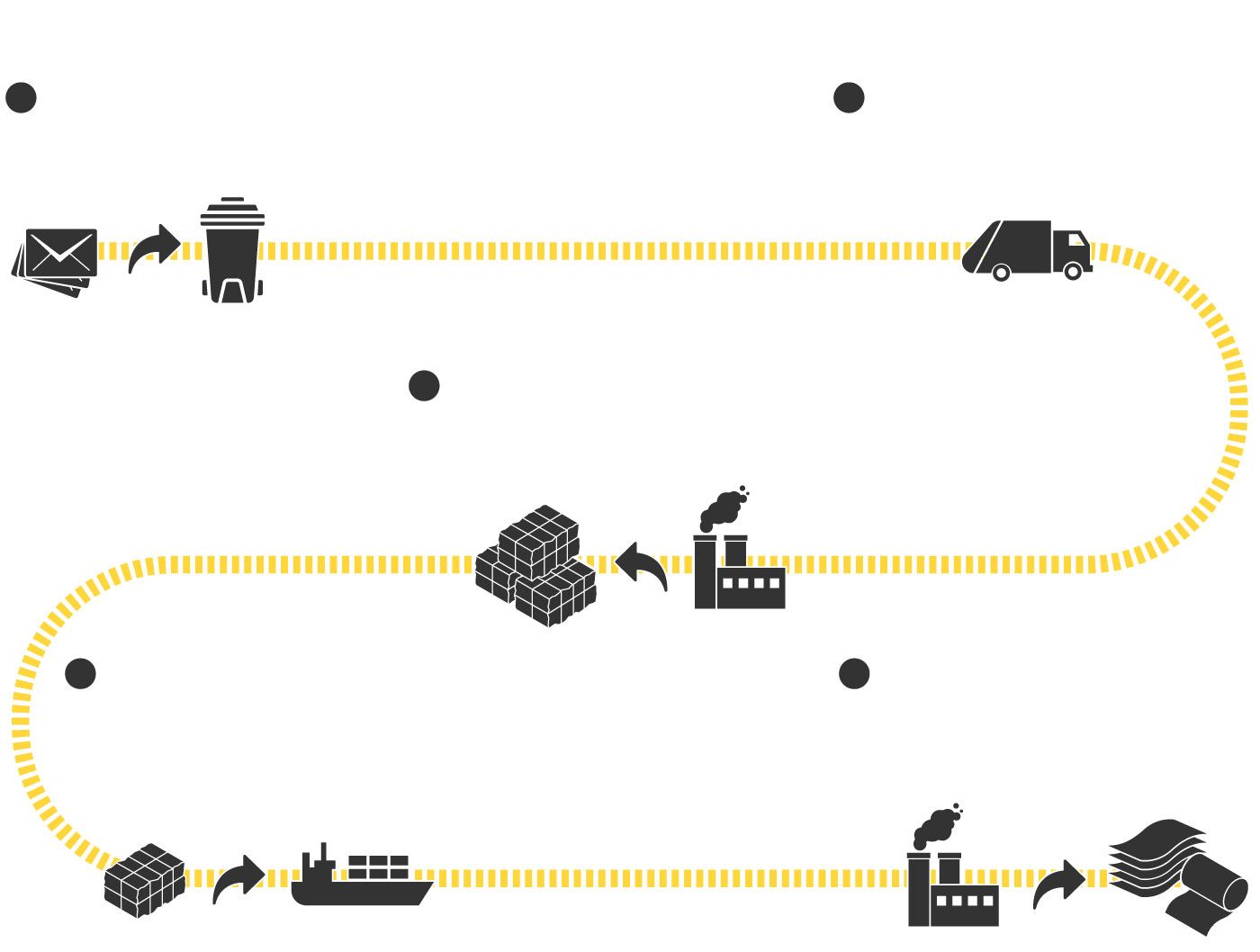
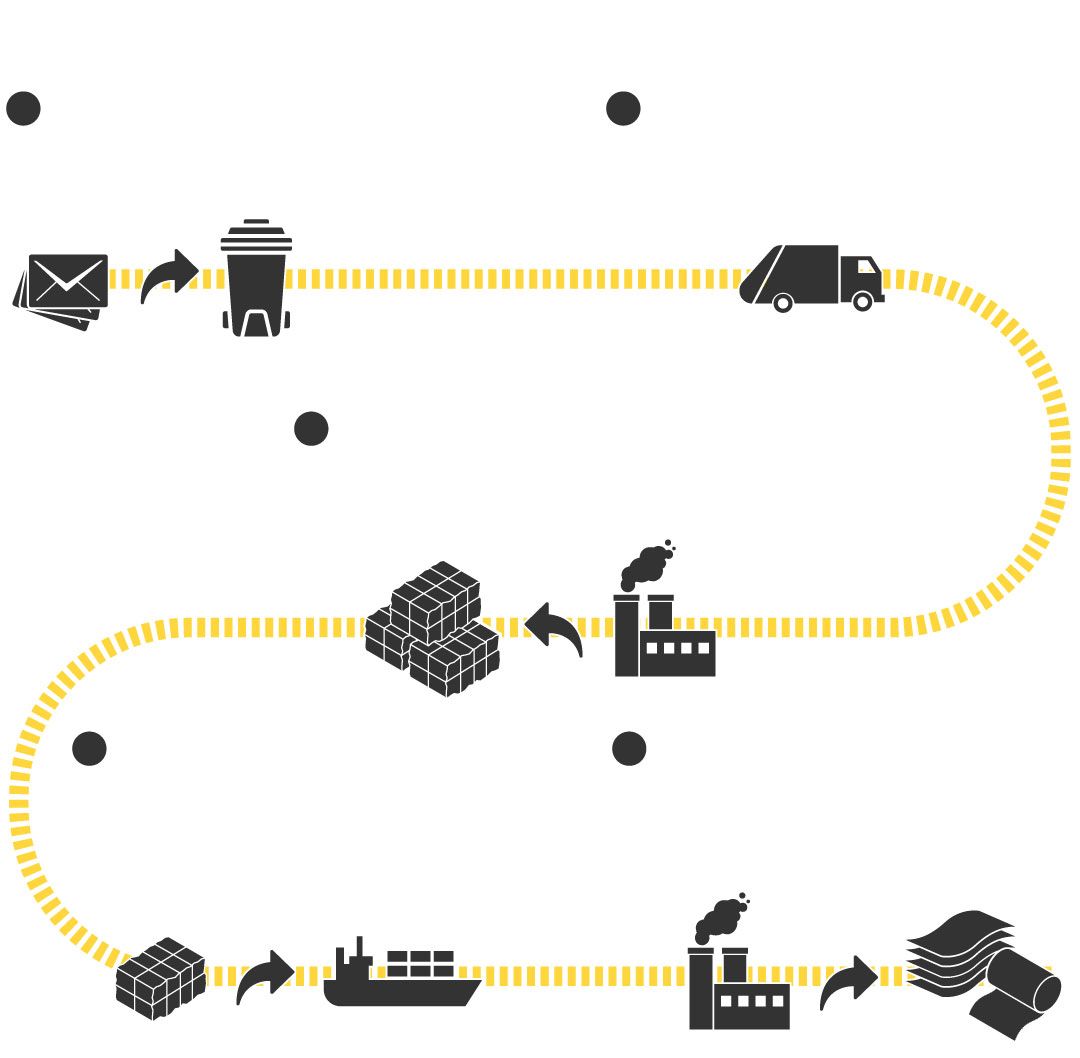
How the paper recycling process works
Trucks collect recyclables and drop them at Republic Services facility in Seattle
Junk mail is thrown into recycling bin in Bellevue, Wash.
Recyclables pass through sorting equipment, and junk mail is baled with other mixed paper
Bales are delivered to paper mills and turned into pulp,
which is used to make new paper and corrugated packaging
Mixed paper bales are trucked to the Port of Seattle and shipped to Vietnam or Malaysia
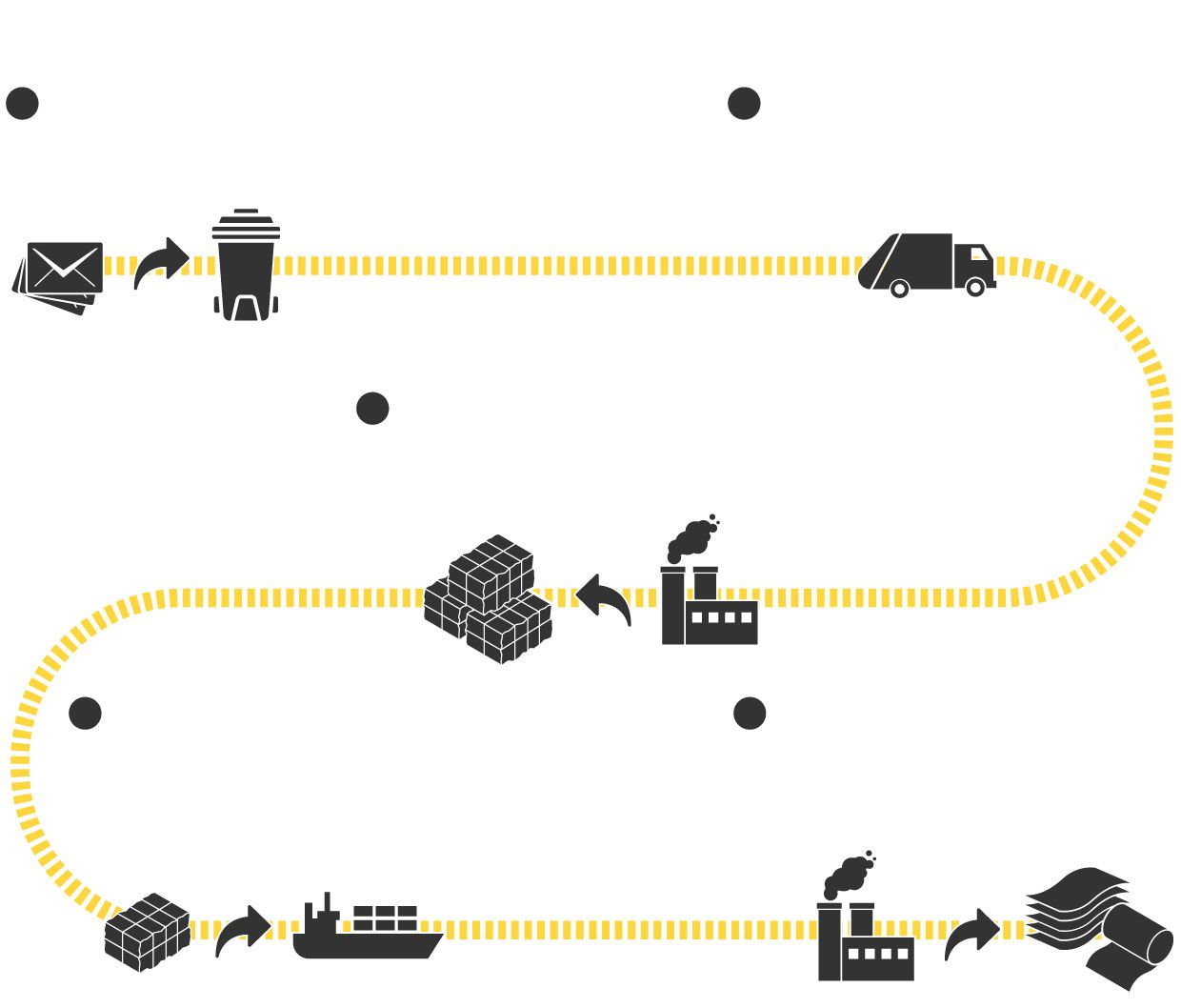
How the paper recycling process works
Trucks collect recyclables and drop them at Republic Services facility in Seattle
Junk mail is thrown into recycling bin in Bellevue, Wash.
Recyclables pass through sorting equipment, and junk mail is baled with other mixed paper
Bales are delivered to paper mills and turned into pulp,
which is used to make new paper and corrugated packaging
Mixed paper bales are trucked to the Port of Seattle and shipped to Vietnam or Malaysia
How the paper recycling process works
Trucks collect recyclables and drop them at Republic Services facility in Seattle
Junk mail is thrown into recycling bin in Bellevue, Wash.
Recyclables pass through sorting equipment, and junk mail is baled with other mixed paper
Bales are delivered to paper mills and turned into pulp,
which is used to make new paper and corrugated packaging
Mixed paper bales are trucked to the Port of Seattle and shipped to Vietnam or Malaysia
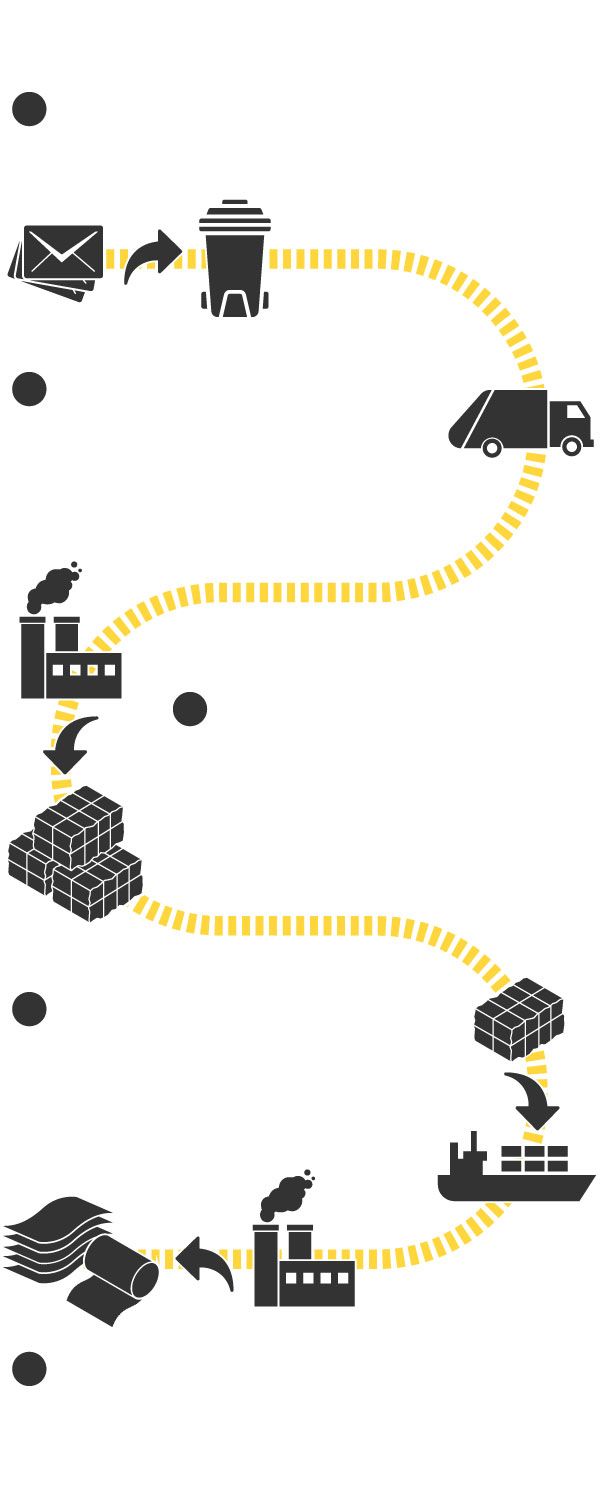
How the paper recycling process works
Junk mail is thrown into recycling bin in Bellevue, Wash.
Trucks collect recyclables and drop them at Republic Services facility in Seattle
Recyclables pass through sorting equipment, and junk mail is baled with other mixed paper
Mixed paper bales are trucked to the Port of Seattle and shipped to Vietnam or Malaysia
Bales are delivered to paper mills and turned into pulp, which is used to make new paper and corrugated packaging
Incineration and recycling rates in England are now on par at roughly 42%, according to government data. Waste collected by local authorities sent for incineration climbed to 10.8 million metric tons last year from 10.2 million tons a year earlier, while recycling dropped to 10.9 million tons from 11.3 million tons.
“We are fast moving into a crisis where we don’t have market capacity for the materials collected, and already prices have plummeted,” said
Simon Ellin,
CEO of the Recycling Association, a U.K. trade body.
London-based waste contractor Paper Round has begun asking customers to stop putting plastic film, which isn’t easily recyclable, into recycling bins dotted around the office buildings, hotels and restaurants it collects from, because buyers don’t want it.
It is holding breakfast seminars for office workers and sending educational emails to staff at the buildings it serves explaining what can and can’t be recycled. It has also warned customers that unless prices for cardboard rise it will start charging for some collections.
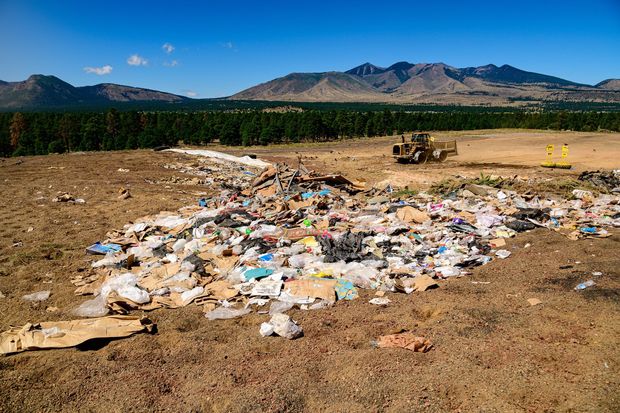
Photo:
DAWN KISH for The Wall Street Journal
“The China ban has highlighted that we can no longer export our problem,” said managing director
Bill Swan.
Paper Round’s buyers have much higher standards now, he said, such as checking moisture levels, which can decrease the quality of paper.
In Memphis, Tenn.,
Republic Services Inc.,
one of America’s largest waste haulers, last year stopped accepting mixed recycling put in a single bin from some businesses, saying it was too contaminated.
“When you’re in a buyer’s market—and we are certainly in a buyers market—you can demand higher quality,” said
Pete Keller,
head of recycling at Phoenix-based Republic.
The move in Memphis prompted the city’s airport to send all its bottles, cans and paper to landfills. For months it left in place recycling bins in case the service returned but recently gave up and removed them.
To improve the quality of what it does still collect, Republic has hired more staff to sort materials and acquired new optical scanners to distinguish between metals, colored paper and different types of plastic. It opened a new facility in Texas earlier this year that uses a variety of technologies to sort material in milliseconds.
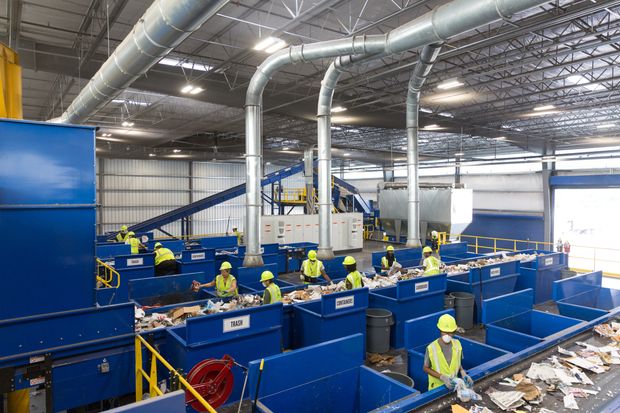
Photo:
Justin Clemons for The Wall Street Journal
Other waste collectors have also made investments, which have driven up costs for customers. Philadelphia is paying $92 a ton for its recyclables to be collected, up from $44 a ton before the China ban. Higher costs initially prompted the city to start burning half its recyclables before backtracking after public criticism.
The city is now spending $500,000 on an advertising campaign it hopes will reduce contamination rates—down to 10% from the current 25%—to secure it a discount on collection costs. “Often the material people put in bins, they don’t know whether it’s recyclable,” said Department of Streets Commissioner
Carlton Williams,
who counts bowling balls, garden hoses and old toys among examples of contaminants he has seen.
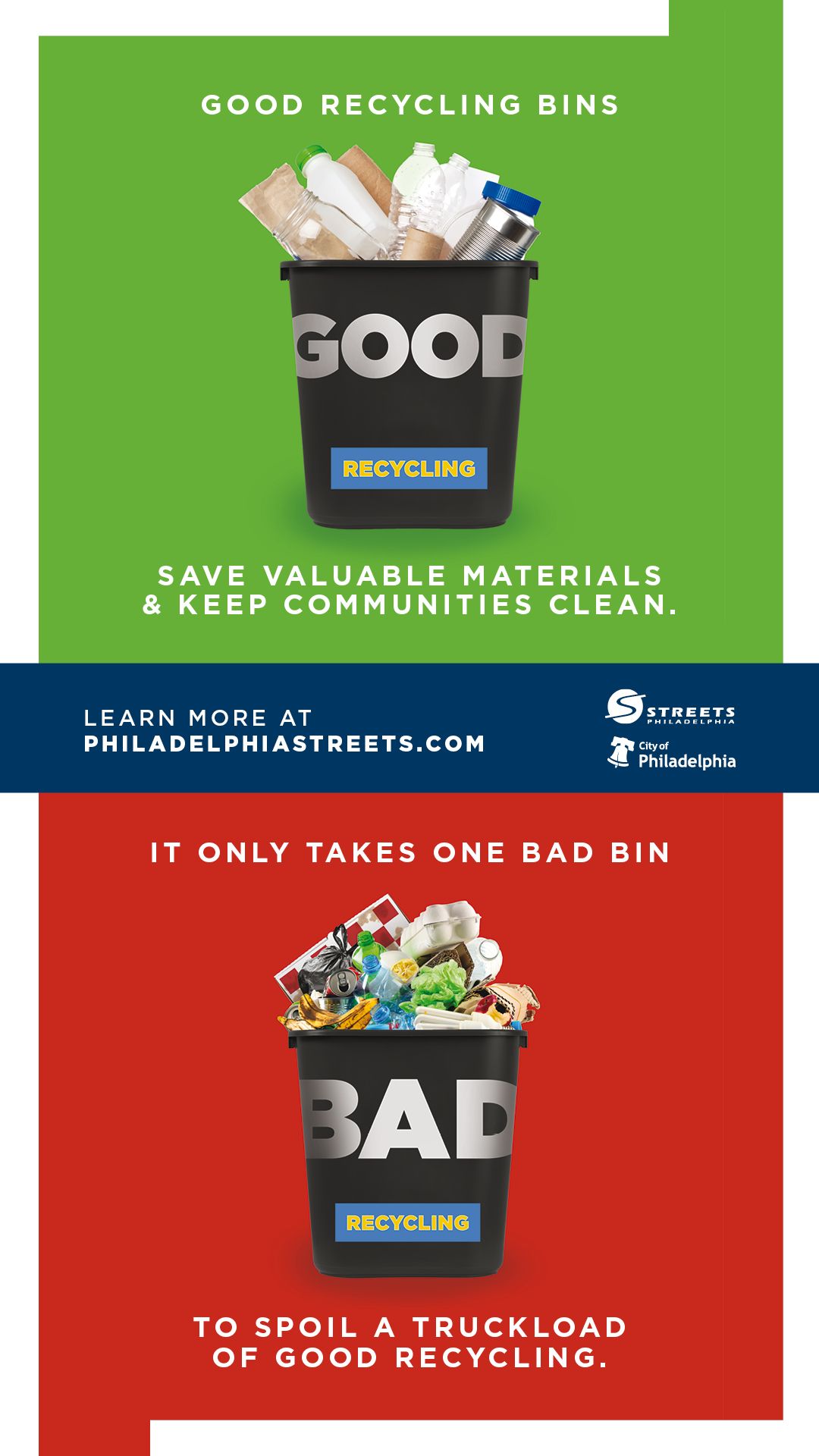
This summer, Philadelphia put ads on bus shelters and the radio telling people to “take a minute before you bin it” and “if in doubt throw it out.” The campaign asks residents to stop putting plastic bags in recycling bins and to rinse food containers. It has also sent staff door-to-door to tell residents what should go in the recycling bin, and has put lids on bins to protect paper from the rain.
The waste contractor in Flagstaff, Ariz., stopped taking five types of plastic, including yogurt tubs and clamshell food containers, because it couldn’t sell those types on to processors. Much of that material now goes to landfills.
The city is running appeals on its social-media pages to encourage its roughly 70,000 residents to put only bottles, jugs and jars in recycling bins to comply with the change. “Do you experience confusion when recycling plastic?” asks a video, styled like a commercial for prescription drugs. “If you live in Flagstaff, talk to your doctor about recycling plastic by shape.”
“People love recycling—it’s a very tangible way of living your environmental values—but I don’t think people realize the impact of putting the wrong things in the bin,” said
Dylan Lenzen,
who works on waste prevention for Flagstaff.
Share Your Thoughts
How much effort or expense are you willing to put into recycling? Join the discussion below.
This year, Flagstaff announced workers would begin inspecting residents’ recycling bins, putting “Oops” tags on ones containing materials that shouldn’t be there and refusing to pick them up. A pilot it ran last year showed tags had slashed the number of nonrecyclable items in recycling bins by 40%.
For
Elisha Dorfsmith
the measure went too far. “It almost feels like public shaming,” said the 42-year-old, who sells used items online for a living. He stopped recycling for months to avoid being humiliated in front of the neighbors and restarted only recently when “it sounded like the recycling police had stopped going around.”
Longtime Flagstaff resident
Susan Bassett
has been washing empty yogurt tubs and feta cheese containers and storing them under her bed. The 75-year-old Ms. Bassett pays $25 a box to mail her extra plastics to Cortland, N.Y., where a company turns them into toothbrushes.
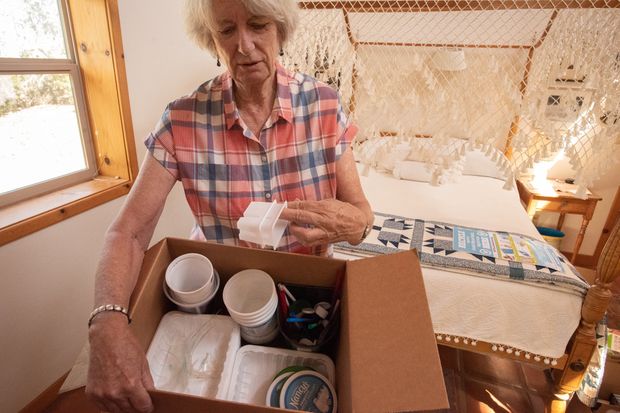
Photo:
DAWN KISH for The Wall Street Journal
For some towns, the finances don’t work. Waste collectors in Deltona, Fla., got just $5 a ton for mixed paper last year, compared with $120 a ton in 2017, while processing costs stayed flat at $80 a ton. “With the current state of the recycling market, there is little if any market for the processed collected recyclable materials,” City Manager
Jane Shang
said in January. The next month, Deltona suspended its recycling program.
Kristie Ramirez
didn’t believe her 12-year-old daughter when she came home from school one afternoon and said Deltona was sending their recycling to a landfill—residents were still filling and setting out recycling containers, but collectors were dumping it all into the regular trash. The 35-year-old, who called her waste company to check, still puts out her blue recycling bin on collection days, saying she doesn’t know what else to do. “I have always practiced recycling as long as there’s a recycling bin that comes with my trash bin,” she says.
—Miho Inada in Tokyo contributed to this article.
Write to Saabira Chaudhuri at [email protected]
Copyright ©2019 Dow Jones & Company, Inc. All Rights Reserved. 87990cbe856818d5eddac44c7b1cdeb8