



• Latest
  • Trending
  • All
Rising Tide Talks Supply Chain Risk Analytics

Rising Tide Talks Supply Chain Risk Analytics

January 18, 2020
Last Mile Delivery Market Worth Observing Growth | UPS, FedEx, SF Express

Last Mile Delivery Market Worth Observing Growth | UPS, FedEx, SF Express

April 23, 2024
Top 5 Spend Analysis Software ranked in 2024

Top 5 Spend Analysis Software ranked in 2024

March 1, 2024
How Tesla And BMW Are Leading A Supply Chain Renaissance With Blockchain

How Tesla And BMW Are Leading A Supply Chain Renaissance With Blockchain

January 19, 2024
LATAM Cargo strengthens European cargo links

LATAM Cargo strengthens European cargo links

April 14, 2020
Ford making reusable hospital gowns from airbag materials as efforts against coronavirus expand

Ford making reusable hospital gowns from airbag materials as efforts against coronavirus expand

April 14, 2020
Don’t Sweat NBC’s Decision to Cut Back on Television Ad Inventory

Don’t Sweat NBC’s Decision to Cut Back on Television Ad Inventory

April 14, 2020
Software firms sharpen focus on AI, big data as IT spending drops

Software firms sharpen focus on AI, big data as IT spending drops

April 14, 2020
Navigating turbulent times in your supply chain (TL:DR version)

Navigating turbulent times in your supply chain (TL:DR version)

April 14, 2020
Last Mile Delivery by Drones Market is Booming Worldwide

Last Mile Delivery by Drones Market is Booming Worldwide

April 14, 2020
AIR CARGO MARKET SIZE, SHARE, DEMAND, TREND, LATEST INNOVATIONS & APPLICATION ANALYSIS AND INDUSTRY GROWTH FORECAST 2027 – Science In Me

AIR CARGO MARKET SIZE, SHARE, DEMAND, TREND, LATEST INNOVATIONS & APPLICATION ANALYSIS AND INDUSTRY GROWTH FORECAST 2027 – Science In Me

April 14, 2020
Wheat procurement in Patiala: 6,500 coupons issued to farmers – cities

Wheat procurement in Patiala: 6,500 coupons issued to farmers – cities

April 14, 2020
Pandemic, Plastics And The Continuing Quest For Sustainability

Pandemic, Plastics And The Continuing Quest For Sustainability

April 14, 2020
  • Supply Chain
  • Logistics
  • Warehousing
  • Procurement
  • Shipping
  • More
    • Strategic Sourcing
    • Spend Analysis
    • Inventory
    • Contact Us
No Result
View All Result
United States International Supply Chain Commission
Home Supply Chain

Rising Tide Talks Supply Chain Risk Analytics

by usiscc
January 18, 2020
in Supply Chain
0
Rising Tide Talks Supply Chain Risk Analytics
492
SHARES
1.4k
VIEWS
Share on FacebookShare on Twitter

Share

Tweet

Share

Share

Share

Print

Email

As board rooms and C-suite executives become more adequately well-versed on the strategic role supply chain management plays in business success, supply chain risk mitigation is rising to the top of corporate priority lists.

But with so many risks seemingly outside of executives’ control — like trade wars and natural disasters — understanding how to plan for these scenarios and mitigate the threats they pose to the bottom line can be confounding.

In an effort to support corporates’ initiatives in risk mitigation, the supply chain analytics arena recently went through a bit of reshuffling with the acquisition of industry player Riskpulse by Columbia Capital, Greenspring Associates and DHL, which are combining Riskpulse with industry peer Resilience360 under the management of holding company Rising Tide Digital.

Speaking with PYMNTS, Rising Tide Digital CEO David Shillingford and Riskpulse CEO Simon Woods explored the current state of supply chain risk exposures at a time where geopolitical disruption, natural disasters and cyberattacks continue to capture headlines. In response to such external factors, they said, supply chain managers and upper-level executives are embracing a new, more sophisticated risk analytics strategy.

“This is a new world for many companies that have either worked on the basis of anecdotal information, or on information that was unstructured, from websites, for example,” said Woods. “They can now work on systemic analysis on a predictive basis.”

Analytics Tackles External Threats

Woods offered an example of this elevated approach to risk analysis. While analytics technology has evolved to be able to incorporate weather patterns and forecasts, for instance, taking this strategy to the next level means placing that weather forecast in the context of operational data.

For instance, analytics technology today is now capable of not only assessing the potential impact a snow storm in Chicago would have on delivery times, but can also connect supply chain managers to actionable insights about how one carrier is more likely to successfully complete a delivery during that snowstorm than another service provider.

Woods also highlighted the importance for risk analytics technologies to enable a dynamic approach to planning. Traditionally, he said, the need for temperature-controlled goods may mean a company has historically turned on and off refrigeration on a certain date of the year. But with unexpected cold snaps and heat spells, businesses must remain flexible to anticipate those fluctuations and act accordingly.

These scenarios have significant effects on corporate spend, he said, with an elevated risk analytics strategy now a crucial part of reinforcing a company’s overall bottom line. And predictive analytics is playing a growing role in analyzing these risks and their likely financial impact, although as Shillingford noted, challenges remain in applying analytics technology to threats like trade wars and hurricanes that are not easily quantifiable.

“I don’t think any of us are saying it’s possible to assign values to all future risks,” he said. “Some are easier to assign value to than others. But the journey we’re on is to get to that point.”

Internal Risks Abound, Too

Weather-related risks are among the largest facing supply chains today, according to Shillingford, who also pointed to geopolitical risks like trade disputes and cyberattacks as other key focuses of the industry today — all of which must be analyzed and addressed in the context of other factors at play.

But threats from within the supply chain are growing, too, including the risk of late payments, suppliers going out of business, or a cyberattack that hits one player down the supply chain but proliferates its way up.

“It’s important that companies look further upstream in their supply chains for an event that might not directly impact them, but the knock-on impact can be very significant,” explained Shillingford.

Businesses can be caught off-guard by events that occur at their Tier-2 and Tier-3 suppliers, or even further down the supply chain, that ultimately spill into their own operations.

Those impacts can range from lost funds to damaged reputations, and like the risks that cause them, these effects aren’t always easily quantifiable. But as analytics technologies continue to evolve, the ability for corporates and their service providers to prepare for scenarios and wield that data to optimize spend will grow.

“Predictive analytics are a lot more than just taking data and creating clever algorithms,” noted Woods. “You need some real intimacy with a company’s operational framework.”

As analytics technologies are applied in the broader context of that operational framework, the technology will become better equipped to offer more accurate actionable insights for corporates. According to Shillingford, this progression of analytics technology is what places risk analysis deeper within organizations’ decision-making processes, a trend that will continue to grow.

“We’re seeing a lot more interest in supply chain risk at the board level,” he said, “and part of that has to do with the operational impact that disruption and delay has on supply chains and reputation.”
——————————–

Featured PYMNTS Study:

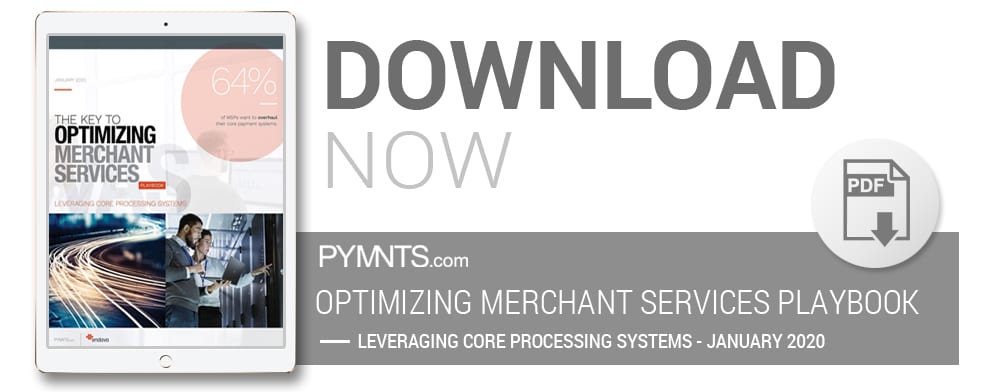
More than 63 percent of merchant service providers (MSPs) want to overhaul their core payment processing systems so they can up their value-added services (VAS) game. It’s tough, though, since many of these systems date back to the pre-digital era. In the January 2020 Optimizing Merchant Services Playbook, PYMNTS unpacks what 200 MSPs say is key to delivering the VAS agenda that is critical to their success.

B2B, B2B Payments, corporate spend, cyberattacks, Editors’ Picks, News, predictive analytics, Rising Tide Digital, risk mitigation, Riskpulse, supply chain management

Share197Tweet123
usiscc

usiscc

  • Trending
  • Comments
  • Latest
Escape From Tarkov – How to Rotate Items

Escape From Tarkov – How to Rotate Items

February 5, 2020
Supply chain examination: Planning for vulnerabilities you can’t control

Supply chain examination: Planning for vulnerabilities you can’t control

December 7, 2019
Procurement Project Manager job with Camden London Borough Council

Procurement Project Manager job with Camden London Borough Council

February 17, 2020
Art Battle Wichita Falls III at The Warehouse, 1401 Lamar.

Art Battle Wichita Falls III at The Warehouse, 1401 Lamar.

0
Global Industry Analysis, Size, Share, Growth, Trends, and Forecasts 2016–2024 – ZMR News Reports

Global Industry Analysis, Size, Share, Growth, Trends, and Forecasts 2016–2024 – ZMR News Reports

0
PHOTOS: Ottawa firefighters respond to warehouse fire

PHOTOS: Ottawa firefighters respond to warehouse fire

0
Last Mile Delivery Market Worth Observing Growth | UPS, FedEx, SF Express

Last Mile Delivery Market Worth Observing Growth | UPS, FedEx, SF Express

April 23, 2024
Top 5 Spend Analysis Software ranked in 2024

Top 5 Spend Analysis Software ranked in 2024

March 1, 2024
How Tesla And BMW Are Leading A Supply Chain Renaissance With Blockchain

How Tesla And BMW Are Leading A Supply Chain Renaissance With Blockchain

January 19, 2024
  • Privacy Policy
  • Terms of Use
  • Disclaimer
  • DMCA
  • Contact Us

Copyright © 2024 United States International Supply Chain Commission (usiscc.org)

This website uses cookies to improve your experience. We'll assume you're ok with this, but you can opt-out if you wish. Cookie settingsACCEPT
Privacy & Cookies Policy

Privacy Overview

This website uses cookies to improve your experience while you navigate through the website. Out of these cookies, the cookies that are categorized as necessary are stored on your browser as they are essential for the working of basic functionalities of the website. We also use third-party cookies that help us analyze and understand how you use this website. These cookies will be stored in your browser only with your consent. You also have the option to opt-out of these cookies. But opting out of some of these cookies may have an effect on your browsing experience.
Necessary
Always Enabled

Necessary cookies are absolutely essential for the website to function properly. This category only includes cookies that ensures basic functionalities and security features of the website. These cookies do not store any personal information.

Non-necessary

Any cookies that may not be particularly necessary for the website to function and is used specifically to collect user personal data via analytics, ads, other embedded contents are termed as non-necessary cookies. It is mandatory to procure user consent prior to running these cookies on your website.

SAVE & ACCEPT
No Result
View All Result
  • Supply Chain
  • Logistics
  • Warehousing
  • Procurement
  • Shipping
  • More
    • Strategic Sourcing
    • Spend Analysis
    • Inventory
    • Contact Us

Copyright © 2024 United States International Supply Chain Commission (usiscc.org)







