






The service seekers value rail transport only in non-engineering terms, be it availability of seats, safety, shorter travel time, smooth ride, punctuality, cleanliness, delivery of cargo on time and value for money. The Railways can fulfil such expectations only when all its departments work cohesively. To curb the tussle among various cadres in trying to protect their fiefdom, the government decided to revamp the Railway Board.
TS Ramakrishnan
TS Ramakrishnan
Public policy analyst
The decision of the Union Government to revamp the Railway Board (RB) and merge the existing eight services into one service, the Indian Railway Management Service (IRMS), has been long due, but it has come at the right time.
Instead of having eight members from eight cadres for engineering, rolling stock, traffic, traction, signal and telecommunication, finance, material management and staff, apart from the Chairman of the RB, the Union government now decided to make it four members, one member each for infrastructure, operations and business development, rolling stock and finance. There will be a few additional members from outside
to provide strategic thinking and fresh lease of ideas for the development of the Indian Railways (IR).
The engineering cadres — IRSE, IRSME, IRSEE, IRSSE and IRSS — get through the engineering services examination (except those who joined through Special Class Railway Apprentice Programme into IRSME, which is abandoned now) and non-engineering officers (IRTS, IRPS and IRAS) get through the civil services examination, all conducted by the UPSC. In that sense, 8,401 Group I officers of the Railways are some of the best of the lot individually, and even then, the growth, either in terms of technological upgradation, expansion of infrastructure or service orientation, has not been even one-tenth of road and air transport that India has achieved since 2000.
The question that then arises is whether it is right to put the blame entirely on Group I officers when the decision-making has been essentially vested with the government and the Railway Minister (RM). It is true that the government and the RM should take the major portion of the blame only in tenures when the government was indifferent and the RM served his political interests at the cost of larger good of the Indian Railway. Till 2014, the railway ministers used it as fiefdom for their political interests. Till 2014, in order to calm down other political representatives, they threw tidbits of announcements to them in the form of additional stops for trains in their respective constituencies, announcing new trains when there were not enough tracks to run them, thereby increasing congestion and accidents, extending the trains to new destinations despite not having enough passengers, announcing development of new routes without bothering about funding for such projects and introducing more divisions and zones, all using the Railway Budget as a tool. None of them were in the interests of the Indian Railway or a majority of its users.
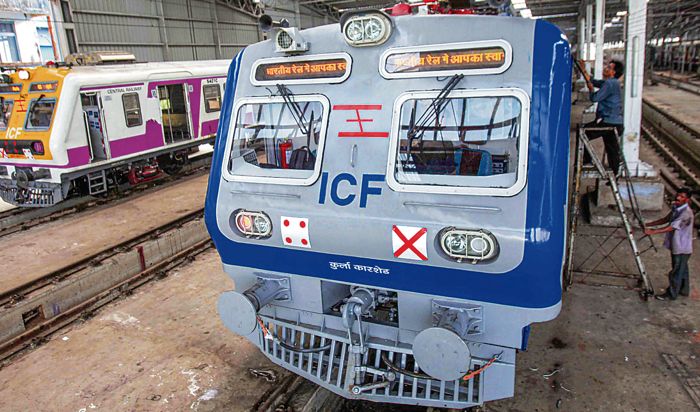
But things changed significantly after 2014. During Suresh Prabhu’s tenure, the Railway Budget was merged with the General Budget to stop future RMs from using it as a tool to serve their political constituencies. New trains were introduced only if there was enough track capacity, no additional stops for trains were entertained, electricity has been purchased from private players at Rs 5 per unit in lieu of Rs 8 per unit from the state electricity boards and, above all, the track construction was doubled, all after 2014. Between 2014-15 and 2017-18, the Indian Railway added an average of 1,204 km of tracks annually, almost twice the average of 620 km of tracks annually between 2000-01 and 2013-14. With transformation initiatives, speeding up of the construction of Western and Eastern Dedicated Freight Corridors, which was in limbo during the UPA-II tenure, incentivising contractors and Railway employees for earlier completion of projects, stopping the manufacturing of the ‘killer’ ICF (Integral Coach Factory) coaches, thereby paving the way for the manufacturing of LHB (Linke Hofmann Busch) coaches only, and refurbishment of the existing ICF coaches into safe LHB coaches, and the foundation for reforms, were all laid during Prabhu’s tenure.
When Piyush Goyal took over, he continued the reforms aggressively by bringing back 25,000 trackmen to Railway maintenance work, who had been otherwise working in the capacity of ‘orderly’ in the homes of Railway officers. He also brought about design and development of Train-18, the first indigenously manufactured train set for long-distance travel, sending back the officers from Railway Board back to zones and divisions to develop the Railway on the ground, conversion of all unmanned level crossings in broad guage network into manned level crossings on a war footing, faster replacement of the old assets with new assets for ensuring the safety and earmarking time and resources for the maintenance of tracks, to list a few.
These measures made rail travel completely safe as there is zero passenger death in the financial year 2019-20 till date, for the first time in Railway history.
Prior to 2014, when the governments and the Railway Minister were protecting their fiefdom, it was convenient for them to allow each cadre of officers to protect their fiefdom, even if it meant jeopardising the growth. The Modi 1.0 government did not allow any fiefdom for the BJP or its allies or the Railway Minister, and the next logical step for Modi 2.0 is to dismantle the fiefdom of various cadres. So, the revamp of the Railway Board and the creation of a single service of the IRMS has been on the anvil to achieve the same.
The fact that there is no mutual respect and trust between the various cadres of the Raiway Group I services cannot be buried under the tracks, of course with exceptions. The lack of mutual respect and trust emanates from the notion that one department is more important than the other, which is wrong. Although this is more acute between the engineering and non-engineering departments, it exists even between the engineering departments. Rail transport itself is a marvel and is an engineering-driven sector.
However, the service seekers, by and large, appreciate and value rail transport only from non-engineering dimensions, be it the availability of seats, safety, shorter travel time, smooth ride, comfort, punctuality or cleanliness, courtesy, delivery of cargo on time and value for money. The Railway can fulfil such expectations only when all its departments work cohesively and seamlessly.
To curb the fierce tussle among the various cadres in trying to protect their turf, the government decided to revamp the Railway Board and merge the cadres into one. The message from the Centre is firm and louder: The government respects the domain expertise of each cadre of the Indian Railway and will continue to do so, but it wants the domain expertise of Group I officers to be channelled towards achieving leapfrogging growth of the Railway, rather than wasting time on petty quarrels.










