






 A bleak, dystopian future isn’t inevitable. Resident science fiction writer Gareth L. Powell offers a more encouraging vision of how technology, and engineers, might shape our grandchildren’s world.
The February issue of The Engineer contained stories about wind power being considered for commercial shipping, hydrogen for long haul trucks, and a call-to-arms from Professor Lord Rees, Astronomer Royal at the Institute of Astronomy, University of Cambridge, for engineers to start addressing the problems that may lead to our extinction.
We live in a time of great uncertainty, with a rising population and changing climate, and many worst-case projections seem increasingly likely to come to pass. But that doesn’t mean we should give up hope. After all, engineering is all about finding solutions to problems, and what greater problem could we face than the extinction of our species!
Sci-Fi Eye: tomorrow’s transit technologies
Sci-Fi Eye: wearable exoskeletons
To counter all the doom and gloom, I decided this month to look ahead to a world where political and industrial inertia have been conquered, and engineers set free to tackle the challenges ahead. So, come with me to the world of 2100 AD. Many of our children and grandchildren are still alive, and have families of their own right now, but their way of life is as different to ours as ours is to that of the Victorians.
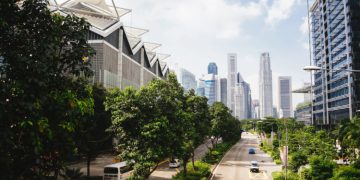
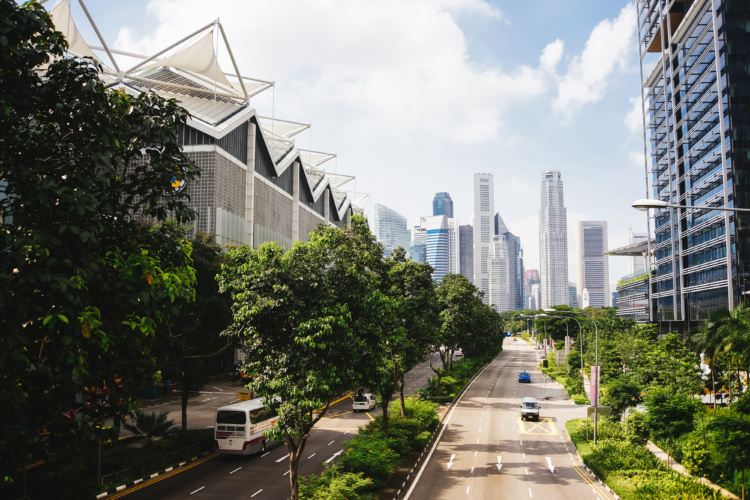
Cities are greener spaces. Trees line the centre of every street; vertical gardens adorn the south side of every building; and solar panels cover every roof. There’s very little traffic noise or pollution, because all the cars are self-driving electric models and most people travel by clean and affordable public transport.
Much of the Green Belt surrounding the cities has been turned over to agriculture, much of which is fully automated, while huge reforestation programmes have returned the wilds of Wales, Scotland and the Lake District to the densely wooded state they enjoyed in the wake of the last ice age, before they were cleared to make way for livestock grazing.
Instead of ransacking the Earth for resources and financial gain, humans have become stewards of their world, engineering the planet to keep it habitable for its ten billion inhabitants.
You certainly don’t see many cows, chickens, sheep or pigs anymore. Ninety-nine percent of the meat in our diet is grown in vats, cloned from the finest animals and produced with minimal environmental impact. It’s also healthier, requiring fewer of the medicines and hormones currently pumped into our food animals.
International travel is also rarer than before. Business can be done online and via video link. There are still a few airliners, but they now use biofuels. The majority of passengers and freight travel via airship or wind-powered sea-going vessels.
Overhead, vast tissue-thin orbital mirrors reduce the amount of heat reaching the Earth from the Sun. Space tourism never really took off (if you’ll pardon the pun), but microgravity turned out to be a great place for science and manufacturing, and there are now several large commercial and governmental space stations in orbit, along with power satellites that collect the sun’s rays and beam them down to earth as microwaves, to collectors on the equator, that then make them available as clean, unlimited electrical power.
Looking down from one of these satellites, parts of the Pacific and the Sahara shimmer with huge solar farms. Floating wind turbines harvest the jet streams, and even the ocean’s tides provide us with the energy we need.
But it isn’t all good news. Some climate change was inevitable. It took us too long to act and respond.
Storms are worse and more frequent. New York now exists below sea level, protected from inundation by a huge sea wall. Other cities have been less fortunate. Venice has become a modern-day Atlantis, and much of Central London floods twice a day at high tide. But people are adapting. Huge infrastructure projects aim to reclaim land from the sea. Climate refugees move north from the scorching equator, seeking shelter in the newly temperate open spaces of Russia and Canada. The population of Greenland is rising at an incredible rate, and there are even some hardy souls scraping a living from the exposed soil on the fringes of Antarctica.
A failed attempt to colonise Mars has shown the world’s billionaires that it’s easier to terraform the Earth than try to adapt the red planet to our needs. So now, they’ve thrown their resources into projects that benefit us all, rather than just themselves—including the development of artificial intelligence capable of regulating the Earth as a single organism, moving food, clean water and other assets to where they are needed, while simultaneously managing the balance of gasses in our atmosphere through carbon capture projects, and the global mean temperature, through manipulation of those solar mirrors I mentioned earlier.
Instead of ransacking the Earth for resources and financial gain, humans have become stewards of their world, engineering the planet to keep it habitable for its ten billion inhabitants. Yes, there are still problems, and yes, much of the above is pure speculation—but speaking as an author, of the two possible fates awaiting us, I know which one I would rather write about.
Gareth L Powell is the author of several novels, including Silversands, The Recollection, Ack-Ack Macaque, Hive Monkey, Macaque Attack, and Embers of War. He has won the BSFA Award for Best Novel twice, for Ack-Ack Macaque in 2013 and Embers of War in 2019.










