

• Latest
  • Trending
  • All
Shift to One-day Delivery is Squeezing the Logistics Market

Shift to One-day Delivery is Squeezing the Logistics Market

December 19, 2019
Last Mile Delivery Market Worth Observing Growth | UPS, FedEx, SF Express

Last Mile Delivery Market Worth Observing Growth | UPS, FedEx, SF Express

April 23, 2024
Top 5 Spend Analysis Software ranked in 2024

Top 5 Spend Analysis Software ranked in 2024

March 1, 2024
How Tesla And BMW Are Leading A Supply Chain Renaissance With Blockchain

How Tesla And BMW Are Leading A Supply Chain Renaissance With Blockchain

January 19, 2024
LATAM Cargo strengthens European cargo links

LATAM Cargo strengthens European cargo links

April 14, 2020
Ford making reusable hospital gowns from airbag materials as efforts against coronavirus expand

Ford making reusable hospital gowns from airbag materials as efforts against coronavirus expand

April 14, 2020
Don’t Sweat NBC’s Decision to Cut Back on Television Ad Inventory

Don’t Sweat NBC’s Decision to Cut Back on Television Ad Inventory

April 14, 2020
Software firms sharpen focus on AI, big data as IT spending drops

Software firms sharpen focus on AI, big data as IT spending drops

April 14, 2020
Navigating turbulent times in your supply chain (TL:DR version)

Navigating turbulent times in your supply chain (TL:DR version)

April 14, 2020
Last Mile Delivery by Drones Market is Booming Worldwide

Last Mile Delivery by Drones Market is Booming Worldwide

April 14, 2020
AIR CARGO MARKET SIZE, SHARE, DEMAND, TREND, LATEST INNOVATIONS & APPLICATION ANALYSIS AND INDUSTRY GROWTH FORECAST 2027 – Science In Me

AIR CARGO MARKET SIZE, SHARE, DEMAND, TREND, LATEST INNOVATIONS & APPLICATION ANALYSIS AND INDUSTRY GROWTH FORECAST 2027 – Science In Me

April 14, 2020
Wheat procurement in Patiala: 6,500 coupons issued to farmers – cities

Wheat procurement in Patiala: 6,500 coupons issued to farmers – cities

April 14, 2020
Pandemic, Plastics And The Continuing Quest For Sustainability

Pandemic, Plastics And The Continuing Quest For Sustainability

April 14, 2020
  • Supply Chain
  • Logistics
  • Warehousing
  • Procurement
  • Shipping
  • More
    • Strategic Sourcing
    • Spend Analysis
    • Inventory
    • Contact Us
No Result
View All Result
United States International Supply Chain Commission
Home Procurement

Shift to One-day Delivery is Squeezing the Logistics Market

by usiscc
December 19, 2019
in Procurement
0
Shift to One-day Delivery is Squeezing the Logistics Market
493
SHARES
1.4k
VIEWS
Share on FacebookShare on Twitter

Editor’s note: Written by Dan Khasis, a technology entrepreneur and the founder and CEO of Route4Me, a logistics software company. This is one in a series of periodic guest columns by industry thought leaders.

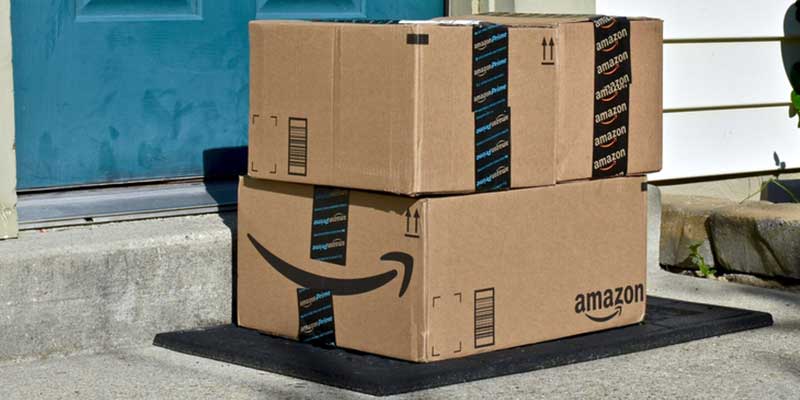
To set the delivery service benchmark even higher, Amazon is expanding its internal shipping services to offer a one-day delivery service. That is a step up from its default two-day delivery service to all Prime customers.

Not only that, soon after Amazon announced plans to expedite shipping services, it also announced incentives for employees to quit their jobs and start up their package delivery service under its delivery service partner program.

Delivery carriers are already viewing this announcement as a strategic move to exclude competition and position Amazon as the core infrastructure provider on which everyone depends.

By making these announcements, Amazon is playing its A-game. The company’s growth trajectory is high, and this move will help it stay competitive for quite some time. Customers’ interests for faster deliveries have also been considered. However, aren’t other logistics providers bearing the brunt of Amazon’s competitiveness?

THE EQUATION

Before we answer that, let’s consider this equation: One-day delivery service equals a $24 billion increase in revenue

RBC Capital Market analyst Mark Mahaney believes one-day delivery service will boost existing Prime members purchased and motivate others to sign up for Prime memberships. This could grow Amazon’s annual revenue by almost $24 billion. Since Amazon is bullish on expanding its internal delivery infrastructure, this doesn’t sound like good news for logistics providers.

THE LOGISTICS MARKET

Amazon lost almost $7.2 billion due to shipping costs in 2017, but the company had enough revenue from other sources to cover the top for these losses. However, not all logistics providers have that same comfort. Therefore, for most delivery carriers, the goal is just to stay in the game. Once they are stable, they will think of competing.

COMPETITIVE STRATEGIES

Here are some of the strategies logistics providers might implement to fight Amazon’s increasing dominance.

To counter the Amazon Effect, logistics providers will have to make their delivery experiences as frictionless as possible. However, this does not mean just offering faster deliveries but aiming to improve the overall delivery experience.

For instance, you could offer an alternate pickup location with flexible hours. You could also consider offering discounted delivery for a minimum amount spent, or on specific products. Free shipping is still the number one option for online shoppers. Nearly half of all shoppers will add items to their carts to qualify for free shipping. While that service might come with initial costs, you are more likely to see a return in extra purchases. Since free shipping may not be possible with same or next-day delivery, providing affordable- but slower- options may help you win and retain customers.

PARTNERSHIPS

Leveraging local delivery carriers can reduce transit time to specific markets and cut transportation costs. A lot of these providers operate within specific markets that often correspond to particular population densities. However, due to geographic constraints, logistics providers must carefully assess how well a regional carrier fits into the national distribution network.

Adding the wrong carrier may impact revenue-based discounts. Packaging, parcel dimensions, and weight can also affect shipping costs. Before you tie-up with a local provider, get an understanding of how to optimize each carrier to keep costs low.

FOCUS ON PROCESS AUTOMATION

Automated solutions are already being implemented in warehouses, and their level of sophistication is increasing. Providers will need to ensure that all the labor-intensive processes — from warehousing to last-mile delivery — are automated to ensure fast and cost-effective delivery. Package delivery could also make use of automation, so could route planning. Why make your drivers spend hours on the road when a simple route optimizer can help them plan faster and more efficient delivery routes?

INVEST IN HIGH-TECH WAREHOUSES

The traditional concept of fulfillment centers located in rural areas is fast changing. Logistics companies are now looking for warehouses that are built in the heart of major urban areas instead of massive warehouses in the suburban areas. If the warehouse location limits a logistics company to a 3-day shipping situation, they may lose out to competitors who are better located and can ship faster.

In addition to the warehouse location, automation is becoming crucial for logistics companies to deliver on their promises of faster and cheaper deliveries. The global warehouse automation market will grow from $13 billion in 2018 to nearly $27 billion by 2025. Updated tools and software such as sensors, scanners, RFID tags with automated material handling, and warehouse control systems will be the way forward for increasing warehouse operational efficiency.

One-day delivery is both an opportunity and a challenge for logistics providers. By taking a look across their fulfillment processes from order capture through to delivery management, providers can identify the gaps in your process and integrate systems accordingly. Making the right decisions and applying the best strategies can give providers enough flexibility not just to survive in competition with giants like Amazon, but to thrive.

Trucks.com welcomes divergent thoughts and opinions on transport technology and trucking industry issues. Use the comments section to cite yours. Qualified opinion leaders are welcome to offer suggestions for opinion columns. Contact [email protected].

Jerry Hirsch December 13, 2019

Honda sales chief Steven Center explains why the Honda Ridgeline is a pickup truck and what the automaker’s truck strategy is moving forward.

Share197Tweet123
usiscc

usiscc

  • Trending
  • Comments
  • Latest
Escape From Tarkov – How to Rotate Items

Escape From Tarkov – How to Rotate Items

February 5, 2020
Supply chain examination: Planning for vulnerabilities you can’t control

Supply chain examination: Planning for vulnerabilities you can’t control

December 7, 2019
Procurement Project Manager job with Camden London Borough Council

Procurement Project Manager job with Camden London Borough Council

February 17, 2020
Art Battle Wichita Falls III at The Warehouse, 1401 Lamar.

Art Battle Wichita Falls III at The Warehouse, 1401 Lamar.

0
Global Industry Analysis, Size, Share, Growth, Trends, and Forecasts 2016–2024 – ZMR News Reports

Global Industry Analysis, Size, Share, Growth, Trends, and Forecasts 2016–2024 – ZMR News Reports

0
PHOTOS: Ottawa firefighters respond to warehouse fire

PHOTOS: Ottawa firefighters respond to warehouse fire

0
Last Mile Delivery Market Worth Observing Growth | UPS, FedEx, SF Express

Last Mile Delivery Market Worth Observing Growth | UPS, FedEx, SF Express

April 23, 2024
Top 5 Spend Analysis Software ranked in 2024

Top 5 Spend Analysis Software ranked in 2024

March 1, 2024
How Tesla And BMW Are Leading A Supply Chain Renaissance With Blockchain

How Tesla And BMW Are Leading A Supply Chain Renaissance With Blockchain

January 19, 2024
  • Privacy Policy
  • Terms of Use
  • Disclaimer
  • DMCA
  • Contact Us

Copyright © 2024 United States International Supply Chain Commission (usiscc.org)

This website uses cookies to improve your experience. We'll assume you're ok with this, but you can opt-out if you wish. Cookie settingsACCEPT
Privacy & Cookies Policy

Privacy Overview

This website uses cookies to improve your experience while you navigate through the website. Out of these cookies, the cookies that are categorized as necessary are stored on your browser as they are essential for the working of basic functionalities of the website. We also use third-party cookies that help us analyze and understand how you use this website. These cookies will be stored in your browser only with your consent. You also have the option to opt-out of these cookies. But opting out of some of these cookies may have an effect on your browsing experience.
Necessary
Always Enabled

Necessary cookies are absolutely essential for the website to function properly. This category only includes cookies that ensures basic functionalities and security features of the website. These cookies do not store any personal information.

Non-necessary

Any cookies that may not be particularly necessary for the website to function and is used specifically to collect user personal data via analytics, ads, other embedded contents are termed as non-necessary cookies. It is mandatory to procure user consent prior to running these cookies on your website.

SAVE & ACCEPT
No Result
View All Result
  • Supply Chain
  • Logistics
  • Warehousing
  • Procurement
  • Shipping
  • More
    • Strategic Sourcing
    • Spend Analysis
    • Inventory
    • Contact Us

Copyright © 2024 United States International Supply Chain Commission (usiscc.org)







