






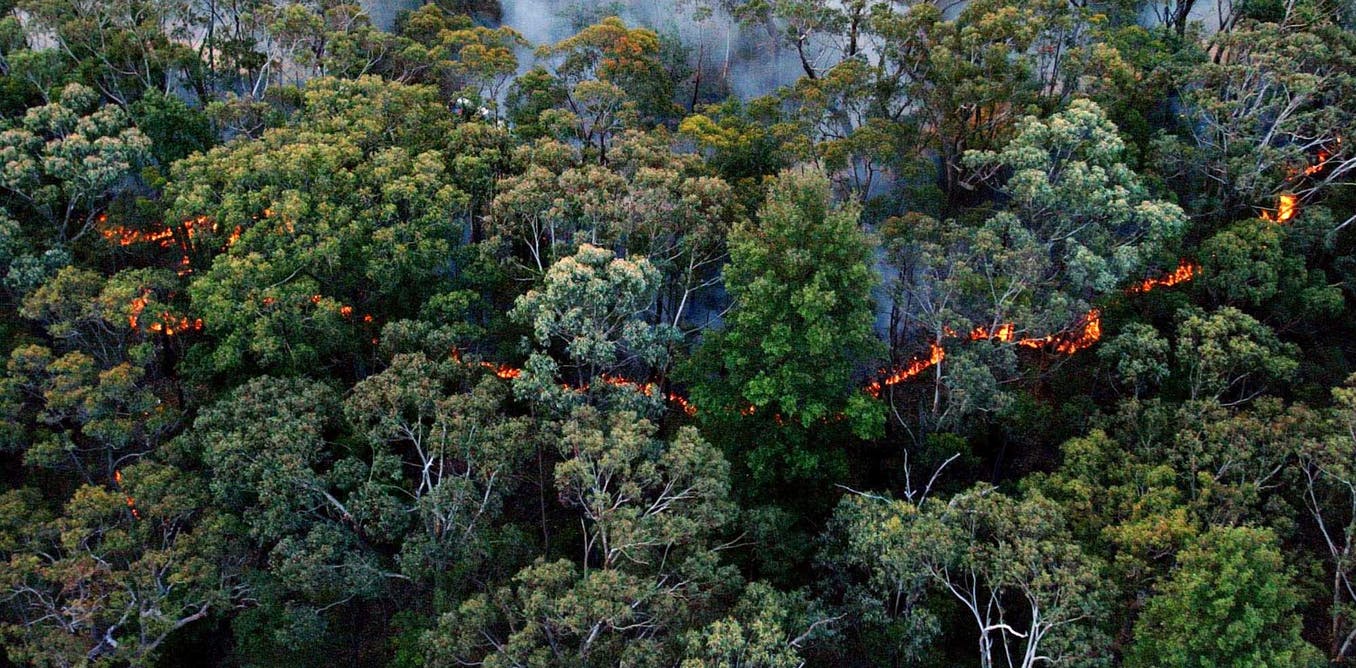
As monstrous blazes overwhelm Australia’s south-east, the need for a national bushfire policy has never been more urgent. Active land management such as hazard-reduction burning and forest thinning must lie at the core of any such policy.
Done well, controlled burning limits a bushfire’s spread and makes suppression easier, by reducing the amount of flammable material. Clearing or thinning vegetation on roadsides and other areas also helps maintain fuel breaks, allowing firefighters access to forests in an emergency.
As former fire chiefs recently pointed out, of all factors driving a fire’s severity – temperature, wind speed, topography, fuel moisture and fuel load – fuel load is the only one humans can influence.
The royal commission into Victoria’s Black Saturday bushfires identified serious shortcomings in land and fuel management, primarily the domain of the states. Ten years ago I also called for a national approach to bushfires, including vegetation management.
Relatively little has changed since. It is as though Australia suffers collective and institutional amnesia when it comes to bushfire preparedness. But the threat will only escalate. Australia must have a sustained commitment to better land management.
AAP/Kelly Barnes
The three pillars of dealing with bushfires
Bushfire management comprises three planks: preparation, response and recovery.
Preparation involves managing fuel loads and vegetation, maintaining access to tracks and fire breaks, planning fire response and ensuring sufficient human capacity and resources to respond to worst-case scenarios.
Response involves deploying aircraft, fire trucks and firefighting personnel, and recovery requires social, financial and institutional support.
Read more:
Disaster recovery from Australia’s fires will be a marathon, not a sprint
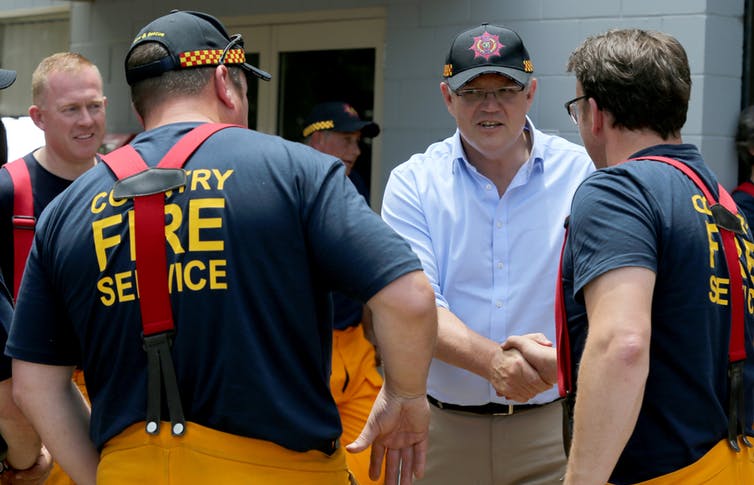
The federal government mostly focuses on bushfire response and recovery, which now falls under the Department of Home Affairs and the responsible Minister for Natural Disaster and Emergency Management, David Littleproud.
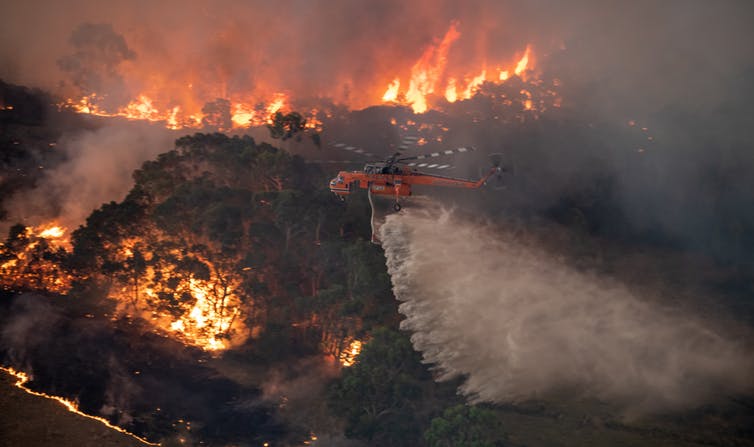
After major fire events in the 2000s, the Commonwealth committed significant resources to response. This included contributing to the cost of more fire-fighting planes and helicopters, and research funding.
Victorian government
But what about fire preparation?
Prescribed burning is considered a key element of bushfire preparation. While there is some debate over its effect on a fire’s impact, the Victorian bushfire royal commission concluded fuel modification at a sufficient scale can reduce the impact of even high-intensity fires.
Other management actions include thinning dense forest areas, reducing the shrub layer mechanically where burning is not possible and maintaining fire breaks. As the climate changes, we may consider changing the tree species mix.
The newly merged Department of Agriculture, Water and the Environment is the federal agency with most interest in land management. However other agencies such as the Department of Industry, Science, Energy and Resources share some responsibilities.
Federal funding for land management deals with single issues such as weeds, feral animals, threatened species or water quality. Funding is often piecemeal, doled out to government bodies or community groups with little coordination. As federal programs are implemented, states often withdraw funding.
Former NSW Fire and Rescue commissioner Greg Mullins and other experts have warned fuel reduction burning is “constrained by a shortage of resources in some states and territories”, as well as by warmer, drier weather which reduces the number of days burning can be undertaken.
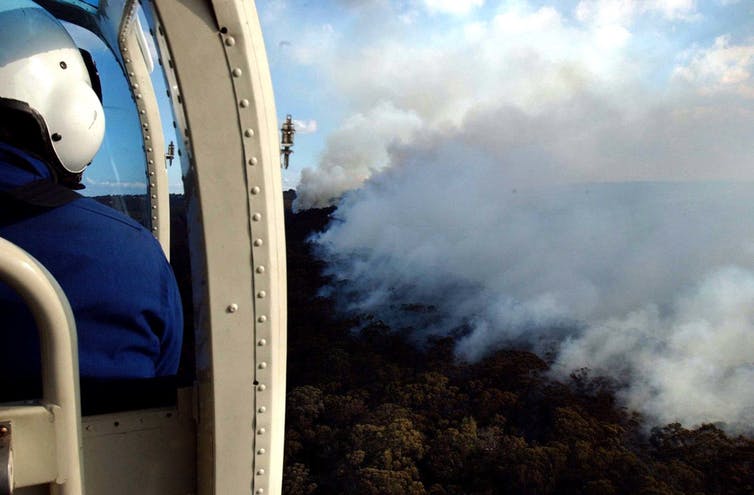
Mick Tsikas/AAP
At state level, since the major fires of the 2000s, funding for fire management has increased and coordination between fire response and land management agencies has improved.
However, the focus of the two groups remains divided, which can thwart progress. Fire services prioritise protecting lives and property once fires are going, while forest and land management agencies focus on reducing fire risk, and must consider a wider range of natural and community values.
In a rapidly changing climate, land management requires a long-term adaptive strategy, underpinned by sound analysis and research, supporting laws and policies, with sufficient funding and human resources. Bipartisan political support and leadership continuity is needed to sustain it.
A national approach
State agencies cannot carry the full financial burden for fire preparedness. With fire events happening in almost all states and territories, it is clear we need a national approach.
The federal government collects most tax revenue and should contribute a greater share of the costs of prescribed burning, maintaining access, fire detection, and rapid firefighting response.
Federal spending on land management can be better integrated to engage and protect communities, conserve biodiversity, maintain water quality, manage forest carbon emissions and improve forest resilience to future fires. Recent federal investments in savannah burning in northern Australia are a good example of this.
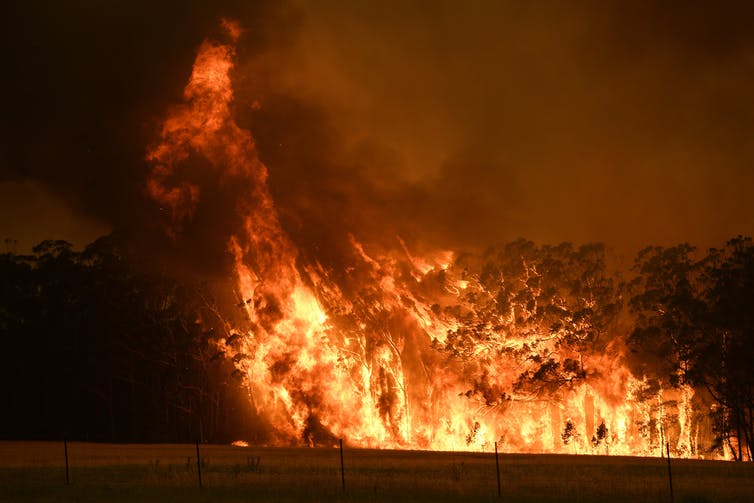
DAN HIMBRECHTS/AAP
A federal bureau of bushfire and land management could support national policy and coordinate investment, including monitoring and reporting on forest and land condition. State agencies, local authorities and private landowners could continue to provide management to meet national targets.
Commitment to public education is also critical. Many people do not understand the need for appropriate human interventions, such as prescribed burning or thinning, to protect the forests we all enjoy. We must also learn from traditional owners about how to live in our country and manage land with fire.
In December, the federal government initiated an inquiry into the efficacy of vegetation and land management and bushfires. This inquiry needs to be expanded, avoiding the simplified debates of the past, and bring together all parties to identify solutions.
As one of the most urbanised countries on Earth, there are few votes to be gained in more spending on rural land management. Hazard reduction is a sometimes risky, labour-intensive measure, and tensions between reducing fuel loads and conserving the environment must be managed.
However after the grief, anger and recriminations from these fires have passed, it’s time for an urgent national rethink – and the Morrison government must lead the way.










