






This article was submitted in response to the call for ideas issued by the co-chairs of the National Security Commission on Artificial Intelligence, Eric Schmidt and Robert Work. It responds to the second question (part b.) which asks what types of AI expertise and skill sets does the national security workforce need, how the government should go about hiring and managing qualified people, and how might the government create its own AI workforce.
How can America’s Army — her sword and shield for 243 years — prepare for the 21st-century battlefield when China and Russia are aggressively pursuing the military use of artificial intelligence (AI)?
Russian President Vladimir Putin has stated that whoever becomes the leader in AI will become the ruler of the world. Senior U.S. military leaders are cognizant of Chinese and Russian investments and objectives in AI and acknowledge that our military is at risk of falling behind in using this capability on the battlefield. While there is consensus that cultivating a workforce postured to embrace rapid technological change is critical, there is no consensus for how to achieve this goal. Nevertheless, if the future of warfare becomes more AI-centric, then it will be critical for the Army to develop the capability to synthesize and leverage large and dynamic data sets in near real time.
To develop this capability, the Army should cultivate soldiers to serve as full-stack data scientists. These soldiers would be capable of wielding analytics pipelines to deliver end-to-end solutions relevant to the modern battlefield. The service should also develop a community of analytics translators who can communicate data-driven recommendations to non-technical audiences. It is critical for the Army to have soldiers at all echelons (and ranks) with the knowledge and tools to rapidly convert terabytes of data (generated from a broad array of sources ranging from battlefield sensors to captured enemy material to publicly available information) into intelligence — and, ultimately, successful operations.
What Is a Full-Stack Data Scientist?
A traditional data scientist combines a deep understanding of statistical and analytical techniques with technical proficiency in coding languages to develop and utilize mathematical models. By contrast, a full-stack data scientist provides end-to-end analytical solutions, and does so by bringing an array of new skill sets, spanning infrastructure, data engineering, machine learning, DevOps, application programming interfaces development, and data visualizations, to the table. In many instances, the data cleaning and organization that must precede the application of statistical methods and algorithmic development is the most time-consuming and critical part of an effort to leverage big data to generate insights. By developing a full-stack data scientist capability, the Army can concentrate all of these skills into a single function and generate the largest return on investment, both in terms of human capital and mission effectiveness.
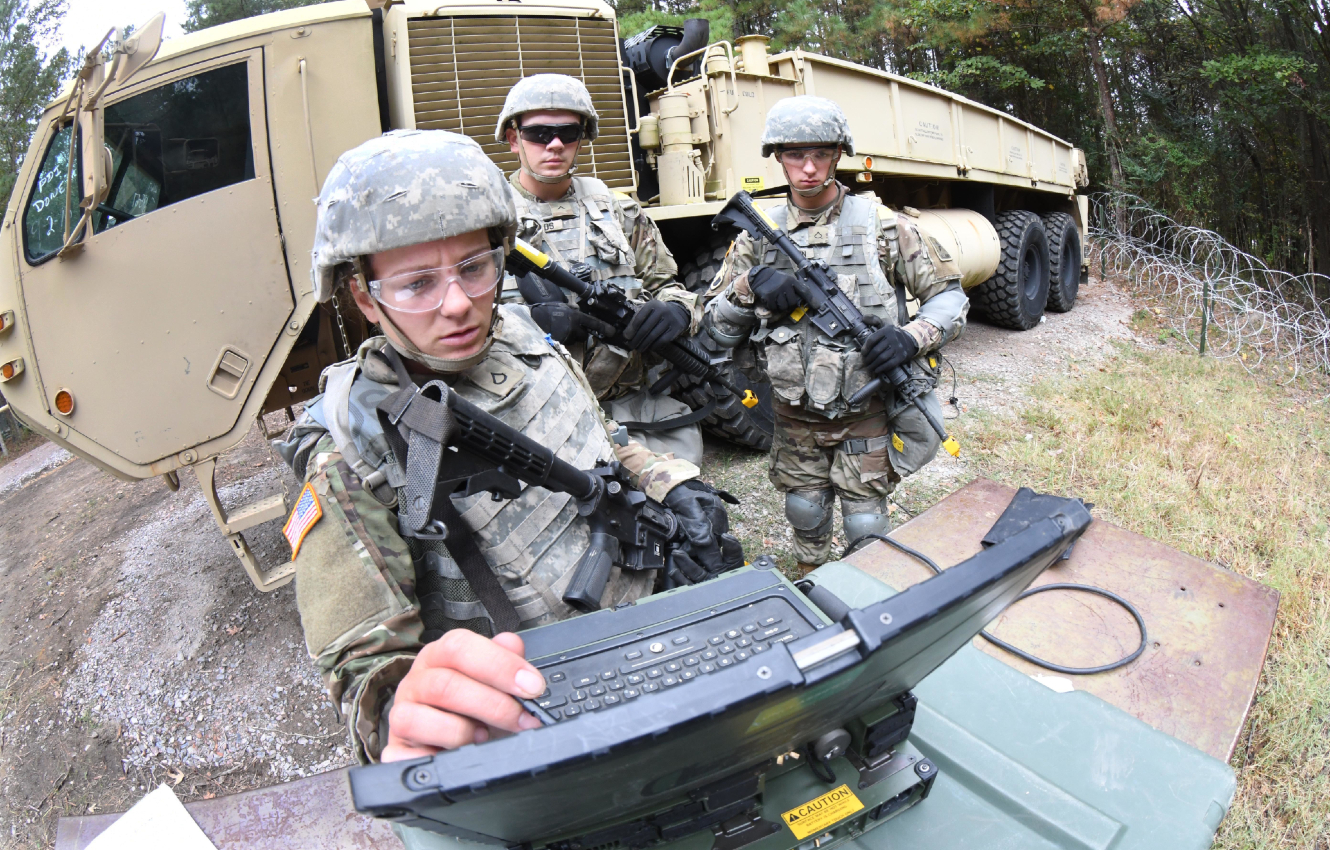
At present, the Army generates its analytical capabilities through two well-regarded and highly influential programs — Operations Research and Systems Analysis and Simulation Operations. While both of these programs add critical capabilities to the force, a full-stack data science program would provide something new — a soldier with the ability to provide end-to-end analytical and technical solutions. To maximize effectiveness, full-stack data scientists need to directly support tactical units and not just headquarters and staffs removed from combat operations. In future conflicts, the technical talent must be co-located or embedded within a unit to provide the tactical advantage when speed of action and an understanding of operational requirements are critical — intelligence collection and the application of precision fires are but two examples that require real-time, co-located data science support. Forward-deployed soldiers cannot rely on quantitative analysis completed by those who do not understand their rapidly changing context, are separated by several time zones, and need to overcome communications challenges imposed by a non-permissive environment.
Full-stack data scientists are but one piece of the puzzle. Bridging the gap between a technical full-stack data scientist and a non-technical operational leader (e.g., a senior military commander) requires a different, but equally critical, set of skills. An analytics translator can fulfill this need and serves as the interface between commanders’ intent and technical execution.
What Is an Analytics Translator?
Analytics translators bridge the gap between non-technical leadership and technical talent. They step into this void by serving as a conduit between the intent of a leader (e.g., a division intelligence officer, or G2, or brigade commander) and the technical talent capable of unlocking the latent power of data. Translators combine a deep understanding of the challenges encountered by combat leaders and the operational context (e.g., a commander’s intelligence needs in a deployed environment) with an appreciation for the technical capabilities and limitations of various advanced analytics and AI methodologies. In this way, analytics translators complement full-stack data scientists by ensuring their efforts nest within the commander’s priorities, intent, and mission. They help in communicating recommendations and critical decision points in a manner that enables commanders to make the right decision at the right time, with minimal interference from technical complexities.
Talent Management Begins Now
Developing data science capabilities is by no means an easy task. Even in the private sector, there is a severe labor shortage for individuals with the requisite technical acumen to deliver full-stack data science solutions. There is a fierce competition among companies in all sectors to recruit data scientists, let alone full-stack data scientists. This labor shortage increases salaries that companies must pay to attract scarce talent. If a soldier has the skills required to be a full-stack data scientist, the private sector provides a lucrative alternative to the Army. To complicate the problem for the Army, the available talent pool is further constrained by the unique physical and lifestyle demands of the profession of arms. Even so, the Army must overcome these challenges to leverage the explosion of data available on the battlefield. In order to do so, certain structural adjustments can be made to the Army’s existing talent management tools and practices.
To develop a full-stack data science and analytics translator capability within its ranks, the Army has a variety of options (many of which mirror the organization’s approach to adding cyber talent). First, the Army could develop a new job function (referred to as a military occupational specialty, MOS), expand a current job function, or create a new way to identify soldiers with the capability regardless of job function (through an Additional Skill Identifier, ASI). Any of these options could serve as a powerful recruiting tool by signaling the Army’s commitment to building and deploying a technically capable workforce. With appropriate design, the associated curriculum could also provide current soldiers with the ability to build new skills and self-select into an exciting and growing career field. Each of these approaches has merits and drawbacks, but implementing structural changes will be key to enabling future talent acquisition, development, and retention efforts.
A new job function or skill identifier would also enable the Army to easily identify soldiers with the technical acumen to drive data science solutions. At a tactical level, this allows the Army to deploy retention incentives such as specialty pay and re-enlistment bonuses. At a strategic level, these markings enable the Army to deploy the right talent against its most critical mission requirements, both advancing the Army’s mission and improving soldier satisfaction as a result.
At present, the Army concentrates its analytics capabilities within the officer ranks because these skills traditionally require an undergraduate or postgraduate degree. For example, the United States Military Academy recently created an applied statistics and data science major. Nevertheless, the proliferation and reception of private sector coding boot camps reinforces the idea that time and resource-intensive multiyear degree programs are not critical. Motivated and willing soldiers of all career paths and ranks can learn to become full-stack data scientists and analytics translators with the appropriate training.
While the above offers a few concrete pathways to initiate talent acquisition, development, and retention, it is not a panacea. Army full-stack data scientists and analytics translators will likely continue to receive less financial compensation than their private sector peers. To fill junior roles, the Army should focus on candidates who are motivated to join its ranks by a sense of service, attraction to the unique mission set, and a desire to build highly marketable skills. Ongoing efforts to relax lateral entry criteria for midlevel and senior roles will help to attract midcareer full-stack data scientists and analytics translators who may be willing to step away from their private sector careers for a few years of public service.
To Win Tomorrow’s Wars, the Army Needs Full-Stack Data Scientists and Analytics Translators
The value of uniformed and forward-deployed full-stack data scientists and analytics translators applies across all domains. The proliferation of social media apps yields a wealth of data associated with popular sentiment. Full-stack data scientists, working in close conjunction with analytics translators, could leverage natural language processing algorithms to rapidly assess the tenor of social media posts. This, in turn, could help a commander determine where best to deploy nonlethal effects such as civil affairs and psychological operations assets.
On future battlefields, data scientists could develop and modify computer vision algorithms to evaluate terrain and enemy locations. Analytics translators, with a strong understanding of the broader operational context, could then coordinate to confirm the enemy’s position with intelligence and fires staff. This would short-circuit the laborious and time-intensive process of manual terrain evaluation.
In training, there is no shortage of value-add activities that full-stack data scientists and analytics translators could execute to maintain technical proficiency. For example, full-stack data scientists could develop a predictive algorithm to identify drivers of poor soldier performance in initial military training. Analytics translators could then take the model outputs and work with commanders to modify initial military training curricula and identify at-risk soldiers for proactive early intervention.
The use cases for the successful employment of full-stack data scientists and analytics translators are endless. Each domain and unit in the near-peer fight maintains myriad applications for this unique capability. While the use of contractors could serve as a temporary stopgap, the long-term solution must include the training of uniformed soldiers to fulfill this critical skill. Soldiers who are co-located with tactical commanders and have a solid understanding of maneuver operations as well as soldier requirements provide the best means to serve as full-stack data scientists and analytics translators. Without the establishment of formal courses and recognition of this skill, the Army risks ceding the advantage to China, Russia, and other nation-states that continue to invest heavily in AI and analytics. This is especially true in future conflicts that may increasingly require actions below the threshold for kinetic operations.
To paraphrase a famous British statistician from the early 20th century, “all models are wrong, but some are useful.” While this statement still holds true on today’s battlefield, it is imperative that the Army develop and maintain the talent to produce useful models. With Russia and China aggressively pursuing AI military applications, the U.S. Army must not only keep pace but exceed their capabilities.
Victory in future conflicts will likely depend on thin margins. AI and data science could mean the difference between victory and defeat. In order to achieve this objective, the Army must grow this talent internally. The failure to train soldiers to become full-stack data scientists and analytics translators will leave the Army at a tactical and strategic disadvantage in a fight where the margin of victory will be defined by who can make quicker data-driven decisions.
Conclusion
In 1944, Gen. George S. Patton famously told Gen. Omar Bradley, “just give me 400,000 gallons of gasoline, and I’ll put you inside Germany in two days.” A little more than 70 years later, data is now as valuable as fuel to modern conflict. The Army must build a rich talent pool of full-stack data scientists and analytics translators to exploit this new reality. Doing so will not be easy given the many competing demands for scarce talent. Nevertheless, these obstacles must be overcome to ensure forward-deployed commanders can leverage and interpret the terabytes of data streaming from the modern battlefield and — more broadly — preserve America’s readiness for global conflict.
As a first step, we recommend that the Army’s Talent Management Task Force and the National Security Commission on Artificial Intelligence assess the viability of developing full-stack data scientists and analytics translators. Options range from creating a new job function (i.e., a MOS), expanding a current job function, or creating a new way to identify soldiers with the capability regardless of job function (through an ASI). Any one of these solutions would be a critical step in the right direction to cultivate a critical talent pool and enable our Army to maintain its status as the world’s premier fighting force.
Erich Feige works at Capital One as a Senior Manager in Cyber and also serves as a Major with the U.S. Army Reserve Innovation Command as an Innovation Officer. The views expressed are his own and do not necessarily represent the views of Capital One, U.S. Army Reserve Innovation Command, or the Department of Defense. Capital One is not affiliated with, nor endorsed by, any of the companies mentioned. All trademarks and other intellectual property used or displayed are property of their respective owners.
Image: U.S. Army Garrison Fort Lee Public Affairs (Photo by Terrance Bell)










