






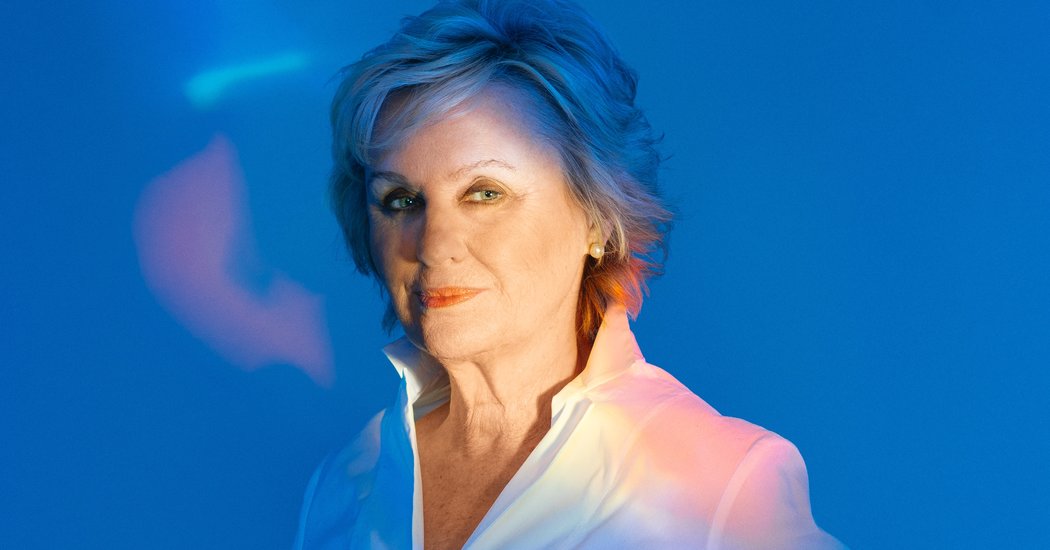
Unlike most journalists, Tina Brown carries with her an aura of swashbuckling glamour, a remnant of her starry, high-budget run during the 1980s and ’90s as editor in chief of Vanity Fair and then The New Yorker. Like many journalists, Brown, 66, has pivoted in recent years to an adjacent line of work, in her case the live-event business. Her Women in the World Summit, which has hosted speakers like Oprah Winfrey and the Nobel Peace Prize winner Nadia Murad, is held each spring at Lincoln Center. (The New York Times was once a partner in the business.) She has also written two best-selling books, “The Vanity Fair Diaries” and “The Diana Chronicles,” a tell-all about the British royal family. Despite her career shifts, it’s her magazine work — after leaving The New Yorker, she edited the short-lived Talk, as well as the Daily Beast website and Newsweek — for which she remains best known. Not that she has any strong desire to revisit that particular world. “Editing now,” Brown says, “is all about: ‘How do I keep this publication alive? How do I get it financed?’ I can do more onstage than I can in a magazine.”
One magazine innovation that you’re often credited with is treating lowbrow stuff in a rarefied, intelligent way. Is the distinction between highbrow and lowbrow ever worth preserving? Well, there has never been more need for intelligence. People want to see things looked at in a different way, and one problem we have is that people have become afraid to be counterintuitive. They’re afraid to have third-rail conversations, because they think it’s not worth being hounded out of a job for saying the wrong things.
Tina Brown at Vanity Fair in 1990.
Shutterstock
What’s a third-rail conversation that you’re not having or that isn’t happening at Women in the World events? #MeToo is fraught, because anything can be taken and become this flying I.E.D. that can mess you up. It’s difficult to have a debate about that topic, because all the things that people say off-camera they don’t want to say in public.
In the past you’ve said that it took you about 25 minutes to regret leaving The New Yorker to go work with Harvey Weinstein on Talk magazine. What did you see that made you feel that way so quickly? The moment the contract was signed, he was utterly different from the person who had been romancing me for five months. It became clear that nothing that he’d told me was true in terms of what the budget was going to be. And I’d never walked into that weird crepuscular den of Miramax when he was courting me. I’d always met him in a restaurant. As soon as I was sitting in that room with that horrible mangy sofa, which I now think of as the Plymouth Rock of the #MeToo movement — suddenly I’m sitting there in this dark room with Harvey yelling and screaming, and I thought, Oh, my God, this is insane.
Were you aware of the rumors about Weinstein? About the sexual assaults? At the time, no. I didn’t know that about him. The kind of abuse that I saw was just bullying, rudeness and so on. But there’s also a reason Harvey was as successful as he was. It wasn’t just bullying. He had a sixth sense for great material, and a lot of actors, directors and producers obviously found his input incredibly valuable. But it’s beauty and the beast. There was this terrible dark side.
Do you feel as if you have any insight into his psychology? I think it’s self-hatred, that he thought of himself as a deeply unattractive man and was tortured about that. He had this amazing taste in movies, but his life was just such a shambles.
Harvey Weinstein aside, was there a possible path to success at Talk? Could it have lasted longer? Yeah. Talk was fantastic. The staff was sensational. They all went on to The New York Times. Sam Sifton, Jonathan Mahler, Danielle Mattoon. It was an amazing group of people that I assembled. The fact is that Sept. 11 happened; the advertising collapsed. Harvey never had the money in it that he said he did and wasn’t going to stick around for it. So it closed. But Talk could have been very successful.
Brown at the offices of Talk magazine with its publisher, Ron Galotti, in 1999.
Jeffrey A. Salter/The New York Times
And what about Newsweek? It seemed like a strange challenge to take on. Newsweek was tilting at windmills. It was completely insane. I sort of liken it to sleeping with your ex-husband. The next morning you think, I know why I left him. I couldn’t resist. We had this brief mirage that having a digital and a print property was a great way to synergize and expand. But Newsweek just wasn’t savable. The third meeting I had with advertisers, they opened by saying, “I’m never going to advertise in a weekly newsmagazine.” And you know what? They were right. The problem was the frequency. I realized a terrible conundrum with Newsweek, which was its name. You could have made it into a monthly, but it was called Newsweek! It’s so difficult to do a weekly now, because you’re always on the wrong side of the interest curve. And if instead you say, “I’m going to be counterintuitive — I’m going to write about wildlife in Africa,” then you’re in that land of being completely sleepy. People pretend that they like that, but nobody actually reads it.
I listened to the interview you did with David Remnick on a New Yorker podcast, and he asked you about workplace sexism. You said you were too busy “blazing ahead” to feel any. Does that mean you were fundamentally unaware or just preoccupied? I became more aware. When I was at The New Yorker, I began to feel frustrated that my vision for what the magazine could become was not being considered by Condé Nast’s male management. At the end of the 1990s, I said The New Yorker should have a book company, do film and TV production, a radio show. The answer I got was, “Stick to your knitting.” The final straw was when I had lunch with Condé Nast’s president at the time, Steve Florio. I was banging on about how I thought The New Yorker should be more than a magazine and I said, “I’m beginning to wonder whether I should go somewhere else.” He said, “Who else is going to give you a dress allowance?” I was so grievously taken aback. That was a real tipping point. I did leave.
Was the condescending sexism you were getting from the top down at Condé Nast mirrored by any of your colleagues at The New Yorker? I was in charge of The New Yorker, so I changed it. It was a very male shop when I arrived, and I switched out a huge amount of those people for women — great people like Dorothy Wickenden, Susan Morrison and Pamela McCarthy. The major ongoing battle was the need to somehow earn cred for being “serious” when, actually, the material that I was publishing at the magazine was better than the material that had been published in the 10 years before me.
Renata Adler argued in her book that you turned it into a less unique magazine. Look, I brought in David Remnick, Jeffrey Toobin, Anthony Lane, Jane Mayer. Everybody is superstar talent, and they weren’t already superstar talent. I found these people. Jeffrey Toobin was, like, an assistant U.S. attorney. Frankly, I electrified a sleeping beauty that had become self-satisfied and self-admiring and was covered in fake ivy. There were the people who thought of themselves as good because they were at The New Yorker rather than at The New Yorker because they were good. They were no longer earning their place. I had to go through all of that crap; Jamaica Kincaid calling me “Stalin in high heels,” which I probably was. I would be stomping around in my Manolos demanding things. George Trow called me the girl in the wrong dress. I mean, the misogyny of the comment! But by the time I left it was a golden group of people. Most of them are still there.
But if you consider the changes you made, like adding photography and expanding the table of contents, you did turn The New Yorker into a magazine that was more like other magazines. Maybe in retrospect that’s not a criticism. But it was intended as a criticism, and that’s why I just addressed it as one. I developed a two-strand approach to editing: In the front of the book I would have current analysis of, for example, the O.J. Simpson trial by Jeffrey Toobin, but in the feature well I might have a classic New Yorker piece, which could have appeared in any one of three or four issues around it. I made the magazine relevant, and they’ve absolutely continued to have those two strands.
Another New Yorker writer, Lawrence Weschler, said you were too interested in chasing buzzy stories. And one of the things that is misguided is the idea that something called “buzz” can be grafted onto a magazine. What is buzz? It’s a story that everybody wants to talk about. Isn’t it a writer’s job to make people find something so interesting that they talk about it? We published great stuff in The New Yorker that people did want to talk about. If that’s “buzz,” I’ll take it.
I know you still keep a diary. Has Megxit made its way in there? You bet. I’m actually doing a new book about the royals, a follow-up to “The Diana Chronicles.” I agreed to do it in the summer before all this craziness. I’m going to call it “The Palace Papers,” and Crown is publishing it. It’s what has happened since Diana. It turns out: quite a lot.
Brown at a signing event for her book “The Diana Chronicles” in 2007.
Paul Hackett/Reuters
Are there any emotional nuances to Prince Harry’s psychology that someone with your insight into the royal family can see that the rest of us can’t? I think the deep wounds of his mother’s death have never healed. And his sense of his role as the second son, the fact that he loved his military career but then left and didn’t have that sense of purpose — all of that came together to make him a very unhappy man.
You point out in “The Diana Chronicles” that the British public’s attitude toward the royal family is affected by what else is going on in the country. How is that dynamic playing out now? There’s a desire for the family to do something difficult, which is to preserve their mystique and prestige while being Instagram royals. I do think that Prince Charles’s handling of these crises — Prince Andrew’s expulsion and Megxit — has shown that he’s ready to be king. He has rather risen to the occasion. He has been very decisive about Andrew, saying, He has to go, and about Harry he has managed to walk the line between being a father who cares about the mental health of his son and being someone who understands what the monarchy has to do to be self-preserving.
Can it be, though? Isn’t the monarchy just going to continue sliding into irrelevance? That’s the interesting question. Nearing the twilight of the queen’s reign, with Brexit happening — will the monarchy fly apart when she’s no longer there to hold the thing together? I think that there’ll be an enormous national identity crisis when she dies. People are so exhausted by instability that if the monarchy collapsed, that would be massively disruptive.
Something that comes through in “The Vanity Fair Diaries” is your ambivalence about being in the milieu of the rich and powerful. But how ambivalent are you? I mean, weren’t you just in Davos? I was indeed. I was in Davos because my company has a partnership with Credit Suisse, and we do a dinner interview, which I curate. This year I did Kristalina Georgieva. What I try to do is to bring our Women in the World story to Davos. But I’ve always felt that I’m a double agent in that world. I am there for the story. I have a motivation that isn’t simply about hanging out.
A criticism of events like Women in the World is that they can amount to feel-good corporate feminism. What do you think people who come to yours are walking away with? The summit has always been about truth to power. It has always been about women who are fearless in the face of cultural oppression, social unfairness, gender marginalism. You’ll go out during the intervals between speakers and hear people say: “I never knew that was happening in Somalia”; “I never knew that was happening in Pakistan.” We’re raising the consciousness of people to what is happening to women in the world.
Brown with the actor and UNICEF good-will ambassador Priyanka Chopra Jonas at the April 2019 Women in the World Summit.
Brendan McDermid/Reuters
Does the summit speak truth to only certain kinds of power? How would you characterize the conversations that people like Condoleezza Rice and Sheryl Sandberg have had at the summit? Condoleezza Rice and Sheryl Sandberg were at the summit about 10 years ago. The conversation we had then would not be the conversation now. Obviously we would have taken issue with a lot of what Sandberg’s doing. What we do is tell stories. We’re not there to do corner-office, women’s-empowerment bromides. We’re not having those navel-fluff conversations about women being raised up. It isn’t what we do. It is much more journalistic. We get frustrated when we’re lumped in with those other conferences. Last year we opened with the Saudi conversation. We were saying M.B.S. is all about pretending that he’s liberating women. In April, we’ll have two female Kurdish warriors from Northern Syria who are going to talk about fighting ISIS. We’ll also have Denise Ho, who’s a leader of the Hong Kong democracy protests. We’re much more interested in that global conversation than we are about global corporate feminism.
You were working at Vanity Fair when there was a lot more money in magazines than there is now. But in “The Vanity Fair Diaries,” it’s clear that even then you were nostalgic for the magazines of the ’50s. If we divorce our thinking from nostalgia, is anything really being lost culturally as magazines have diminished? Absolutely. It’s tremendously problematic. When everybody has rushed to the story in a rabid wolf pack is when you know nothing. Half the people in Trump’s world, for instance, come and go, and I never read anything about them except the same 10 facts regurgitated. How many times did I read what a brave, noble figure Jim Mattis was? But I wished I could have read a big, fat meaty magazine piece about his military career. I’m sure somebody did it.
There was a New Yorker profile. Yeah, maybe I missed it. Somehow I didn’t ever feel I was getting it at the time I wanted. I think the profile is a very underserved medium in the United States. I miss them. We did so well at Vanity Fair when I gave Gail Sheehy candidates to profile. I read the Hillary Clinton piece that Sheehy did when she was on the campaign trail with her. It was fantastic. She got so much access. She’s there in the middle of the Gennifer Flowers meltdown, sitting with Hillary as Hillary is saying, If I was cross-examining her I would crucify her. I don’t think any reporter now would get that kind of access.
Which has less to do with the reporters and more to do with the subjects. Of course. What I mean is that things have changed. The subjects are so guarded. The spin doctors are so intense. I don’t think any reporter now could get so up close. Sometimes they do, but it’s difficult. I hate it when celebrities say things like, “Yes, I’ll do it,” and then they name somebody in their social circle to write the piece. Or “I’d love my mom to interview me.” It’s nauseating.
What’s a story you’d assign right now? I’d assign Bill Browder, who wrote the gripping memoir Red Notice about the dark world of high finance and Russian oligarchs, to do a great piece about the world of Lev Parnas and the corrupt machinations of doing business in Ukraine.
Is being an editor in chief again something you’d ever think about doing? I have to suppress those feelings, because I love content, to use the horrible word, and editors now are so beleaguered that all the fun that I had isn’t there to be had. It’s a shame that editors get so little time now to think about stories and writers. Most of their time is spent having incredibly boring meetings about distribution and platforms and branded digital content. All this stuff, it’s just incredibly miserable. What I love, and what I’ve always loved, is telling stories.
David Marchese is a staff writer and the Talk columnist for the magazine.
This interview has been edited and condensed for clarity from two conversations.










