








The profitable companies of the future will be those that can adapt to the change in sourcing, production and distribution that are happening today, and are flexible enough to take advantage of new technologies.

Top Article of 2019 – Warehouse and Supply Chain Automation
Top Article of 2019 – Warehouse and Supply Chain Automation
Len Calderone for | RoboticsTomorrow
What is supply chain automation? Supply chain automation is the result of adding robots to a supply chain. Using robots, a supply chain manager can connect and automate sales, forecasting, inventory refill, inventory scheduling, purchasing, manufacturing and distribution actions in a seamless system.
Whereas, warehouse automation is a warehouse management system (WMS) that exchanges real-time data with a voice-directed, or paperless picking, putting or sorting and assembling products. It is another link between software and advanced automation that directs automated guided vehicles (AGV) to retrieve orders while tracking inventory levels in instantaneously.
A supply chain is made up of all the businesses and suppliers involved in creating a product, from the raw materials to a finished product. International supply chain management includes transactions with companies and suppliers in other countries. This could require knowledge in politics, trade and tariff laws, quality control, and international relationships.
Because international supply chains are both logistically and technically complex, there are global supply chain management specialists, who manage the process for many different companies.
Companies are overcome by enormous amounts of information coming from suppliers and customers in many locations This information includes pricing and labor contracts to tax documents and more. This makes critical information difficult to produce quickly and error-free due to the lack of personnel and time constraints.
Combining all these countless processes together into one supply chain, customer relations don’t get as much attention and time as they should. Companies have to uphold fast delivery lead times to customers, who want to receive their products on schedule, regardless of the increase complexity in a manufacturer’s supply chain.
So, is there a happy solution? How can a company meet all of the deadlines, while at the same time, giving customer service the attention it demands? The solution lies in supply chain automation.
Supply chain automation has the potential to help businesses keep pace with distribution challenges and consumer demand. Up until now, robots had been fixed, blind, and rather unintelligent. They did not have the complexity and dexterity that the supply chain required. The new generation of robots are very different. They are not as heavy and they are more flexible, and easier to program with great progress in grip and sensor technologies. With the introduction of micro-technology, we are finally starting to see automation become a reality in the supply chain.
Robots have the capability to terminate activity if they touch anything unexpected. Therefore, they can be safely used alongside an existing workforce This means that they are especially suitable for picking and co-packing.
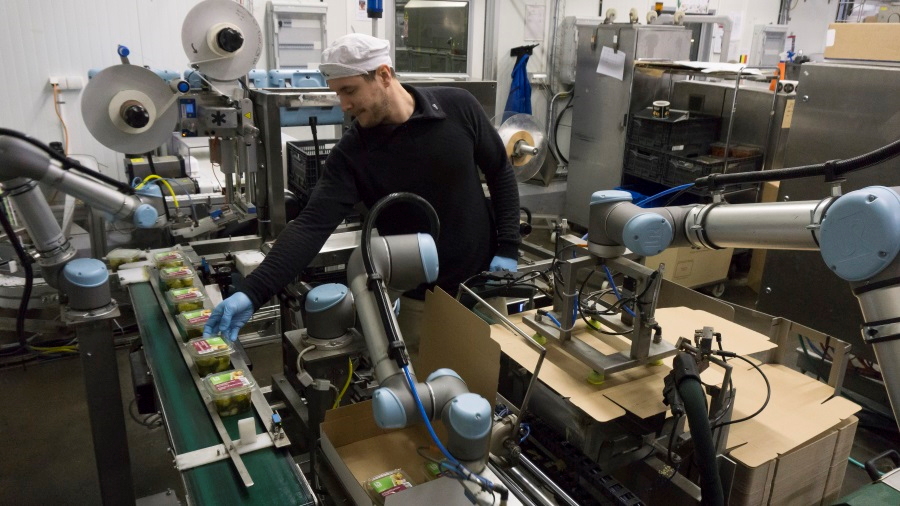
Employees at Atria’s Skene, Sweden, factory work side-by-side with three robot arms from Universal Robots
Supply chain robots are different from traditional automation tools in that they computerize the complete business process, rather than use a limited, individual job method. They coordinate a complete integrated process, allowing the different sections to work together.
As an example, if the robot detects that a warehouse is full because there is no inventory movement, it automatically alerts the purchasing department and halts ordering, or it transfers inventory to a new storage location if one is available.
Supply chain managers can use a dashboard to determine that the current warehouse stockpile of a certain item is below the required reorder levels. The dashboard facilitates an instant dissection of the overall process chain. Without delay, the manager can identify the particular problem, such as a delayed order from a major supplier’s factory.
Warehouse automation is based on motion planning and computer vision, allowing for industrial robots to be autonomous and work intelligently. Industrial robots pick, transfer and pack boxes. Other robots transport the boxes around to loading docks and trucks.
JD.com is China’s largest online retailer and it has a vast product offering, covering everything from fresh food and apparel to electronics and cosmetics. Its unparalleled fulfillment network provides same and next-day delivery, covering more than 1 billion people. The 43,000 sq. ft. facility in Shanghai is equipped with 20 industrial robots that pick, transfer and pack packages using boxes on conveyor belts, as well as camera systems and Mujin robot controllers.
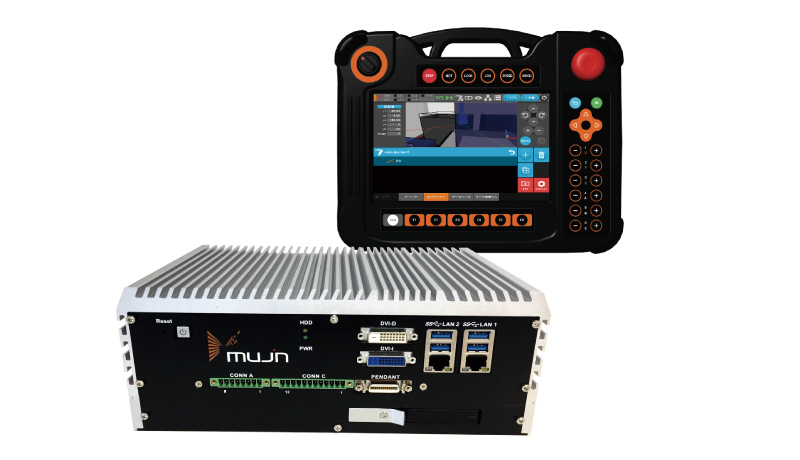
JD has the world’s first fully automated e-commerce warehouse. In place of the usual 400 to 500 workers required to run a warehouse of that size, it employs only five. And their job is just to service the robots—not run operations.
There are several robots on the market that can move around a warehouse without human control. An average warehouse employee wastes nearly seven weeks per year in unnecessary motion, which accounts for more than $4.3 billion in labor costs.
Autonomous mobile robots can eliminate a lot of unnecessary walking. Because of improvements in sensors, artificial intelligence and mobility, these robots can be deployed practically anywhere. These robots normally carry carts and are programed to travel flexible routes in the warehouse in order to move product between workers and stations, eliminating walking which represents half of the picking time.
Forklifts are developing into increasingly complex and intelligent machines with full autonomy for some applications. They are suitable for operations, where load-handling provides little added value and the operations are repetitive, involving longer distances. They have a navigation laser, front and rear scanners, a 3D camera along with visual and acoustic warning indicators that allow it to safely move around a warehouse near the human workers.
Platform based logistics solutions aids the forklift to know when goods are arriving and where they will be stored. The forklift can then calculate the loading procedure, find the best route, work in partnership with other forklifts, and send verification of location and movement to the ERP system. Using an automated battery management system, the forklift can revert back to a charging dock.
Autonomous mobile robots present new scenarios for inventory monitoring. Combined with RFID tagged products and equipment, these robots can perform their own inventory sweeps autonomously at pre-determined schedules. The robot can identify storage and placement problems that could lead to inefficient movements of machinery or people, as well as identify goods that are nearing expiration date.
The profitable companies of the future will be those that can adapt to the change in sourcing, production and distribution that are happening today, and are flexible enough to take advantage of new technologies.
The content & opinions in this article are the author’s and do not necessarily represent the views of RoboticsTomorrow

Len Calderone – Contributing Author
Len contributes to this publication on a regular basis. Past articles can be found with an Article Search and are listed below.
He also writes short stories that always have a surprise ending. He has also written a book on wedding photography on a budget. These can be found at http://www.smashwords.com/profile/view/Megalen
Other Articles
What is Machine Vision?
Machine vision is used in a variety of industrial processes, such as material inspection, object recognition, pattern recognition, electronic component analysis, along with the recognition of signatures, optical characters, and currency.
Robots Assisting with Physical Therapy
Physical therapists are crucial to the design, development, and the operation of sensing technologies and robotic interfaces. Physical therapists are proactive partners, who work with engineers to encourage discoveries that will enhance best practice principles for patients.
Boston Dynamics’ SpotMini Robot and More
Spot is a small four-legged robot that resembles—well, a dog. It might not fetch your slippers, but it is very versatile. It weighs about 66 pounds, about what a large dog weighs.
More about Len Calderone – Contributing Author
Comments (1)
Posted by Sunny M on 10/02/19, 03:47 AM
Thanks a lot for such an interesting article. It was really useful. What is your view on picking assistant AMRs like the way 6 River Systems, inVia Robotics, Fetch Robotics, Magazino, IAM Robotics etc. are providing their solutions. Do you differentiate these AMRs with mobile robots provided by Geek+, Grey Orange and Quicktron.
Recently, we have completed a study on Warehouse Automation Market and found that this market is worth $27B by 2025 and is mainly driven by AMRs and Picking Robots only
https://www.thelogisticsiq.com/research/warehouse-automation-market/
What do you say?
Featured Product
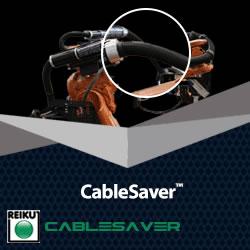
REIKU’s Cable Saver™ – The Most Versatile Modular Robotic Cable Management Solution
REIKU’s Cable Saver™ Solution eliminates downtime, loss of revenue, expensive cable and hose replacement costs, maintenance labour costs. It’s available in three sizes 36, 52 and 70 mm. All of the robots cables and hoses are protected when routed through the Cable Saver™ corrugated tubing.
The Cable Saver™ uses a spring retraction system housed inside the Energy Tube™ to keep this service loop out of harms way in safe location at the rear of the Robot when not required. The Cable Saver™ is a COMPLETE solution for any make or model of robot. It installs quickly-on either side of the robot and has been tested to resist over 15 million repetitive cycles.










