






“So far, less than 0.1 percent of those assets might have been original recordings affected by the fire,” says UMG archivist Patrick Kraus.
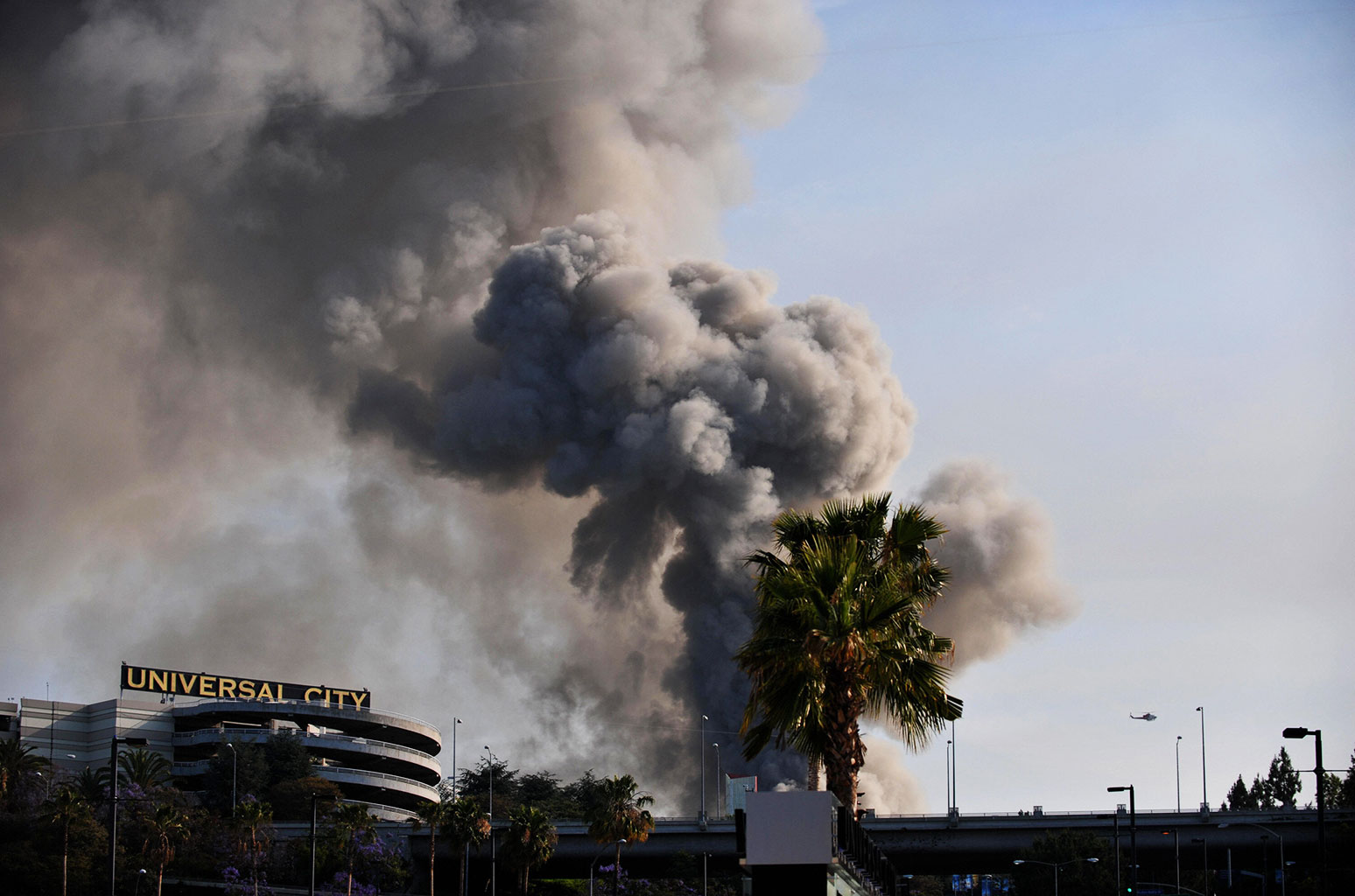
Nearly nine months after The New York Times Magazine‘s report that nearly a half a million original master recordings owned by Universal Music Group (UMG) were destroyed in a 2008 fire on the Universal Studios backlot in Los Angeles County, the label is taking inventory and says the loss was dramatically less.
On Thursday (March 5), UMG senior vp recording studios and archive management Pat Kraus sent an email to label staff — that was obtained by Billboard — that provided an exhaustive update on the situation as it stands today. In it, Kraus wrote that, contrary to reporting by The New York Times Magazine, “less than 0.1 percent” of the more than 150,000 assets he and his team have reviewed so far were “original recordings” destroyed by the fire.
“For the very few original recordings we believe were impacted, almost all had previously been commercially released and we have located safeties, copies or digital alternatives for every single album,” he wrote. “In the one instance where an unreleased album was affected, we have located multiple copies and we could still release the album if the artist wishes. We are also currently working with a few artists and estates to locate masters and copies that may exist in their archives.”
So far as original recordings are defined in this instance — as a multitrack master or flat mix master — Kraus explained that various alternatives typically exist to make up for their loss. “In fact,” he continued, “even when an original recording is available, we may choose to work from duplicates or digitized versions when the fidelity of the original tape may have, over time, become unusable for technical reasons.”
According to the memo, a team of more than 70 specialists have been undertaking the “exhaustive work” of reviewing assets, with Kraus noting that it can take “as long as several weeks” to analyze assets for a single artist. He added that they are prioritizing their work based on direct requests from artists or their representatives, with a total of 392 requests having been received and 209 responded to since the New York Times Magazine stories were published.
The memo continually downplays the scope of the losses suggested in the New York Times Magazine reporting, which included a list of 830 artists whose original recordings may have been destroyed in the 2008 blaze, Aretha Franklin, Nirvana, Tupac and Elton John among them. Kraus also noted only 5% of UMG’s total assets were stored in the Universal Studios vault that burned, and that the bulk of those materials were not master recordings. Of the 19 artists whose masters were confirmed to have been destroyed by UMG, he said, they have managed to track down secondary copies “for nearly all” of them.
After the alleged losses were reported last year, on June 21 UMG was hit with a class-action lawsuit by Soundgarden, Tom Whalley on behalf of the Afeni Shakur Trust that oversees Tupac Shakur‘s estate, Tom Petty‘s ex-wife Jane Petty, Hole and Steve Earle. (Hole subsequently dropped out of the lawsuit after being satisfied that the band’s masters had not been affected.)
“I don’t want to make this process sound either clinical or triumphant,” Kraus concluded. “This is emotionally charged, often painful, work. Many artists and estates were justifiably horrified by the report suggesting that original recordings were lost. As archivists, we understand their concern: we’ve devoted our lives to the preservation of music. As Sir Lucian [Grainge] has said, the loss of even one asset from our archives is heartbreaking.”
You can read the memo in full below.
Dear Colleagues,
I’m writing to provide you with another update on our continuing efforts to provide artists with information as to the archived assets in our facilities and, particularly, which, if any, of those assets may have been lost in the 2008 fire at the NBCUniversal Studios lot. On behalf of my entire team, I want to thank the many artists and artist representatives whose collaboration with our team in performing this time-intensive work has been invaluable.
Before I get to the specifics, let me briefly describe the context for our work:
What we refer to as the “assets” in our archives consist of far more than original audio recordings. The bulk of the material consists of protection and other secondary copies, safeties, and videos, as well as non-recorded items such as artwork, session notes and more. If an original recording (i.e., a multitrack master or flat mix master) is ever lost, various alternatives typically exist to make up for that loss. In fact, even when an original recording is available, we may choose to work from duplicates or digitized versions when the fidelity of the original tape may have, over time, become unusable for technical reasons.
Back in June, the New York Times Magazine published two articles about the fire. Regardless of how or why The Times came to the conclusion that a particular original recording was destroyed—whether they were relying on contemporaneous lists that were based on estimates and guesswork at the time of the fire, or whether they fundamentally misunderstood the information they obtained–the bottom line is that through the exhaustive work by our team of more than 70 specialists, we are able to provide more accurate information to artists for whom our analysis has been completed.
We prioritize our work based on requests from artists and their representatives, given that it can take as long as several weeks to analyze potentially thousands of assets for a given artist. The Times published a list of 830 artist names and stated or implied that those artists lost original recordings in the fire. Of the 392 inquiries that we’ve received so far, my team and I have reviewed more than 150,000 assets and responded to 209 of those artists. So far, less than 0.1 percent of those assets might have been original recordings affected by the fire.
Does that mean those recordings are lost forever? Absolutely not. For the very few original recordings we believe were impacted, almost all had previously been commercially released and we have located safeties, copies or digital alternatives for every single album. In the one instance where an unreleased album was affected, we have located multiple copies and we could still release the album if the artist wishes. We are also currently working with a few artists and estates to locate masters and copies that may exist in their archives.
You may have noticed that some artists have already made public statements about the status of masters based upon our review, with many expressing relief that The Times’ reporting was inaccurate. As I noted in my last update, each artist will decide if they wish to publicly release information that we convey to them.
I don’t want to make this process sound either clinical or triumphant. This is emotionally charged, often painful, work. Many artists and estates were justifiably horrified by the report suggesting that original recordings were lost. As archivists, we understand their concern: we’ve devoted our lives to the preservation of music. As Sir Lucian has said, the loss of even one asset from our archives is heartbreaking.
Our work is not yet done. We continue to meticulously review assets in our facilities around the world and will live up to our commitment to be transparent and respond to every artist or artist’s representative’s inquiry. We have extended invitations to visit our facilities to a number of artists who are interested in seeing the tapes for themselves.
Again, I am are enormously grateful to those artists and their representatives who have cooperated with us in our review and to the teams across the company who are dedicated to this project. As our work continues, I will continue to provide future progress reports.
Finally, I’ve included below an updated list of questions we are most frequently asked by artists and their representatives. Should you receive any others, please send them to me and we will answer them as quickly as possible.
Thank you.
Pat
1. What was in the NBCU facility?
The NBCU facility contained multiple copies of audio and video recordings, documents ranging from legal papers to liner notes, and packaging materials and artwork from projects released by UMG’s West Coast labels.
2. In 2008, what portion of UMG masters did this facility hold?
At the time of the fire, we estimate the vault held less than 5 percent of UMG’s total assets. The facility was about a third empty by the summer of 2008 as the company had already begun to transfer assets to Iron Mountain.
3. Have you identified any assets contained in the vault that weren’t commercially released due to the fire?
At this time, we have encountered only one unreleased album potentially affected in the fire, however, we have located multiple copies of that recording and we could still release that album in the future if the artist wishes.
4. But I read that UMG confirmed that original masters for 19 artists had been destroyed in the fire. Isn’t that a contradiction?
No. For nearly all of those artists we have located exact digital clones, duplicate master recordings, safeties and other copies for every single original album recording that we believe was affected by the fire.
5. Why does it take so long to determine what assets you have for a particular artist?
We are committed to responding as quickly as possible with complete transparency to any artist who inquires about master recordings in our archives. However, it can take weeks to conduct research on a single artist in order to present an accurate picture of the assets we have. Here’s why:
The “assets” in our archives comprise far more than original audio master recordings. The bulk of the material in the archives consist of secondary copies of material. Assets in the archives include protection copies, multi-tracks, demos, safeties, and videos as well as non-recorded items such as artwork, session notes and much more. In fact, the majority of our archived assets are not masters. Thanks to advances in technology and the expertise of our archiving team, we can now quickly locate and identify the assets stored in our facilities which came into our possession over the last several years.
When it comes to assets that are older, however, our team’s work is more complicated and time-consuming. For example, thousands of associated assets held at our facilities around the world might relate to one particular artist. The first step in inventorying those assets is to go through each of the assets individually and identify which of them are master recordings. For these older assets, we often must rely on the accuracy of the information that was originally written on a box in a studio or by a third party and which was then subsequently transferred to a database. Where the information was not catalogued reliably at the time the recordings were originally created, more investigative work by our team is required.
Once we have conveyed the information to the artist or the artist’s representative, there often is further dialogue between our team and the artist’s which has sometimes resulted in locating additional assets which were not in a UMG facility but which may be in the possession of the artist, or a producer, another record company or a recording studio.
6. Are you planning to make public the status of particular artist masters?
At this stage, no. Our current priority is to communicate directly with our artists and their representatives. Each artist can determine if they wish to publicly release the information we convey to them.
7. If a master is lost or destroyed, is it still possible to reissue high-quality recordings of that music?
Absolutely. Some recent media reports have created a significant amount of confusion about the role masters play in reissue work. In many cases, even when the original master is available, we often work from duplicates or digitized versions because the fidelity of the original master has deteriorated from overuse or from chemical interactions over time or for other technical reasons. We reissue thousands of recordings a year, and each project presents a unique set of challenges to overcome. In each case, our team of experts works hard to locate, restore, preserve and make available the highest fidelity recordings possible. For those masters that were lost in the fire, we explore various alternatives that may exist to make up for the loss.
8. I read reports of artists claiming that their masters have been destroyed. Does that mean they were told the results of your work?
Not necessarily. Many of the artists who have spoken out did so based on their concerns after reading their names in The New York Times Magazine. We have subsequently communicated with many of these artists following their public comments and in many cases we’ve been able to reassure them about the status of masters of their performances. This is not to say there weren’t losses in the fire, it’s simply to say that the Times report is not a reliable source for what was lost and as a result it has created significant confusion.
9. Where are original recordings stored today? How can we be sure they are safe?
Our assets are safely housed in temperature-controlled, secure facilities strategically located near our key operations centers. In fact, the majority of our assets are stored in a facility recognized as one of the most secure on Earth. Our global team of archivists regularly and continuously care for our masters and other recorded media, to ensure the music will be available to fans today and for generations to come.
10. The fire happened in 2008, why are you doing this work more than a decade later?
Let me clarify that there were two different work streams: one in 2008 immediately following the fire; and one starting last summer.
The work performed in 2008 was to help document the potential loss of assets and locate replacement copies which were the subject of insurance claims.
Further, it was clear that the loss suffered in the fire did not prevent the commercial release of any reissues or other projects. Even in the rare instance when an asset had been lost, the artist worked together with the company to successfully reissue recordings from alternative sources.
As to the project that was initiated last summer, that was a different matter altogether.
The 2019 work came in the wake of inaccurate press reports wildly overstating the extent of the loss of original recordings. And it reflects the company’s commitment to provide inquiring artists with accurate information.










