






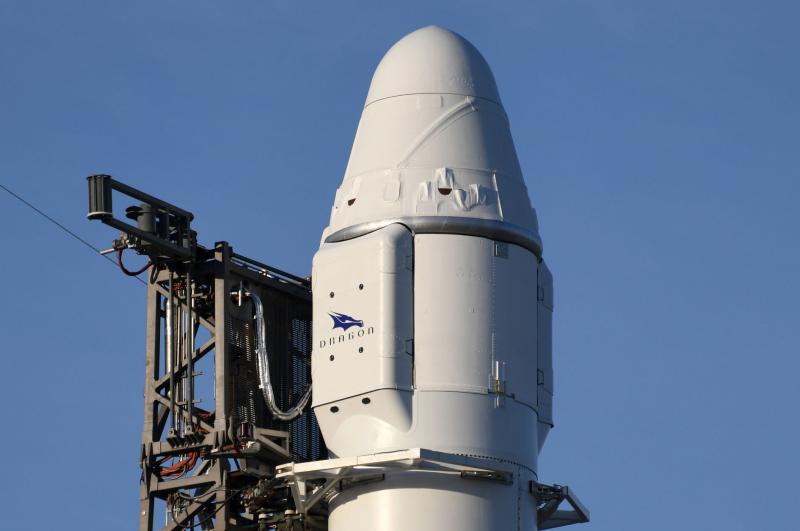
ORLANDO, Fla., March 6 (UPI) — SpaceX plans to launch more than 4,300 pounds of supplies and science experiments to the International Space Station from Florida on Friday night — the company’s 20th such mission for NASA.
Liftoff is scheduled for 11:50 p.m. EST from Launch Complex 40 at Cape Canaveral Air Force Station, which is adjacent to Kennedy Space Center.
If successful, the mission will mean SpaceX will have ferried 94,000 pounds of cargo to the space station since its first demonstration flight arrived there in 2012 and brought back 74,000 pounds of cargo.
Weather is only 60 percent favorable for launch Friday night, with a backup attempt scheduled for 11:27 p.m. Saturday.
SpaceX will attempt to fly the first-stage booster back to the company’s Landing Zone-1 at Cape Canaveral, which the company said could create a sonic boom.
The capsule would take a little over two days to reach the space station.
In April, it is scheduled to re-enter Earth’s atmosphere and splash down in the Pacific Ocean off the coast of Baja California with 3,700 pounds of return cargo.
SpaceX’s Falcon 9 rocket includes a booster that launched a similar mission to the station Dec. 5. The capsule will be used a third time after traveling to the space station in 2017 and in 2018.
Among the science experiments is a space plant nursery designed by food container company Tupperware, a shower head experiment from Delta Faucet and a scientific investigation into microgravity’s effects on stem cell production of heart cells from Emory University in Atlanta.
The European Space Agency is sending up its new science platform — Bartolomeo — that will attach to the outside of the space station. The platform provides 11 units that can house science experiments controlled from Earth.
Delta Faucet says it will examine water flow in microgravity from its H2Okinetic showerhead, with an eye toward better performance and water conservation.
Tupperware’s nursery is intended to be mostly self-sustaining — with minimal work time required by astronauts.
The system is called a Passive Orbital Nutrient Delivery System, or PONDS, and has no electricity, pumps or moving parts. It has a free-standing water reservoir from which plants can draw when needed.










