






Welcome to Thomas Insights — every day, we publish the latest news and analysis to keep our readers up to date on what’s happening in industry. Sign up here to get the day’s top stories delivered straight to your inbox.
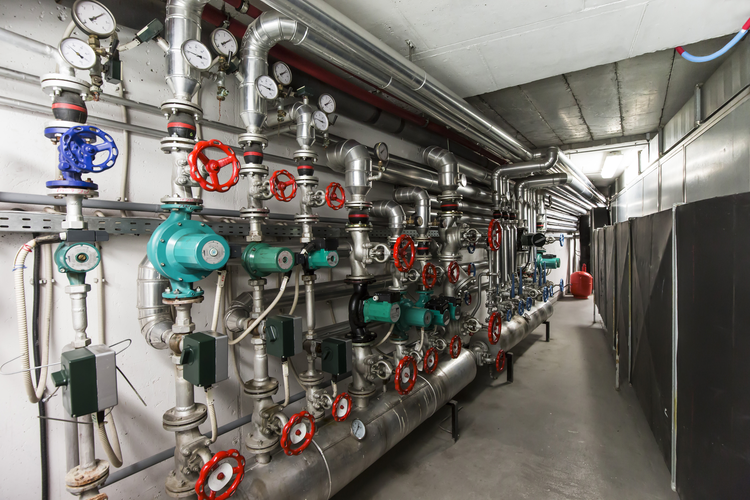
As winter settles in, each warehouse will require specific heating solutions. In some cases, the entire warehouse will need to be warmed up, in others, just in particular areas. Issues of cost, ventilation and unit placement also demand consideration.
Luckily, gas-fired and electric heaters—the two most popular types—can address all these concerns because they offer many options.
Gas-fired Heaters
Let’s start with gas-fired heaters, such as natural gas- and propane-fired heating systems. These systems appeal to many warehouse managers because they give off a lot of heat for the gas and energy they consume. This translates to lower operating costs than those of electric heaters.
The two basic types of gas-fired heaters are indirect- and direct-fired systems, which each come in different designs. If you choose to go indirect, you can select from either unit heaters or air-rotation heating systems. Direct-fired systems offer a wider selection of designs—high-temperature rise space heaters, low-temperature rise make-up air heaters, air re-circulation heaters, and low-intensity tube-style infrared (radiant) heaters. Indirect-fired systems warm up and re-circulate only the air inside the warehouse. They utilize a heat exchanger and a flue, which lets heat and energy escape and thus, compromise energy efficiency.
Unit Heaters
If your warehouse is small with only a few dock doors and low ventilation needs, then you should look into mounting unit heaters on the ceiling or affixing air-rotation heaters to the floor. For larger warehouses with many dock doors and greater ventilation requirements, consider direct-fired systems. These systems are more energy-efficient than their indirect counterparts because they don’t utilize an exchanger or flue so no heat is wasted. But be careful to specify the type of direct-fired system—space air or infrared.
Direct-fired air heating systems are your big warehouse’s best bet while infrared heaters are more suited for heating certain areas in a warehouse with light ventilation needs and dock doors that are kept closed the vast majority of the time. Of the two types of indirect-fired systems, air rotation systems are more energy-efficient than unit heaters and are thus better suited for heating bigger warehouses.
Meanwhile, for warehouses with less than 10,000 square feet of floor space, unit heaters offer peak performance and low installation costs. Operating costs for both systems tend to be high, however, due to their gas consumption. They must also be used with other systems such as direct-fired make-up air systems for better ventilation and warm air distribution.
Space Heaters
Among the direct-fired air heaters, the high-temperature rise space heater delivers the most cost and energy efficiency. It replenishes indoor air with fresh air and evenly distributes warmed air throughout a warehouse. In fact, space heaters consume the least gas and need the least maintenance out of all gas-fired systems. Like the high-temperature rise space heater, the make-up air heater uses 100% outdoor air, pulling it into the facility and heating it.
This design is ideal for warehouses that must take out a lot of inside air. This space heater, however, is more expensive to operate than other direct-fired heaters because of its large size and blower. If your warehouse uses mechanical exhaust systems all year long, air re-circulation heaters are a wise choice. These systems keep the interior positive static pressure steady by warming as much as 80% circulated indoor air and 20% outdoor air. Meanwhile, the second direct-fired heater style—infrared—has the advantage of low gas consumption.
However, if these systems are used for large warehouses, installation and maintenance costs will be hefty because many gas burners are needed to distribute heat throughout the facility. Warehouses that employ such heaters should be adequately ventilated and should place air curtains at open dock doors.
Electric Heaters
Now on to electric heaters. These systems are less expensive to install but usually cost more to operate because electricity is pricier than gas. There are three types of electric heaters to choose from—convection, forced air and radiant. If flammable vapors are present in your warehouse, consider using forced air or convection heaters, which eliminate the risk of explosions.
Convection Heaters
Convection heaters with electrical heating elements rely on natural air circulation to distribute heat. The system releases heated air that rises and makes way for cooler air, which is then drawn to the bottom of the heater. For big warehouses, these heaters must be used with ceiling or portable fans for effective distribution of the heated air around the enclosed space. These systems, however, are most appropriate for small facilities or certain areas such as entryways.
Forced-air Blowers
Forced-air blower systems, in comparison, feature a fan to circulate the air. They also sport more compact bodies and can be affixed horizontally or vertically to ceilings or walls to heat sizeable areas. Because they offer such a wide range of configurations and mounting options, these heaters can be used as primary or supplementary heat sources.
Radiant Heaters
Unlike convection and forced-air systems, radiant heaters use infrared energy to directly provide warmth to objects or people, rather than the surrounding air. They offer safe, clean and low-maintenance heating because they don’t have parts or motors that need repair or replacement and don’t release any combustion byproducts.
By carefully considering the benefits that such heating systems provide, you can find the heater that best meets the needs of your facility. In so doing, you will keep your warehouse warm in a cost-effective, energy-efficient and safe manner.
Image Credit: Don Pablo / Shutterstock










