


• Latest
  • Trending
  • All
Why the Coronavirus-Battered Food Supply Chain Wins High Marks

Why the Coronavirus-Battered Food Supply Chain Wins High Marks

March 30, 2020
Last Mile Delivery Market Worth Observing Growth | UPS, FedEx, SF Express

Last Mile Delivery Market Worth Observing Growth | UPS, FedEx, SF Express

April 23, 2024
Top 5 Spend Analysis Software ranked in 2024

Top 5 Spend Analysis Software ranked in 2024

March 1, 2024
How Tesla And BMW Are Leading A Supply Chain Renaissance With Blockchain

How Tesla And BMW Are Leading A Supply Chain Renaissance With Blockchain

January 19, 2024
LATAM Cargo strengthens European cargo links

LATAM Cargo strengthens European cargo links

April 14, 2020
Ford making reusable hospital gowns from airbag materials as efforts against coronavirus expand

Ford making reusable hospital gowns from airbag materials as efforts against coronavirus expand

April 14, 2020
Don’t Sweat NBC’s Decision to Cut Back on Television Ad Inventory

Don’t Sweat NBC’s Decision to Cut Back on Television Ad Inventory

April 14, 2020
Software firms sharpen focus on AI, big data as IT spending drops

Software firms sharpen focus on AI, big data as IT spending drops

April 14, 2020
Navigating turbulent times in your supply chain (TL:DR version)

Navigating turbulent times in your supply chain (TL:DR version)

April 14, 2020
Last Mile Delivery by Drones Market is Booming Worldwide

Last Mile Delivery by Drones Market is Booming Worldwide

April 14, 2020
AIR CARGO MARKET SIZE, SHARE, DEMAND, TREND, LATEST INNOVATIONS & APPLICATION ANALYSIS AND INDUSTRY GROWTH FORECAST 2027 – Science In Me

AIR CARGO MARKET SIZE, SHARE, DEMAND, TREND, LATEST INNOVATIONS & APPLICATION ANALYSIS AND INDUSTRY GROWTH FORECAST 2027 – Science In Me

April 14, 2020
Wheat procurement in Patiala: 6,500 coupons issued to farmers – cities

Wheat procurement in Patiala: 6,500 coupons issued to farmers – cities

April 14, 2020
Pandemic, Plastics And The Continuing Quest For Sustainability

Pandemic, Plastics And The Continuing Quest For Sustainability

April 14, 2020
  • Supply Chain
  • Logistics
  • Warehousing
  • Procurement
  • Shipping
  • More
    • Strategic Sourcing
    • Spend Analysis
    • Inventory
    • Contact Us
No Result
View All Result
United States International Supply Chain Commission
Home Supply Chain

Why the Coronavirus-Battered Food Supply Chain Wins High Marks

by usiscc
March 30, 2020
in Supply Chain
0
Why the Coronavirus-Battered Food Supply Chain Wins High Marks
492
SHARES
1.4k
VIEWS
Share on FacebookShare on Twitter

It’s true that America has enough food and that much of it simply isn’t in the right place.

Its rightful position is in supermarket aisles and empty shelves are evidence that grocers haven’t been able to keep up with the bump in demand driven by panic buying as the number of coronavirus cases rises.

Those lean grocery store supply chain models have clearly been exposed as being on the wrong side of scant. Just-in-time retail isn’t living up to its name for a good number of staple food items and vendors are left playing serious catch-up with consumers’ expanded appetites.

Let’s also be clear that in no way is this business as usual.

It’s tempting to slam supply chain participants all the way from the farm to the front door for the current failures. But this pandemic is an unprecedented moment. It would be unfair to expect anyone to build such an event into their scenario planning.

Nor will you find it coded into stock-management algorithms.

Short-Term Shortages

The store shortages you’re seeing now are “a short-term disruption and not an indicator that the overall supply chain is not functioning,” according to 
Lowell Randel, a vice president at the Global Cold Chain Alliance, a trade group representing the refrigerated warehouse and delivery industry. Although the disruption is severe, there are signs that the reactions to it are precisely right.

Obviously, a large part of the problem revolves around ensuring that the shelves are supplied for shoppers. And many large store chains responded relatively quickly to that issue by reducing retail hours so that workers had more time to restock.

The stores also quite understandably shifted focus to reordering and replenishing those items customers were busy snapping up, with remaining inventory left to take care of itself.

Now there’s the need to have the workforce deal with this huge uptick in customer demand. While big stores normally have a backup labor pool to call on at busy times, the requirement now is of exceptional magnitude.

Amazon’s Prime Pantry online grocery, for instance, was hit by such high order volumes that it had to tell shoppers that the cupboards were bare. Its website bore the message: “Pantry is temporarily closed. We are busy restocking.”

Help-wanted calls

Amazon then promptly announced that it was looking to hire a whopping 100,000 additional warehouse and delivery workers, while it also said it was raising its pay for them by $2 an hour.

Other retailers are following suit on hiring binges. Walmart wants to bump up its workforce by 150,000 people, while 7-Eleven is on the lookout for 20,000 pairs of hands for its stores and Kroger for 10,000 across a variety of tasks.

Job creation is the order of the day further back in the supply chain, too, with the refrigerated warehousing giant Lineage Logistics, which handles nearly one-third of the country’s food, trawling for an additional 2,000 workers.

All in all, a lot of people power is required, so it makes sense that these companies are targeting the newly unemployed who have fallen victim to local shelter-in-place orders. Retail employees are quick and easy to train, while vast numbers of restaurant workers also will have the aptitude required for store work.

Mobilize that Food

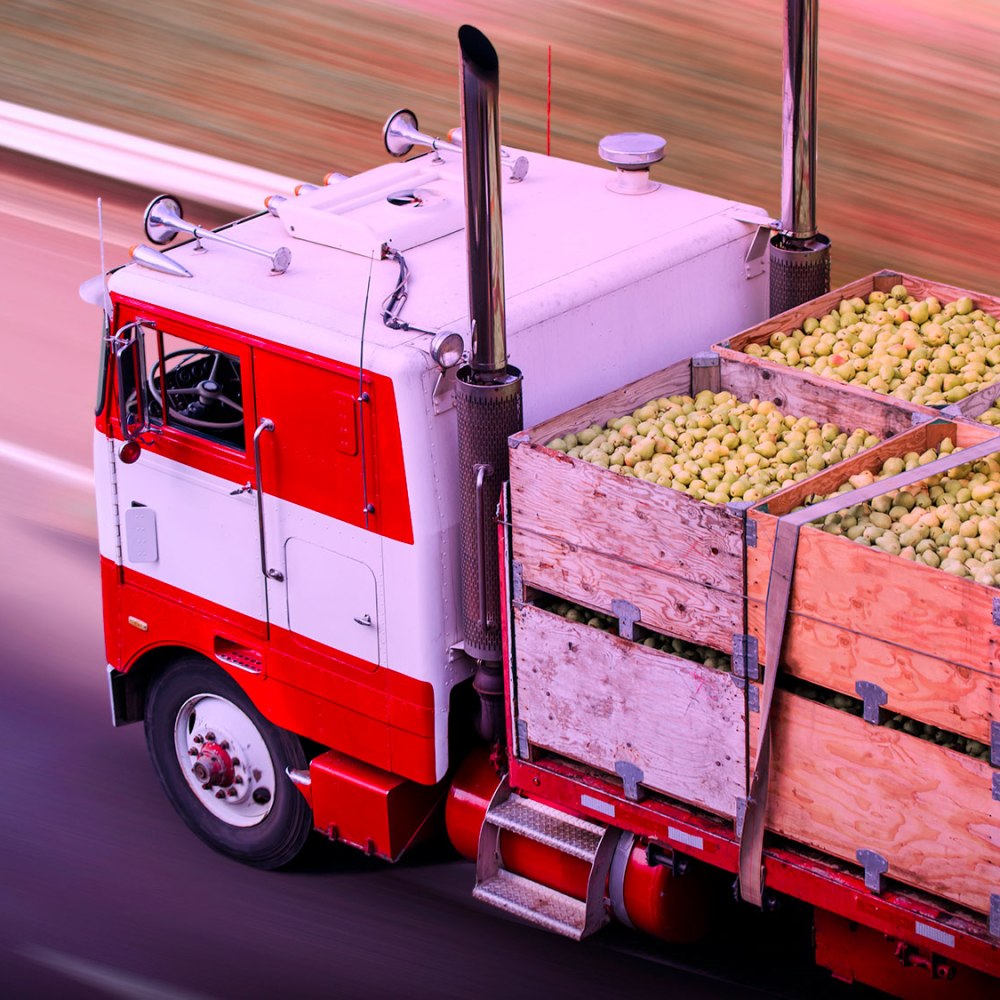
The transportation side of things is a trickier proposition. While plenty of people can drive a light truck for last-mile delivery operations, the same is not true for interstate trucking.

So it’s essential to get the most out of existing fleets. That’s why regulators at the Federal Motor Carrier Safety Administration last week eased the hourly driving restrictions for truckers moving emergency supplies of food to distribution centers and stores – as well as for other items such as soaps, sanitizers and medical supplies.

And there are two pieces of coronavirus good news for food transportation: Covid-19 has hugely reduced traffic congestion, with traffic flowing freely in America’s 25 largest metropolitan areas, according to Inrix, the mobility data company.

Plus, it reports, travel speeds are faster on the country’s usually congested interstates and highways. That development will come just in time for both stores and shoppers.


Share197Tweet123
usiscc

usiscc

  • Trending
  • Comments
  • Latest
Escape From Tarkov – How to Rotate Items

Escape From Tarkov – How to Rotate Items

February 5, 2020
Supply chain examination: Planning for vulnerabilities you can’t control

Supply chain examination: Planning for vulnerabilities you can’t control

December 7, 2019
Procurement Project Manager job with Camden London Borough Council

Procurement Project Manager job with Camden London Borough Council

February 17, 2020
Art Battle Wichita Falls III at The Warehouse, 1401 Lamar.

Art Battle Wichita Falls III at The Warehouse, 1401 Lamar.

0
Global Industry Analysis, Size, Share, Growth, Trends, and Forecasts 2016–2024 – ZMR News Reports

Global Industry Analysis, Size, Share, Growth, Trends, and Forecasts 2016–2024 – ZMR News Reports

0
PHOTOS: Ottawa firefighters respond to warehouse fire

PHOTOS: Ottawa firefighters respond to warehouse fire

0
Last Mile Delivery Market Worth Observing Growth | UPS, FedEx, SF Express

Last Mile Delivery Market Worth Observing Growth | UPS, FedEx, SF Express

April 23, 2024
Top 5 Spend Analysis Software ranked in 2024

Top 5 Spend Analysis Software ranked in 2024

March 1, 2024
How Tesla And BMW Are Leading A Supply Chain Renaissance With Blockchain

How Tesla And BMW Are Leading A Supply Chain Renaissance With Blockchain

January 19, 2024
  • Privacy Policy
  • Terms of Use
  • Disclaimer
  • DMCA
  • Contact Us

Copyright © 2024 United States International Supply Chain Commission (usiscc.org)

This website uses cookies to improve your experience. We'll assume you're ok with this, but you can opt-out if you wish. Cookie settingsACCEPT
Privacy & Cookies Policy

Privacy Overview

This website uses cookies to improve your experience while you navigate through the website. Out of these cookies, the cookies that are categorized as necessary are stored on your browser as they are essential for the working of basic functionalities of the website. We also use third-party cookies that help us analyze and understand how you use this website. These cookies will be stored in your browser only with your consent. You also have the option to opt-out of these cookies. But opting out of some of these cookies may have an effect on your browsing experience.
Necessary
Always Enabled

Necessary cookies are absolutely essential for the website to function properly. This category only includes cookies that ensures basic functionalities and security features of the website. These cookies do not store any personal information.

Non-necessary

Any cookies that may not be particularly necessary for the website to function and is used specifically to collect user personal data via analytics, ads, other embedded contents are termed as non-necessary cookies. It is mandatory to procure user consent prior to running these cookies on your website.

SAVE & ACCEPT
No Result
View All Result
  • Supply Chain
  • Logistics
  • Warehousing
  • Procurement
  • Shipping
  • More
    • Strategic Sourcing
    • Spend Analysis
    • Inventory
    • Contact Us

Copyright © 2024 United States International Supply Chain Commission (usiscc.org)






